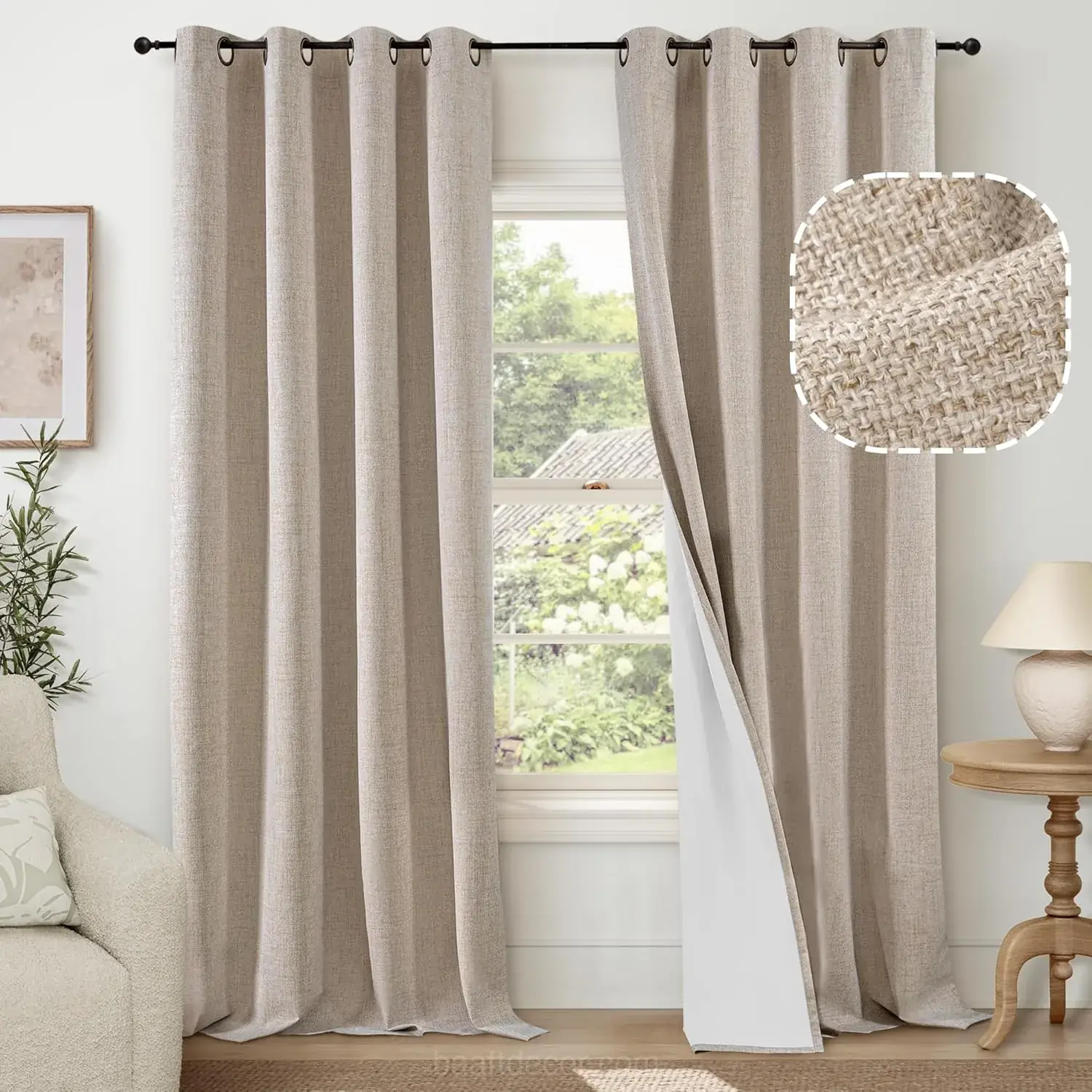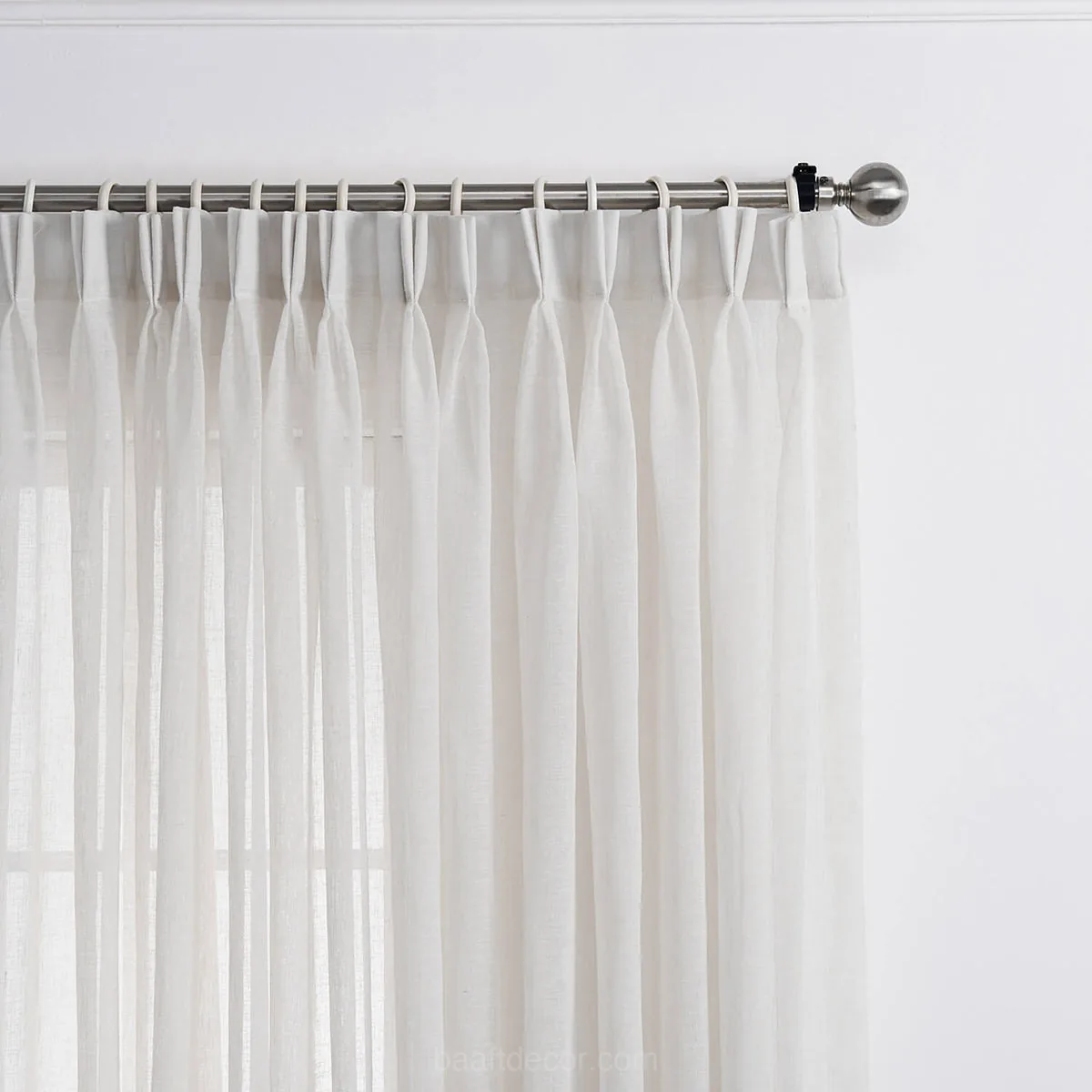
Curtain shops, tailors and fitters use a lot of words that nobody explains: heading, drop, return, glider, M-track, parda. This glossary defines more than 100 of them in plain language, with the typical numbers where they matter. Every term has its own link, so you can share or bookmark the exact definition you need.
If you’re planning a whole project rather than looking up one word, start with our curtains buying guide for Hyderabad homes, which puts these terms in order. When you’re ready for someone to measure, stitch and fit, our custom curtains service in Hyderabad covers the whole job, from fabric samples at your home to the final hook on the track.
Curtain anatomy at a glance
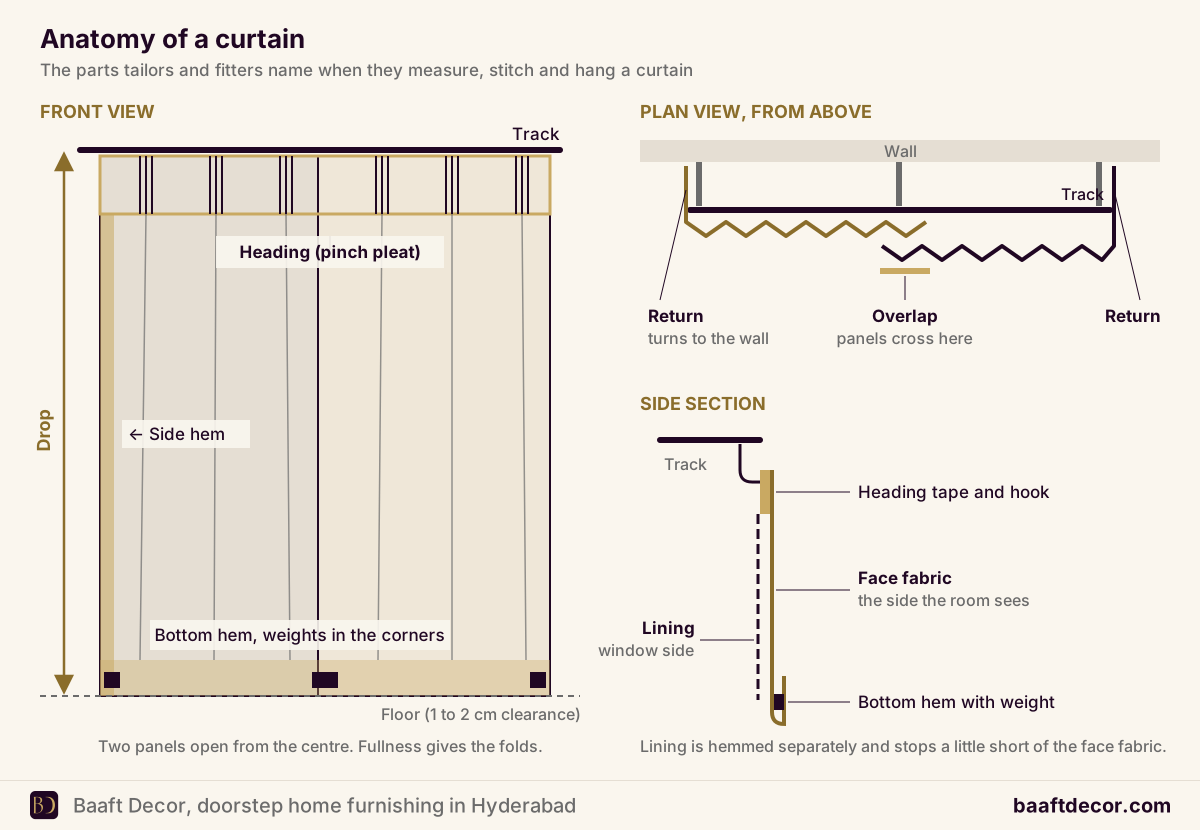
A curtain has five parts that come up in every quote: the heading at the top, the drop (its length), the side and bottom hems, the lining behind, and the return and overlap that close the gaps at the sides and centre. The drawings below show where each sits.
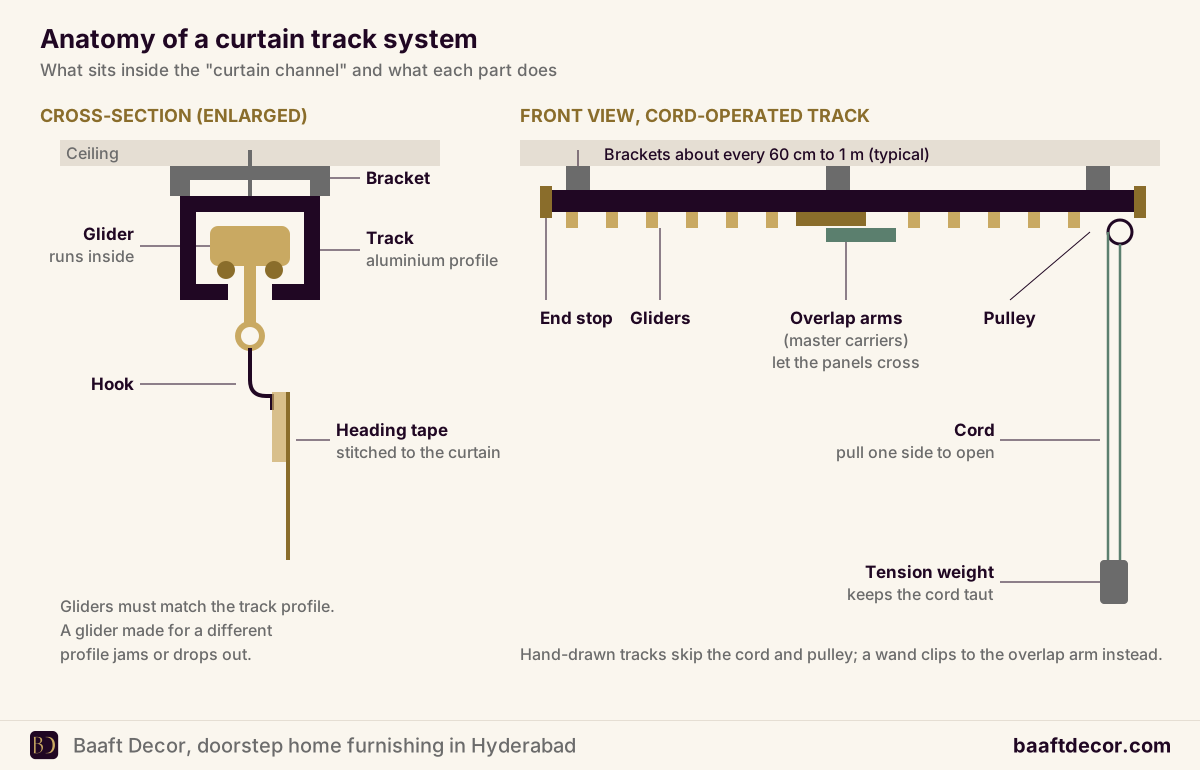
The track has its own vocabulary. In India it’s usually called a curtain channel, and the parts inside it decide how smoothly the curtain runs.
Not sure which of these your windows need? We visit with samples and measure, free across Hyderabad. WhatsApp +91 98499 17494.
A
Apron length
A curtain that ends 10 to 15 cm below the windowsill (typical). It covers the gap under the frame where light leaks in, and suits short windows above a bed or desk. See standard curtain sizes.
Arabian curtain
A shop and online-listing label in India, not a standard heading name. Listings that use it, sometimes as “Arabian pleat”, show anything from plain pleated curtains to layered, decorative sets, so ask the seller which heading it actually is and look at a sample before ordering.
Arched window curtain
Any curtain for a window with a curved top. It is either shaped to follow the arch and fixed in place, hung from a rod at the spring line below the arch, or hung from a straight track above the arch. Our guide to small and arched window curtains compares the three.
B
Back tab
A heading with fabric loops stitched on the back, so the rod is hidden from the front and the curtain falls in soft, flat folds. It slides less easily than rings or eyelets.
Bay window track
A curtain track bent to follow the angled or curved faces of a bay window, so one curtain can run around all sides. It needs a bracket close to each bend.
Bendable track
A track, usually aluminium or PVC, that can be bent by hand or with a tool to fit bays, corners and curved walls. Each model has a minimum bending radius; one Silent Gliss hand-operated track, for example, is specified to bend to a 100 mm minimum radius, with 200 mm as standard.
Blackout curtain
A curtain that blocks almost all light, through a coated blackout lining or a dense blackout weave. For the full comparison, see blackout vs sheer vs dim-out curtains.
Blackout lining
A lining fabric with a coating or dense weave that stops light passing through. It is sewn behind the face fabric so any curtain can become a blackout curtain. Our curtain lining guide explains the grades.
Box pleat
A heading where fabric is folded into flat, squared pleats that meet behind, giving a formal, tailored look. It uses a lot of fabric. Compare it with other tops in our curtain heading types guide.
Bracket
The fixing that holds a rod or track to the wall or ceiling. End brackets go at each end, and centre supports go roughly every 60 cm to 1 m (typical), closer for heavy curtains. See the curtain brackets guide.
Break
The small bend a curtain makes where it just touches the floor, between a clean float and a full puddle. It needs accurate measuring, because tiles and marble floors are rarely perfectly level.
Buckram
A stiff, open-weave fabric stitched inside the heading so pinch pleats and goblet pleats hold their shape. Better curtains use a wider buckram for crisper pleats.
Bump
A thick, soft cotton or cotton-blend interlining placed between face fabric and lining to add weight, body and some insulation.
C
C-track
A curtain track with a C-shaped profile, open along the bottom, in which gliders or runners sit and slide. Indian shops use C-track and M-track as profile names, and sizes differ between makers.
Cafe curtain
A short curtain that covers only the lower half of a window (spelt café curtain too), hung from a rod across the middle of the frame. It gives privacy while letting light in at the top. Common in kitchens; see the kitchen curtains guide.
Carrier
Another name for a glider, especially on ripple fold tracks, where carriers are linked at fixed spacing so every wave is the same size.
Ceiling track
A track fixed to the ceiling rather than the wall, so the curtain falls from ceiling height. It suits rooms with false ceilings and windows with a beam above. Our curtain channel and ceiling track guide covers fixing into gypsum and concrete.
Centre support
A bracket in the middle of a rod or track that stops it sagging. On rods, a passing bracket lets rings slide past it.
Cord draw
A track operated by pulling a cord at one end, so you never touch the fabric. The cord runs over a pulley and is kept taut by a tension weight or floor fixing.
Corner connector
A joint, usually 90 degrees, that links two rods or tracks around a corner window. Rings generally cannot slide past a rod connector, so each side needs its own curtain.
Cubicle curtain
A curtain that hangs from a ceiling cubicle track around a hospital or clinic bed to give patients privacy. It usually has an open mesh band at the top so air and light pass through. See our hospital cubicle curtains service.
Curtain channel
The everyday Indian name for a curtain track: an aluminium or PVC profile with gliders inside. Sold by the running foot, in single and double versions.
Cut drop
The length of fabric cut for each width: the finished drop plus allowances for the heading and the bottom hem. Pattern repeats can add more.
Cyclorama
A large, plain backdrop cloth at the back of a stage, lit with colour to look like sky or an even background. Often shortened to “cyc”. Part of our stage curtains work.
D
Dim-out
A curtain or lining that cuts most light without fully blacking out the room. A good default for living rooms.
Double pinch pleat
A pinch pleat with two folds in each group instead of three, giving a lighter, more modern look.
Double track
Two tracks side by side, or a single bracket holding two, so a sheer and a heavier curtain can be drawn separately.
Drapes
In Indian usage, usually heavier, lined, floor-length curtains, often pleated. The line between drapes and curtains is loose; see drapes vs curtains.
Drop
The finished length of a curtain, from where it hangs to where it ends. Floor-length curtains typically finish 1 to 2 cm above the floor. Step-by-step method: how to measure windows for curtains.
E
End cap
A plastic or metal cap that closes the end of a track, often with a built-in end stop. On rods, the plain version of a finial.
End stop
A small block fixed inside the track ends so gliders don’t run out. On some tracks it also anchors the last hook so the curtain edge stays put.
Eyelet
Metal or plastic rings punched into the curtain heading so the curtain slides directly on a rod. Uses about 1.5 to 2x fullness (typical). Eyelets cannot run on a slim ceiling track.
F
Fabric width
The width of the fabric roll from selvedge to selvedge. Much curtain fabric is about 54 inches (137 cm) wide, while many sheers come in wide widths that can run sideways. See how much fabric you need for curtains.
Finial
The decorative end piece on a curtain rod, in shapes from plain balls to crystal or carved designs. It also stops rings sliding off. Covered in the curtain rods and tracks guide.
Fire-retardant fabric
Fabric that resists catching fire and slows flame spread, either through the fibre itself or a chemical treatment. Often asked for in hospitals, auditoriums, hotels and offices; ask for the supplier’s test certificate.
Fullness
The ratio of flat fabric width to track or rod length. Typical figures: about 1.5 to 2x for eyelet, 2 to 2.5x for pinch and pencil pleat. More fullness gives deeper, richer folds.
G
Glider
The small slider that runs inside a curtain track and carries the hook. It must match the track’s profile exactly. Types are compared in our guide to curtain hooks and gliders.
Goblet pleat
A formal heading where each pleat is shaped into a rounded cup, sometimes stuffed to hold its form. Best on tall windows that are rarely opened and closed.
Grommet
The American word for an eyelet. See eyelet.
GSM
Grams per square metre, the weight of one square metre of fabric. Higher GSM usually means a heavier, better-draping curtain, but weave and lining matter as much. More in our curtain fabric guide.
H
Heading
The stitched top of a curtain that decides how it hangs and what it hangs from: eyelet, pencil pleat, pinch pleat, ripple fold, tab-top and so on.
Heading tape
A stiff tape stitched along the top of a curtain with pockets or cords for hooks. Pulling its cords forms pencil or pinch pleats. In Indian shops it’s usually called pleat tape.
Hem
A folded and stitched edge. Side hems are typically 2.5 to 4 cm wide, bottom hems often 8 to 10 cm, deeper on heavy or long curtains. How tailors finish them is covered in how curtains are stitched.
Holdback
A fixed hook, knob or arm on the wall that a curtain is tucked behind when open. Unlike a tieback, it doesn’t wrap around the fabric. See curtain holders and tiebacks.
Holder
In Indian usage, a parda holder or curtain holder is any wall fitting that holds the curtain back: a holdback, a hook for a tieback, or a decorative knob. “Parda pipe holder” means the bracket that holds a curtain rod.
Hook
The metal or plastic hook that connects the heading tape to a glider, ring or runner. Pin hooks push into buckram headings; standard plastic hooks slot into tape pockets.
I
Inside mount
Fixing a rod, track or blind inside the window recess rather than on the wall above it. Neat, but light leaks at the sides.
Interlining
A soft, thick layer sewn between face fabric and lining to add weight, body and some insulation. Bump and Sarille are common types.
J
Jabot
A pleated, cone-shaped piece of fabric that hangs down at each end of a swag or valance, framing the top of a window.
Jacquard
A fabric with the pattern woven into it on a jacquard loom, rather than printed on the surface. Common in traditional living rooms and pooja room curtains.
L
Lead weight
Small weights sewn into the bottom hem corners, or a weighted cord along the hem, so a curtain hangs straight and doesn’t flap. Sheers often use a fine weighted cord.
Lining
A separate fabric sewn behind the face fabric. Plain lining protects the face fabric from sun fading and adds body; dim-out and blackout linings also block light.
Linen-look
Polyester or poly-blend fabric woven to look like linen, with less creasing and better colour-holding in strong sun.
M
M-track
A name Indian shops use for a common aluminium curtain channel profile, sold in single and double versions for wall or ceiling fixing. Profiles vary between makers, so buy gliders for the same track.
Magnetic curtain
A door curtain with magnets sewn along the centre opening, so it closes by itself after you walk through. Mostly used as a mosquito screen; see magnetic door and mosquito curtains.
Master carrier
See overlap arm.
Mitred corner
A neat, diagonal fold where the side hem meets the bottom hem, so the corner lies flat and there is room for a corner weight.
Motorised track
A curtain track driven by a motor, controlled by remote, wall switch, app or timer. Needs a power point near one end. See the motorized curtains guide.
O
Outside mount
Fixing a rod or track on the wall above and beyond the window frame. Typically 10 to 15 cm above the frame and 15 to 20 cm past each side, so the curtain stacks off the glass.
Overlap
The section at the centre where two curtain panels cross when closed, so there’s no gap. Overlap arms on the track create it.
Overlap arm
A longer carrier at the leading edge of each curtain on a track. The two arms pass each other at the centre so the panels overlap when closed. Also called a master carrier.
P
Panel
One piece of curtain. A centre-opening window has two panels; a single panel pulls to one side.
Parda
The Hindi and Urdu word for curtain, used across India for window, door and room curtains. “Parda design” usually means the style or pattern people are choosing. For doorways see door curtain ideas.
Passing bracket
A centre bracket for a rod with an open shape, so rings can slide past it instead of stopping.
Pelmet
A fixed, structured box or board across the top of a window that hides the track and heading. Can be fabric-covered, wooden or built into a false ceiling. Ideas in curtain pelmets and valances.
Pencil pleat
A heading with tight, narrow gathers made by pulling the cords of a pencil pleat tape. Economical and works on rods or tracks. Typical fullness 2 to 2.5x.
Pinch pleat
A heading where fabric is pinched into groups of two or three folds stitched at fixed spacing. The triple pinch pleat is the one most Indian homes know. Typical fullness 2 to 2.5x.
Pleat tape
The Indian trade name for heading tape: a stiffened tape stitched to the top of a curtain with pockets for hooks. Different tapes make pencil, pinch or ripple fold headings.
Pole
Another name for a curtain rod, usually a thicker decorative one. In Indian shops a “parda pipe”.
Projection
The distance from the wall to the front of a rod or track, set by the bracket. It must clear window handles, sills and any blind behind the curtain, and it decides how deep the return is.
Puddle
A curtain made 5 to 15 cm longer than the floor so it pools (typical). Looks dramatic, but collects dust.
PVC strip curtain
Overlapping flexible PVC strips hung in a doorway to keep cool air in and dust and insects out while people and trolleys pass through. Called AC curtain or plastic curtain in India. See our PVC strip curtains service.
R
Railroaded fabric
Fabric whose pattern runs across the roll instead of along it, so it can be used sideways. Wide-width sheers are often railroaded, which allows a tall curtain with no vertical joins.
Recess
The opening the window sits in. A recess fit means the curtain, blind or rod fits inside it.
Repeat
The distance after which a printed or woven pattern starts again. Large repeats need extra fabric so the pattern matches across widths. More in printed and patterned curtains.
Return
The short piece of curtain at each outer end that turns back to the wall, hiding the bracket and closing the light gap at the side. Its depth equals the bracket projection.
Ring
A metal, wooden or plastic ring that slides on a rod, with a small eye below for a hook or clip.
Ripple fold
A heading where the curtain clips onto carriers spaced evenly in a special track, so it hangs in identical S-shaped waves. Also called wave curtain. The usual choice for motorised curtains.
Rod
A round bar fixed on brackets that curtains slide along on rings or eyelets. Slim rods of about 16 to 19 mm suit sheers; lined curtains need about 25 mm or more (typical).
Rod pocket
A heading where a sleeve is stitched along the top and the rod passes through it. The curtain gathers on the rod and doesn’t slide easily, so it suits curtains that stay mostly in one place.
Runner
A track slider, often with small wheels, that carries the hook. Wheeled runners help heavy curtains move smoothly.
S
Sarille
A trade name for a lightweight synthetic interlining, usually a polyester and viscose blend. One supplier lists it at 220 GSM and 54 inches wide, sold for adding thermal and sound protection to curtains.
Selvedge
The tightly woven edge along each side of a fabric roll that stops fraying. Tailors trim or clip it so it doesn’t pucker the seams.
Sheer
A thin, see-through curtain fabric such as voile or linen sheer that filters daylight and gives daytime privacy. See the sheer curtains guide.
Sill length
A curtain that ends about 1 cm above the windowsill (typical). Practical above beds, desks and kitchen counters.
Solution-dyed
Synthetic fibre that is coloured before it’s spun, by adding pigment to the liquid polymer, so the colour runs right through each fibre. It holds colour much better in strong sun than fabric dyed after weaving.
Spring line
The level on an arched window where the straight sides end and the curve begins. A rod fixed here leaves the arch open.
Stack-back
The space a curtain takes up when fully open. Allow the rod or track to run past the frame so the stack sits on the wall, not over the glass.
Stage traveller
A pair of stage curtains on a traveller track that open from the centre to each side, operated by a cord or motor. The main front curtain of an auditorium is often a traveller.
Sun-fast
Fabric that resists fading in sunlight. Polyester and solution-dyed fabrics are generally more sun-fast than cotton, linen or silk.
Swag
Fabric draped in a curved, scooped shape across the top of a window, usually with jabots at the ends. A formal, traditional top treatment.
T
Tab-top
A heading with flat fabric loops sewn along the top that slip over a rod. Relaxed look, but slides poorly.
Tension rod
A spring-loaded rod that holds itself inside a recess by pressure, with no drilling. Fine for light curtains in small windows. Options in our no-drill curtain rods guide.
Thermal lining
A coated or dense lining that slows heat passing through the window. Useful on west-facing windows.
Tieback
A band, rope, tassel or chain that wraps around an open curtain and hooks to the wall, holding the curtain in a gathered shape.
Track
A metal or PVC profile, fixed to the wall or ceiling, in which gliders or runners slide. Smoother and quieter than a rod, and the only option for ripple fold and motorised curtains.
Track pocket
A recess left in a false ceiling along the window so a ceiling track sits hidden inside it. It needs to be wide enough for a double track if you want sheers as well.
Triple pinch pleat
The classic pinch pleat with three folds in each group, the most common pleated heading in Indian homes.
V
Valance
A short fabric top treatment across the head of a window that hides the hardware. Softer than a pelmet; it can be pleated, gathered or shaped.
Velvet
A dense fabric with a short, soft pile that gives rich colour and good light blocking. Collects dust, so plan to vacuum it regularly.
Voile
A soft, lightweight, see-through fabric, usually polyester or cotton, used for sheer curtains.
W
Wand
A slim rod that clips to the overlap arm of a track so you can draw the curtain without handling the fabric. Also called a draw rod.
Wall plug
The plastic anchor (often called a rawl plug) pushed into a drilled hole so a screw grips brick or concrete. Gypsum false ceilings need different fixings or a wooden batten above.
Wave curtain
Another name for ripple fold. See ripple fold.
Width
Two meanings: the width of a window, rod or track, or one full width of fabric. “Three widths” means three fabric widths joined together.
Hyderabad terms you’ll hear on a home visit
A few words come up on almost every job here. “Channel” means track, “pipe” means rod, “pleat tape” means heading tape and “parda” means curtain. False ceilings with a curtain pocket (“track pocket”) are standard in newer flats in the IT corridor, which is why many flats in Gachibowli and Kokapet towers get ceiling tracks rather than rods. In older independent houses, wall-mounted rods and arched windows are still common. Our curtain installation service handles both.
Baaft Decor measures, stitches and fits curtains at homes across Hyderabad, and these are the words you’ll see in our quotes. We regularly fit curtains in Gachibowli, curtains in Kondapur, curtains in Kukatpally, curtains in Manikonda and curtains in Banjara Hills.
Get the right words into the right curtains
Knowing the terms helps you compare quotes properly, but nothing replaces seeing fabric in your own light. For curtains in Hyderabad, book a free home visit: we bring samples, measure every window, and give a written quote with heading, fullness, lining and hardware spelt out. We work 8 AM to 10 PM, all seven days. WhatsApp or call +91 98499 17494.
Frequently asked questions
What are the main parts of a curtain called?
The main parts of a curtain are the heading, the body or drop, the side hems, the bottom hem and, on better curtains, the lining. The heading is the stitched top that holds the hooks, rings or eyelets, often stiffened with heading tape or buckram. The drop is the finished length from the hook or rod to the hem. Side hems are folded edges, usually 2.5 to 4 cm wide, and the bottom hem is a deeper fold, often 8 to 10 cm, that may hold small weights so the curtain hangs straight.
What is fullness in curtains?
Fullness in curtains is the ratio of flat fabric width to the length of the rod or track it covers. A curtain at 2x fullness uses 2 metres of fabric for every metre of track, which gives deep, even folds when closed. Typical fullness is about 1.5 to 2x for eyelet curtains, 2 to 2.5x for pencil pleat and pinch pleat, and about 2 to 2.5x for ripple fold, depending on the track system. Less fullness saves fabric but makes the curtain look flat and thin.
What is the difference between a curtain glider and a runner?
A curtain glider and a runner do the same job: they slide inside a curtain track and carry the hook that holds the curtain. In Indian shops the words are often used for the same part. Where a difference is made, a glider usually means a smooth plastic slider and a runner can mean a wheeled roller that runs with less friction, which helps with heavy lined curtains and wide spans. Either way, the glider or runner must match the exact track profile, or it will jam or fall out.
What is a curtain channel in India?
A curtain channel is the common Indian name for a curtain track: an aluminium or PVC profile fixed to the ceiling or wall, with gliders running inside it and hooks hanging from the gliders. Shops sell channels by the running foot in single and double versions, and names such as M-track describe particular profiles. A channel is quieter and smoother than a rod, fits neatly under false ceilings and can be curved for bay windows. The gliders must match that channel's profile.
What is the drop of a curtain?
The drop of a curtain is its finished length, measured from the point it hangs from (the top of the rod for eyelets, the bottom of the rings or the glider eye for tracks) down to where the curtain should end. For floor-length curtains the typical finish is 1 to 2 cm above the floor, for sill length about 1 cm above the sill, and for apron length 10 to 15 cm below the sill. Fabric cut length, called the cut drop, adds hem and heading allowances to this figure.
What is the return on a curtain?
The return on a curtain is the short section of fabric at each outer end that turns back from the front of the track or rod to the wall. It closes the side gap so light does not leak in and the hardware is hidden from the side. The return equals the bracket projection, the distance from the wall to the front of the track, which is typically a few centimetres on a ceiling track and more on a projecting rod. Returns matter most on blackout curtains in bedrooms.
What is the difference between lining and interlining?
Lining is a separate fabric sewn behind the face fabric of a curtain to protect it from sun, add body and, with blackout or dim-out lining, block light. Interlining is a soft, thick layer sandwiched between the face fabric and the lining, used to add weight, fullness and some insulation. Bump and Sarille are common interlining types. Most curtains in Indian homes use lining only; interlining is used for heavy formal curtains and some theatre and auditorium work where weight and drape matter.
What does GSM mean for curtain fabric?
GSM means grams per square metre, the weight of one square metre of fabric. It is a quick guide to how thick and heavy a curtain fabric is. Sheers and voiles are light, while blackout and heavy upholstery-style weaves are much heavier, and one supplier lists Sarille interlining at 220 GSM. Higher GSM usually means better drape and more light blocking, but weave and lining matter too, so compare samples against the window rather than choosing by GSM alone.