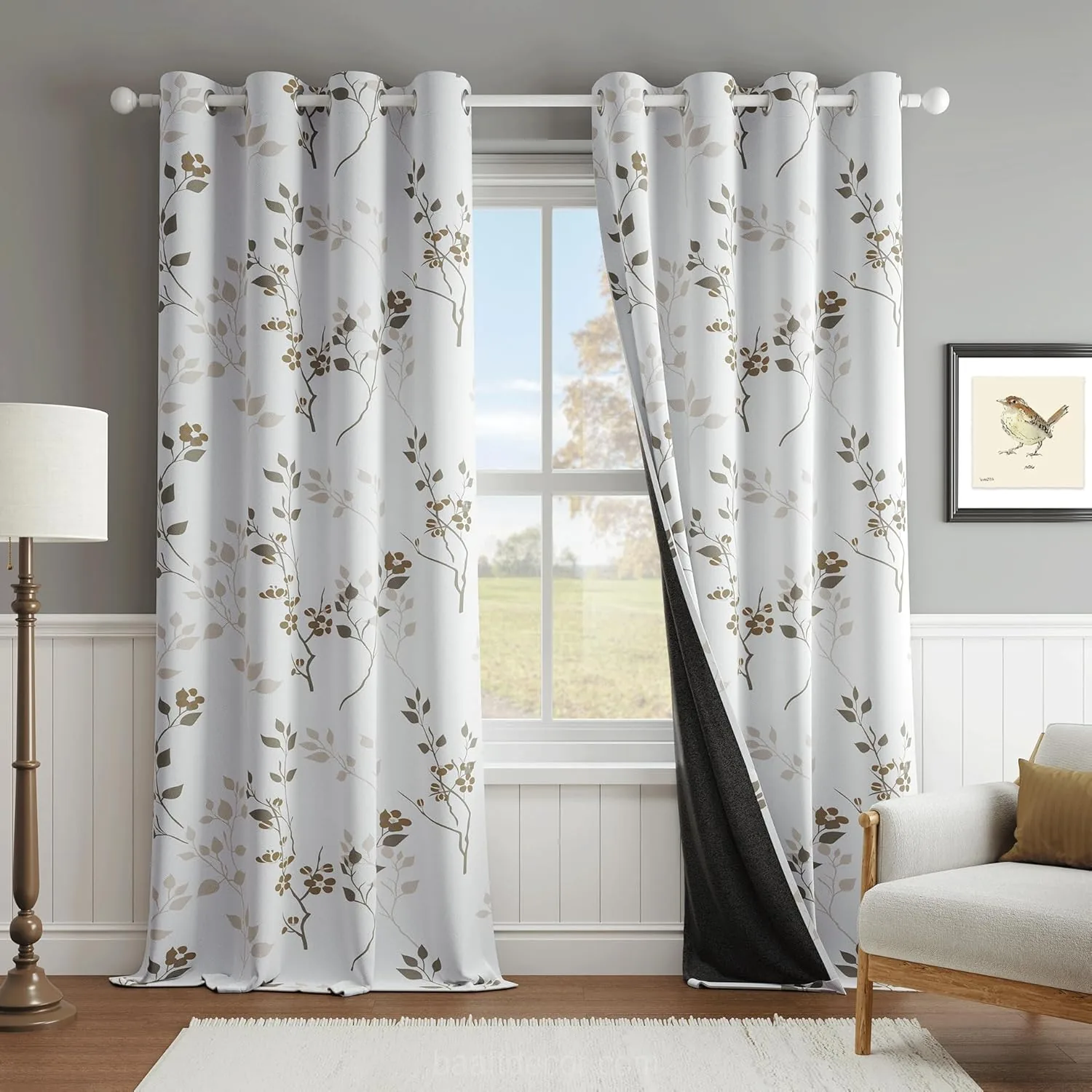
A patterned curtain is often the boldest thing in a room, more than a sofa or a rug, simply because of how much wall it covers. Getting it right means knowing how the pattern was made, how it behaves in sun and folds, and what else in the room it has to live with. When we make patterned curtains in Hyderabad, those three questions decide the fabric before anyone falls for a sample.
This guide covers printed, embroidered and woven patterns, the common motifs, and the practical side: fading, matching and fabric wastage. For the full picture from measuring to installation, start with our curtains buying guide for Hyderabad homes.
How do printed, woven and embroidered curtains differ?
A patterned curtain gets its design in one of three ways: printed on the fabric surface, woven into the cloth using coloured yarns, or stitched onto it as embroidery. The method decides how the curtain looks up close, how it wears, and how it fades.
| Type | How the pattern is made | Look and feel | Wear and fading | Typical use |
|---|---|---|---|---|
| Printed (screen or digital) | Dye or ink applied to the surface | Smooth, any colour or motif | Colour mostly on the face; line on sunny windows | Living rooms, kids’ rooms, bold designs |
| Jacquard | Pattern woven in with coloured yarns | Raised texture, heavier | Pattern can’t rub off; fades more evenly | Formal living and dining rooms |
| Damask | A jacquard weave where shiny and matte areas form the motif | Tonal, often reversible | Very durable | Traditional and formal rooms |
| Yarn-dyed stripes and checks | Dyed yarns woven in lines | Crisp, the same on both sides | Holds pattern well | Studies, bedrooms, casual rooms |
| Embroidered | Thread stitched onto a base fabric | Raised, decorative | Threads can snag | Sheers, pooja rooms, formal rooms |
Fabric choice sits underneath all of this. Our curtain fabric guide covers fibres, weight and GSM in detail; here we’re only dealing with the pattern.
Want this measured for your windows? We visit with samples, free across Hyderabad. WhatsApp +91 98499 17494.
Screen printed vs digital printed curtains: which is better?
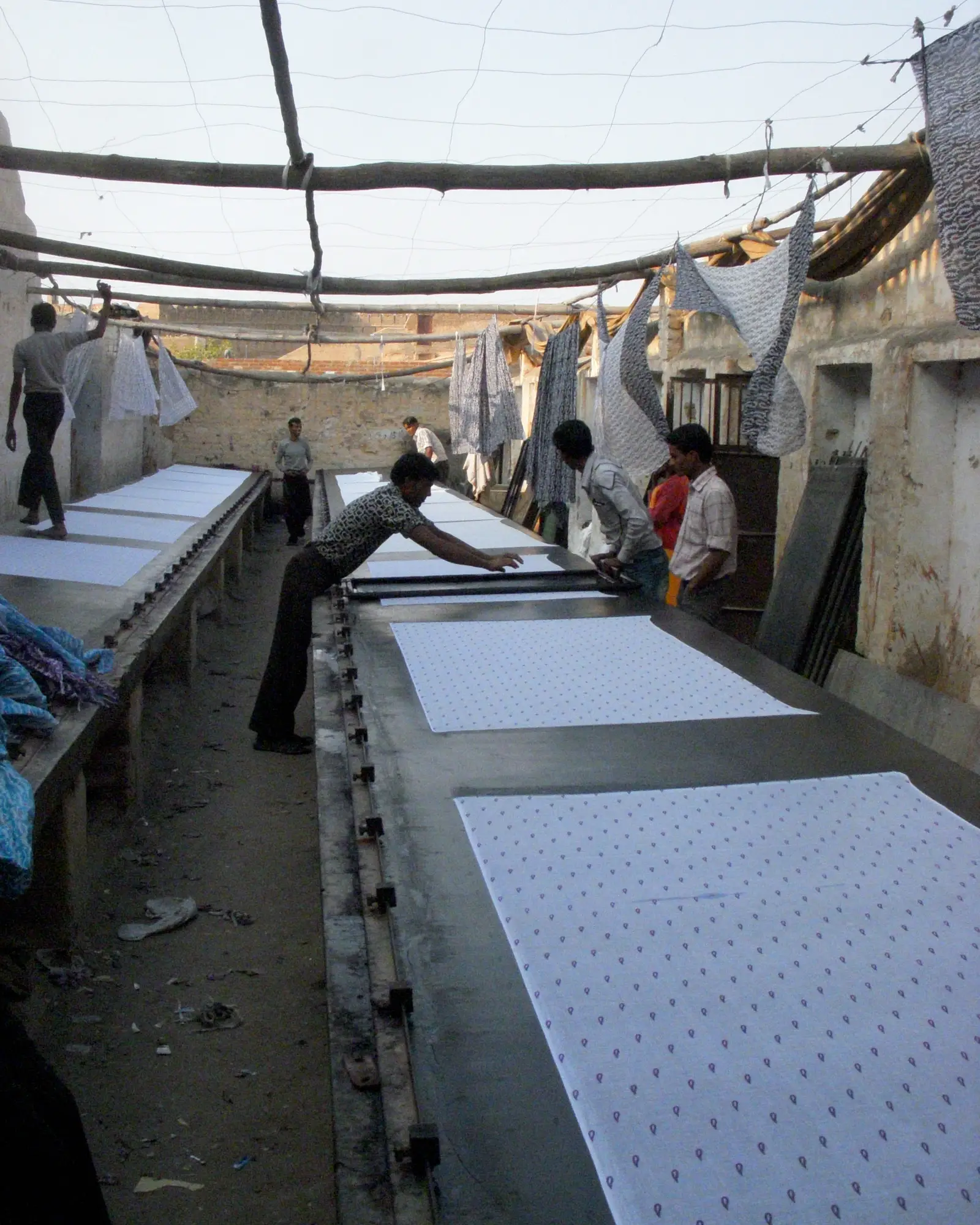
Screen printing pushes dye through a fine mesh screen, one screen per colour, while digital printing sprays ink straight from a design file. Screen prints suit bold, flat colour in big runs; digital prints suit fine detail, gradients and many colours. Neither is better in every case.
| Screen printed | Digital printed | |
|---|---|---|
| Colours | Limited, one screen each | Practically unlimited |
| Best at | Bold florals, block motifs, flat colour | Watercolour florals, gradients, photo-like art |
| Edges | Crisp, slightly raised in places | Very fine detail |
| Runs | Economical in large runs | Practical for small runs and custom designs |
| Fading | Depends on dye and fabric | Depends on dye and fabric |
Hand block printing, which India is known for, is a separate craft again: carved wooden blocks stamped by hand. It gives a slightly irregular, handmade look that many people love on cotton curtains for traditional rooms.
Embroidered curtains and embroidered curtain fabric
Embroidered curtains carry a pattern stitched onto the base fabric with thread, usually by multi-head embroidery machines. Embroidery adds texture and a little weight, and it looks particularly good on sheer voile, where the motif stands out against the light.
Embroidered sheers are a common choice in Indian homes: they give daytime privacy and a decorative look without darkening the room. Our sheer curtains guide explains how to layer them with a lined curtain behind. On heavier fabric, embroidery tends to appear as borders along the hem or a scattered motif, often in gold or ivory thread for living rooms and pooja rooms.
A few practical points:
- Snagging. Threads catch on eyelet rings and bangles. Pinch pleat on a track, opened with a wand, is kinder to embroidery.
- Washing. Gentle cycle in a laundry bag, or dry clean. Iron on the reverse so you don’t flatten the stitching.
- Weight. Dense embroidery on a sheer makes it heavier; slim tension rods may sag.
Which pattern suits which room?
Florals, geometrics, stripes, checks and damask each suit different rooms and moods. The scale of the pattern matters as much as the type: large motifs need a big window to show off, and small ones read as texture from across the room.
| Pattern | Works well in | Watch out for |
|---|---|---|
| Large floral | Living rooms with tall windows, formal rooms | Overwhelms small rooms; competes with patterned sofas |
| Small floral or vine | Bedrooms, kids’ rooms, sheers | Can look busy with a patterned rug |
| Geometric | Modern apartments, studies | Lines show any misalignment at seams |
| Vertical stripes | Low-ceiling rooms (adds height) | Must be hung perfectly straight |
| Checks | Bedrooms, casual living rooms, kids’ rooms | Large checks need careful matching across widths |
| Damask and ethnic motifs | Traditional living rooms, pooja rooms | Heavy look in small, bright rooms |
Colour decides the mood more than the motif. If you’re unsure whether a print’s base colour suits your walls and light, our curtain colour guide works through it room by room.
How do prints fade on west-facing windows?
Prints fade fastest on west- and south-west-facing windows, because those take hours of direct afternoon sun, and in Hyderabad that means 40 °C days from March to June. Saturated reds, oranges and deep blues show fading first; light grounds and tonal prints hide it better.
Textile labs measure this as lightfastness. The common test is ISO 105-B02, which exposes fabric to a xenon arc lamp that simulates daylight and compares the fading against blue wool references numbered 1 to 8, where 8 is the most lightfast (Q-Lab summary of ISO 105-B02). If a supplier can give you a lightfastness rating, higher is better for a sunny window.
What actually slows fading in a Hyderabad home:
- Line the curtain. A lining behind the print takes the direct sun first. Our curtain lining guide covers cotton, dim-out and blackout options.
- Add a sheer in front of the glass. It filters sun before it reaches the printed layer.
- Choose prints that fade gracefully. A cream ground with soft motifs ages better than a bold red one.
- Rotate or reverse panels every year or two if the design allows, so one panel doesn’t fade more than its pair.
Monsoon is the other risk. Printed cotton kept closed against damp glass from June to September can spot with mildew, so leave a small gap from the glass and air the room on dry days.
How do you match printed curtains with sofas, rugs and wallpaper?
Let one item carry the boldest pattern and keep the others quieter, then link them through one or two shared colours. Vary the scale: a large print next to a small one, or next to a plain texture, looks planned; two large prints of similar size compete.
- With a patterned sofa: pick a curtain that takes one colour from the sofa in a smaller or simpler pattern, or go solid.
- With a rug: the floor and the window are far apart, so a shared colour is usually enough to connect them.
- With wallpaper: if the wallpaper is patterned, the curtain should usually be solid or a subtle texture. Two prints on the same wall rarely work.
- Cushions: leftover curtain fabric made into cushions is a neat way to tie the window to the sofa.
We bring printed and plain samples on our visits so you can hold them against your actual sofa and walls, which tells you far more than a phone photo.
Pattern repeat: why printed curtains need more fabric
A pattern repeat is the distance after which a design starts again, and every drop of a patterned curtain has to be cut in whole repeats so the motif lines up across the seams. The extra fabric left from each cut is wastage, and it’s why patterned curtains need more metres than plain ones.
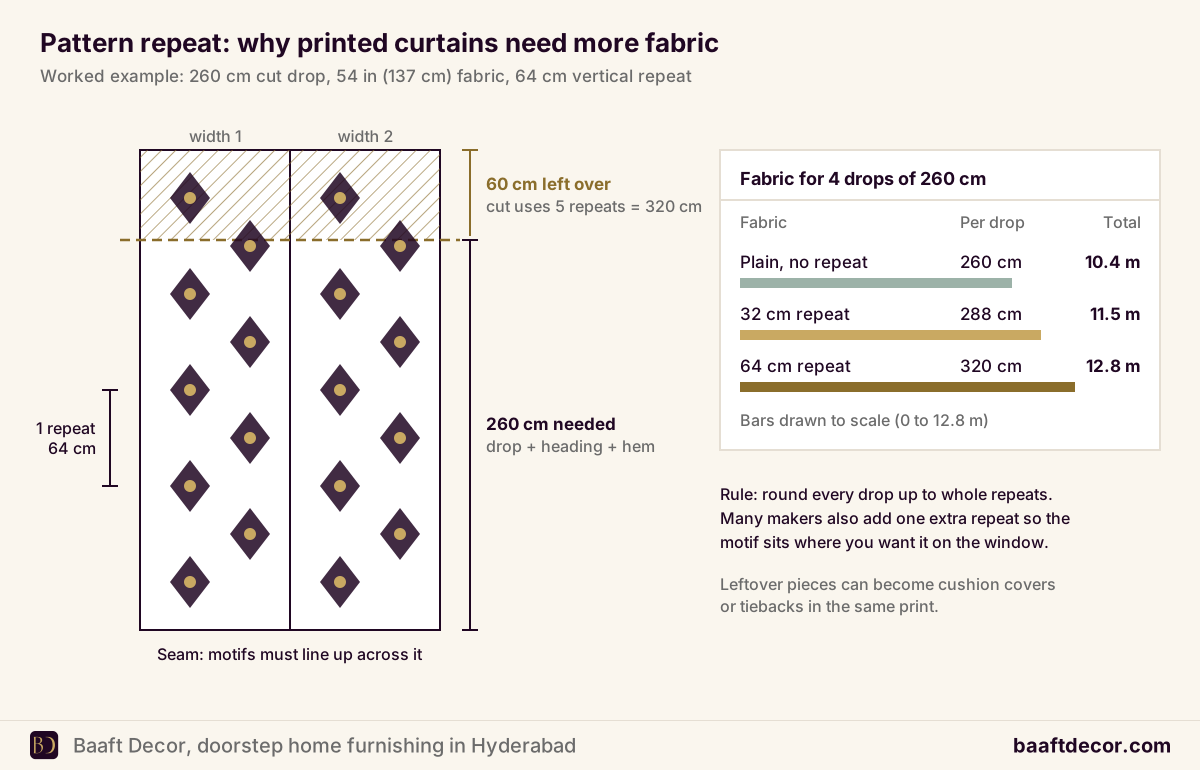
A good curtain maker also decides where the motif sits on the window: usually a full motif just below the heading, so the pattern doesn’t start with a cut-off flower at the top. Some wide fabrics are railroaded, meaning the pattern runs sideways along the roll and the curtain needs no seams at all; check the direction before you order. For the full calculation with fullness and allowances, see how much fabric you need for curtains.
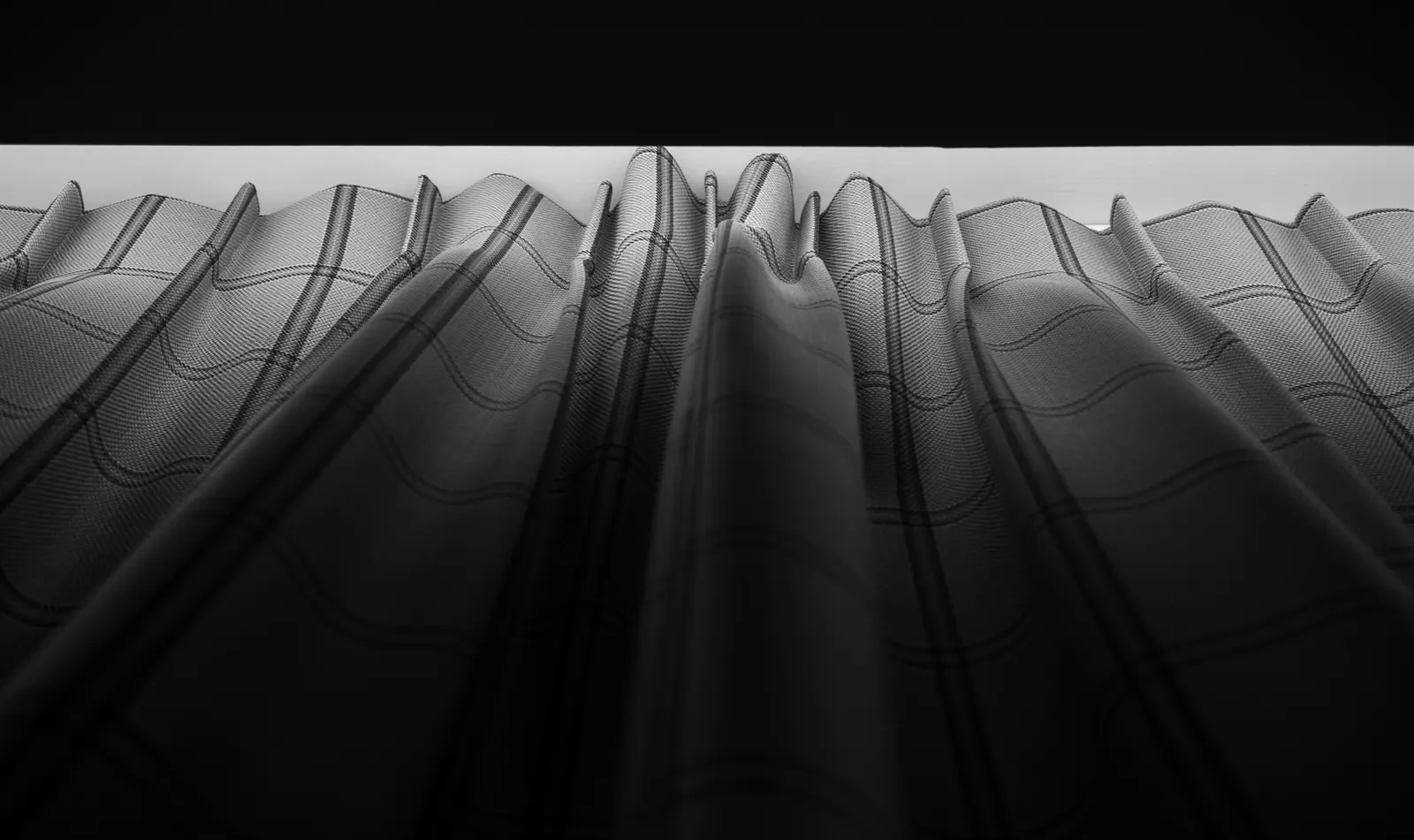
Folds change how a pattern reads, too. On a ripple fold or deep pinch pleat, a large motif breaks up into strips when the curtain is open, while stripes and checks stay legible.
When does a solid curtain work better?
A solid curtain works better when the room already has a strong pattern elsewhere, when the room is small, or when the curtain covers a very wide wall of glass. Solids are also easier to extend or replace later because matching a plain colour is simpler than matching a print from a discontinued batch.
That doesn’t mean plain has to be flat. A slub weave, a linen-look texture or a tonal jacquard gives depth without visual noise. A common approach we suggest in open-plan flats is a printed curtain in one zone, say the living area, and a solid in a matching colour for the dining side.
Baaft Decor measures, stitches and fits curtains at homes across Hyderabad, including printed, embroidered and jacquard fabrics, and we also stitch fabric customers have bought elsewhere through our curtain stitching service. We bring pattern samples to homes for curtains in Banjara Hills, curtains in Jubilee Hills, curtains in Manikonda and curtains in Madhapur.
See patterns in your own light
Book a free home visit and we’ll bring printed, embroidered, jacquard and plain samples, hold them against your windows, sofa and walls, measure every room and work out the fabric with repeats included. We work across Hyderabad from 8 AM to 10 PM, all seven days. Call or WhatsApp +91 98499 17494.
Frequently asked questions
What are printed curtains?
Printed curtains are curtains made from fabric with a pattern applied to its surface by printing, usually screen printing or digital printing, rather than woven or embroidered into it. The base cloth is often polyester, cotton or a poly-cotton blend. Printed curtains offer the widest range of designs, from florals and geometrics to stripes and abstract prints, at a lower cost than woven patterns. Because the colour sits mostly on the face, prints on sunny windows should be lined to slow fading.
What is the difference between screen printed and digital printed curtains?
Screen printed curtains are printed by pushing dye through a mesh screen, one screen for each colour, which gives bold, crisp areas of flat colour and suits large production runs. Digital printed curtains are printed by inkjet machines straight from a design file, so they can carry unlimited colours, fine gradients and photographic images, and suit smaller runs. Neither method is automatically more fade-resistant; lightfastness depends mostly on the dye and fabric used, so ask for the fabric's rating.
Are embroidered curtains good for daily use?
Embroidered curtains are fine for daily use if you choose the right place and handle them gently. Embroidery adds weight and texture, and it looks especially good on sheer voile and on lined curtains in living rooms and pooja rooms. The threads can snag on rings, hooks and jewellery, so they suit curtains that are opened and closed by a wand or kept mostly in one position. Wash them on a gentle cycle in a laundry bag or have them dry cleaned, and iron on the reverse.
What is embroidered curtain fabric?
Embroidered curtain fabric is curtain material that has decorative stitching sewn into it, usually by multi-head embroidery machines, before it is made into curtains. The base fabric can be a sheer voile, a cotton, a linen-look polyester or a heavier satin. Common designs include florals, vines, small scattered motifs and borders along the hem. Embroidered sheer fabric is popular in Indian homes because it gives privacy and pattern while still letting light through. It is usually sold by the metre.
Is jacquard better than printed curtain fabric?
Jacquard curtain fabric is often more durable than printed fabric because the pattern is woven into the cloth with coloured yarns rather than printed on the surface, so it cannot rub off or crack, and fading tends to be more even. Jacquards also have a richer texture and usually a heavier weight. Printed fabric wins on choice of colours and designs, and it is generally lighter and cheaper. For formal living rooms jacquard is a good pick; for kids' rooms and bold colours, prints work well.
Do printed curtains fade in the sun?
Printed curtains do fade in strong sun, and the effect is most visible on saturated colours such as reds, oranges and deep blues on west- and south-west-facing windows. How fast depends on the dye, the fabric and the hours of direct sun. Textile labs rate this as lightfastness, commonly tested under ISO 105-B02 against a blue wool scale from 1 to 8. Sewing a lining behind the printed fabric, closing sheers in the afternoon and picking lighter grounds all slow fading.
How do I match patterned curtains with a sofa and rug?
To match patterned curtains with a sofa and rug, let one item carry the boldest pattern and keep the others quieter. Pull one or two colours from the curtain print into the sofa, cushions or rug so the room feels connected. Vary the scale: a large floral curtain sits well with a small check or a plain textured sofa, while two large patterns of similar size compete. If the wall already has patterned wallpaper, a solid or subtly textured curtain is usually the better choice.
Why do patterned curtains need more fabric?
Patterned curtains need more fabric because each length of fabric has to be cut in whole pattern repeats, so the design lines up across the seams where widths are joined and between the left and right curtains. The extra left over from each cut is wastage. A 64 cm repeat on a 260 cm cut drop, for example, uses 320 cm per drop, so four drops take 12.8 m instead of 10.4 m for plain fabric. Larger repeats and taller drops add more.
When should I choose solid curtains instead of patterned?
Choose solid curtains instead of patterned ones when the room already has a busy pattern elsewhere, such as wallpaper, a printed sofa or a strong rug, when the room is small and you want it to feel calmer, or when the curtain covers a very wide wall of glass where a large print can overwhelm. Solids are also easier to match later if you add or replace a panel. A woven texture, slub or tonal jacquard gives interest without the visual noise of a print.