Most people pick a curtain fabric and treat the lining as an afterthought. In Hyderabad it’s often the other way round: the lining decides how hot the room gets, how fast the fabric fades, and whether you sleep past 6 AM. If darkness is the goal, our blackout curtains service in Hyderabad starts with the lining choice, not the face fabric.
This guide covers each type of lining, what it does and where we use it. For the wider picture of choosing curtains room by room, read our Hyderabad curtains buying guide alongside it.
What does a curtain lining actually do?
A lining is a second layer of fabric behind the curtain. It does five jobs:
- Protects the face fabric from sun. The lining takes the direct UV and heat, so the coloured fabric fades far more slowly.
- Controls light. From a slight softening (cotton) to near-total darkness (blackout).
- Adds body. A lined curtain hangs in fuller, more even folds than the same fabric unlined.
- Slows heat. Denser and coated linings block more sunlight before it warms the room.
- Tidies the outside view. Neighbours and the street see a uniform white or ivory lining, not the back of a printed fabric.
Types of curtain lining compared
| Lining | Light blocked | Heat | Weight and drape | Best for |
|---|---|---|---|---|
| Standard cotton or poly-cotton | Some | Slight | Light, soft | Living rooms, dining, protecting fabric from fading |
| Dim-out | Most, room goes dim | Moderate | Medium | Living rooms, study, TV rooms in daytime |
| Thermal (single-pass coated) | Most, some light still through | Good | Medium | Sunny rooms where full darkness isn’t needed |
| Blackout (3-pass coated) | Almost all | Good | Stiffer, heavier | Bedrooms, nursery, media room, night-shift workers |
| Interlining (plus a lining) | Depends on the lining | Good | Heavy, padded | Formal rooms with heavy fabric; rarely needed here |
Standard cotton lining
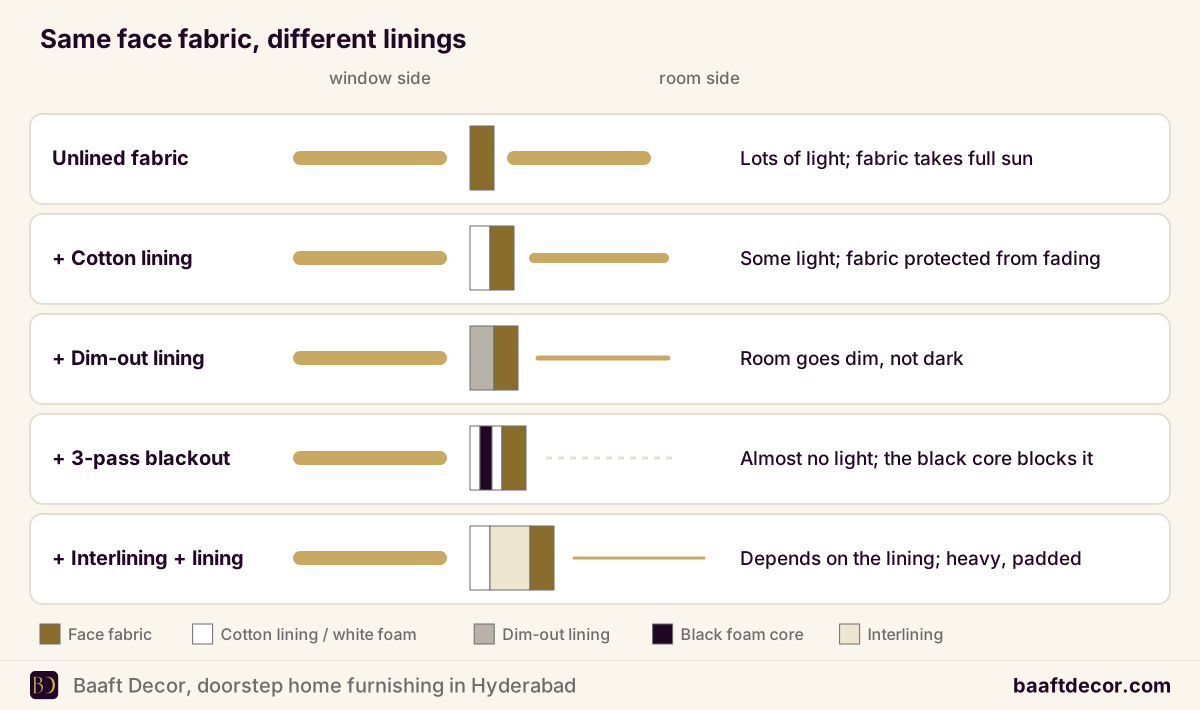
A plain woven cotton or poly-cotton fabric in white or ivory. It doesn’t darken the room much, but it’s the cheapest way to make a good fabric last. On a west-facing window, an unlined silk or cotton curtain can fade unevenly within a few summers. The same fabric lined lasts much longer.
Dim-out lining
A denser lining, sometimes lightly coated, that blocks most daylight. The room goes dim, not dark. It drapes almost like ordinary fabric, which is why we use it in living rooms where people want to cut glare on the TV without making the room feel shut in.
Blackout lining: coated, 3-pass and woven
Most blackout linings are coated. The lining fabric is passed through a machine that applies layers of acrylic foam. According to curtain lining maker James Dunlop Textiles, one pass of coating gives a thermal lining that still lets some light through, while three passes give a true blackout thermal lining (James Dunlop Textiles FAQ). In a 3-pass lining the layers usually go white, black, white: the black core stops the light, and the white outer layers keep the lining looking white from the street and stop the black showing through the face fabric.
There are also woven blackout fabrics, where a dark yarn is woven into the middle of the cloth instead of a foam coating. They feel softer and drape more naturally, and they can be used as a single-layer curtain. How completely they block light varies from weave to weave, so we hold a sample up against a bright window before you decide.
One thing no lining can fix: light coming in around the edges. Pinholes from stitching, gaps at the top, and short side returns all let light in. The blackout vs sheer vs dim-out comparison covers how we stop those leaks.
Want this measured for your windows? We visit with lining and fabric samples, free across Hyderabad. WhatsApp +91 98499 17494.
Thermal lining
Thermal lining is a coated lining, often single-pass, made mainly to slow heat. It’s useful on sunny windows where you want the room cooler in the afternoon but don’t want it dark. In Hyderabad summers, a thermal or blackout lining with the light side facing the glass, closed from about midday on west-facing windows, makes the room noticeably more comfortable by evening. Our guide to keeping your home cool in summer puts this together with blinds and glass options.
Interlining
A soft, thick layer (similar to thin flannel) sewn between the face fabric and the lining. It makes curtains look padded and luxurious and adds some insulation. It’s common in cold countries. Here we rarely suggest it. It makes curtains heavy, they take a long time to dry, they usually need dry cleaning, and in July and August a thick interlined curtain against a damp wall can hold moisture and develop mildew spots.
Sewn-in or detachable lining?
| Sewn-in | Detachable | |
|---|---|---|
| Look | Neatest; layers move together | Slightly less tidy at edges |
| Washing | Whole curtain washed or dry cleaned together | Lining comes off and is washed separately |
| Adding to old curtains | Needs unpicking and re-hemming | Simply hooks onto the existing heading |
| Best for | New custom curtains, living and master bedroom | Rentals, kids’ rooms, frequent washing |
Detachable linings hang from the same hooks as the curtain and can be added later. That’s handy if you’ve already bought curtains and only now realised the bedroom is too bright. Adding lining is one of the alterations we do through our curtain stitching service, including for fabric bought elsewhere.
Does lining make a difference to sleep?
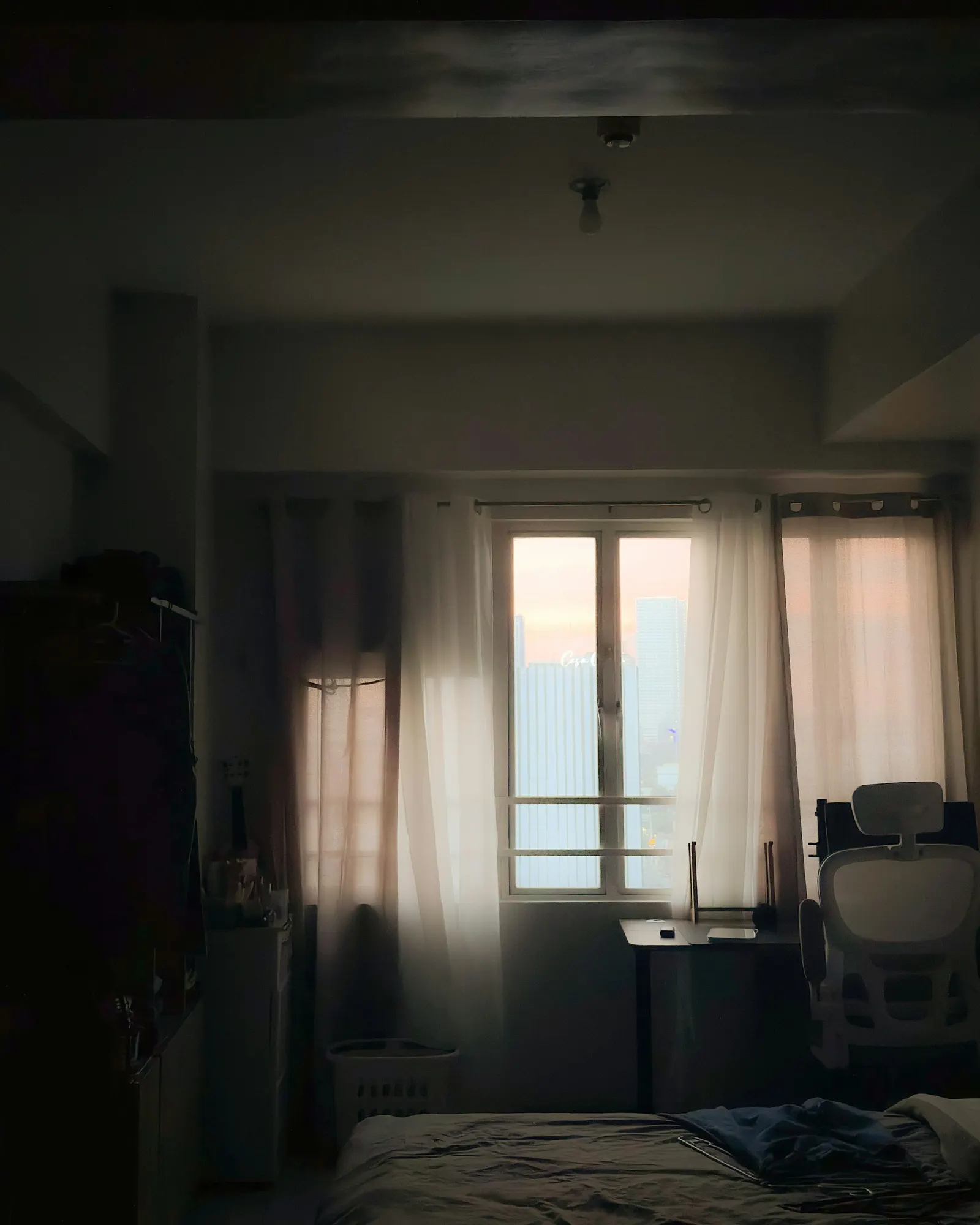
For bedrooms, this is the main reason people ask about lining. Hyderabad gets early sunrises for much of the year, and in many flats the bedroom window faces a lit corridor, a street lamp or the next tower. A cotton lining softens that light but won’t stop it waking you. Blackout lining does, provided the curtain is also hung to close the gaps: mounted on the ceiling or well above the frame, extended past the window on both sides, and stopping just above the floor.
Two smaller points matter too. A blackout lining adds weight, so a thin rod or a cheap track can sag over a wide window; we check the hardware when we add lining. And the coated side should face the window, with the face fabric towards the room, so the bedroom still looks like a curtain and not a sheet of white foam.
Which lining for which room?
- Master bedroom: blackout, sewn-in, with a sheer in front for daytime.
- Kids’ room: blackout, often detachable so it can be washed after the monsoon.
- Living room: cotton or dim-out behind the main curtain, plus a sheer.
- Study or home office: dim-out, to cut screen glare without darkening.
- West-facing rooms: thermal or blackout, whatever the room, to protect fabric and cut heat.
- Rented flats: detachable lining, so it moves with you.
The face fabric matters too. Polyester blends tolerate sun and washing better than pure cotton or silk; our curtain fabric guide goes through the options.
What does the lining look like from outside?
The lining is what the building sees. White or ivory looks uniform across a tower, reflects sunlight, and works with any face fabric. Coloured linings fade fast in direct sun, so we rarely use them. If your gated community has rules about how windows look from outside, a white or ivory lining keeps you within them.
Caring for lined curtains in Hyderabad
- Wash cold and gently. Face fabric and lining can shrink differently; hot washes cause puckering.
- Don’t iron the coated side. Heat and hard creasing crack blackout coatings over time.
- Air dry in shade. Hyderabad’s hard water leaves marks on light linings, so a final rinse in filtered water helps.
- Keep a gap from the glass in the monsoon. Lined curtains pressed against cold, damp glass can mildew.
Our full guide on how to wash and care for curtains covers each fabric type. And if you’re planning every room at once, we make all kinds of curtains in Hyderabad, lined to suit each room.
Choose your lining at home
Linings are hard to judge in a shop. Book a free home visit and we’ll hold cotton, dim-out and blackout samples up to your own windows, in your own light, then measure and quote. We make new lined curtains and add lining to curtains you already have. We work across Hyderabad from 8 AM to 10 PM, all seven days. WhatsApp or call +91 98499 17494.
Frequently asked questions
What is curtain lining and do I need it?
Curtain lining is a separate fabric stitched or hooked behind the main curtain fabric. Most curtains benefit from it. Lining protects the face fabric from direct sun so it fades more slowly, adds weight so the curtain hangs in fuller folds, reduces the light coming through, and gives the window a neat, uniform look from outside. Sheer curtains are the exception, since they are meant to let light through. On sunny Hyderabad windows, an unlined coloured curtain can fade noticeably within a few summers.
What is the difference between dim-out and blackout lining?
Dim-out lining blocks most daylight but still lets a soft glow through, so a room becomes dim rather than dark. Blackout lining blocks almost all light, usually through a coated foam layer with a black core, and is meant for bedrooms, nurseries and media rooms. Dim-out lining is lighter, softer and drapes more like ordinary fabric, which suits living rooms and studies. Blackout lining is stiffer and heavier. Neither will make a room fully dark if light leaks around the curtain edges and top.
What does 3-pass blackout lining mean?
3-pass blackout lining is a lining fabric that has been coated three times with acrylic foam: usually a white layer, then a black layer, then a final white or light layer. The black middle layer blocks light and the outer light layers hide it, so the lining looks white or ivory on both sides. A single pass of coating gives a thermal lining that still lets some light through. Three passes are what turn a coated lining into a true blackout lining.
Does curtain lining help keep a room cool?
Curtain lining does help keep a room cooler, mainly by blocking direct sunlight before it reaches the room and heats surfaces inside. A coated thermal or blackout lining works better than plain cotton because it is denser and reflects more light, especially when the light-coloured side faces the window. Lining cannot match proper glass films or external shading, but on west-facing Hyderabad windows a lined curtain closed during the afternoon makes a clear difference to how hot the room feels by evening.
Is sewn-in or detachable lining better?
Sewn-in lining is better for appearance, because the lining and face fabric move together, the edges are neat and the folds stay even. Detachable lining is better for practicality: it hangs from the same hooks as the curtain, can be washed separately, and can be added to curtains you already own. Detachable lining suits homes where curtains are washed often, or rentals where you may move. Sewn-in lining is our usual choice for new custom curtains in living rooms and master bedrooms.
Can lining be added to existing curtains?
Yes, lining can be added to existing curtains in two ways. A detachable lining can be stitched to match the curtain size and hooked onto the same heading, which needs no change to the curtain itself. Alternatively, a tailor can unpick the side hems and sew a lining in, which looks neater but costs more labour and works best when the curtain fabric is still in good condition. Check that the heading and rod can take the extra weight, especially with coated blackout lining.
What is interlining in curtains?
Interlining is a soft, thick layer, a bit like thin flannel or felt, sewn between the face fabric and the lining. It gives curtains a fuller, padded look, adds insulation and softens sound slightly. Interlining is common in cold climates and formal rooms with heavy fabrics. In Hyderabad it is rarely needed: it makes curtains heavy, takes longer to dry, usually means dry cleaning, and holds moisture during the monsoon. We suggest it only for specific rooms, such as a formal living room with velvet.
What colour should curtain lining be?
Curtain lining is usually white, ivory or a light neutral, because the lining side faces the window and is what neighbours and the street see. A light lining reflects more sunlight, which helps with heat, and gives the building a uniform look from outside. Coloured or patterned linings are possible for a decorative effect, but they fade quickly in direct sun. If your apartment association has rules about how windows look from outside, a white or ivory lining keeps you within them.
How do you wash lined curtains?
Lined curtains need gentle care because the face fabric and the lining can shrink at different rates. Detachable linings should be removed and washed separately. Sewn-in linings are best dry cleaned or washed cold on a delicate cycle, depending on the fabric label. Coated blackout linings should not be wrung, tumble dried or ironed on the coated side, as heat and creasing can crack the coating. Air dry them flat or hanging in shade, which also avoids the hard-water marks common in Hyderabad.