Most curtain damage we see in Hyderabad homes isn’t from sun or age. It’s from one bad wash: a lined curtain that shrank unevenly, a blackout coating that cracked in hot water, a sheer that came out of the dryer two inches shorter. When we stitch curtains in Hyderabad, we tell every customer how to clean them, because the right method depends on the fabric and the lining, not on what the rest of the laundry gets.
This guide covers how to wash each type, how to take curtains down and put them back, and how to deal with the dust, monsoon mildew and hard water this city throws at them. Washing is one part of owning curtains well; our curtains buying guide for Hyderabad homes covers the choices that come before it.
How do I know if my curtains are washable?
Start with the care label, usually sewn into a side seam or the bottom hem of the lining. The symbols follow an international code, ISO 3758, which tells you the harshest treatment the fabric can take without permanent damage: a tub for washing (with a temperature or a hand), a triangle for bleach, a square for drying, an iron, and a circle for professional cleaning. A tub with a cross through it means don’t wash at home.
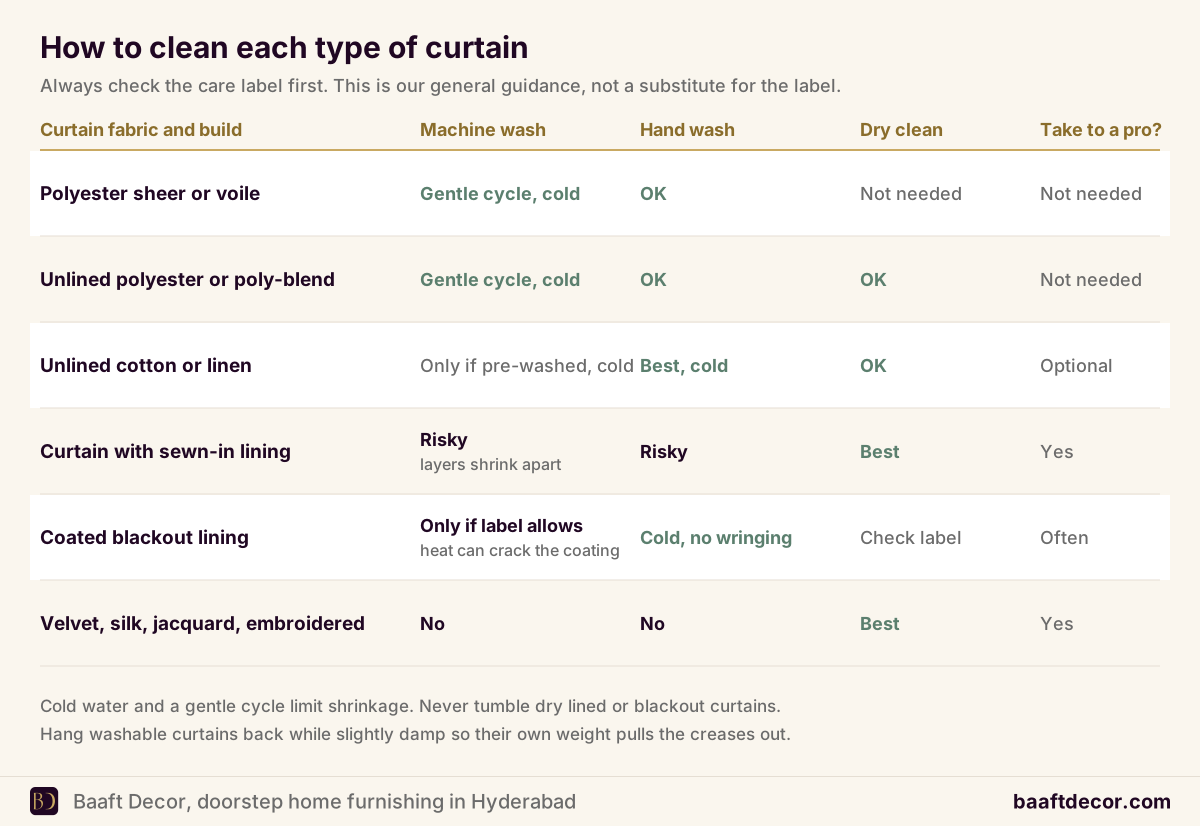
Custom-stitched curtains often have no label at all. In that case, go by what the curtain is made of and how it’s built:
- Sheers and voiles (almost always polyester): washable at home.
- Unlined polyester or poly-blend: washable at home.
- Unlined cotton or linen: washable, but cold water only, and expect some shrinkage on the first wash unless the fabric was pre-shrunk.
- Anything with a sewn-in lining: dry clean. The face fabric and the lining shrink at different rates, and the curtain puckers.
- Coated blackout backing: only if the supplier says it’s washable, and never hot.
- Velvet, silk, faux silk with heavy sheen, jacquard, embroidered or sequinned: dry clean.
Not sure what your fabric is? Our curtain fabric guide explains how to tell polyester from cotton and linen-look weaves.
Got curtains that are already past saving with a wash, or want a new set made in a fabric that’s easy to care for? We visit with samples, free across Hyderabad. WhatsApp +91 98499 17494.
Machine wash vs hand wash vs dry clean
| Method | Suits | How | Main risk |
|---|---|---|---|
| Machine wash | Sheers, unlined polyester, poly-blends | Cold water, gentle cycle, mild liquid detergent, low spin, one or two panels per load | Creasing, snagging on the drum, over-spinning |
| Hand wash | Unlined cotton and linen, delicate sheers, small panels | Soak in cold water with mild detergent, swish, don’t wring, rinse twice | Stretching if lifted while heavy and soaked |
| Dry clean | Lined curtains, velvet, silk, jacquard, embroidered, many blackout | Professional cleaner; tell them about any lining or coating | Cost and handling; some coatings dislike solvents |
A few habits make machine washing far safer. Use a front-loader if you have one, since top-loaders with a central agitator twist long panels. Don’t stuff the drum; a 7 ft panel of sheer needs room to move. Wash light and dark curtains separately, especially on the first wash. And skip fabric softener on sheers, which can leave a film that attracts dust.
Before you wash: take down hooks, rings and weights
Every bit of metal or plastic must come off first. Hooks snag fabric and can rust in the wash; rings and eyelets can dent a drum.
- Pleated curtains on hooks: count the hooks on each panel and note the spacing before removing them, or take a phone photo of the heading. Hook tape can go in the wash.
- Eyelet curtains: the metal eyelets stay in the fabric. Wash on a very gentle cycle or by hand, and turn the curtain inside out so the eyelets don’t knock the drum.
- Curtain weights: many lined and sheer curtains have small lead or chain weights in the bottom corners or along the hem. Unpick or slide them out if they are loose; if they are sewn in, hand wash or dry clean instead.
- Ripple fold curtains: unclip the snap tape from each carrier along the track. Pull the curtain gently off; don’t drag it.
- Motorised curtains: switch the motor off at the remote or app, and at the switch if it is hard-wired, before touching the curtain. Never get the motor or track wet. Our motorised curtains guide explains the track parts if you are unsure what to unclip.
While the curtain is down, check the track or rod. Sagging brackets, stiff gliders and missing end stops are easier to fix with the curtain off.
How to stop curtains shrinking
Shrinkage comes from heat and from natural fibres relaxing on their first wash. To limit it:
- Wash cold, always. Warm water is the most common cause of shrinkage we see.
- Never tumble dry curtains. Hang them in shade or indirect light; strong Hyderabad sun fades colour fast, even through a short drying session.
- Rehang while slightly damp. The weight of the fabric pulls it back to length and pulls out creases.
If your curtains have already shrunk, they can usually be saved. A tailor can often let down a deep hem, or add a contrast band at the bottom. We take on this kind of curtain repair and re-hemming, along with adding lining and re-stitching headings.
Ironing and steaming curtains
A handheld garment steamer is the best tool for curtains. Hang the curtain back up first, then steam from top to bottom, keeping the nozzle a few centimetres from the fabric. It takes out creases without flattening pleats, and you don’t have to wrestle a 9 ft panel onto an ironing board.
If you iron:
- Use the setting on the care label; polyester and sheers need a low setting.
- Iron the reverse side, with a cotton cloth between the iron and the fabric.
- Never iron coated blackout lining. Heat can melt or crack the coating.
- Don’t press pinch pleats or ripple folds flat; steam them instead.
Dust from construction and traffic
New gated communities in Kokapet, Tellapur or the Financial District stay dusty for months while neighbouring towers go up, and homes on main roads in older parts of the city get traffic grime. Fine dust works into the weave, dulls colour and, over time, wears the fibres.
The fix is regular dusting, not frequent washing. Every two to four weeks, vacuum curtains on low suction with the upholstery brush, working top to bottom, and do the inside of pleats and the top of the track. Shake sheers out on the balcony when you can. During heavy construction nearby, keep windows closed on windy afternoons and wash sheers more often. Velvet and heavy textured fabrics hold the most dust, so they need the brush most.
Monsoon mildew and damp
From June to September the air in Hyderabad stays humid for weeks. Lined curtains pressed against cold glass, or hanging near a damp wall, are where mildew starts: small grey or black spots, usually low down and on the lining side.
The US Environmental Protection Agency recommends keeping indoor humidity below 60 percent to prevent mould growth. You don’t need a meter to act on that:
- Leave a gap of a few centimetres between curtain and glass, especially on AC rooms where windows sweat.
- Open curtains and windows on dry, sunny monsoon days to air the fabric.
- Never put curtains back up while they are still wet in the monsoon; dry them fully first.
- If spots appear, take the curtain down, brush off loose mildew outdoors, then wash or dry clean as the label allows.
Mildew in the lining is a sign the lining may need replacing, not just cleaning. Our curtain lining guide covers lining types, and the monsoon home care guide covers sofas, carpets and wood in the same season.
Hard water marks
Many Hyderabad homes use borewell or tanker water, which is often hard. The US Geological Survey notes that hard water needs more soap or detergent to clean laundry and can shorten the life of fabrics. On curtains, that shows up as white sheers turning grey, a stiff feel and faint white marks where detergent residue dried.
Use a liquid detergent rather than powder, add an extra rinse, and don’t overload the machine. If you have a softener, use softened water for curtains. A greyed sheer can sometimes be brightened with an oxygen-based whitener if the label allows bleaching, but test a hidden corner first.
How often should you wash curtains?
| Curtain | Dust or vacuum | Full wash or dry clean |
|---|---|---|
| Sheers near open windows | Every 2 to 4 weeks | Every 2 to 3 months |
| Living room main curtains | Every 2 to 4 weeks | Once or twice a year |
| Bedroom blackout curtains | Monthly | Once a year, as the label allows |
| Kitchen-facing curtains | Every 2 weeks | Every few months (oil and smoke) |
| Homes next to construction | Weekly during heavy work | After the work ends |
Over-washing is its own problem. Each wash loosens fibres and fades colour, so dusting regularly and washing less is the better routine.
Putting curtains back up
Rehang curtains slightly damp and the folds settle as they dry. Put hooks back at the spacing you noted, starting from the leading edge. For ripple fold, clip the tape into each carrier in order, then run the curtain open and closed a few times so the waves settle evenly. For motorised tracks, run a full open and close cycle and check the motor stops at the right points; if the limits have shifted, the motor may need its end points set again.
If the curtains are too heavy to handle on a ladder, or the track needs fixing while they’re down, that’s a job we take on too: curtain installation and refitting, including putting back ready-made or customer-owned curtains.
Need help with your curtains?
Curtains shrunk, lining spotted with mildew, or ready for a new set in a fabric that copes better with washing? Book a free home visit and we’ll check the fabric and lining, suggest what can be saved, and quote for repair or replacement. We work across Hyderabad from 8 AM to 10 PM, all seven days. WhatsApp or call +91 98499 17494.
Frequently asked questions
Can I wash curtains in a washing machine?
You can wash most unlined polyester curtains and sheers in a washing machine, as long as the care label allows it. Remove all hooks, rings and weights, wash one or two panels at a time on a cold, gentle or delicate cycle with a mild liquid detergent, and use a low spin. A front-loading machine is gentler than a top-loader with a central agitator. Curtains with a sewn-in lining, coated blackout backing, velvet, silk or heavy embroidery are better dry cleaned, because machine washing can shrink layers unevenly or crack the coating.
How often should curtains be washed?
Most curtains need a full wash or dry clean about once or twice a year, with light vacuuming every two to four weeks in between. Sheers near open windows get dirty faster and often need washing every two to three months. In Hyderabad, homes near construction sites or busy roads collect dust quickly, so vacuum more often there. Kitchen-facing curtains pick up oil and may need cleaning every few months. Washing too often shortens curtain life, so regular dusting is the better habit.
Why did my curtains shrink after washing?
Curtains shrink after washing mainly because of hot water, hot drying or a natural fibre that was never pre-shrunk. Cotton and linen can shrink noticeably on the first wash, and a lined curtain can pucker because the face fabric and lining shrink by different amounts. To avoid it, wash in cold water, skip the tumble dryer and rehang the curtain slightly damp so its weight pulls it straight. If a curtain has already shrunk, a tailor can often let down the hem or add a fabric band at the bottom.
Should blackout curtains be machine washed?
Blackout curtains should only be machine washed if the care label clearly allows it. Many blackout curtains have a coated backing that can crack, peel or develop pinholes when washed in hot water, wrung hard or tumble dried. If washing is allowed, use cold water, a gentle cycle, a mild detergent and no spin or a very low spin, then hang to dry. Never iron the coated side. Triple-weave blackout fabrics without a coating are usually more tolerant of washing than coated ones.
How do I remove creases from curtains after washing?
The easiest way to remove creases from curtains is to rehang them while still slightly damp, so their own weight pulls most creases out as they dry. For stubborn creases, use a handheld garment steamer on the hanging curtain, working top to bottom. If you iron, use the setting on the care label, iron on the reverse side, and put a cotton cloth between iron and fabric for polyester or sheers. Never iron coated blackout lining, and avoid pressing pleats flat.
How do I get rid of mildew spots on curtains in the monsoon?
Mildew spots on curtains usually appear when damp fabric stays pressed against cold glass or a damp wall during the humid monsoon months. Take the curtain down, brush off loose mildew outdoors, then wash it according to its care label and dry it fully in shade or indirect sun. Light stains on white polyester may lift with an oxygen-based bleach if the label permits. To prevent mildew, keep a small gap between curtain and glass, open windows on dry days and reduce indoor humidity.
Can hard water damage curtains?
Hard water can make curtains look dull, stiff and greyish over time, because the dissolved calcium and magnesium react with detergent and leave residue in the fabric. It also means you need more detergent to get curtains clean. In Hyderabad, where many homes rely on borewell or tanker water, use a liquid detergent, add a little extra rinse, and avoid overloading the machine. If your home has a water softener, use softened water for curtains, especially white sheers.
How do I wash ripple fold or motorised curtains?
To wash ripple fold or motorised curtains, first switch off the motor, then unclip the curtain from each carrier or glider along the track rather than pulling it off. Note which end is the leading edge so it goes back the same way. Most ripple fold curtains use snap tape that can stay on the curtain for washing if the label allows. Never wash or wet the motor or track. If the curtain is large or lined, dry cleaning is safer, and a technician can refit it if the motor needs recalibrating.