- 3-pass coated, lined and woven blackout options explained side by side
- Ceiling tracks, overlaps and side returns that stop edge light leaks
- Any decorative fabric can be made blackout with a sewn or detachable lining
- Light-backed linings that help keep west-facing rooms cooler
- Cordless, child-safe setups for nurseries
A blackout curtain that leaves a bright line of light at the top and a glowing strip down the middle hasn’t done its job, however good the fabric is. In most bedrooms with this problem, the fabric isn’t at fault; the fitting is. Our custom curtains service in Hyderabad treats blackout as a fabric choice and a fitting job, so the room is properly dark at 2 in the afternoon. Where blackout fits among sheers, linings, headings and hardware is covered in our complete curtains buying guide.
Blackout, room-darkening and dim-out: what’s the difference?
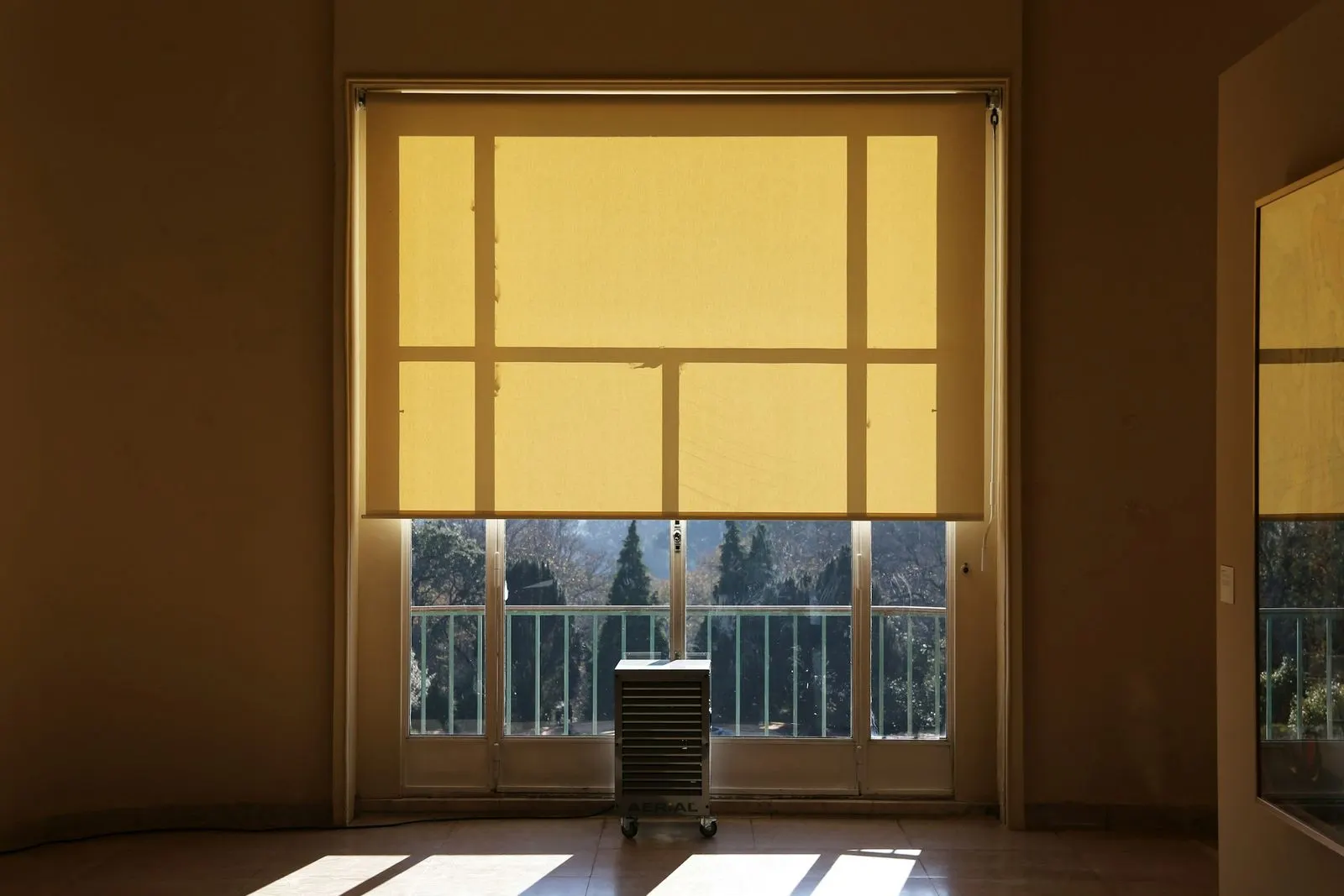
Blackout blocks close to all light through the fabric. Room-darkening (often called dim-out) cuts light heavily but lets some glow through in strong sun. Both are sold as “blackout drapes” in shops, which is why people end up disappointed (shops use “drapes” loosely too; our drapes vs curtains guide sorts out the terms). How the fabric is made decides which one you’re getting.
| Construction | How it blocks light | Darkness | Drape and feel | Washing | Best for |
|---|---|---|---|---|---|
| 3-pass coated | Three foam coats on the back: white, black, white | Close to total | Firmer, structured folds | Gentle cold wash, no wringing | Bedrooms, nurseries, day sleepers |
| Lined blackout | Any fabric plus a separate blackout lining, sewn or detachable | Close to total | Drapes like the face fabric, fuller | Dry clean, or wash the detachable lining separately | Living rooms, master bedrooms, theatres |
| Triple-weave | Black yarn woven into the middle layer | High, pinholes in direct sun | Soft, like normal fabric | Usually machine washable | Rooms that need dimming, not total dark |
| Dim-out / thermal | Dense weave or light coating | Partial | Normal | Easy | Living rooms, study rooms |
Our guide to blackout, sheer and dim-out curtains explains each fabric type with photos.
Why blackout curtains still leak light, and how we stop it
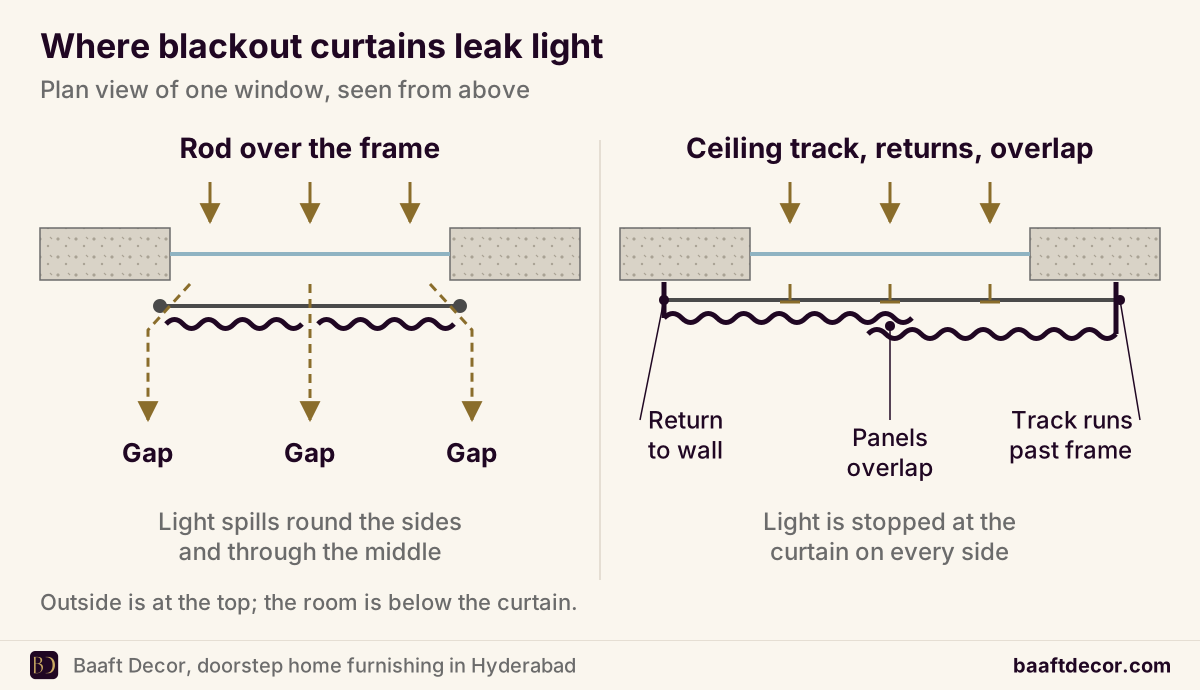
Light gets in at four places. Fix all four and the room goes dark.
- Over the top. A rod mounted above the window frame leaves a gap between curtain and wall. We use a ceiling-mounted track, or a track inside a pelmet or false-ceiling pocket, so the curtain hangs from the ceiling line.
- Down the sides. We extend the track well past the window frame on each side and turn the end of the curtain back to the wall (a “return”), so light can’t spill round the edge.
- Through the middle. Two panels that just meet will always gap. Overlap arms on the track make the panels cross by several inches.
- Under the bottom. Curtains stop at the floor, not at the sill.
Heading matters too. Eyelet curtains look clean but let light through the gaps at the top between the rings. Pinch pleat and ripplefold headings sit close to the track and leak far less.
Which blackout setup suits which room?
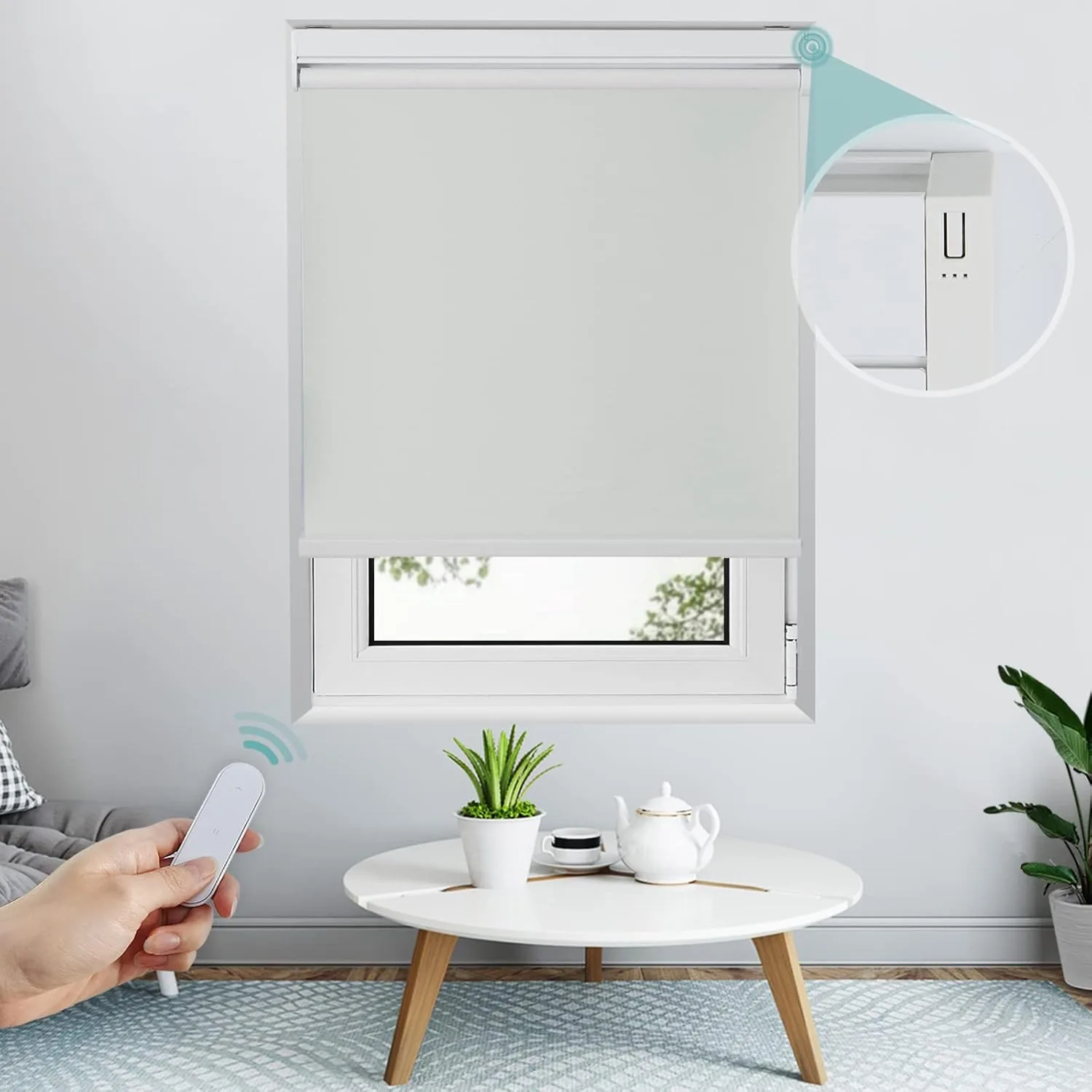
Night-shift workers. Plenty of people around Gachibowli, HITEC City and Madhapur work US or UK hours and sleep through the brightest part of the day. Here we go all in: lined or 3-pass curtains on a ceiling track, full returns and overlap, plus a blackout roller blind inside the window recess to catch the last edge light. A motorized curtain track on a schedule can close everything before you get home.
Nurseries. 3-pass or lined blackout for day naps, with no looped cords anywhere a child can reach. Tracks drawn by hand or wand, or motorised, avoid cords entirely.
Home theatres. Lined blackout in a dark face fabric, so the curtain doesn’t reflect light from the screen. Heavier lined curtains also soften echo a little.
West-facing bedrooms. A light-coloured coated back reflects part of the afternoon sun back through the glass. Close the curtains before the sun hits the window, not once the room is already hot. Our guide to keeping your home cool in Hyderabad’s summer has more on this.
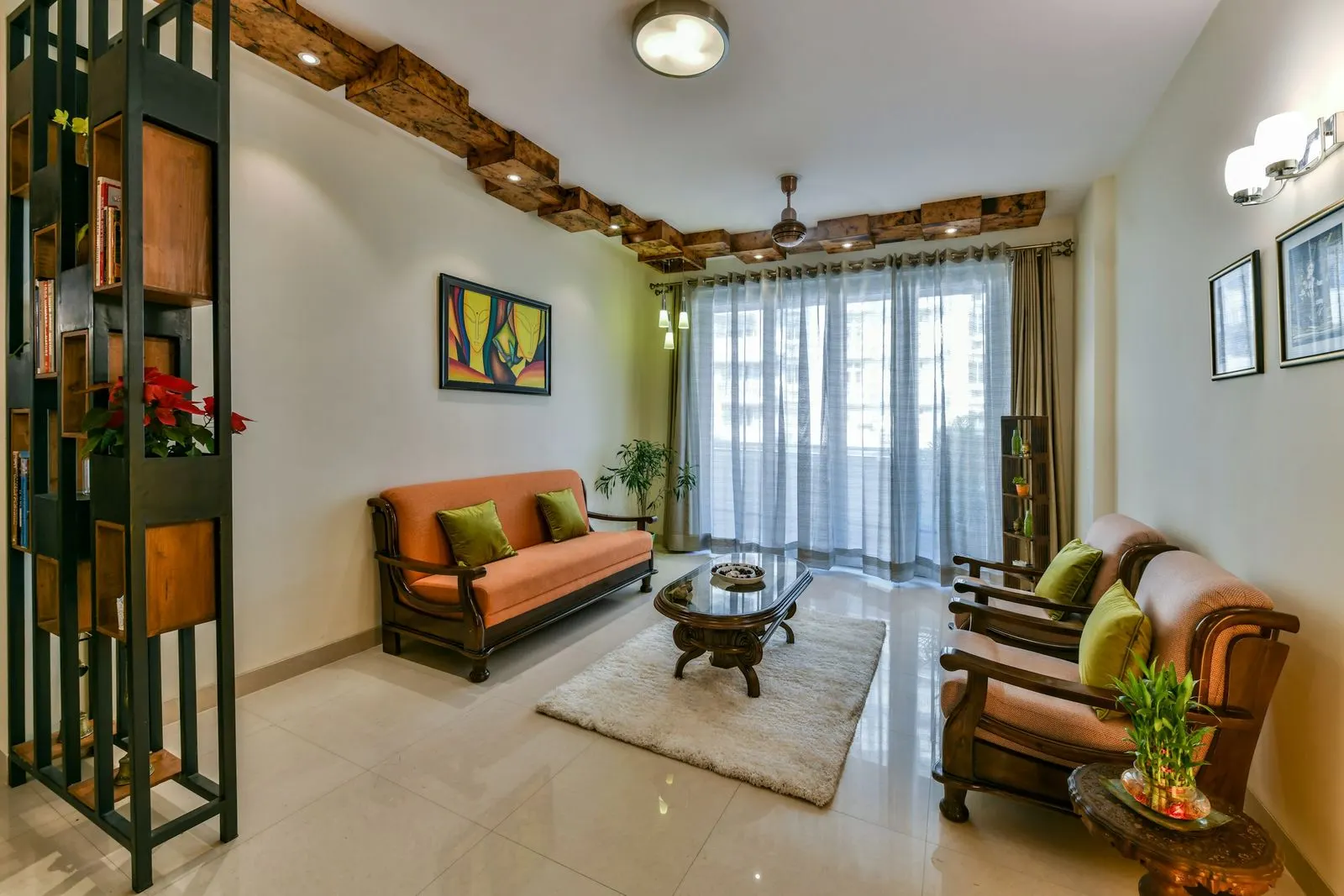
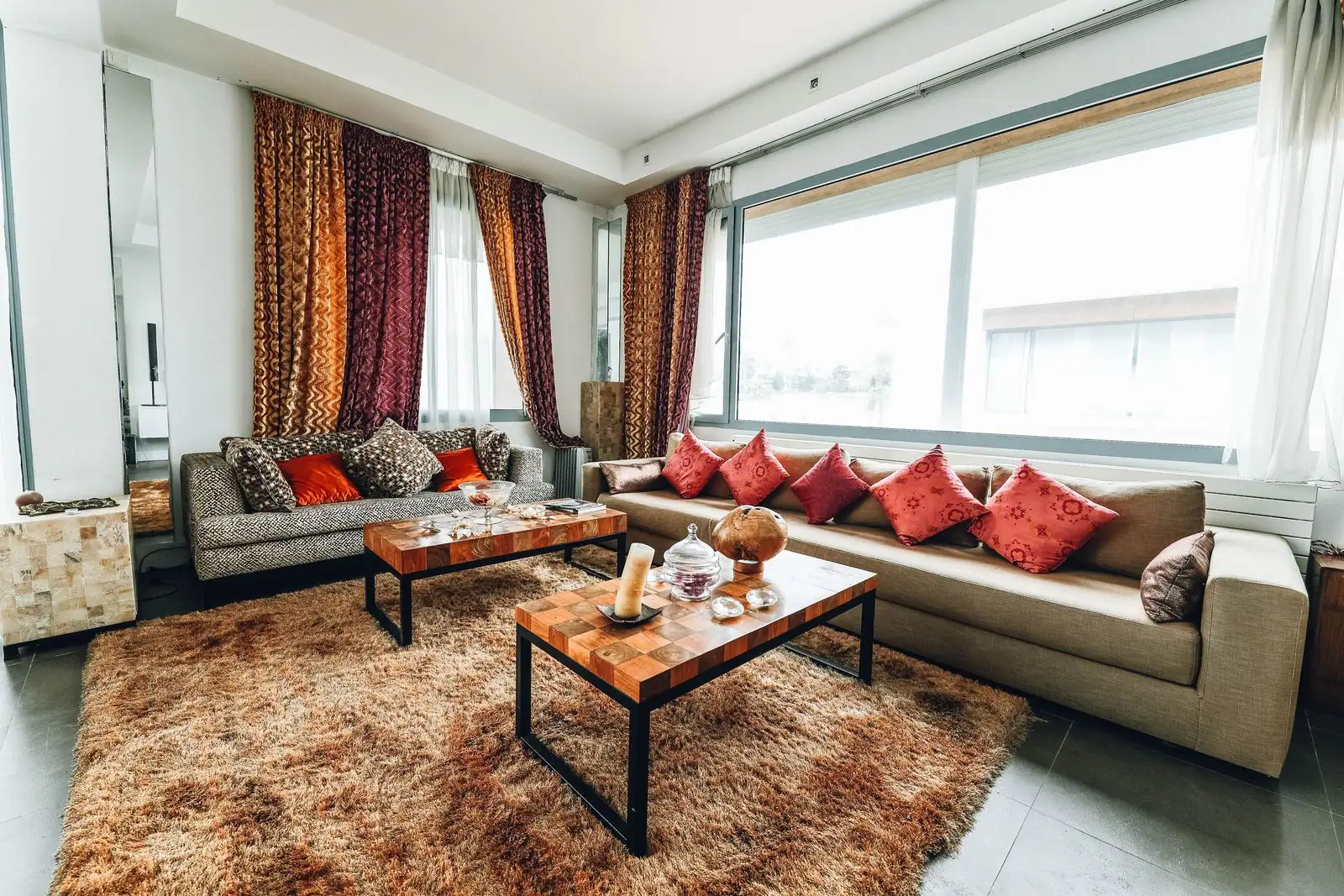
Living rooms. Lined blackout on a double track with a sheer in front: the sheer for daytime privacy, the blackout for afternoon heat and evening films.
Do blackout curtains reduce heat?
Yes, noticeably on sun-facing glass, though less than shading outside the glass would. The US Department of Energy’s Building America Solution Center explains why: indoor attachments don’t block direct sunlight until it has already passed through the window. A light-coloured coated or lined back still reflects part of it back out, and the thick layer slows heat moving through the window. They won’t replace an AC in May, but a west-facing bedroom with closed blackout curtains through the afternoon stays cooler and the AC works less hard in the evening.
How long does it take?
The home visit and measurement take under an hour per room. Stitching usually takes about a week to ten days, and installation two to three hours for a typical bedroom.
What decides the cost of blackout curtains?
- Construction: 3-pass coated, lined or triple-weave
- Face fabric, if lined
- Window size, and whether the curtains run floor to ceiling
- Fullness (how many times the window width the fabric is gathered)
- Heading style and track: ceiling track, double track or motorised
You get a fixed, itemised quote after the free home visit.
Caring for blackout curtains
Vacuum with a brush attachment every few weeks; fine dust settles fast in Hyderabad, especially near construction. Coated 3-pass curtains go on a gentle cold cycle or get hand washed (follow the label), without wringing, and never in a dryer or under an iron on the coated side. Sewn-in lined curtains should be dry cleaned. Detachable linings can be washed separately.
Blackout curtains across Hyderabad
We measure and fit across the city, including Kondapur and Manikonda.
Book a free home visit or WhatsApp +91 98499 17494 with your window sizes. We’ll bring blackout samples, hold them up to your own window, and plan a fit that leaves no light gaps.
How it works
- Free home visit with samples We bring blackout fabric and lining samples and hold them up to your window in daylight so you can see how much light each one stops.
- Measure for zero gaps We measure ceiling height, window width, wall space on each side, and clearance from ACs and wardrobes, then plan the track to extend past the frame.
- Choose construction and heading You choose 3-pass, lined or woven blackout, and a heading (pinch pleat or ripplefold) that sits close to the track and doesn't leak light at the top.
- Stitching Curtains are stitched to full floor length with enough fullness to overlap at the centre. This usually takes about a week to ten days.
- Installation and dressing We fit the track, hang the curtains, set the returns and overlap, and train the pleats so the curtains fall in neat, even folds.
Frequently asked questions
What are blackout curtains?
Blackout curtains are curtains made with a fabric or lining that stops almost all daylight from passing through. The light-blocking comes either from a foam coating on the back of the fabric (called 3-pass or 2-pass), a separate blackout lining sewn or hung behind a decorative fabric, or a dense triple-weave with a black yarn core. They are used in bedrooms, nurseries, home theatres and by people who sleep during the day, and also help reduce heat from sunny windows.
Do blackout curtains block 100% of light?
Good blackout fabric itself can block close to all light, but a blackout curtain only darkens the room completely if it's fitted to stop light around the edges. Most leaks come from the top of a rod, the gaps at the sides of the window, the centre where two panels meet, and the bottom. A ceiling-mounted track, side returns to the wall, overlapping panels at the centre and full floor length together give a room that is properly dark at noon.
What is the difference between 3-pass blackout and lined blackout curtains?
A 3-pass blackout curtain is a single fabric with three layers of foam coating on its back (white, black, white), so the fabric itself blocks the light. A lined blackout curtain uses any decorative fabric you like, with a separate blackout lining sewn behind it or hung on the same hooks. 3-pass is lighter and costs less, but the choice of colours and textures is limited. Lined curtains drape better, look richer and let you pick any fabric.
Do blackout curtains reduce heat in Hyderabad summers?
Blackout curtains do reduce heat entering a room, especially on west-facing windows in Hyderabad, where afternoon sun hits the glass directly. A light-coloured coated or lined back reflects part of the sunlight back out through the glass before it warms the room, and the thick layer slows heat transfer. Close them before the sun reaches the window, not after the room has heated up. They work best combined with a ceiling track and floor-length panels that leave no gaps.
Can I add blackout lining to my existing curtains?
Yes. Existing curtains can usually be made blackout by adding a lining. A sewn-in lining is stitched to the back of each panel and gives the neatest finish. A detachable lining hangs from the same hooks or a separate track behind the curtain, so it can be washed separately and removed in winter. The curtain heading and track need to suit the extra weight. We check your current curtains on the home visit and tell you which method fits.
Which blackout curtains are best for night-shift workers?
For night-shift workers who sleep during the day, the best setup is lined or 3-pass blackout curtains on a ceiling-mounted track, extended well past the window on both sides, with panels that overlap at the centre and touch the floor. Adding a blackout roller blind inside the window recess, behind the curtains, blocks the last edge light. A motorised track on a schedule can close everything automatically before you get home from a night shift.
Are blackout curtains safe for a baby's nursery?
Blackout curtains are safe for a nursery when there are no loose or looped cords within a child's reach. Curtains on a track that you draw by hand or with a wand, or a motorised track, avoid cords entirely. If you add a blackout blind, choose a cordless or motorised one, or fix the cord tensioner firmly to the wall. Keep tie-backs above a child's reach and position the cot away from the window. We plan child-safe operation at measurement.
Are triple-weave curtains real blackout curtains?
Triple-weave curtains block most light by weaving a black yarn layer into the middle of the fabric, and they are often sold as blackout curtains. In practice they behave more like heavy room-darkening curtains: in strong direct sun, tiny pinholes of light can show through the weave. They drape softly, wash easily and suit living rooms and bedrooms where dimming is enough. For nurseries, home theatres and day sleepers, coated 3-pass fabric or a dedicated blackout lining is more reliable.
How do I wash blackout curtains?
Wash coated 3-pass blackout curtains on a gentle, cold machine cycle or by hand, without wringing, and hang them to dry in the shade; don't tumble dry or iron the coated side, because heat and twisting crack the coating. Lined curtains with a sewn-in lining are best dry cleaned, since the face fabric and lining can shrink differently. Detachable linings can be washed separately from the curtain. Between washes, vacuum with a brush attachment to remove Hyderabad's fine dust.