Fabric is what you touch, what you see from the sofa and what the afternoon sun works on, year after year. When we design custom curtains in Hyderabad, we bring a bag of fabric samples to every home visit, and the same question comes up at nearly every window: which one will actually last here?
This guide answers it fabric by fabric, with the trade details shops rarely explain: GSM, weave, lightfastness and what our sun, dust and monsoon do to each fibre. Fabric is one chapter in our curtains buying guide for Hyderabad homes, which covers light control, headings, measuring and cost.
Which fabric is best for curtains? The short answer
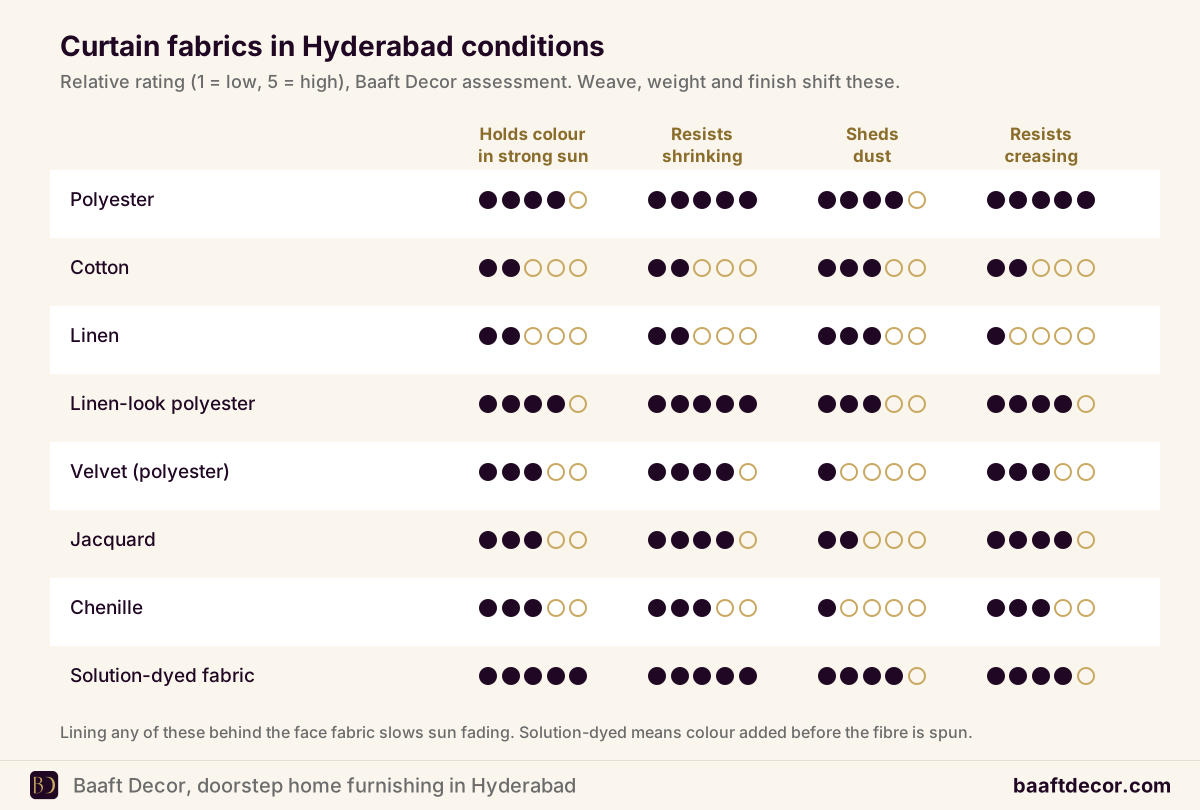
For most rooms in a Hyderabad home, a good polyester or polyester blend, often in a linen-look weave, is the best curtain fabric. It holds colour on sunny windows, barely shrinks, resists creasing and washes easily. Natural fabrics look lovely but need lining and gentler light.
| Fabric | Look and feel | Sun fading | Shrinkage | Dust | Best for |
|---|---|---|---|---|---|
| Polyester | Smooth, crisp, wide range | Low | Very low | Sheds easily | Any room, sunny windows |
| Cotton | Soft, matte, breathable | High unless lined | Can shrink | Moderate | Bedrooms, gentle light |
| Linen | Slubbed, relaxed, creases | High | Can shrink | Moderate | Lined, north or east windows |
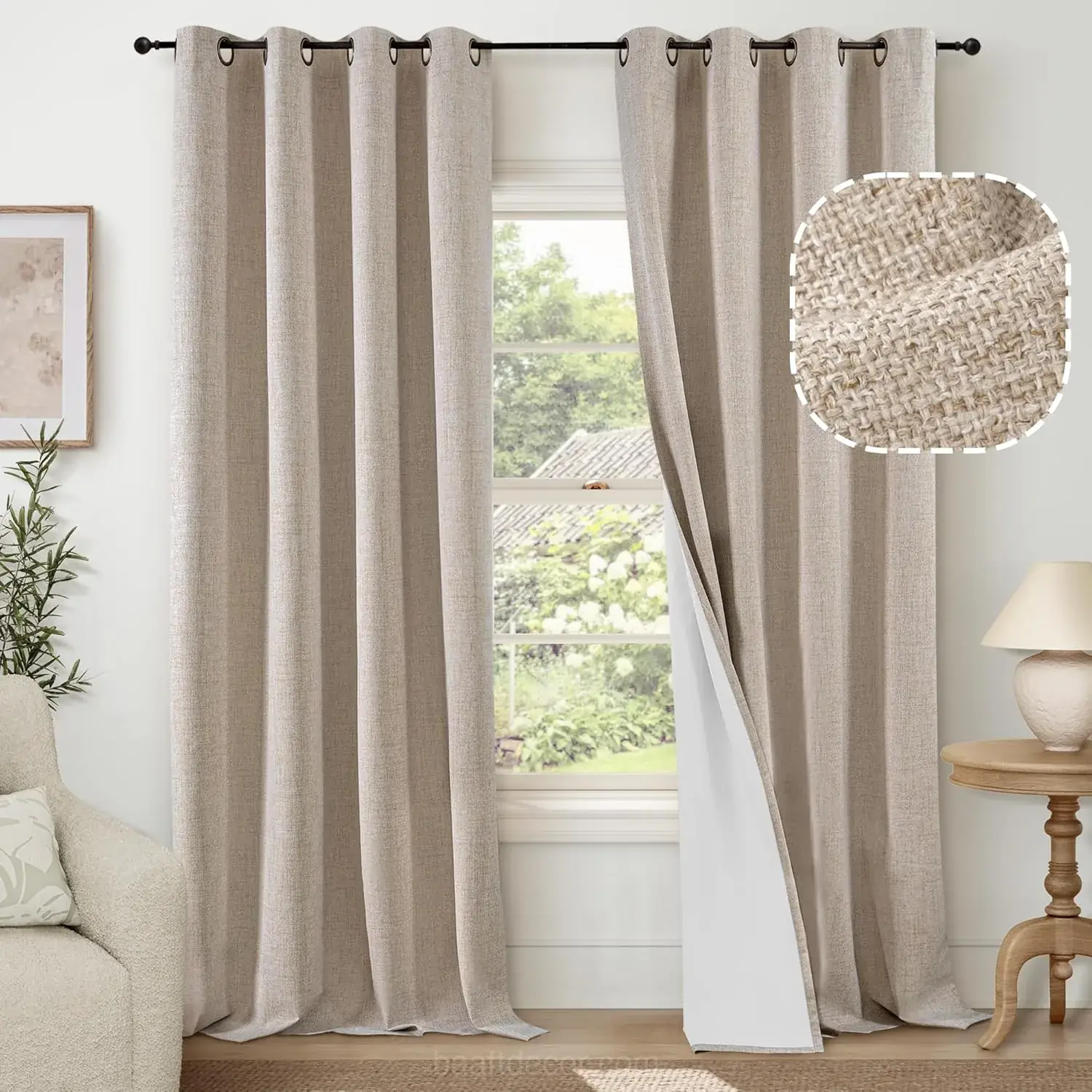
| Linen-look polyester | Textured, natural look | Low | Very low | Moderate | New apartments, living rooms |
| Velvet | Deep pile, heavy, rich | Moderate | Low (polyester) | Holds dust | Formal living, media rooms |
| Jacquard | Woven pattern, raised texture | Moderate | Low | Holds some dust | Traditional living, pooja rooms |
| Chenille | Soft, tufted, heavy | Moderate | Moderate | Holds dust | Bedrooms, cosy rooms |
| Solution-dyed | Varies | Very low | Low | Sheds easily | West-facing windows, balconies |
Want to feel these fabrics against your own walls? We bring samples to your home, free across Hyderabad. WhatsApp +91 98499 17494.
Curtain fabric types, one by one
Polyester
Polyester is a synthetic fibre that takes dye well, holds colour in sunlight better than most natural fibres, and stays dimensionally stable when washed. Good polyester curtain fabric no longer looks shiny or cheap; the better qualities are matte, soft and heavy enough to drape. It’s our usual starting point for west-facing living rooms.
Cotton
Cotton is soft, breathable and matte, and many people simply like how it feels. On sunny windows, though, unlined cotton fades, and it can shrink on its first wash. If you choose cotton, ask whether it’s pre-shrunk, have it lined, and keep it for rooms with morning or north light.
Linen and linen-look
Real linen has a beautiful slubbed texture and a relaxed, crumpled look, but it creases, can shrink and weakens in strong sun over time. Linen-look polyester and poly-linen blends copy the texture using slubbed yarns while staying stable in the wash. This is the fabric most new apartments in Hyderabad end up choosing for the living room.
Velvet
Velvet has a short, dense pile that drapes heavily and looks rich in lamplight. It blocks a fair amount of light and softens sound, which suits media rooms. Polyester velvet holds colour better than cotton velvet. The catch is dust: the pile traps it, so plan for regular brushing, and fit a sturdy track because velvet is heavy.
Jacquard
Jacquard fabric has its pattern woven in, not printed on, so the design has texture and survives longer. Damask and brocade are jacquard weaves. They’re common in traditional living rooms and pooja room curtains. Heavier jacquards need lining and a strong rod.
Chenille
Chenille is woven from a fuzzy, tufted yarn that gives a soft, cosy hand. It’s heavy and warm-looking, good for bedrooms, but like velvet it holds dust and can snag on rings or pets’ claws.
Blends
Poly-cotton and poly-linen blends try to give natural texture with synthetic stability, and they usually do. Viscose (rayon) blends drape beautifully and take rich colour, but viscose is weaker when wet and can shrink, so these often need dry cleaning.
Sun-fast and solution-dyed fabrics
“Sun-fast” is a marketing term for fabrics treated or made to resist fading. Solution-dyed fabrics are the strongest version: the colour pigment is added to the fibre material before it is spun, so colour runs right through each fibre instead of sitting on the surface. They’re used widely for outdoor and balcony fabrics and are the safest choice for hard west sun.
Ask for a number, not a promise. Lightfastness is commonly tested under ISO 105-B02, which exposes fabric to a xenon arc lamp simulating daylight and grades colour change against blue wool references on a 1 to 8 scale. Higher is better.
GSM and weave: reading a fabric label
GSM (grams per square metre) is fabric weight. Typical ranges, which vary with weave:
- Sheers and voiles: often under about 100 GSM
- Most regular curtain fabrics: roughly 150 to 300 GSM
- Velvet, chenille, heavy jacquard and blackout fabrics: often above 300 GSM
Heavier isn’t automatically better. A 250 GSM fabric with a tight weave can outlast a loose 350 GSM one. Weave matters as much:
- Plain weave: simple over-under, crisp and stable (most voiles, many cottons).
- Twill: diagonal lines, drapes softly, hides dirt.
- Satin or sateen: smooth with a sheen, catches the eye and shows creases.
- Dobby: small woven geometric texture.
- Jacquard: large woven patterns.
Three quick tests we do with customers: hold the fabric up to the window (light through it shows how dense it really is), scrunch it in your fist for ten seconds (creases that stay will stay on your window too), and rub the face with a dry thumb (fibres pilling now will pill on the track).
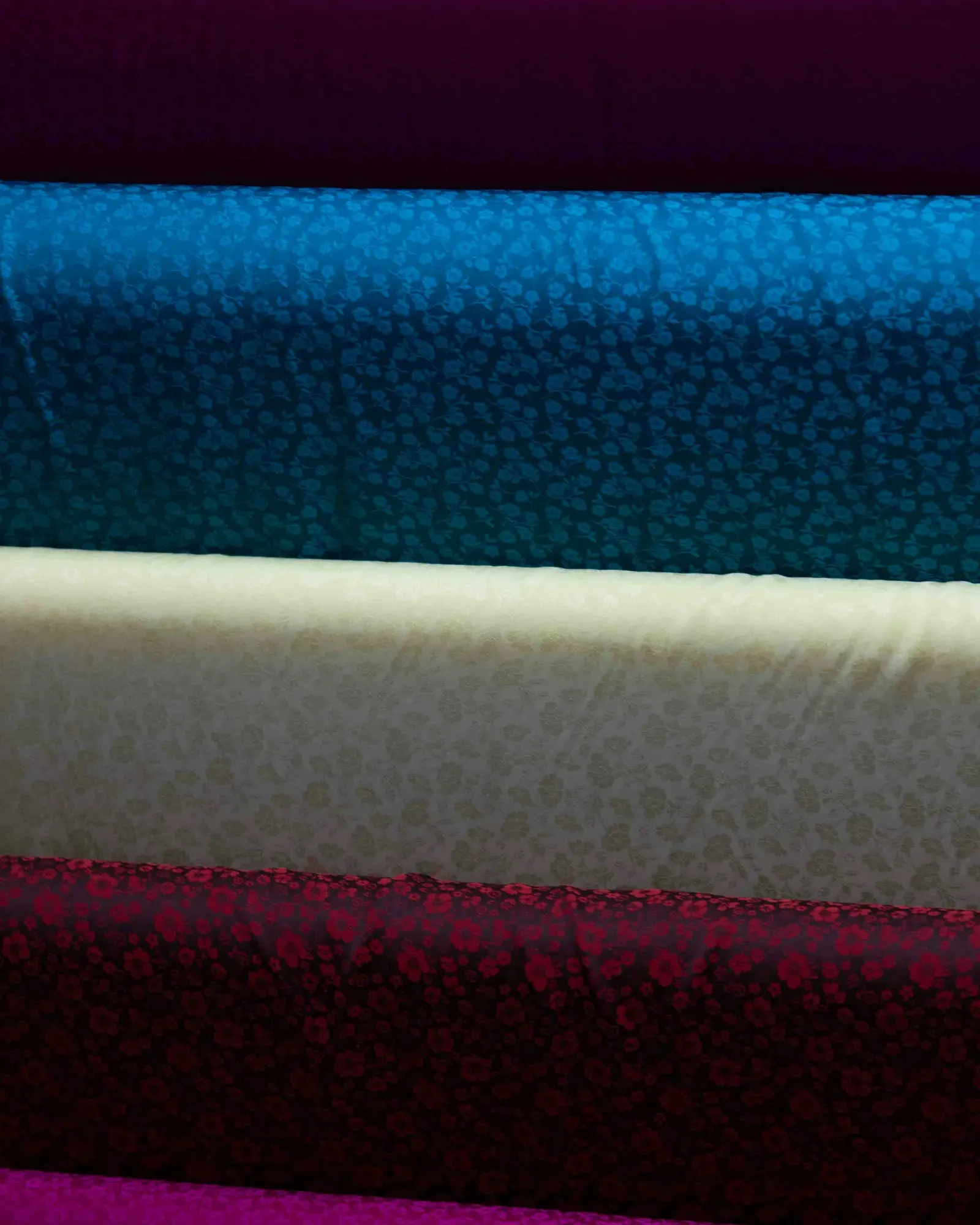
What fades, shrinks or holds dust in Hyderabad
What fades
Hyderabad’s March to June sun on west and south-west windows is the biggest enemy of curtain colour. The Canadian Conservation Institute explains that ultraviolet light yellows and weakens fibres, and that light damage is cumulative and irreversible. Natural fibres, silk and bright or dark saturated colours show it first. A lining sewn behind the face fabric takes the direct hit; our curtain lining guide covers the options.
What shrinks
Cotton, linen and viscose can shrink, especially in warm water. Polyester barely moves. If you’re supplying cotton or linen for stitching, ask whether it’s pre-shrunk, or have it washed before cutting.
What holds dust
New gated communities stay dusty for months while the next phase is built. Smooth polyester sheds dust with a shake; velvet, chenille and deep textures hold it. Hard water then leaves washed fabrics stiff or greyish, so dry cleaning or careful rinsing suits heavier pieces. Our curtain care guide covers washing in detail.
Monsoon damp
From June to September, cotton and linen pressed against cold, condensation-prone glass or damp walls can develop mildew spots. Leave a small gap from the glass and air the room on dry days.
Which fabric for which room?
| Room | Our usual fabric | Why |
|---|---|---|
| West-facing living room | Linen-look or solution-dyed polyester, lined | Holds colour in afternoon sun |
| Master bedroom | Polyester, velvet or chenille with blackout lining | Darkness and a soft feel |
| Kids’ room | Washable polyester print | Easy to wash, survives handling |
| Study | Plain or twill polyester, dim-out lined | Cuts screen glare |
| Pooja room | Jacquard or embroidered sheer | Traditional look |
| Formal living or dining | Velvet or heavy jacquard, lined | Rich drape for evening use |
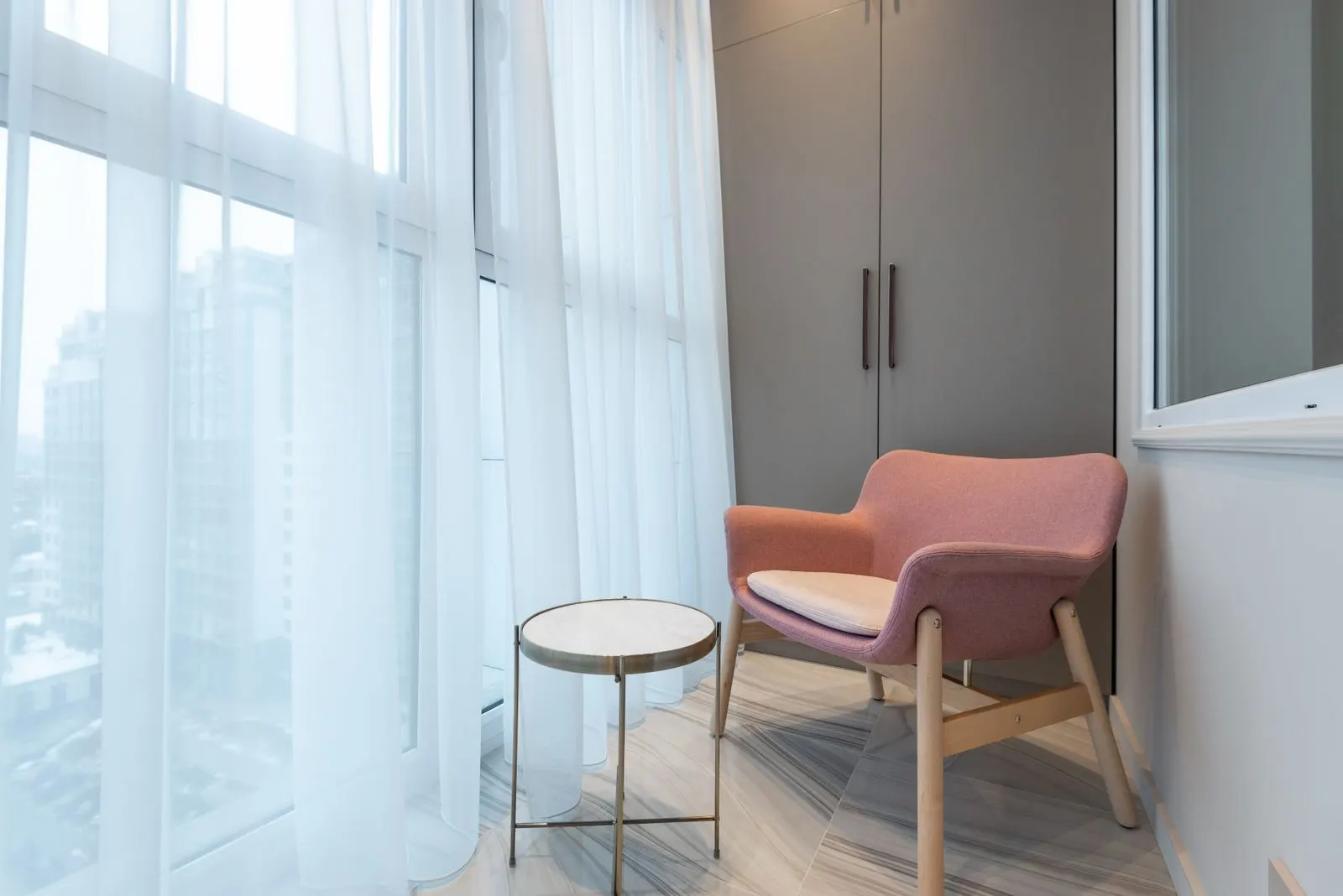
Sheers are a category of their own; our sheer curtains guide compares voile, net and linen-look sheers. Colour affects fading as much as fibre, which our curtain colour guide covers.
Buying your own fabric for stitching: what to check
Plenty of customers buy curtain cloth from a market or online and want it stitched. That’s fine; we take these jobs. Check these before you pay:
- Roll width. Most curtain fabric is around 54 inches; wide sheers are often 110 to 118 inches. Width changes how many metres you need.
- Fibre composition. The label should give percentages (for example, polyester and viscose). “Imported fabric” tells you nothing.
- Pattern repeat. Large repeats add metres. Ask for the vertical repeat in centimetres.
- Dye lot. Buy all the fabric for one room from the same roll or batch; shades can differ between lots.
- Pre-shrunk or not. Important for cotton, linen and viscose blends.
- Care label. Machine wash, hand wash or dry clean only. Heavy pieces that must be dry cleaned cost more to keep over the years.
- Lightfastness. For west-facing windows, ask whether the fabric has a rating.
- Flaws. Unroll a few metres in daylight and look for weaving faults, shading streaks and print misalignment.
Our guide on how much fabric you need for curtains shows how to convert your measurements into metres before you go shopping.
Choosing fabric at your window
Fabric looks different under shop tube lights than in your own west sun. Baaft Decor brings fabric samples to homes across Hyderabad, and we also stitch fabric you’ve bought elsewhere. For curtains in Hyderabad, we cover everything from fabric to fitting, including homes looking for curtains in Bachupally, curtains in Madhapur and curtains in Kollur.
Book a free home visit and we’ll hold samples against your windows, measure every room and give you a written quote. We work 8 AM to 10 PM, all seven days. WhatsApp or call +91 98499 17494.
Frequently asked questions
Which fabric is best for curtains?
For most homes in India, the best fabric for curtains is a good-quality polyester or polyester blend, often in a linen-look or textured weave. Polyester holds its colour better in strong sun than cotton or linen, hardly shrinks, resists creasing and is easy to wash, which matters in dusty cities. Cotton and linen give a softer, more natural look but fade and shrink faster unless lined. Velvet, jacquard and chenille suit formal living rooms. Whatever you choose, a lining behind the face fabric protects it from sun.
Is cotton or polyester better for curtains?
Polyester is usually better than cotton for curtains in sunny Indian homes because it fades less, shrinks very little, creases less and dries quickly after washing. Cotton is softer, more breathable and has a matte, natural look, but it can shrink when washed and fades faster on sunny windows, especially west-facing ones. If you love cotton, choose a pre-shrunk fabric, have it lined, and use it on windows that get gentler morning or north light. Poly-cotton blends sit between the two.
What is GSM in curtain fabric?
GSM means grams per square metre, the weight of one square metre of fabric. Higher GSM usually means a heavier, denser fabric that drapes more fully and blocks more light, though weave matters too. As a typical guide, sheers are often under about 100 GSM, most regular curtain fabrics fall roughly between 150 and 300 GSM, and velvets, chenilles and blackout fabrics are often heavier. GSM alone does not tell you about fade resistance or quality, so check the weave and fibre as well.
Which curtain fabric does not fade in sunlight?
No curtain fabric is completely fade-proof, but solution-dyed fabrics, where colour is added to the fibre material before it is spun, resist fading best because the colour runs right through each fibre. Good polyester fabrics come next. Cotton, linen, silk and many viscose blends fade faster. Ask the supplier for a lightfastness rating, which is commonly tested under ISO 105-B02 and graded on a blue wool scale from 1 to 8, with higher numbers lasting longer. A lining slows fading on any fabric.
Do linen curtains shrink?
Pure linen curtains can shrink when washed, especially in warm water, and they crease easily, which is part of their relaxed look. Many linen curtain fabrics are pre-washed to reduce this, so ask before buying. Linen also fades and weakens in strong direct sun over time. For a linen look with less upkeep, linen-look polyester or poly-linen blends use textured yarns to copy the slubbed appearance while staying stable in washing. They are the most common choice for new apartments in Hyderabad.
Are velvet curtains good for Indian homes?
Velvet curtains can work well in Indian homes, especially formal living rooms, bedrooms and media rooms, because the heavy pile drapes richly, blocks a good amount of light and softens sound. Polyester velvet holds colour better and is easier to care for than cotton velvet. The downside is dust: the pile traps fine construction dust and needs regular brushing or vacuuming with a soft attachment. Velvet is also heavy, so it needs a sturdy track or rod and properly fixed brackets.
What is the difference between jacquard and printed curtain fabric?
Jacquard curtain fabric has its pattern woven into the cloth on a jacquard loom, so the design is part of the structure and looks the same quality on both faces, with raised texture. Printed fabric has the pattern applied to the surface after weaving, so the back is usually plain and the print can fade faster in sun. Jacquards are heavier and more formal and are common in traditional living rooms and pooja rooms. Prints offer more colour and design choice at a lighter weight.
Which curtain fabric is easiest to maintain?
Smooth, tightly woven polyester and linen-look polyester are the easiest curtain fabrics to maintain. They shed dust when shaken or lightly vacuumed, usually tolerate gentle machine washing, dry quickly and rarely shrink or crease badly. Velvet, chenille and heavily textured jacquards hold dust in their pile or texture and often need dry cleaning. Cotton and linen may shrink and need careful washing. In homes near ongoing construction, choosing an easy-care fabric for the main living areas saves a lot of effort.