Around late July, the same problems start showing up in Hyderabad homes: a sofa that smells musty, wallpaper lifting behind the TV, a wardrobe with white spots on the back panel, laminate edges rising near the balcony door. None of it happens overnight. It builds through weeks of humid air, closed windows and one damp wall nobody noticed. If something is already damaged, our sofa upholstery service in Hyderabad handles foam replacement and re-covering at your home.
Below is what to do for each furnishing, before, during and after the rains. If you’re planning new interiors, the materials that cope best with monsoon damp (BWP board near water, an air gap behind wardrobes) are covered in our home interior design guide for Hyderabad.
Why the monsoon damages furnishings
Hyderabad gets most of its rain between June and September. The problem isn’t only the rain. It’s the long stretches of humid air, windows kept shut, clothes drying indoors, and walls that soak up water and release it slowly into whatever stands against them.
Mould and mildew need moisture and time. The US EPA recommends keeping indoor humidity below 60 percent, ideally 30 to 50 percent, and drying anything wet within 24 to 48 hours. In a Hyderabad monsoon, indoor humidity can sit above that for days. A cheap hygrometer tells you when to act.
Start with the walls
Furnishings can’t outlast a wet wall. Before anything else, walk the house and look for:
- Damp patches or bubbling paint on external walls, especially under windows
- White, powdery salt marks (efflorescence) near skirting
- Peeling paint on walls shared with a bathroom
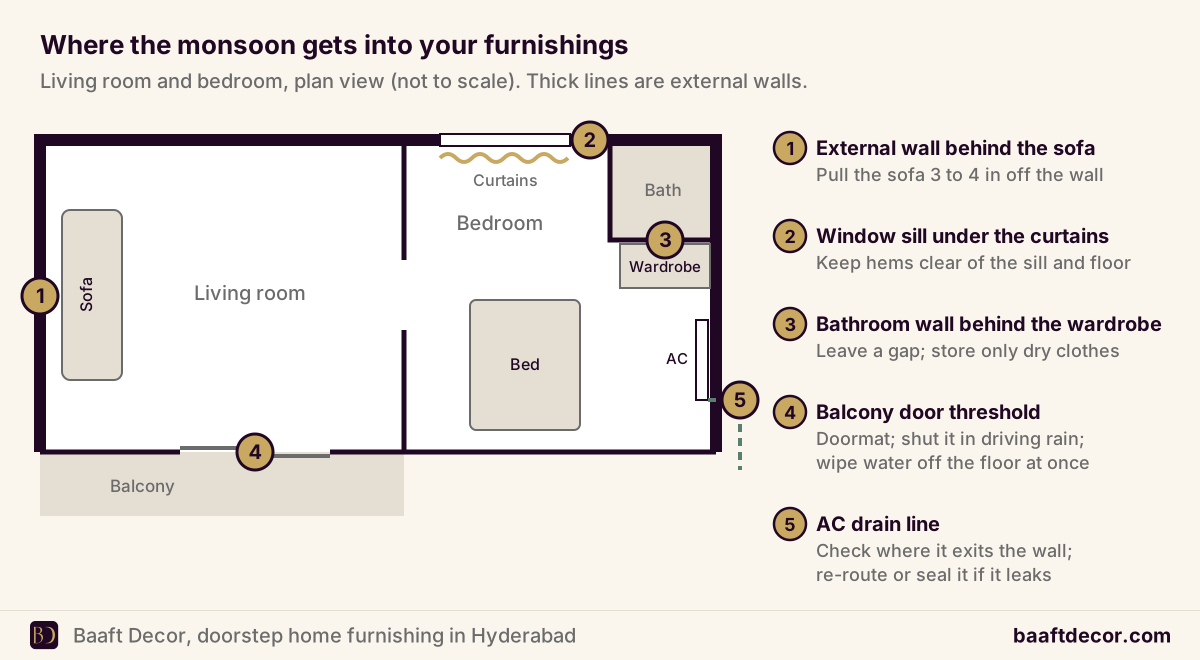
- Wet marks around the AC drain line where it exits the wall
Fix the source (sealing, waterproofing, re-routing the AC drain) before re-pasting wallpaper or pushing a sofa back. Otherwise you’ll be doing it again next year.
Keep indoor humidity down
Once the walls are sound, the next job is the air. A few habits make a measurable difference:
- Ventilate on dry days. Open windows on opposite sides of the flat for an hour or two when it isn’t raining.
- Run bathroom and kitchen exhaust fans for a while after showers and cooking, not just during.
- Use your AC’s dry mode in closed bedrooms during muggy spells. It pulls moisture out without chilling the room as much as cooling mode.
- Don’t dry laundry in living rooms or bedrooms. Use the utility area or balcony, or a dryer.
- Consider a dehumidifier for a room that stays closed, such as a guest bedroom or a store room full of stored furnishings.
- Roll up and store thick-pile rugs if the room stays damp; flat-weaves are easier through the season.
Sofas: stop fungus and the musty smell
Fabric sofas absorb moisture from the air and from damp walls; foam holds it. Leather grows white or grey bloom on the surface.
- Pull the sofa 3 to 4 inches off external walls so air can move behind it.
- Vacuum weekly, including crevices and under cushions, where crumbs and dust feed mildew.
- No wet shampooing in July and August. Foam takes too long to dry. Spot-clean only, then dry with a fan.
- Don’t sit on it in damp clothes after coming in from the rain.
- For leather, wipe surface bloom with a dry cloth, clean gently with a barely damp cloth and mild soap, dry fully, then condition.
- Use washable covers on sofas in rooms that stay humid.
If the foam still smells after drying, or you see spots on the frame, the foam probably needs replacing. Re-covering over mouldy foam doesn’t fix anything. When you do reupholster, pick a fabric that dries quickly; our guide to the best sofa fabric for Indian homes compares the options.
Curtains and blinds
Curtains suffer at the hem and the lining. A hem resting on a wet sill or floor wicks water up; a blackout lining against cold, damp glass grows mildew.
- Keep hems clear of sills and floors. Curtains that stop half an inch above the floor stay drier.
- Open curtains for a few hours on dry days so fabric and glass can breathe.
- Vacuum gently rather than washing mid-season; heavy fabrics dry slowly in humid air.
- Wash or dry-clean just before the rains start and again once they end.
- Wipe roller and zebra blinds with a dry cloth; check the bottom bar for damp.
If you want windows open for air without mosquitoes coming in, fitted mosquito mesh makes ventilation practical through the season. And if your curtains have faded or stained beyond saving, our custom curtains can be made with linings suited to humid rooms.
Wallpaper in humid months
Wallpaper rarely fails on its own. It peels when moisture comes through the wall behind it. That’s why the damage shows up first on external walls, beside bathrooms, and under leaking windows.
- Check seams and corners in July. Lifting edges with dark spots mean moisture behind.
- Don’t re-paste until the wall is dry and the leak is fixed.
- In humid rooms, vinyl or washable wallpapers on a sealed, primed wall hold up far better than paper-based ones.
Our wallpaper humidity guide for Hyderabad explains wall preparation and which papers suit which walls.
Wooden and laminate floors
Humidity makes wood and laminate move a little. Water makes them fail.
- Doormats at every balcony and entry door. Wet footwear is the most common cause of swollen edges.
- Wipe spills and rain immediately. Water left overnight soaks into the joints.
- Mop with a well-wrung mop, never a wet one.
- Close balcony doors during driving rain, especially on high floors where wind pushes water under sliding doors.
- Check the expansion gap. Floating floors need a gap at every wall, hidden by skirting. If boards peak in the middle each monsoon, the gap is probably too tight.
If a room floods regularly, consider SPC or vinyl for that area. Our comparison of wooden, laminate, vinyl and SPC flooring shows how each handles water.
Wardrobes: musty clothes and swollen panels
Wardrobes trap air. Put damp clothes inside and you’ve built a mildew incubator.
- Store only fully dry clothes. Don’t dry laundry in the bedroom.
- Keep silica gel or moisture-absorber packs on each shelf and replace them when saturated.
- Open wardrobe doors for an hour on dry, sunny days.
- Leave a small gap behind wardrobes on external walls or walls shared with a bathroom.
- Check the bottom panel and back for swelling or white spots, and clean early.
When you build or replace wardrobes, water-resistant board on damp-prone walls makes a real difference. If you’re planning new wardrobes, ask for the board grade to be chosen by wall position, not one grade for the whole flat.
Monsoon care checklist
For what to plan in the other eight months, including when to schedule wallpaper and wooden flooring, see our Hyderabad home furnishing calendar.
| Furnishing | Before the rains (May to June) | During the monsoon | After (October) |
|---|---|---|---|
| Sofas | Deep clean, move off external walls | Weekly vacuum, spot-clean only, ventilate | Check foam for smell, air in sun if possible |
| Curtains and blinds | Wash or dry-clean, check hems | Keep hems dry, open on dry days | Wash again, check linings for spots |
| Wallpaper | Inspect seams, fix seepage | Watch external walls for lifting | Re-paste only once walls are dry |
| Wooden and laminate floors | Doormats, check skirting gaps | Wipe water immediately, damp-mop only | Check for raised edges |
| Wardrobes | Add absorbers, check back panels | Dry clothes only, air on dry days | Replace absorbers, clean any spots |
If the rains have already left their mark on a sofa, curtains or wardrobe, book a free home visit. We inspect the damage, bring fabric and material samples, and send a quote for repair or replacement. Call or WhatsApp +91 98499 17494, any day from 8 AM to 10 PM.
Frequently asked questions
How do I protect my sofa during the monsoon?
To protect a sofa during the monsoon, move it a few inches away from external or damp walls so air can circulate behind it, vacuum it weekly including the crevices, and avoid sitting on it in damp clothes. Keep the room ventilated on dry days and run a fan or AC in dry mode during humid spells. Avoid wet shampooing in July and August, because fabric and foam dry slowly and can smell musty. Treat any white or grey spots straight away.
How do I remove fungus from a leather sofa?
To remove light surface fungus from a leather sofa, take the sofa to a ventilated spot or open the windows, wipe the spots with a soft dry cloth, then clean gently with a cloth slightly dampened with a mild soap solution and dry the area fully with a fan. Condition the leather once it's dry. Test any cleaner on a hidden area first. If the fungus returns quickly or the leather is cracked or stained deep, the leather may need professional cleaning or replacement.
Why does my wallpaper peel in the monsoon?
Wallpaper usually peels in the monsoon because moisture is coming through the wall behind it, from seepage on an external wall, a leaking pipe or a bathroom on the other side. The paste weakens and the edges lift, often with dark spots or a musty smell. Re-pasting won't hold until the wall is dry and the leak is fixed. For humid rooms, vinyl or washable wallpapers on a properly sealed, primed wall perform far better than paper-based ones.
Can laminate flooring get damaged in the monsoon?
Yes, laminate flooring can be damaged in the monsoon, mostly by water rather than humidity. Rain blowing in through balcony doors, wet footwear, and over-wet mopping let water into the joints, and the core can swell permanently so edges lift or peak. Humidity alone causes small seasonal movement, which a correct expansion gap at the walls absorbs. Use doormats, wipe spills immediately, mop with a well-wrung mop, and consider SPC or vinyl for wet-prone areas.
How do I stop my wardrobe smelling musty in the rainy season?
To stop a wardrobe smelling musty in the rainy season, store only fully dry clothes, put silica gel or other moisture-absorber packs on each shelf and replace them when saturated, and open the doors for an hour on dry, sunny days. Don't dry clothes indoors in the bedroom. If the wardrobe sits against an external wall or one shared with a bathroom, check the back panel for damp and leave a small air gap behind it. Persistent smells usually mean a hidden damp wall.
Should I wash curtains during the monsoon?
It's better to wash curtains just before or just after the monsoon rather than in the middle of it, because heavy curtains and blackout linings dry slowly in humid air and can develop mildew or a musty smell. During the rains, keep curtains drawn open for airflow when you can, keep hems away from wet sills and floors, and vacuum them gently. Lightweight sheers dry quickly and can be washed on a sunny day if needed.
What humidity level causes mould at home?
Mould grows readily when indoor relative humidity stays high for long periods. The US Environmental Protection Agency advises keeping indoor humidity below 60 percent, ideally between 30 and 50 percent, and drying wet materials within 24 to 48 hours. In Hyderabad's monsoon, humidity often stays above that for days, so ventilate on dry days, use AC in dry mode or a dehumidifier in closed rooms, and pay attention to wardrobes, sofas against walls and corners behind curtains.
Is it okay to get sofa reupholstery done during the monsoon?
Yes, sofa reupholstery can be done during the monsoon, and it's a good time to replace foam that has absorbed moisture or started to smell. The key is that the frame and any new foam stay dry during the work, and that the sofa isn't placed back against a damp wall. If the old foam has mould, it should be replaced rather than covered. Pick a tightly woven fabric that dries quickly and resists mildew for homes that stay humid.