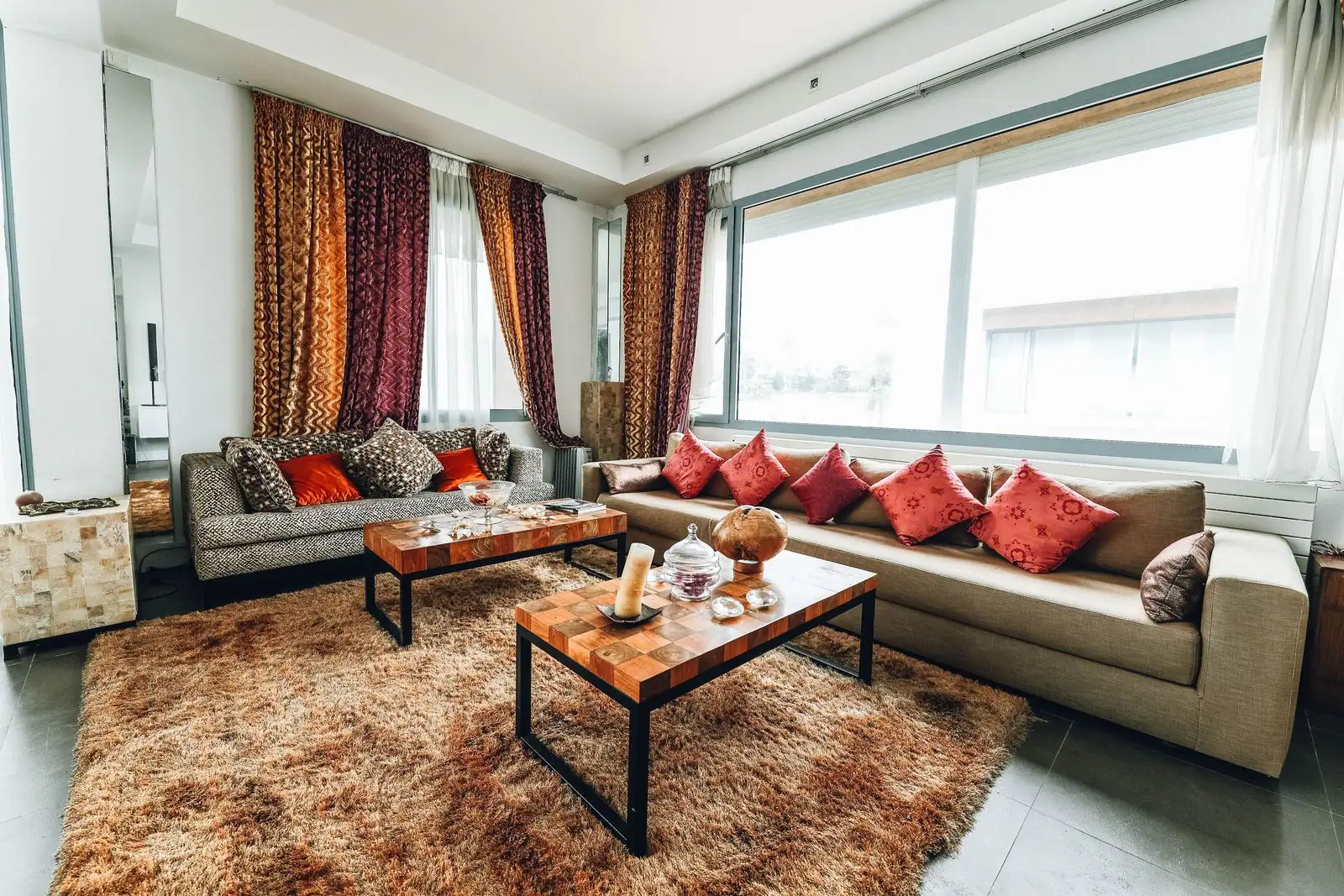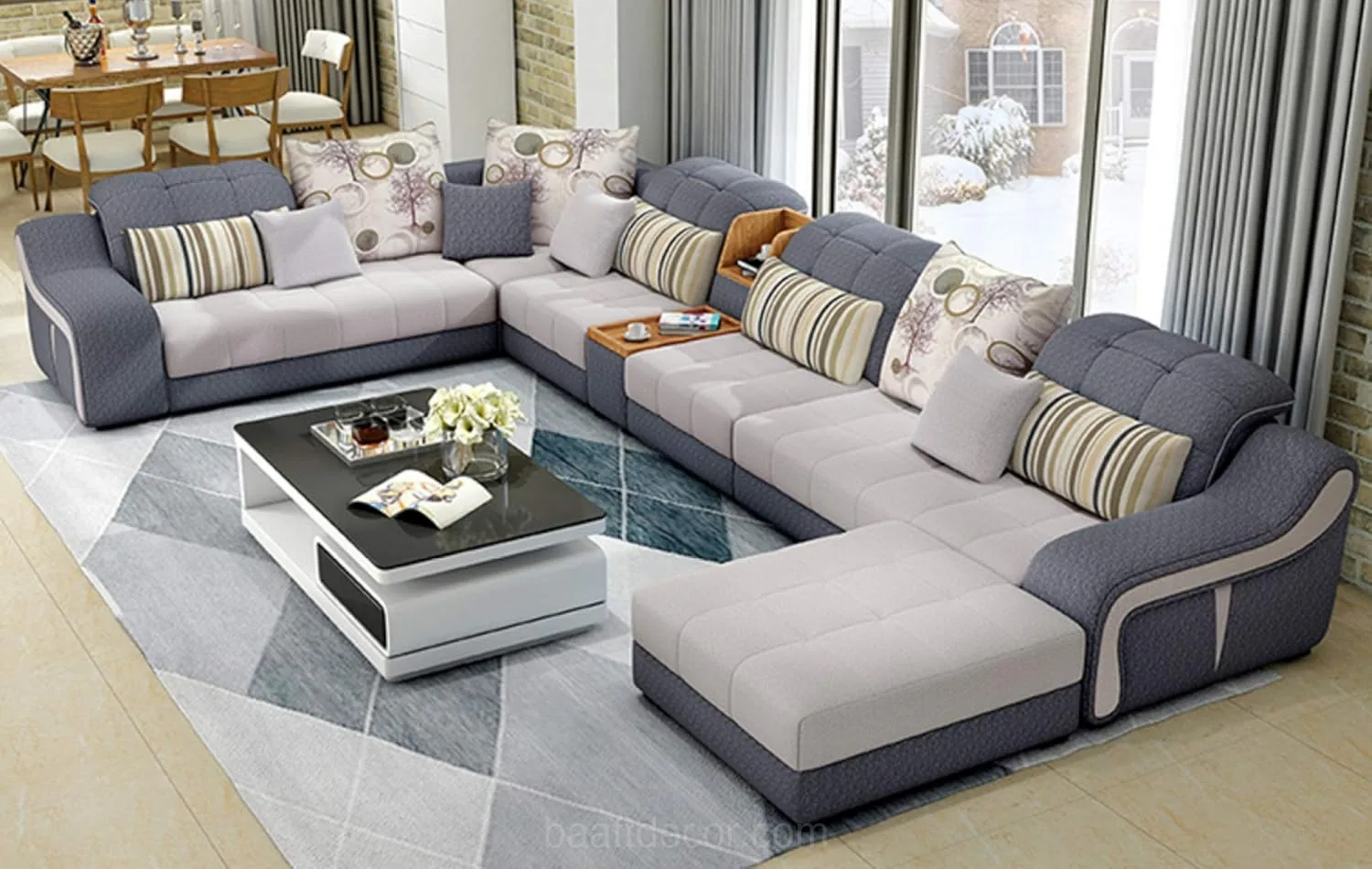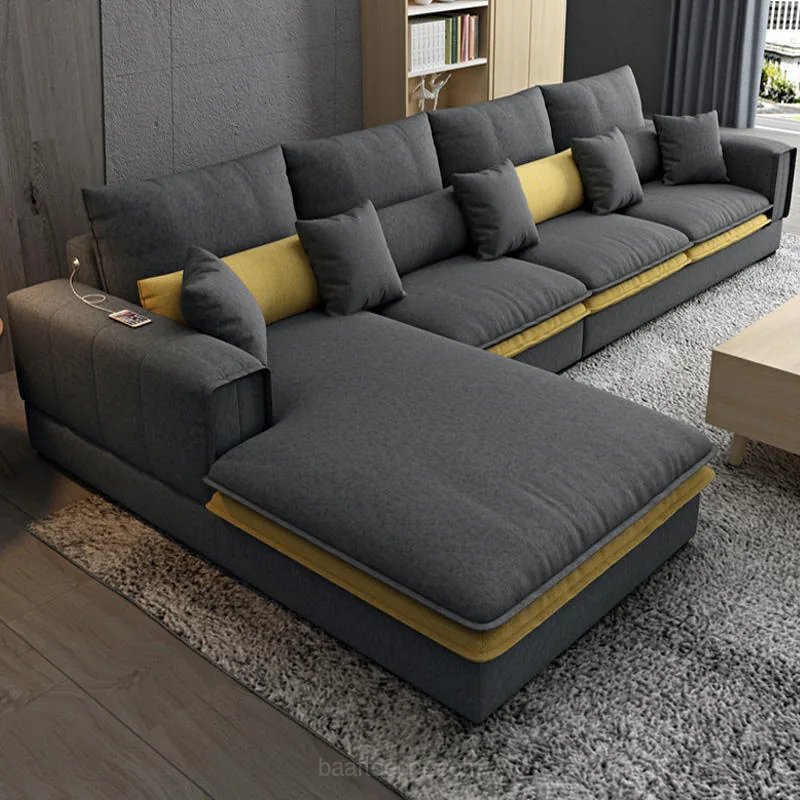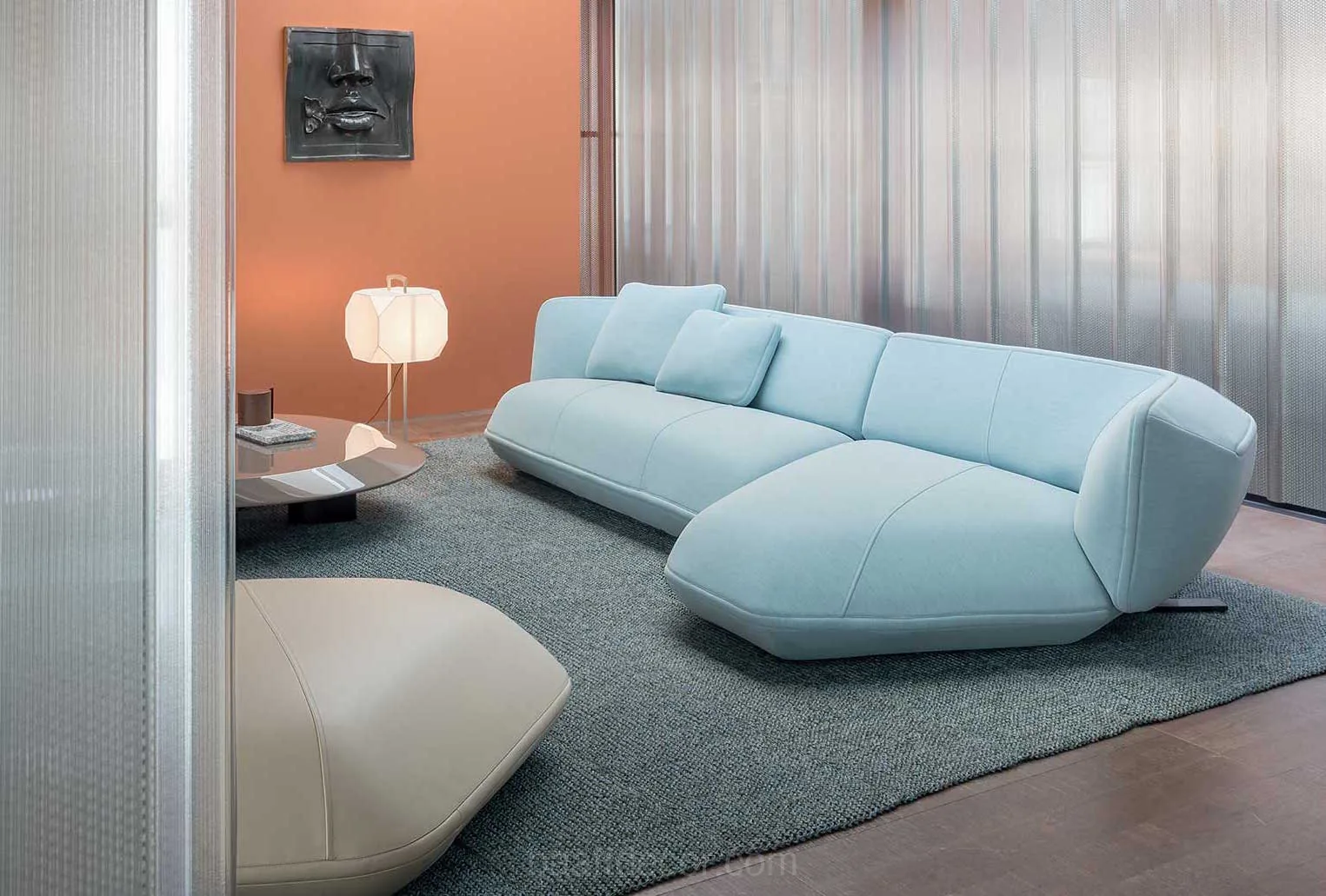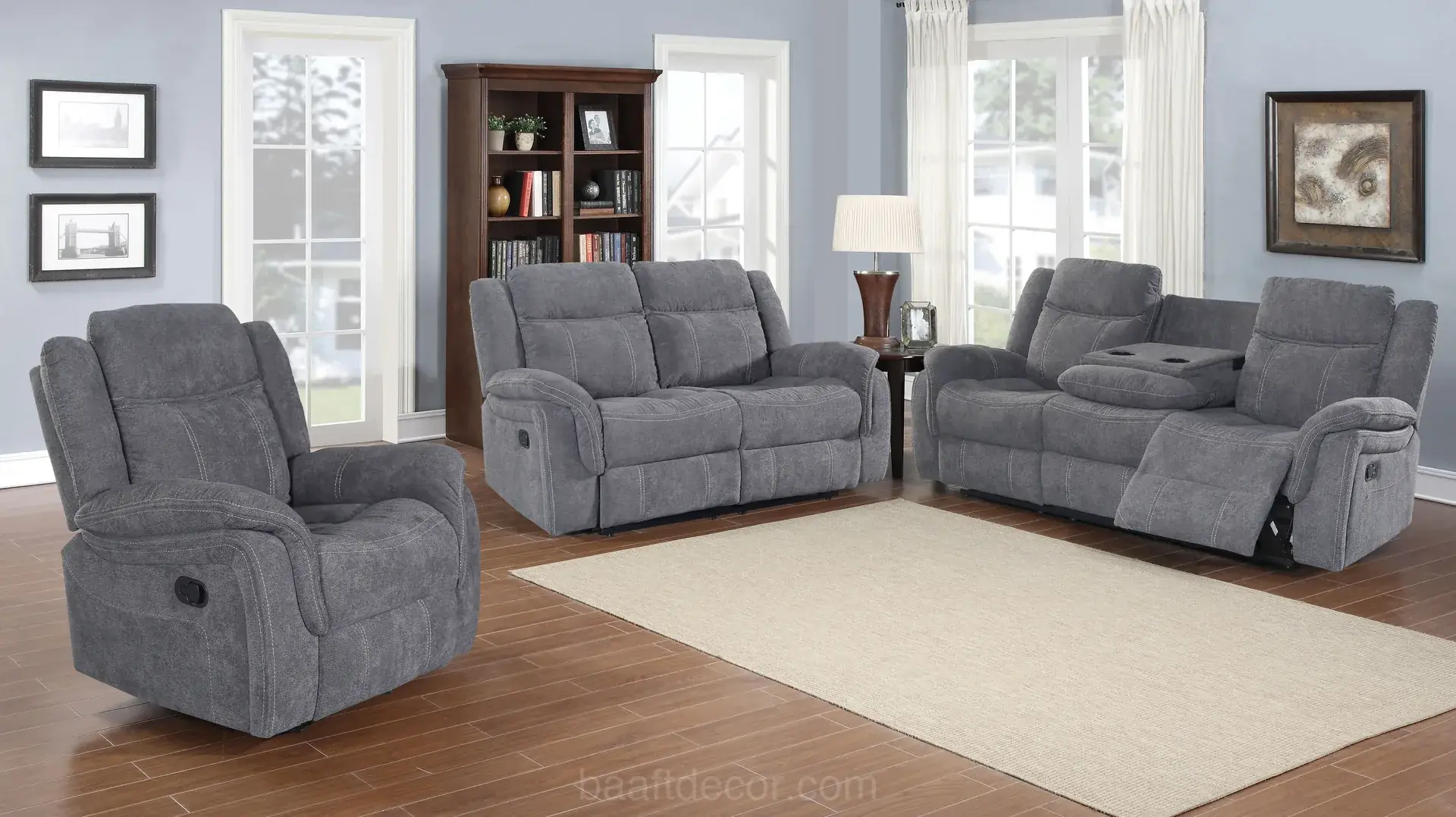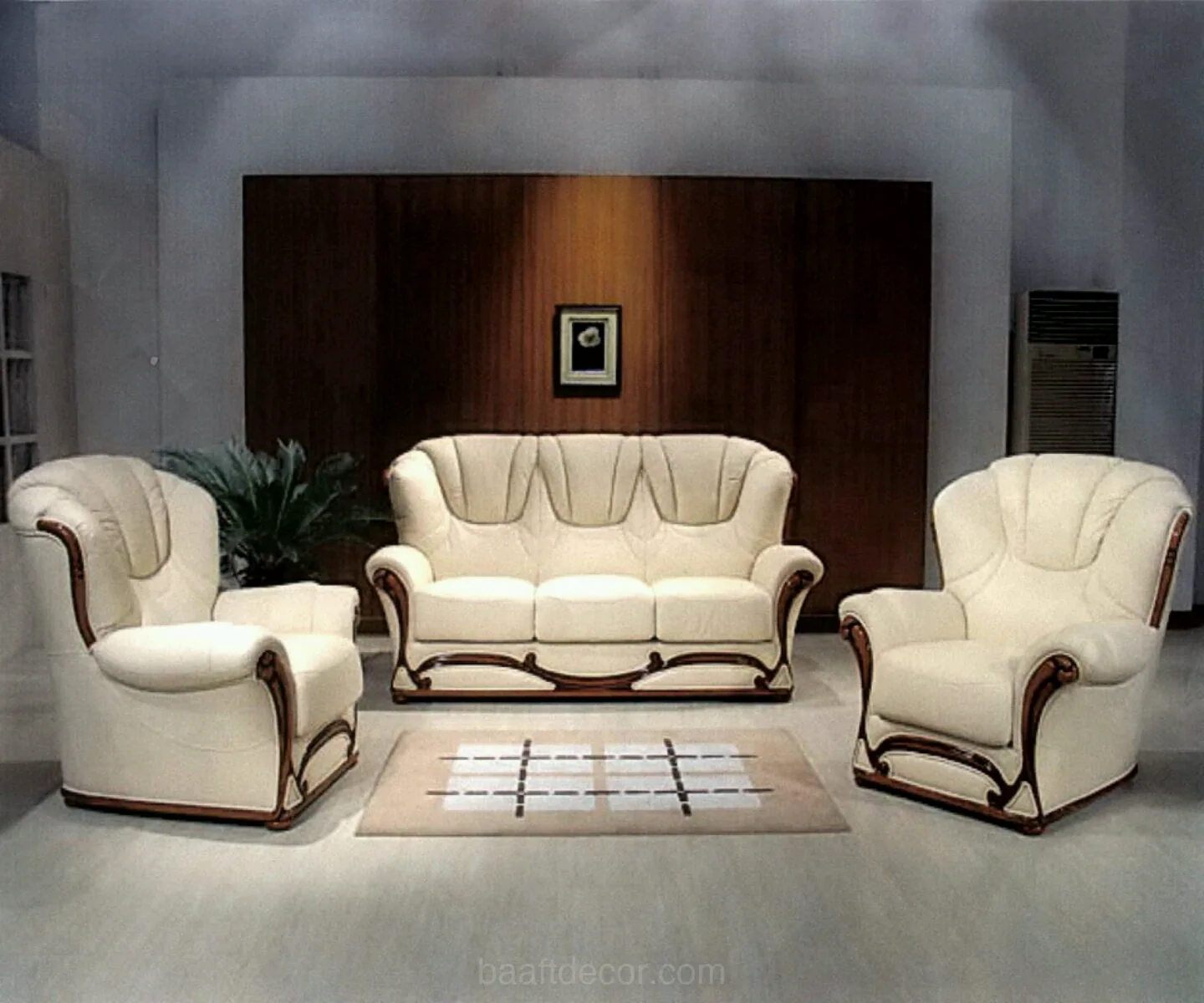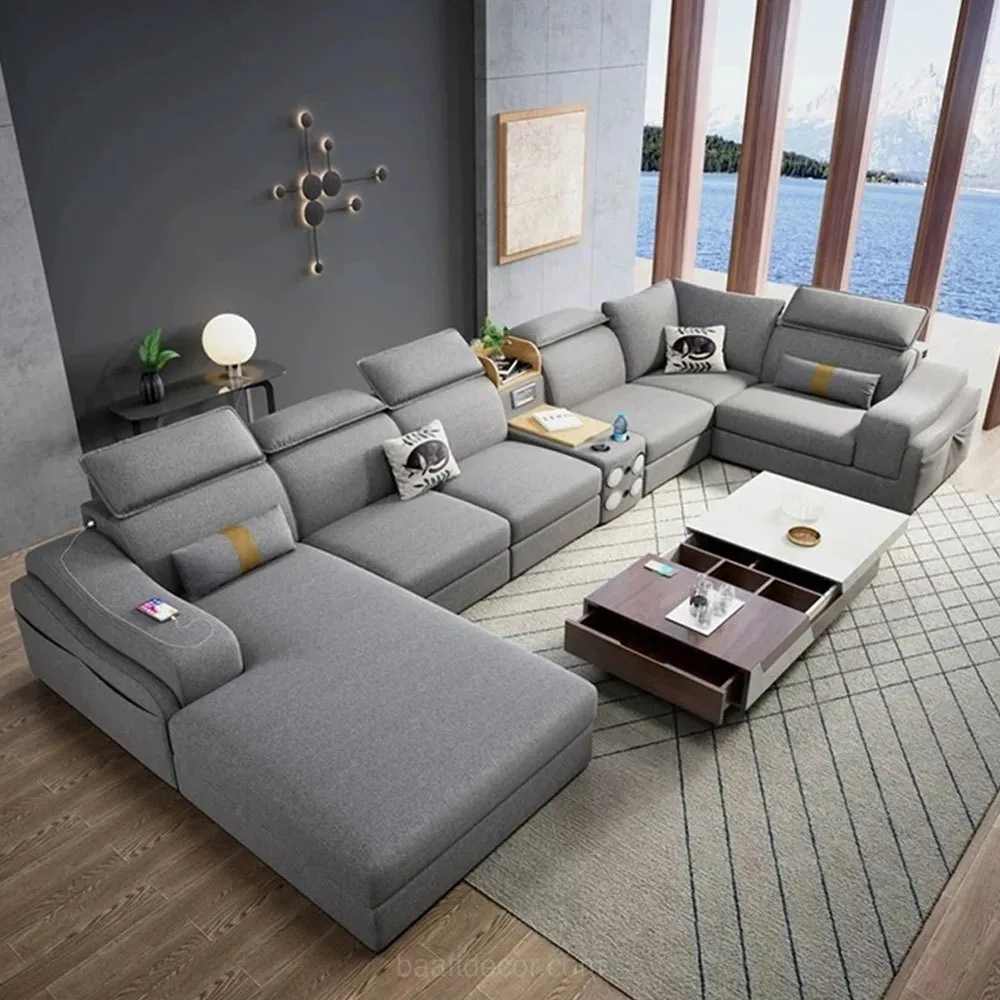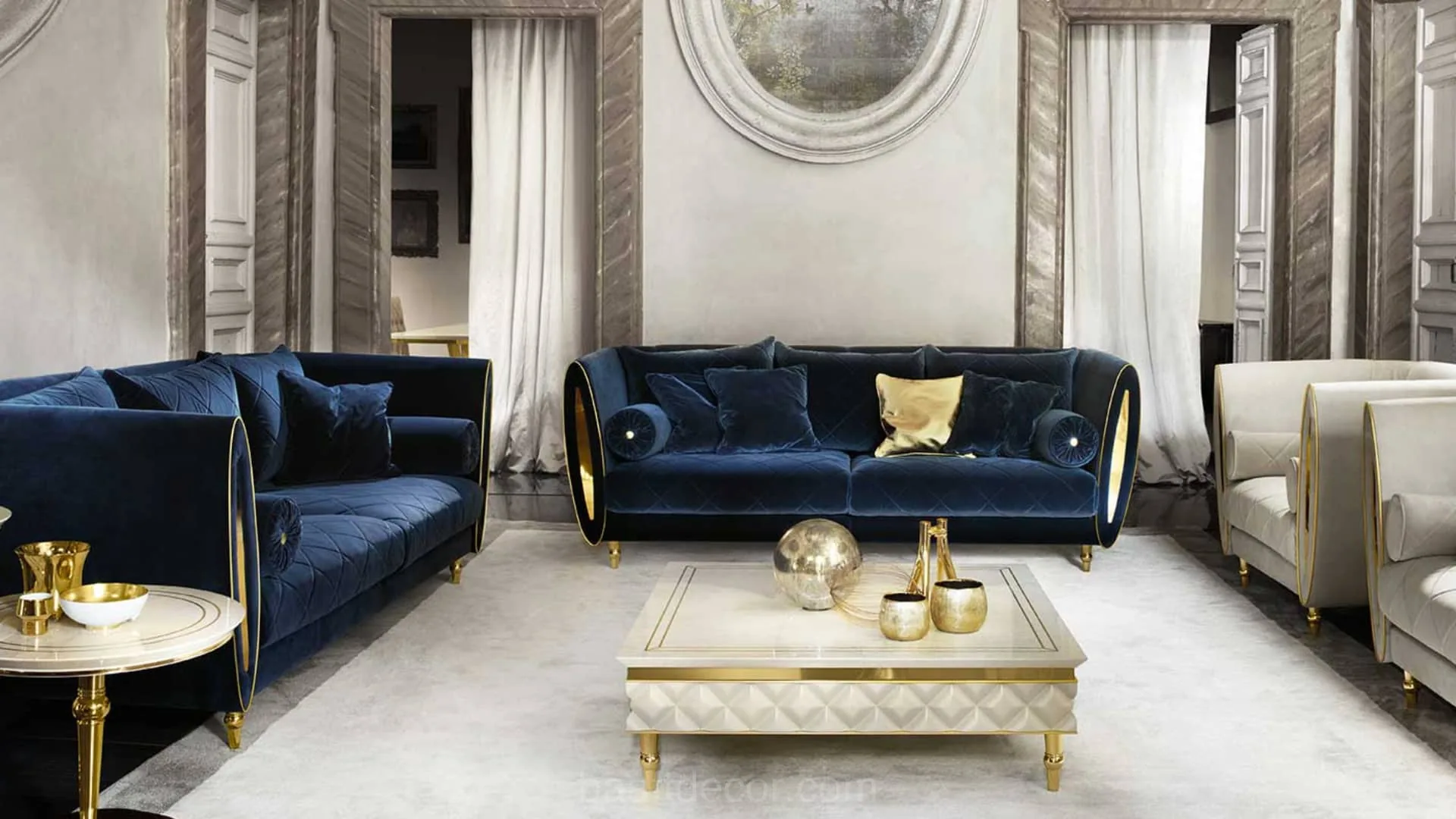
A swatch that looks lovely under shop lights can be faded, fuzzy or musty within two summers in a Hyderabad flat. Afternoon sun through a west window, fine dust every day, monsoon damp and a family that actually uses the sofa: that’s the real test. For most homes, a tightly woven polyester or poly-cotton blend passes it, and we explain why below. If you’re redoing a sofa, our sofa upholstery service in Hyderabad brings swatch books to your home so you judge fabric in your own light.
Fabric is one chapter of the bigger job. Our sofa upholstery guide for Hyderabad homes covers the frame, foam, repairs and covers that sit around it.
Which type of fabric is best for a sofa?
For daily family use in India, choose a tightly woven polyester, poly-cotton blend or polyester microfibre with a Martindale rub count of 25,000 or more, in a mid-tone colour. It resists pilling and spills, copes with humidity, and stays comfortable in summer. Velvet suits formal rooms. Cotton and linen feel coolest but stain and fade faster.
That’s the short answer. The rest depends on your room.
The common sofa fabrics compared
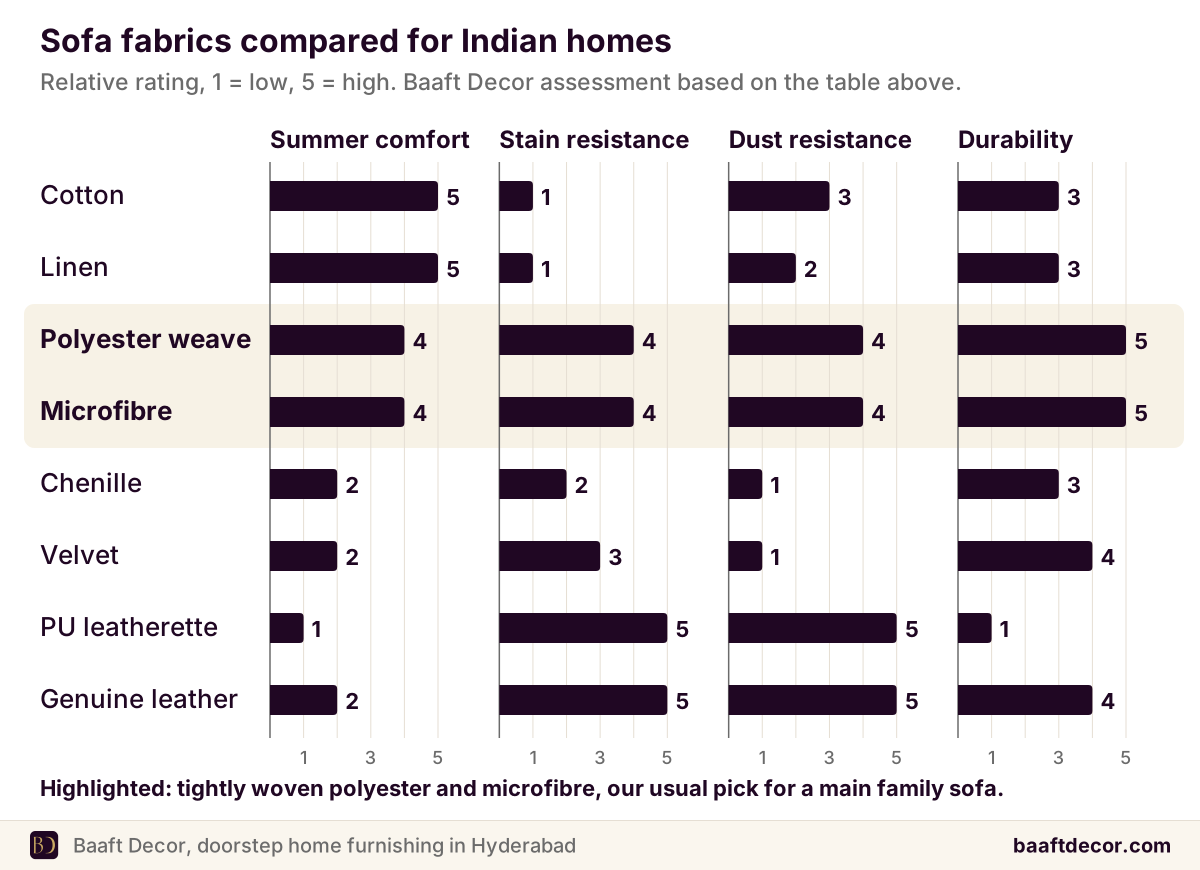
| Fabric | Summer comfort | Dust and stains | Durability | Best for |
|---|---|---|---|---|
| Cotton | Very cool | Absorbs spills; fades in sun | Moderate | Low-traffic rooms, removable covers |
| Linen / linen blends | Very cool | Stains, creases | Moderate | Relaxed look, adult homes |
| Polyester / poly-cotton weave | Comfortable | Good; spills sit on surface | High | Main family sofa |
| Polyester microfibre / suede-feel | Comfortable | Good; easy to wipe | High | Kids, pets |
| Chenille | Warm | Traps dust and hair | Good if dense | Bedrooms, cosy dens |
| Velvet (polyester) | Warm | Holds dust; shows pressure marks | Good | Formal drawing rooms |
| PU leatherette | Hot, sticky | Wipes clean | Low in heat; peels | Short-term or AC rooms |
| Genuine leather | Warm, breathes a little | Wipes clean | High with care | AC rooms, high budgets |
Cotton and linen
They breathe best, which matters in a non-AC room in May. But pure cotton soaks up a spilled cup of chai before you can reach a cloth, and darker cottons fade fast near a sunny window. Linen creases and shows water marks. Both work well as washable, tailored covers, where you can take them off and launder them.
Polyester and poly-cotton blends
This is the fabric we suggest most for a main sofa. Modern polyester weaves don’t feel plasticky; many look like linen or cotton. They hold colour in sunlight better than cotton, resist pilling when the weave is tight, and dry faster after the monsoon. A blend with some cotton feels softer and cooler.
Microfibre and performance fabrics
Polyester microfibre has a soft, suede-like feel and a very tight weave, so spills bead up briefly and pet claws find less to grab. “Performance” fabrics add stain-resistant finishes. Worth it with toddlers or dogs.
Chenille and velvet
Both have a pile that traps dust, hair and lint, and both feel warm. Polyester velvet is tougher than it looks and resists crushing better than old cotton velvet, which makes it fine for a formal room. As the main family sofa in a dusty, non-AC home, it’s hard work to keep clean.
Leatherette (rexine, PU, PVC)
PU leatherette looks good on day one. Then heat, sweat and humidity break down the coating, and within a few years it cracks and peels at the seat edges and arm tops, usually while the frame underneath is still fine. PVC (traditional rexine) lasts longer but feels stiff and hot. If you want something wipeable, microfibre is the better bet.
Check the rub count, not just the feel
The Martindale test rubs the fabric against an abrasive under set pressure and counts the cycles until it wears. Suppliers band the results differently. A furnishing-brand founder quoted by Asian Paints Beautiful Homes recommends 20,000 rubs and above for upholstery, and commercial seating usually starts somewhere between 30,000 and 40,000. For a sofa used every day, we aim for 25,000 or more.
The rub count says nothing about fading or pilling, so check those separately: rub two swatch edges together and look for fuzz, and ask whether the fabric is solution-dyed if it will sit in direct sun.
What Hyderabad conditions do to sofa fabric
Summer heat. Hyderabad’s average daily maximum in May is close to 39 °C, so a living room without AC is hot by afternoon. Pile fabrics and leatherette feel warm against the skin; flat woven fabrics stay comfortable.
West sun. Living rooms facing west in Gachibowli, Kondapur and Narsingi get direct low sun in the afternoon. It fades cotton noticeably over a couple of summers. Polyester and solution-dyed fabrics hold up better, and a good blind or curtain on that window helps any fabric.
Dust. Construction is constant in the western suburbs, and fine dust settles on every surface. Textured, open and pile fabrics hold it; tight, flat weaves let you vacuum it off.
Monsoon humidity. From June to September, a closed flat can smell musty. Natural fibres are more prone to mildew than synthetics. Zipped, removable cushion covers let you air and wash them. Our monsoon furnishing care guide covers this in detail.
Matching the fabric to your household
- Young children: polyester microfibre or a performance weave in a mid-tone. Zipped covers.
- Dogs and cats: tight flat weave; avoid bouclé (loops snag) and velvet (holds hair).
- No AC in the living room: poly-cotton or a breathable polyester weave; avoid leatherette.
- Formal drawing room, light use: velvet or a jacquard looks rich and lasts.
- Rental flat or short-term refresh: keep the sofa and add tailored covers through sofa cover stitching.
Five quick tests to run on a swatch
Swatch books look good under shop lights. These checks take a minute each at home:
- Pinch and pull. Hold the swatch at two corners and stretch it gently on the diagonal. If the weave opens up or the threads slide apart, it will stretch and bag on a seat.
- Rub the edges. Rub two swatch corners together for 20 to 30 seconds. Fuzz or little balls forming means the fabric will pill where people sit.
- Water drop. Put a drop of water on the face. If it soaks in instantly, spills will too. If it sits for a few seconds, you have time to blot.
- Hold it to the window. Light coming through a thin, open weave means dust and crumbs will go through too, and the fabric will wear faster.
- Sit on it in your mind. Run your forearm across it. Anything scratchy or sticky on a cool day will be worse in May.
A fabric that passes all five, in a colour you’ll still like in five years, is a good pick. If your sofa itself is worn out underneath, read reupholster or buy a new sofa before choosing fabric, because the frame decides whether the new fabric is worth it.
Colour: the cheapest durability upgrade
White and cream sofas look beautiful on day one and show every mark by week two. Very dark fabrics show dust and pet hair. Mid-tones such as grey, taupe, olive, rust and muted blue, or a fabric with a subtle pattern or two-tone weave, hide daily wear best. If you love a light colour, have it made as a removable cover you can wash; our guide to sofa cover types compares fitted and stretch options.
Fabric grade and your reupholstery cost
Fabric is one of the larger lines in a reupholstery quote, and grade affects it as much as metres. Our sofa reupholstery cost guide explains how fabric, foam and labour add up, and when it’s worth paying more for a better weave.
If you’re deciding between two or three fabrics, the easiest way is to see them on your own sofa, in your own light. Book a free home visit and we’ll bring swatch books across price grades, check the foam and frame, and give a fixed quote. Call or WhatsApp +91 98499 17494, 8 AM to 10 PM, all seven days.
Frequently asked questions
Which type of fabric is best for a sofa in India?
For most Indian homes, the best sofa fabric is a tightly woven polyester or poly-cotton blend, or a polyester microfibre, rated at 25,000 Martindale rubs or more. These fabrics resist pilling, don't absorb spills as fast as pure cotton, cope with monsoon humidity better than natural fibres, and stay comfortable in summer. Pick a mid-tone or textured colour to hide dust. Velvet suits formal rooms with lighter use, while cotton and linen feel coolest but stain and fade faster in daily use.
What is the most durable sofa fabric for daily use?
The most durable sofa fabrics for daily use are tightly woven synthetics such as polyester, polyester microfibre and performance fabrics with stain-resistant finishes, ideally with a Martindale rub count of 25,000 or higher. Durability depends on weave as much as fibre, so a dense, flat weave lasts longer than a loose, slubby one of the same material. Genuine leather is also very durable when cared for, but PU leatherette is not, because its coating tends to crack and peel within a few years in heat and humidity.
Is velvet a good sofa fabric for Indian homes?
Velvet can be a good sofa fabric for Indian homes when it is used in the right room. Modern polyester velvets are hard-wearing and resist crushing better than older cotton velvets, and they look rich in formal living rooms. The drawbacks are that velvet feels warm in Hyderabad summers without AC, collects dust and pet hair, and shows pressure marks where people sit. It works best in a formal drawing room or a lightly used sofa, rather than as the main family sofa.
Is leatherette or fabric better for a sofa in a hot city?
Fabric is usually better than leatherette for a sofa in a hot city like Hyderabad. Woven fabric lets air pass and stays comfortable against skin, while PU or PVC leatherette traps heat and sweat and feels sticky in summer, especially in rooms without air conditioning. Leatherette coatings also tend to crack and peel with heat and humidity over a few years. Leatherette is easy to wipe clean, which suits some homes with small children, but for comfort and lifespan, a good woven fabric wins.
What does Martindale rub count mean for sofa fabric?
The Martindale rub count measures how many cycles of abrasion a fabric survives in a standardised test before it shows visible wear. It is a guide to how well upholstery fabric holds up to people sitting and sliding on it. Suppliers band the results slightly differently, but 15,000 to 25,000 rubs generally suits domestic seating, 25,000 and above suits heavy family use, and commercial seating usually starts at 30,000 to 40,000. Ask for the rub count when choosing from a swatch book.
Which sofa fabric is best for homes with pets and small children?
For homes with pets and small children, choose a tightly woven synthetic such as polyester microfibre or a performance fabric with a stain-resistant finish, in a mid-tone or patterned colour. Tight weaves resist claws better than loops, and synthetic fibres let spills sit on the surface long enough to blot. Avoid loop-pile fabrics like bouclé, which snag on claws, and velvet or chenille, which hold pet hair. Removable, zipped cushion covers are worth adding so you can wash them when needed.
Which sofa colours are practical for Hyderabad homes?
Practical sofa colours for Hyderabad homes are mid-tones such as grey, taupe, olive, rust, teal and muted blues, along with small patterns or textured weaves. They hide the fine construction and road dust common in growing suburbs better than white, cream or very dark fabrics, and they show fewer marks between cleanings. If the sofa faces a west window, prefer polyester or solution-dyed fabrics, which resist fading better than cotton, and use curtains or blinds to cut afternoon sun.