A recliner sofa is the one piece of living room furniture that has moving parts, a motor and sometimes a power cord, and that changes how you should buy it. Looks come last. Space, mechanism and upholstery come first. We build manual and motorised recliner sofas to order in Hyderabad, and we also repair them, so this guide covers both sides: what to choose, and what tends to go wrong later.
For the bigger picture on frames, foam and fabric, see our sofa and upholstery guide for Hyderabad. This piece is just about recliners.
Manual or motorised recliner sofa?
This is the first decision, and it’s mostly about who will use the sofa and how often.
| Manual recliner | Motorised (power) recliner | |
|---|---|---|
| How it works | Side lever or handle, or push-back with your body weight | Buttons on the side or a remote drive an electric actuator |
| Positions | A few fixed positions | Stops at any angle |
| Power needed | None | Socket within cord reach |
| Parts that can fail | Cable, springs, handle | Cable, springs, plus motor, switch and adapter |
| During a power cut | Works normally | Stays where it stopped, unless it has a battery pack |
| Best for | Occasional use, guest rooms, spots without a socket | Daily TV use, older parents, home-theatre corners |
Push-back recliners have no handle at all; you lean back and the mechanism follows. They look the neatest but need a bit of body weight and strength, which isn’t ideal for everyone.
Power recliners often add a powered headrest, lumbar support or a USB charging point, and some models go further with heat and massage. Nice to have, but each extra is one more part that can stop working. Choose the features you’ll use every evening.
Power, wiring and power cuts
A motorised recliner runs from a wall socket through an adapter or transformer, and the cable usually comes out under the back of the sofa. Three things to sort out before delivery:
- A socket within cord reach. Extension boards trailing across the floor get kicked, pulled and mopped around. If there’s no point behind the sofa, get an electrician to add one first.
- Inverter backup. Without it, a power cut leaves a reclined seat stuck where it stopped. In areas where cuts are frequent, an inverter-backed point, or a rechargeable battery pack that runs the motor for a while, solves this.
- Surge protection. The adapter and the motor’s electronics are the parts most exposed to voltage spikes. A surge-protected or stabilised socket is cheap insurance where voltage fluctuates.
How much space does a recliner sofa need?
A recliner needs room in two directions, and most people only measure one.
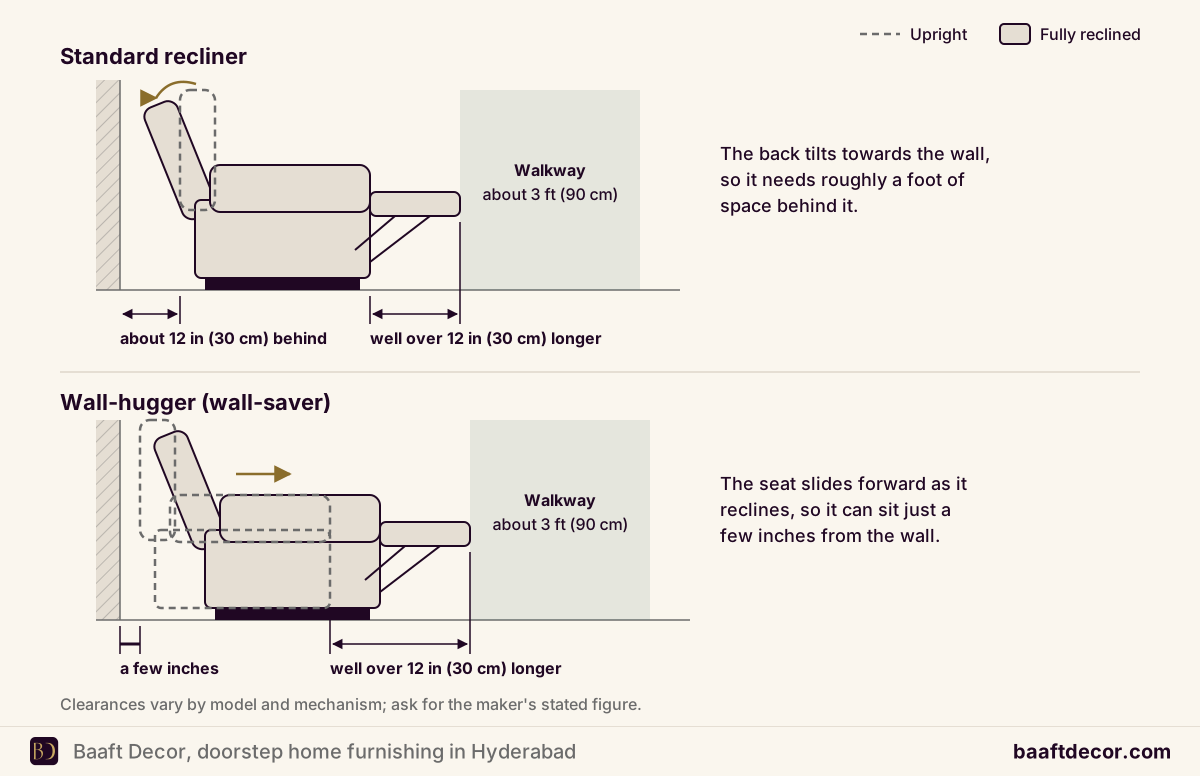
Behind. A standard recliner tilts its back towards the wall, so it typically needs roughly a foot of clearance. A wall-hugger (also sold as wall-saver or wall-away) slides the seat forward as it reclines, so it can sit just a few inches from the wall. In a compact 2BHK hall, that difference decides whether the recliner fits at all. Ask for the maker’s stated clearance for the exact model.
In front. When the footrest is out, the sofa can be well over a foot longer. Measure the fully reclined length from the spec sheet, then make sure there’s still a walkway past the raised footrest. Keep the path to the balcony door clear; about 3 ft is a comfortable width.
Masking tape on the floor in the fully reclined footprint will tell you more in a day than any brochure.
Mechanisms: what to check before you buy
The mechanism is the steel frame under the seat that moves the back and footrest. You can’t see much of it in a showroom, but you can test it.
- Sit, recline and return several times. It should move smoothly, without jerks, grinding or clicks.
- Rock it sideways when reclined. A footrest that wobbles sideways on a new sofa is a bad sign.
- Listen. Squeaks on day one get louder.
- Ask about the weight rating for each seat, and the warranty on the mechanism and the motor separately.
- Check where the power cord and adapter will run, so they won’t be pinched when the sofa is pushed back.
Other types you’ll come across, as La-Z-Boy’s range shows: rocking recliners, wall recliners, swivel or gliding recliners, and power lift chairs, which tilt forward to help someone stand. Lift chairs are a single-seat option worth considering for a parent with limited mobility.
Don’t forget the frame the mechanism bolts onto. Each reclining seat puts its load through a few mounting points, so those rails need to be seasoned hardwood or good BWR-grade plywood. A mechanism screwed into particle board can work loose within a couple of years, and then the whole seat starts to rock.
Seat counts and layouts
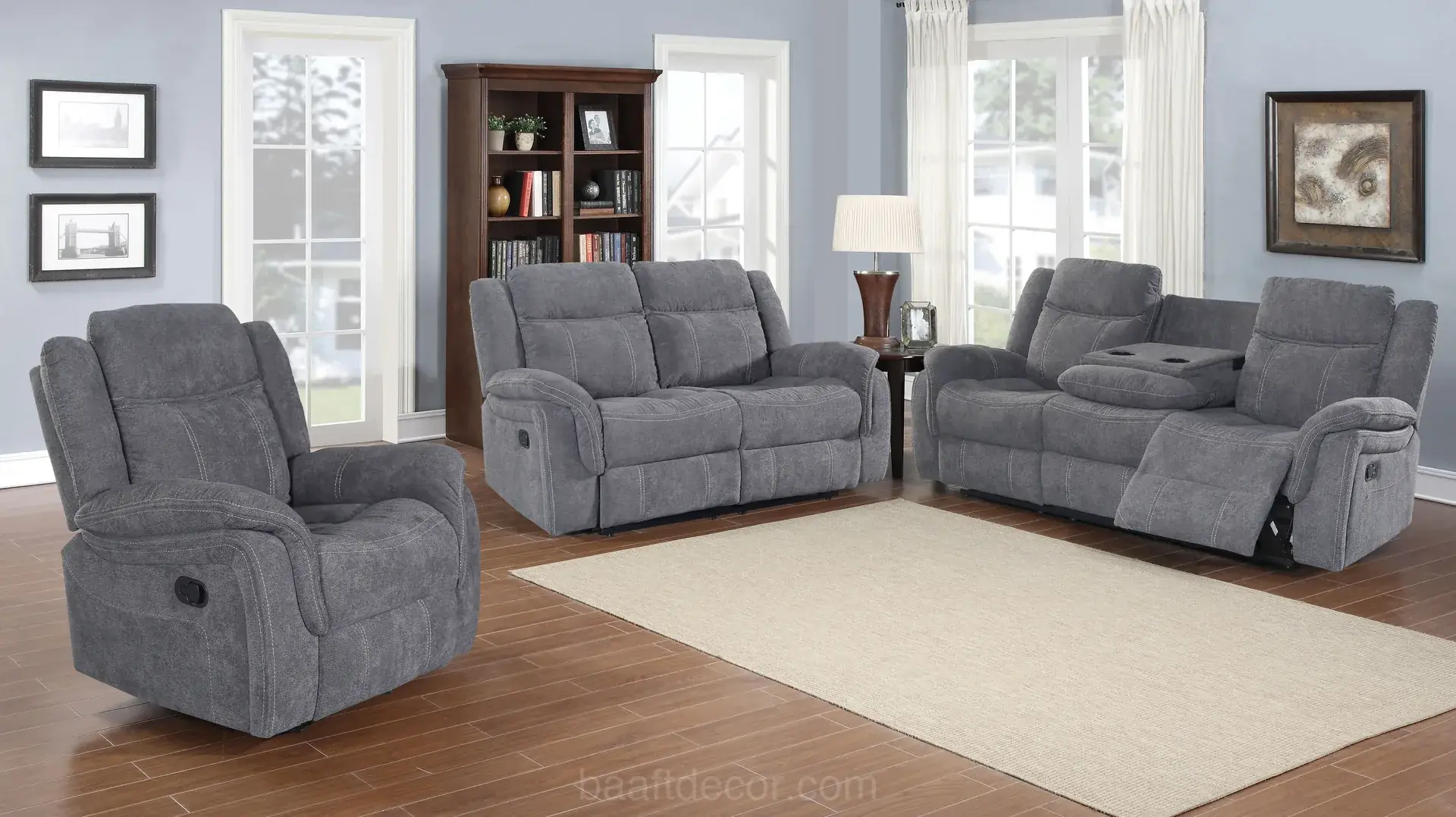
- 1-seater: a reading chair or a parent’s chair next to the main sofa.
- 2-seater: usually both seats recline. Good for couples and smaller halls.
- 3-seater: often reclines at the ends with a fixed middle or a centre console, though all three can recline.
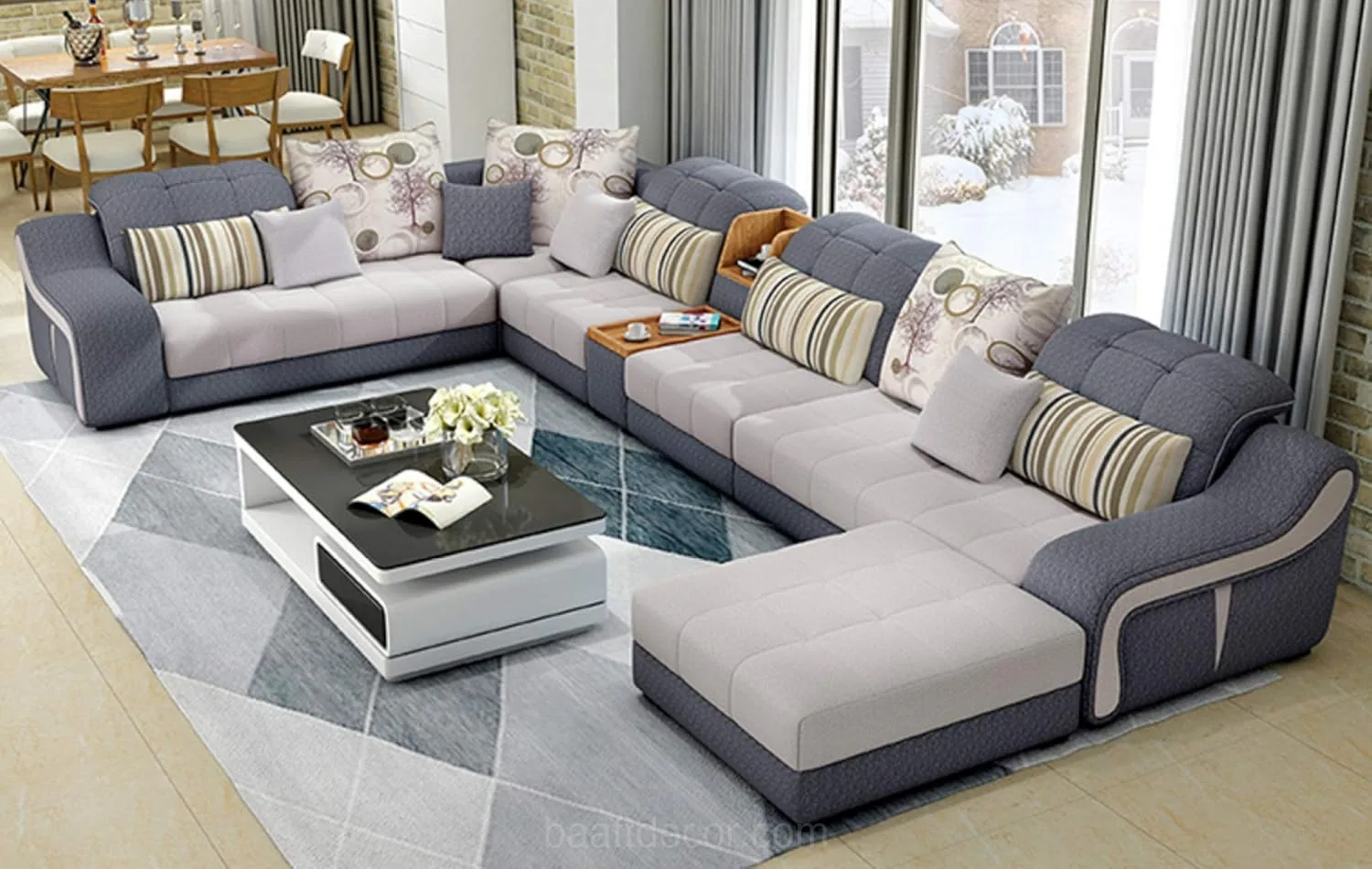
- L shape with reclining ends: the most comfortable family layout, and the heaviest build. Our L shape sofa buying guide covers sizing and delivery for those.
- Home-theatre row: individual recliners joined with consoles between them.
A centre console with cup holders and storage sounds like a gimmick until you’ve used one for a cricket match.
Upholstery: fabric, leatherette or leather?
Recliners take more wear than fixed sofas. The cover stretches and folds every time the footrest moves, and the seat front gets the most friction.
PU leatherette is a very common recliner cover in showrooms, and one of the covers we’re most often asked to replace. Heat, sweat and humidity break down the coating, and within a few years it cracks and peels at the seat edges and armrests. Genuine leather lasts well but feels warm in rooms without AC. A tightly woven polyester or microfibre stays cooler and cleans easily; our guide to the best sofa fabric for Indian homes compares them.
Underneath, the seat foam matters as much as the cover. Ask for 32 to 40 kg/m³, ideally HR foam; the sofa foam density guide explains why.
Care: habits that prevent most repairs
A lot of recliner repairs trace back to a handful of habits, not bad luck.
- Close the footrest before getting up, instead of pushing it down with your legs.
- Don’t sit or stand on the open footrest, and don’t let children ride it shut.
- Check that no child or pet is under the footrest before closing it.
- Leave the gap behind the sofa the mechanism needs.
- Vacuum under the mechanism every few weeks; remotes, coins and toys jam it.
- Unplug a power recliner before cleaning underneath it.
- In the monsoon, don’t flood the floor around the legs when mopping, since mechanisms near the floor pick up surface rust.
When something does go wrong, our guide to common recliner problems explains the usual causes, and our recliner repair service handles mechanisms, motors and reupholstery at your home.
Custom or showroom recliner sofa?
A showroom recliner is ready sooner and you can sit on the exact piece. A custom recliner lets you set the overall width to your wall, choose seat depth and height, specify foam density and fabric, and build it in sections that fit your lift. A motorised custom recliner usually takes us about four to six weeks from sign-off, because the mechanisms and motors are sourced for each order.
Either way, plan the power point before the sofa arrives. An inverter-backed socket near the sofa saves a lot of frustration in the first summer power cut.
Thinking about a recliner for your living room? Book a free home visit. We’ll measure the wall and walkways, bring fabric and foam samples, and give a fixed quote that names the mechanism type and seat count. Call or WhatsApp +91 98499 17494, 8 AM to 10 PM, all 7 days.
Frequently asked questions
Which is better, a manual or a motorised recliner sofa?
A motorised recliner sofa is better for daily use, for older parents and for anyone who wants to stop at any angle at the press of a button. A manual recliner is better for occasional use, for spots without a power socket, and for buyers who want fewer parts that can fail. Manual recliners use a lever or a push-back action and lock in a few fixed positions. Motorised ones need a socket within cord reach, ideally on an inverter-backed circuit.
How much space does a recliner sofa need behind it?
A standard recliner sofa usually needs roughly a foot of space behind the backrest so it can tilt back without hitting the wall. A wall-hugger, also called a wall-saver, uses a mechanism that slides the seat forward as it reclines, so it can sit just a few inches from the wall. The exact figure varies by model and mechanism, so ask for the stated clearance, and also measure the fully reclined length in front so the footrest doesn't block a walkway.
What happens to a power recliner during a power cut?
During a power cut, a power recliner without a battery backup stays in whatever position it was in, so a reclined seat can't return upright until power comes back. To avoid this, plug the recliner into an inverter-backed socket, or ask for a rechargeable battery pack that runs the motor for a while without mains power. A surge-protected or stabilised socket is also sensible in areas with voltage fluctuations, because it protects the adapter and the motor's electronics.
Which material is best for a recliner sofa in Hyderabad?
A tightly woven polyester or microfibre fabric is usually the best material for a recliner sofa in Hyderabad, because it stays cooler than leatherette in summer, resists dust and can be cleaned easily. PU leatherette looks smart at first but tends to crack and peel with heat, sweat and humidity, often at the seat edges and armrests. Genuine leather lasts well with care but feels warm in rooms without AC. Whatever the cover, ask for 32 to 40 kg/m³ seat foam.
Can all three seats of a 3-seater recliner sofa recline?
Yes, all three seats of a 3-seater recliner sofa can recline if each seat is built with its own mechanism. Many 3-seaters recline only at the two ends, with a fixed middle seat or a centre console that holds cups, a storage box or charging points, because a reclining middle seat is the hardest to get in and out of. Two-seaters usually recline on both seats. Decide based on how many people actually put their feet up at the same time.
How long does a recliner sofa last?
A recliner sofa is commonly estimated to last around 7 to 15 years, depending on build quality and how hard it's used. The steel mechanism often outlasts the foam and upholstery, which can be replaced through reupholstery. Power recliners may need a motor, switch or adapter replaced along the way, which costs far less than a new sofa. Standing on the open footrest, letting children ride it shut and exceeding the weight rating shorten a recliner's life quickly.
Is a recliner sofa good for elderly parents?
A recliner sofa can be very good for elderly parents if it's chosen carefully. A motorised recliner removes the need to push back or pull a lever, and a firm seat at about 17 to 19 inches high is easier to stand up from. A power lift chair, which tilts forward to help the user stand, suits people with limited mobility. Avoid very soft, deep seats, keep the remote or buttons within easy reach, and place the recliner near a socket.
How long does it take to make a custom recliner sofa?
A custom motorised recliner sofa from Baaft Decor usually takes about four to six weeks from design sign-off, because the mechanisms and motors are sourced for each order and the frame is built around them. Manual recliners and fixed sofas are generally quicker. The delivery date is confirmed in your quote, so if you're working towards a housewarming or flat handover, mention the date at the free home visit and the order is planned around it.