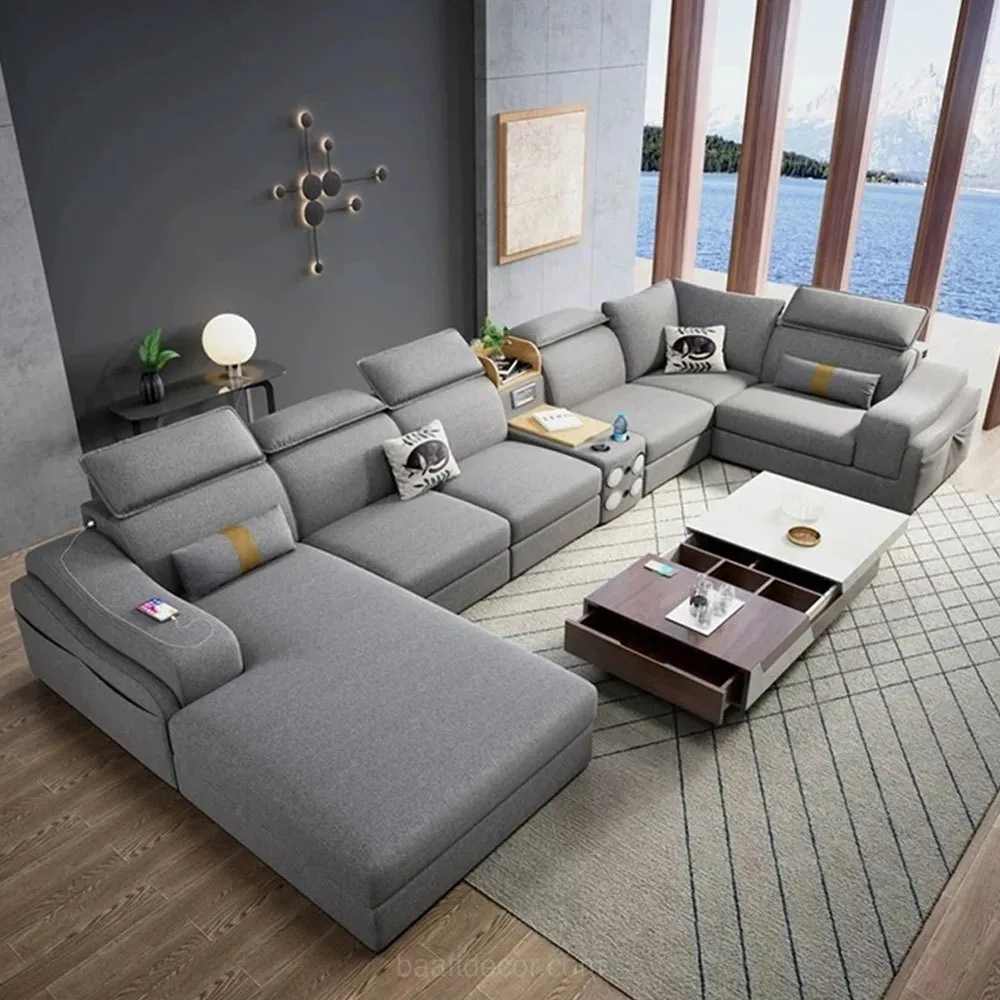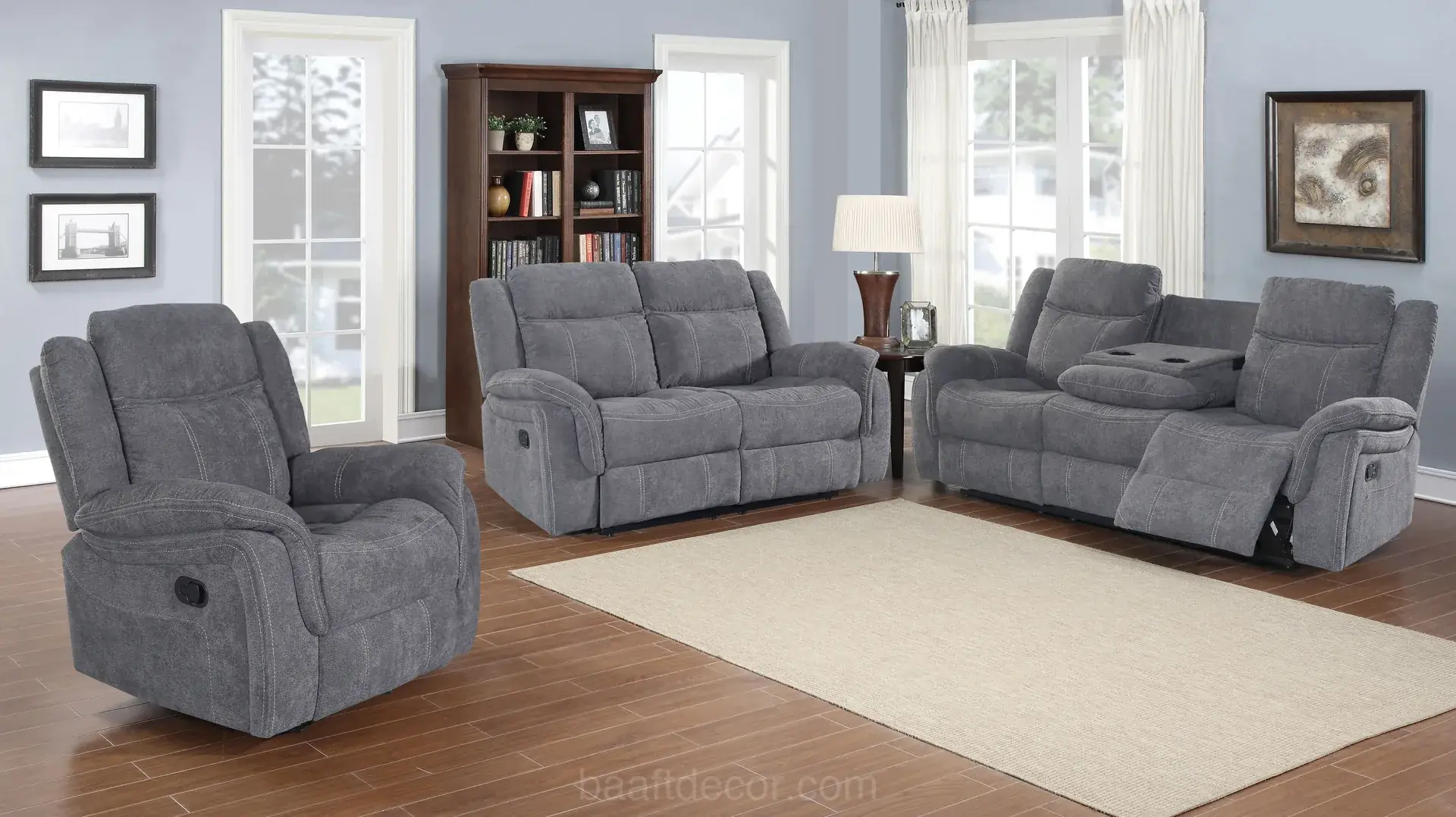
A recliner that won’t close, a handle that flops, a power seat that simply stops: each feels like the end of the chair. Most aren’t. They come down to a cable, a spring, a few bolts or a power supply. Below are the common recliner problems, what causes each, which checks are safe to do yourself, and when to call for recliner repair in Hyderabad.
Recliners are one part of a wider topic. Our sofa upholstery guide for Hyderabad homes covers frames, fabric, foam and covers for every kind of sofa.
First, which kind of recliner do you have?
The fix depends on how it moves.
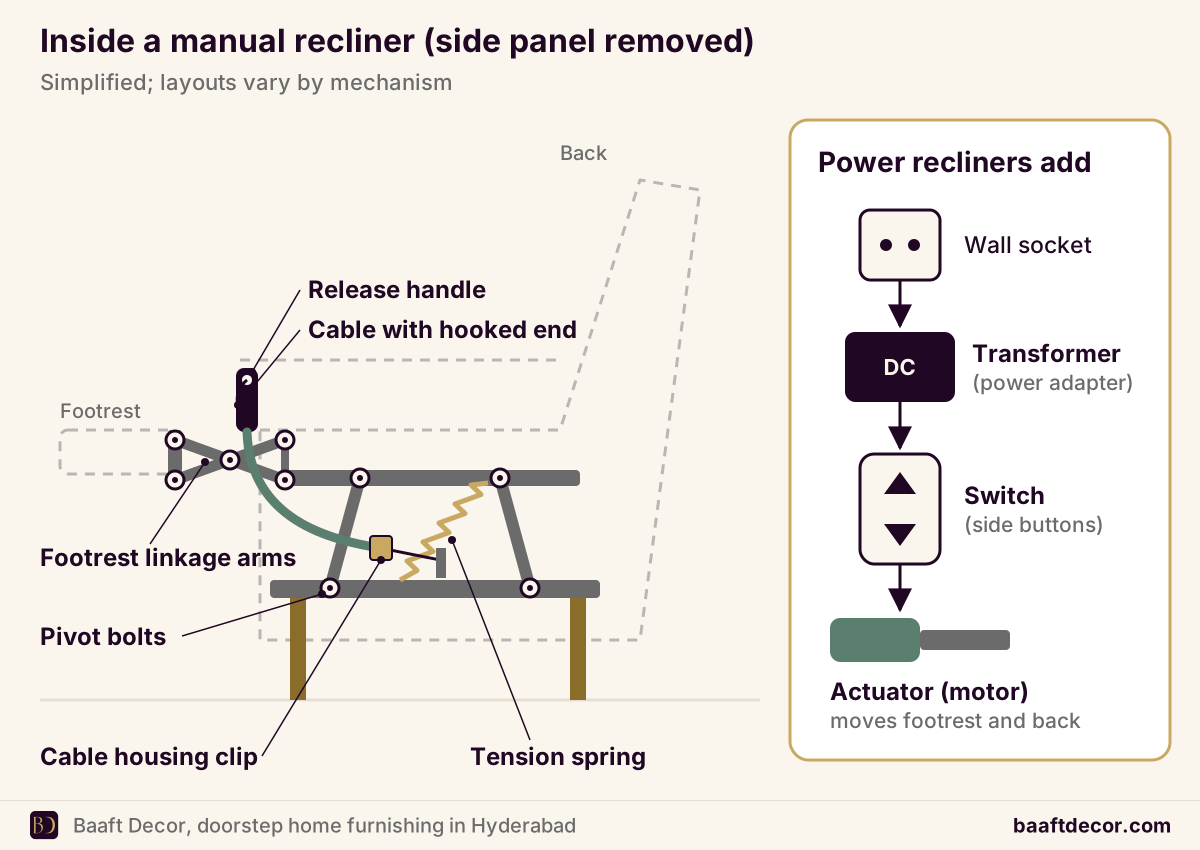
- Manual lever or handle recliners. Pulling a handle on the side releases the footrest through a cable connected to the mechanism.
- Push-back recliners. No handle; you lean back to recline, and the mechanism relies on springs and your weight.
- Power recliners. An electric actuator (motor) moves the footrest and back. Power comes through an adapter or transformer, controlled by side buttons, often with a USB port.
- Recliner sofas. Each reclining seat has its own mechanism, so one seat can fail while the others work.
How do you fix your recliner? Start with these safe checks
Before anything else:
- Unplug power recliners. Every time, before touching anything underneath.
- Look for obstructions. Remotes, toys, phone chargers and cushions slip into the mechanism and jam it.
- Check the handle cable. On manual recliners, see whether the cable’s hooked end is still seated in the handle lever.
- Tighten visible bolts. Loose bolts cause wobble, leaning and noise.
- Power check. Confirm the socket works, the adapter is pushed in fully, and no cable under the chair has been pinched or pulled out.
If those don’t fix it, the problem is likely one of the following.
The eight most common recliner problems
1. The handle is loose and does nothing
The release cable has come off the handle or snapped. If it simply slipped out, it can be re-hooked. A frayed or broken cable means replacing the cable and handle assembly with one that matches the mechanism’s length and fitting.
2. The footrest won’t close or lock
Usually stretched or broken tension springs, a cable housing clipped too tight (which holds the release partly open), a bent linkage arm, or something jammed in the mechanism. Springs on recliners are under real tension, so this is one to leave to a technician.
3. The footrest won’t open
The cable may be stretched or disconnected at the mechanism end, or the mechanism is stiff from dirt and rust. On push-back recliners, the springs may need adjusting.
4. The back reclines on its own or won’t stay up
Worn springs or worn parts in the back mechanism. On some designs, the back brackets have loosened from the frame.
5. Leaning, wobbling or squeaking
Loose bolts and worn pivot points. Tightening and light lubrication at the metal pivots fix most noise. Creaking from the wood frame itself is different and needs a frame repair.
6. The power recliner is completely dead
If every seat on a power sofa stops at once, suspect the shared power supply or transformer first. If one seat stops, it’s more likely that seat’s switch, cable or motor. A motor that hums without moving usually means an obstruction or a loose actuator connection.
7. The power recliner works on and off
Loose connectors between the switch, motor and power supply are the usual cause. Sofas that are pushed back against the wall or moved during cleaning tend to pull these connectors loose.
8. The upholstery is peeling and the seat is flat
Not a mechanism problem, but the most common reason people give up on recliners. PU leatherette cracks and peels with heat and sweat, and seat foam softens. Both are fixable by reupholstering, with the mechanism removed and refitted. See our sofa foam density guide for what to ask for in new seat foam, and best sofa fabric for Indian homes if you’re replacing leatherette.
Quick reference: symptom, cause and who should fix it
| Symptom | Likely cause | Safe to DIY? |
|---|---|---|
| Handle loose, nothing happens | Cable unhooked or snapped | Re-hooking yes; replacement better done by a technician |
| Footrest won’t close | Springs, tight cable, bent linkage, obstruction | Clearing obstructions only |
| Back won’t stay up | Worn springs or back brackets | No |
| Wobble or squeak | Loose bolts, dry pivots | Yes: tighten and lubricate metal pivots |
| All power seats dead | Power supply or transformer | Check plug and socket only |
| One power seat dead | Switch, cable or motor | Check connectors only |
| Motor hums, no movement | Obstruction or actuator linkage | Clear obstructions only |
| Peeling cover, flat seat | Worn PU leatherette, soft foam | No; reupholstery job |
When the whole mechanism needs replacing
Most faults are fixed by replacing one part. Sometimes the mechanism itself is finished. Signs of that:
- Linkage arms are visibly bent, usually after someone stood on the open footrest or a child rode it shut.
- Rivets at the pivots have worn oval, so the footrest wobbles sideways even with every bolt tight.
- Rust has eaten into the steel, not just stained the surface.
- A weld has cracked.
In these cases, the mechanism is removed and a replacement fitted, provided one of the right size and type can be sourced. Mechanisms differ by seat width, footrest style and mounting points, so the old one is measured before ordering. Replacing a mechanism is a bigger job than a cable or spring, but it is still usually far less than buying a new recliner sofa, and the frame, foam and upholstery stay as they are.
What Hyderabad conditions do to recliners
Power cuts and voltage dips. A power recliner without a battery backup pack stays wherever it stopped when the power goes, which is a nuisance mid-recline. Plugging the adapter into a stabilised or surge-protected socket is sensible in areas with frequent fluctuations.
Monsoon humidity. Mechanisms close to the floor can pick up surface rust in a damp season, especially when floors are mopped with lots of water around the legs. A stiff, gritty footrest after the monsoon is often just dirt and light rust in the pivots.
Heat. Leatherette recliners in non-AC living rooms age fastest. Fabric recliners stay cooler and last longer.
What is the average lifespan of a recliner?
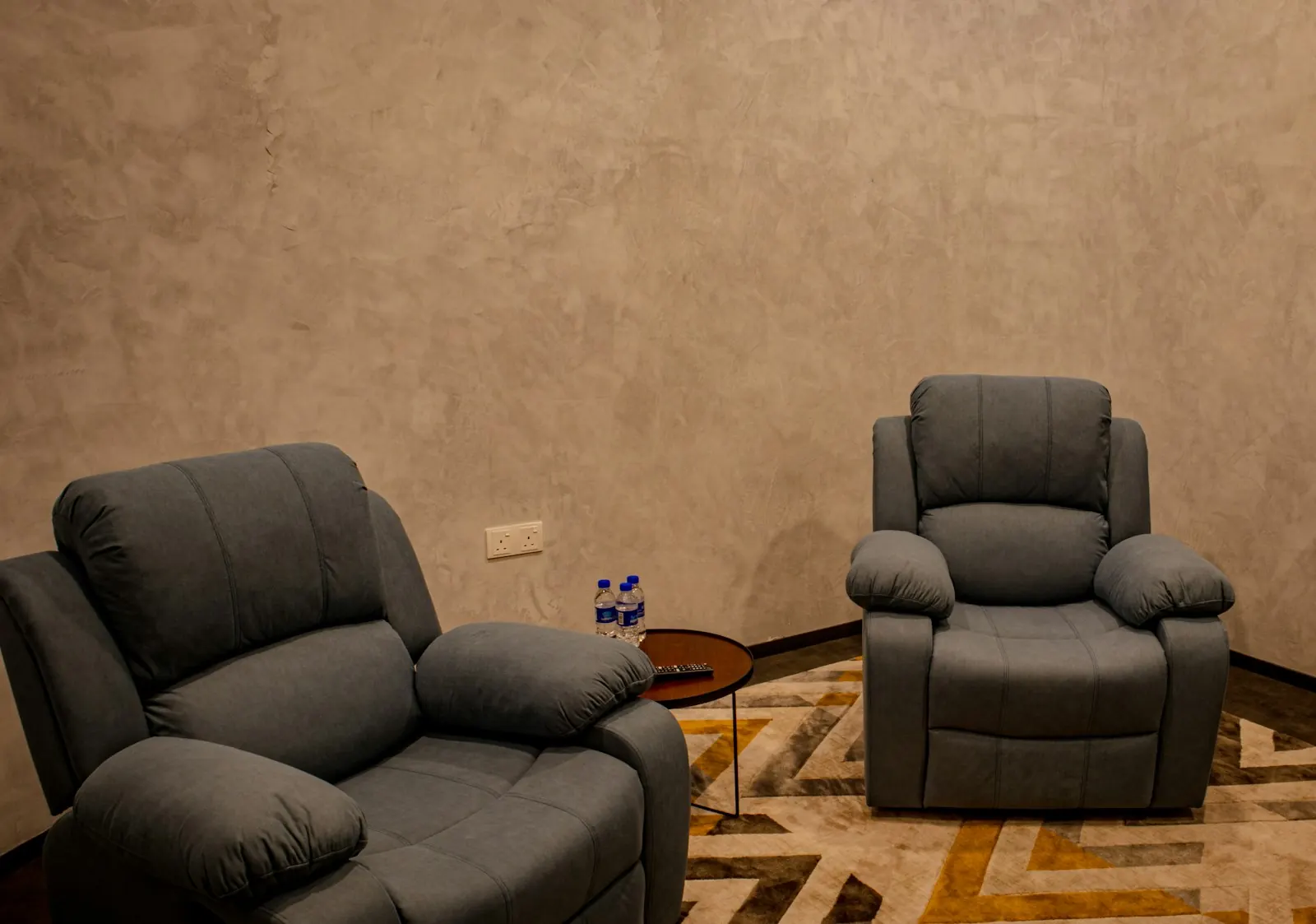
Recliners are commonly estimated to last around 7 to 15 years, depending on how well they’re built and how hard they’re used. The steel mechanism often outlasts the upholstery and foam. Power recliners may need a motor, switch or power supply replaced along the way, which still costs far less than a new chair. Exceeding the weight rating, or using the footrest as a seat, shortens a recliner’s life quickly.
Repair or replace the recliner?
Repair when the frame is solid and the fault is in a replaceable part: cable, springs, bolts, foam, cover, switch, motor or power supply. Replace when the frame is cracked, the mechanism is badly bent and no matching replacement can be found, or several major parts have failed at once. If you do end up replacing it, our recliner sofa buying guide covers manual versus power mechanisms, wall clearance and seat sizes, so the next one lasts. For non-reclining sofas with sagging seats or loose frames, see sofa repair.
A few habits that prevent repairs
- Close the footrest before getting up, rather than pushing it down with your legs.
- Don’t sit or stand on the open footrest, and don’t let children ride it.
- Keep a little gap between the sofa and the wall for the back to recline.
- Run the vacuum under the mechanism every few weeks to clear crumbs and grit.
Book a free home visit and we’ll diagnose the mechanism on the spot, explain what’s failed and quote before any work starts. Call or WhatsApp +91 98499 17494, 8 AM to 10 PM, all seven days.
Frequently asked questions
How do you fix a recliner that won't close?
To fix a recliner that won't close, first unplug it if it is a power recliner, then look under the footrest for anything jammed in the mechanism, such as a remote, toy or cushion. On manual recliners, check that the release cable is still hooked onto the handle and isn't pulled too tight. If the footrest still won't lock, the tension springs may be stretched or broken, or a linkage arm may be bent. Springs are under strong tension, so replacing them is best left to a technician.
What is the average lifespan of a recliner?
The average lifespan of a recliner is commonly estimated at around 7 to 15 years, depending on build quality, how often it is used and how it is looked after. The steel mechanism often outlasts the upholstery and foam, which tend to wear first. Power recliners can need a motor, switch or transformer replaced partway through their life, which is usually far cheaper than a new chair. Daily heavy use, exceeding the weight rating and humidity that rusts the mechanism all shorten a recliner's life.
Why is my power recliner not working?
A power recliner usually stops working because of a power supply problem rather than a dead motor. Check that the socket works, the plug and adapter are firmly connected, and the cables under the chair are not loose or pinched. If every motor in the sofa stops at once, the transformer or power supply is a likely cause. If only one seat fails, the fault is more likely its switch, cable or motor. If the motor hums but nothing moves, look for an obstruction or a loose actuator connection.
Why does my recliner handle feel loose and do nothing?
A recliner handle that feels loose and does nothing almost always means the release cable has come off the handle or snapped. The cable has a small hooked end that sits in a hole on the handle lever, and it can slip out with use. If it has just come unhooked, it can be clipped back. If the cable is frayed or broken, the cable and handle assembly needs replacing with a part that matches the length and fitting of the mechanism, which a recliner technician can source.
Can a recliner sofa be repaired at home?
Many recliner sofa repairs can be done at home, because the mechanism is accessible once the sofa is tipped forward or the seat is lifted. Cable and handle replacement, tightening and lubricating the mechanism, replacing footrest springs, and swapping a power supply or switch are all usually done on site. Jobs that need the mechanism removed and replaced, frame repairs, or full reupholstery of a recliner may need the sofa taken away, depending on its size and the work involved.
Is it worth repairing an old recliner?
Repairing an old recliner is usually worth it when the frame is sound and the problem is in the parts that commonly wear: the cable, springs, bolts, foam, upholstery or the motor and switch on a power model. These are replaceable at a fraction of the cost of a new recliner. It is less worthwhile when the frame is cracked, the mechanism is badly bent or rusted and no matching replacement is available, or when several major parts have failed at once.
Why is the leather on my recliner peeling?
Peeling on a recliner is almost always PU leatherette rather than genuine leather. PU is a thin plastic coating on a fabric backing, and heat, sweat, body oils and humidity break it down over a few years, so it cracks and flakes first on the seat, headrest and arm tops. It can't be patched convincingly. The fix is reupholstering the recliner, either in better-grade leatherette or in a woven fabric, which also stays cooler in summer. The mechanism is removed and refitted during the job.
How do I stop my recliner from squeaking?
To stop a recliner squeaking, unplug it if powered, tip it forward or lift the seat to reach the mechanism, and tighten any loose bolts and nuts you can see. Then apply a little light machine oil or a silicone spray to the metal pivot points while working the footrest through its range, and wipe off any excess so it doesn't drip onto the carpet. Never oil motors, switches or wiring. If the squeak comes from cracked wood in the frame, a technician needs to repair it.