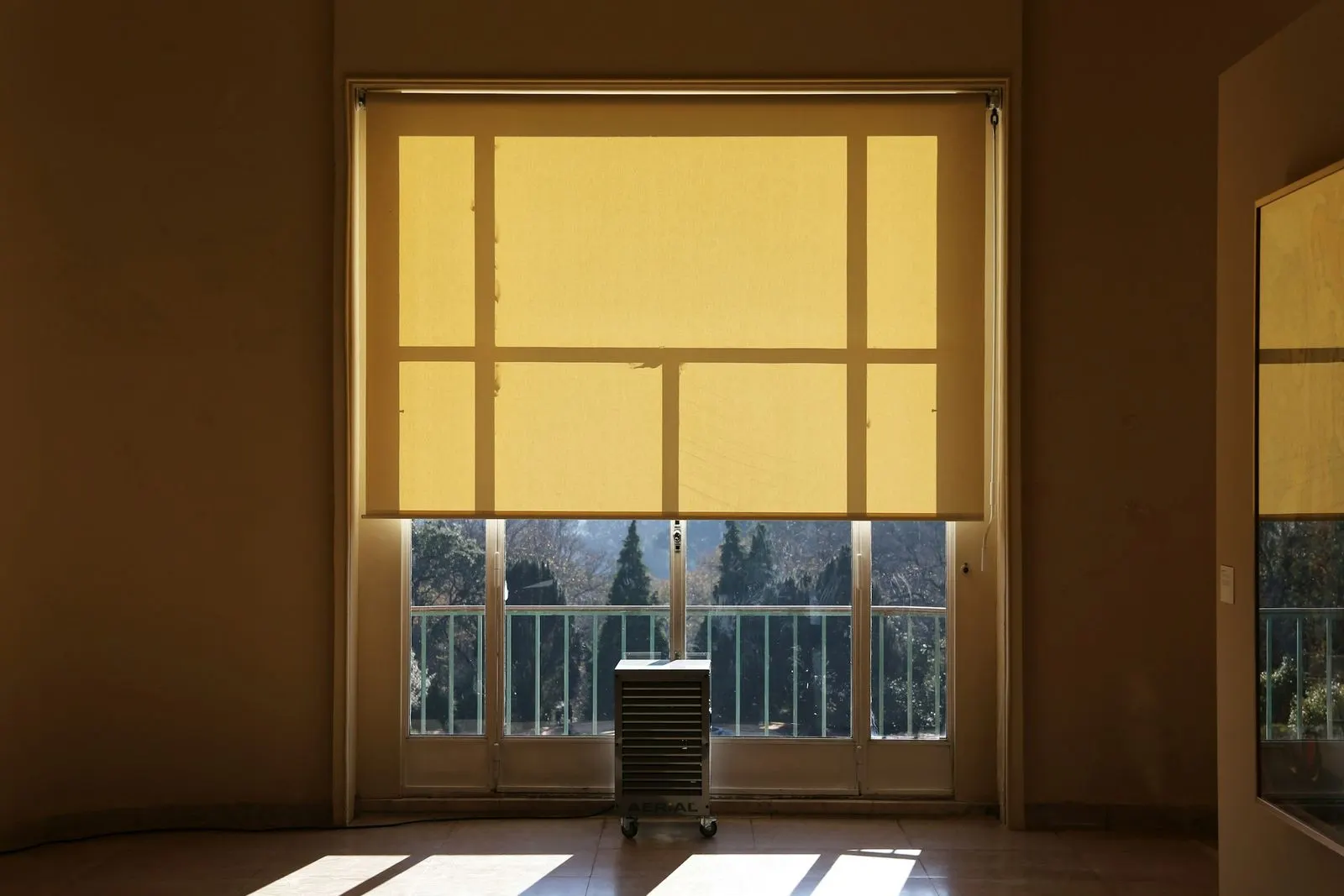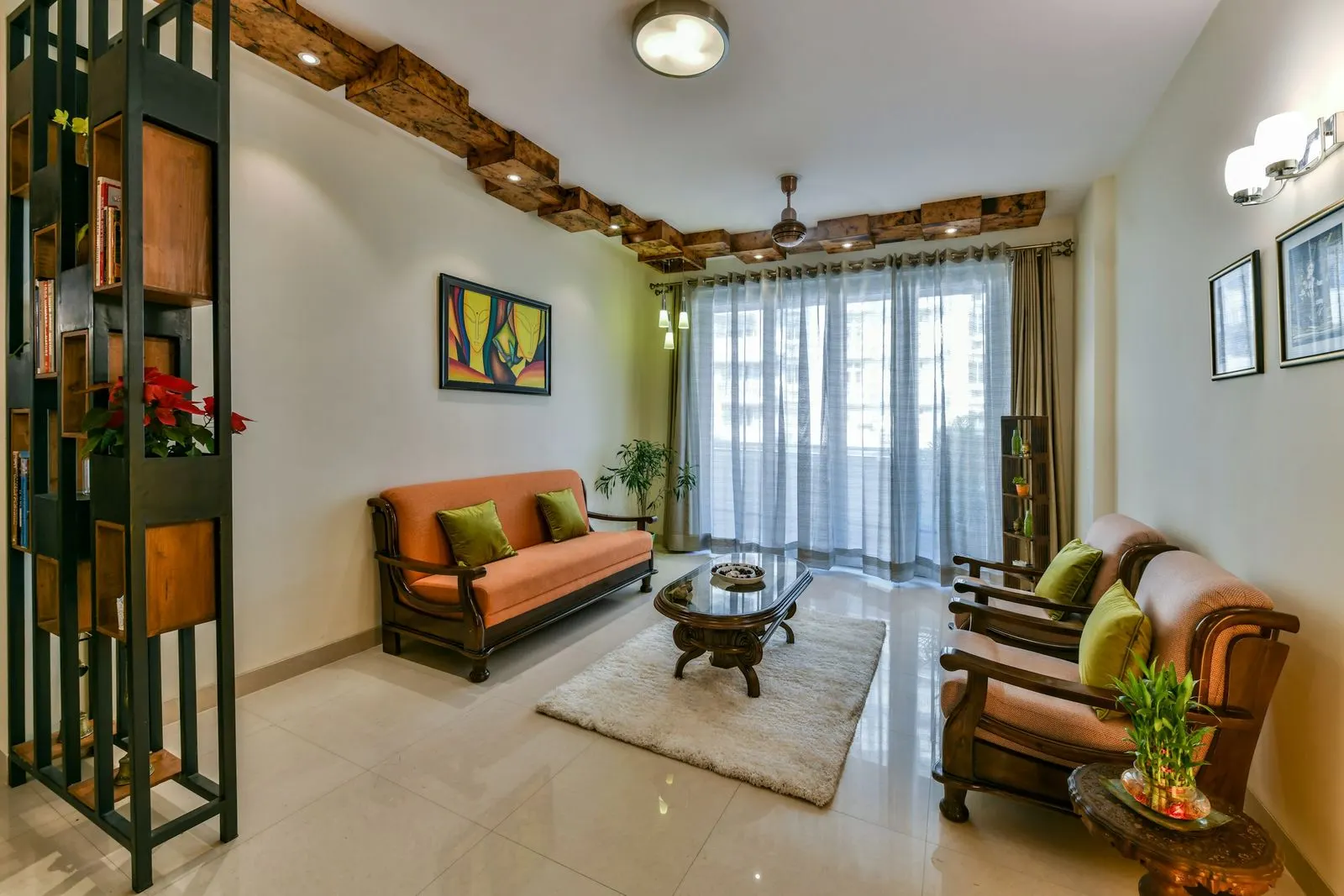
By April, some rooms in a Hyderabad flat are fine at noon and others feel like an oven by 4 PM. The difference is almost always the windows: which way they face, how much glass there is, and what’s covering them. For these rooms, summer heat is the main brief when we plan window blinds in Hyderabad and curtains. Below is what helps, roughly in order of how much difference it makes. Heat is one chapter of our curtains buying guide for Hyderabad homes; this page takes it window by window.
The short version:
- Shade the glass from outside where you can (balconies, outdoor blinds).
- Use sunscreen or blackout roller blinds close to the glass inside.
- Add thermal-lined curtains with a light backing facing the window.
- Close sun-facing windows before the sun reaches them, open them after sunset.
- Cover the edges. Gaps let the heat in.
Why some rooms get so much hotter
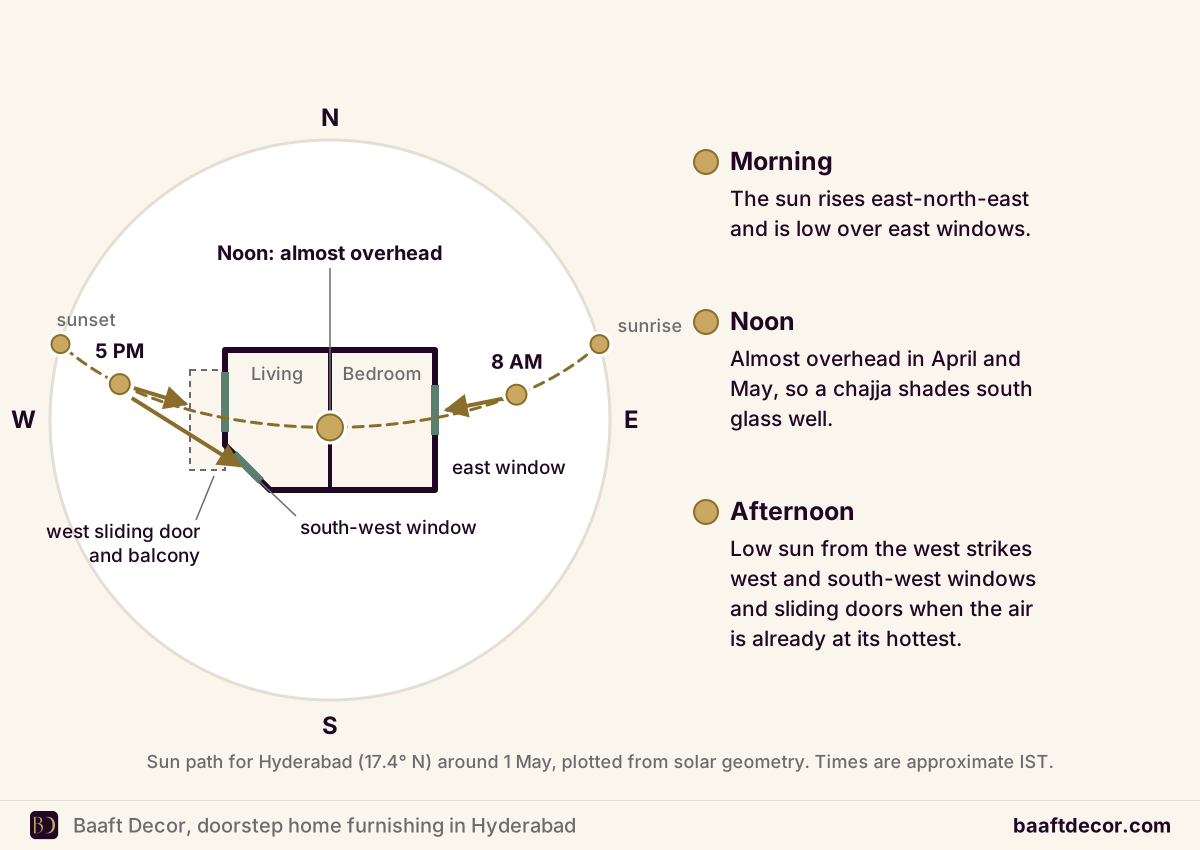
West-facing windows are the main culprit. They take the low afternoon sun, when the air is already at its hottest. A roof overhang or chajja above the window can’t stop sun that comes in nearly horizontally.
South and south-west windows get strong sun for much of the year. In peak summer the midday sun in Hyderabad is almost overhead, so a decent chajja shades a south window well at noon. In October to February, the sun sits lower in the southern sky and reaches further in.
Sliding balcony doors and floor-to-ceiling glass let in far more sun than a standard window. New apartments in areas like the Financial District and Kokapet often have whole walls of glass on the living room side.
High floors have nothing between the window and the sun. No trees, no neighbouring building’s shadow.
Outside the glass beats inside the glass
If you remember one thing, make it this: stop sunlight before it gets through the window. Once sunlight passes the glass, part of it has already turned into heat inside the room, whatever you hang behind it.
The US Department of Energy’s Building America Solution Center makes the same point: exterior attachments block sunlight before it passes through the window, which is why interior ones are usually less effective at cutting solar heat gain.
In a Hyderabad apartment, “outside” usually means the balcony:
- Outdoor PVC or roller blinds across the balcony opening shade both the balcony and the sliding door behind it. Our balcony blinds service covers these.
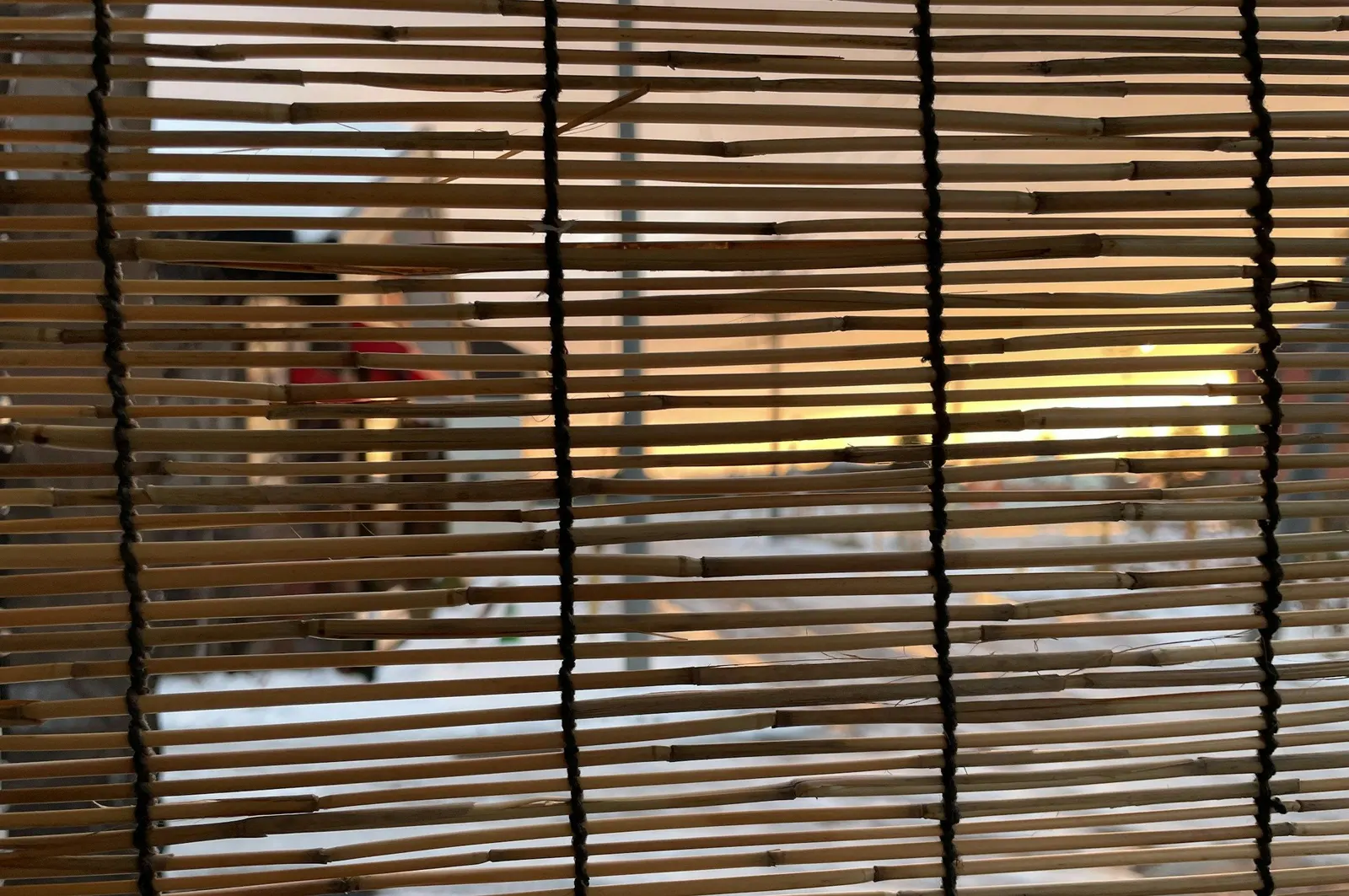
- Bamboo chiks give the same shade with a traditional look, but they belong on covered, sheltered sit-outs. On an exposed west-facing balcony, PVC or outdoor fabric holds up far better.
- Khus (vetiver) mats shade and, when sprinkled with water, cool the incoming air. They work well in the dry heat of April and May, but take them down before the monsoon or they go mouldy.
Check your residents’ association rules before fitting anything that changes how the building looks from outside. For more options, see our guide to the best blinds for balconies.

Inside the window: sunscreen and blackout roller blinds
Where you can’t shade from outside, a roller blind close to the glass is the next best thing.
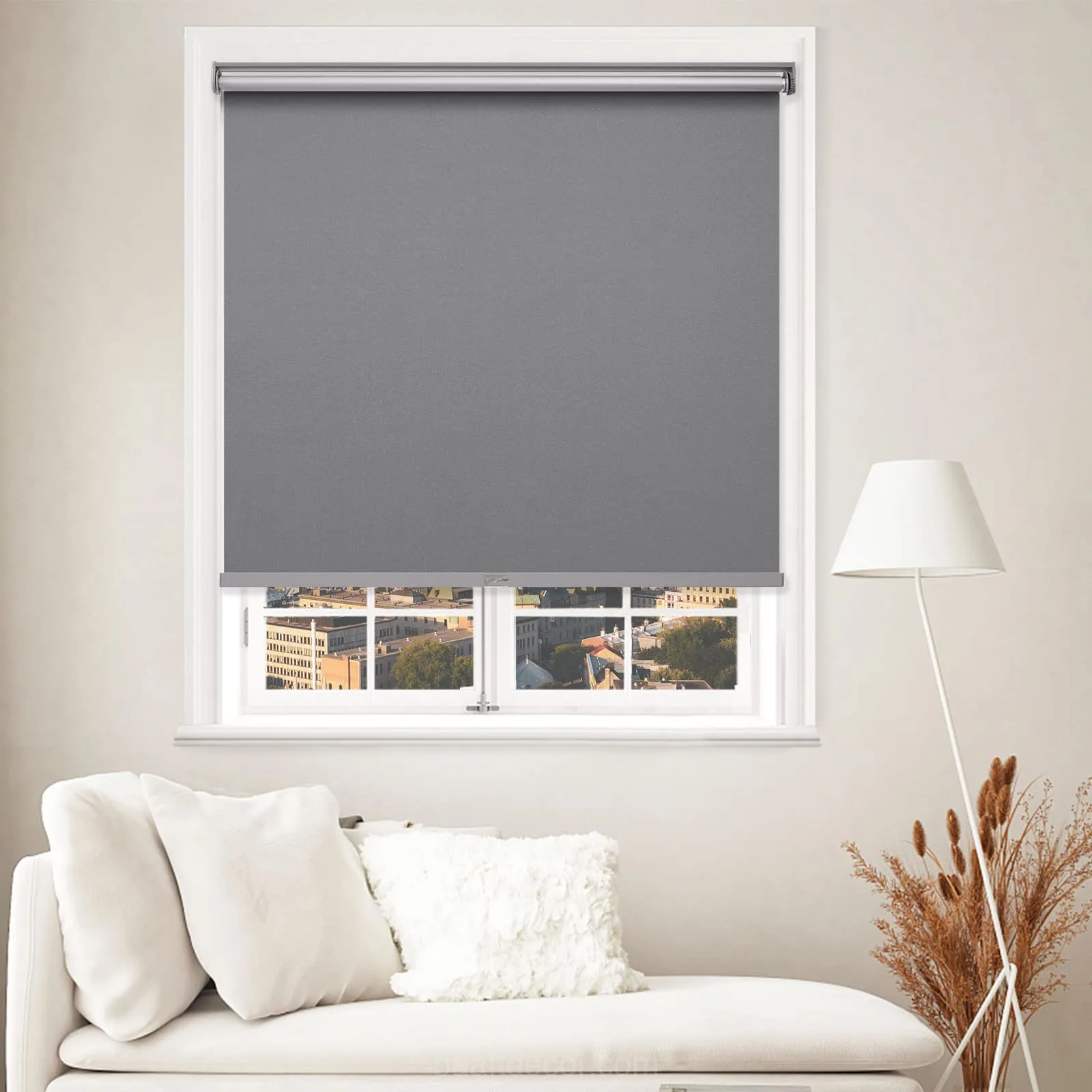
Sunscreen roller blinds use a woven mesh-like fabric. You can still see out, but glare and much of the heat are cut. The key spec is the openness factor, the percentage of tiny gaps in the weave:
| Openness | Heat and glare blocked | View outside | Good for |
|---|---|---|---|
| 1% | Most | Limited | West-facing living rooms, harsh afternoon sun |
| 3% | High | Good | Most sunny living rooms and home offices |
| 5% | Moderate | Clear | Rooms with moderate sun where view matters |
| 10% | Least | Very clear | North-facing or shaded windows |
Darker sunscreen fabrics give a clearer view out and better glare control. Lighter ones reflect more heat. For west-facing living rooms we usually suggest 1% to 3% in a mid tone as a balance.
Blackout roller blinds block light completely and suit bedrooms. A white or light backing facing the glass helps reflect heat.
Zebra blinds let you switch between see-through and solid bands. They’re useful for daytime privacy, but in the open position the sheer bands let sun through, so they help less on the hottest windows.
Thermal-lined curtains
A curtain adds a thick layer between the glass and the room and covers the edges a blind leaves open.
- Choose a thermal or blackout lining with a white or silver backing facing the window.
- Go floor length and wide. 15 to 20 cm past the frame on each side.
- Mount at the ceiling to close the top gap.
- Pair with a blind on the hottest windows: blind for daytime, curtain for full coverage.
Our custom curtains service covers thermal and blackout linings, and the guide on blackout, dim-out and sheer curtains compares them.
Sheers alone cut glare, not much heat. Keep them as the day layer in rooms that face north or east.
Timing: when to close and open
Building America’s advice for cooling is to close window coverings during the day and open them at night, as long as it’s cooler outside than in. In Hyderabad, adjust by direction:
- East windows: close in the morning, open by noon.
- West and south-west windows: close by late morning, before the sun reaches them, and keep them shut until sunset.
- All windows: open after sunset to let the house release heat and catch any breeze.
If no one is home in the afternoon, motorised blinds or curtains on a schedule close the west side at noon and open it at sunset without anyone remembering to.
Room-by-room setup
| Room | Best setup for summer |
|---|---|
| West-facing living room | Outdoor balcony blind + 1 to 3% sunscreen roller + lined curtain |
| Master bedroom | Blackout roller blind + thermal-lined curtain |
| Kids’ room | Blackout roller blind, washable |
| Home office | 3 to 5% sunscreen roller blind to cut screen glare and keep the view |
| Kitchen | Sunscreen or PVC roller blind, nothing that holds oil |
| Balcony | Outdoor PVC or outdoor-fabric blinds (bamboo only on a covered sit-out) |
Small fixes that add up
- Close the gaps. Light leaking around a blind is heat leaking in too. Outside-mount blinds should overlap the frame by 5 to 8 cm each side.
- Mind the colours. Dark unlined curtains on a west window soak up heat and fade fast.
- Keep openable panels usable. A blind or curtain that blocks the sliding sash makes it awkward to open windows in the evening, which is when you need the breeze most.
- On high floors, use heavier fabrics or bottom bars that don’t flap in the wind. See our guide to high-rise apartment window solutions.
What about window films?
Solar control films are applied directly to the glass and reflect or absorb part of the sun’s heat before it enters the room. They work day and night without anyone opening or closing anything, and they keep the view. They aren’t something we install, but they can be combined with blinds and curtains. If your windows are under a builder’s warranty, check whether films affect it, and check your residents’ association rules if the film changes how the glass looks from outside.
Common mistakes that keep rooms hot
- Sheers only on west windows. They soften glare but let most of the heat through.
- Blackout in the living room, left open all day. It only helps if it’s closed when the sun is on that window.
- Dark unlined curtains. They absorb heat and radiate it into the room.
- Blinds that stop short of the frame, leaving bright strips at the sides.
Plan your summer setup
Book a free home visit before the heat peaks. We’ll check which windows take the sun, bring sunscreen, blackout and thermal-lined samples, measure, and give a written quote. We’re available 8 AM to 10 PM, all seven days. WhatsApp or call +91 98499 17494.
Frequently asked questions
Which curtains are best for reducing heat in summer?
The best curtains for reducing summer heat are lined curtains with a thermal or blackout lining that has a white or light-coloured backing facing the window. The light backing reflects part of the sun's heat back through the glass, and the thick lining slows heat moving into the room. Make them floor length, extend them 15 to 20 cm past the window on each side, and hang them from a ceiling track to reduce gaps. Keep them closed on sun-facing windows from late morning until sunset.
Are blinds or curtains better for keeping a room cool?
Blinds and curtains both help keep a room cool, but they work in different ways. A sunscreen or blackout roller blind sits close to the glass and blocks sun before it spreads into the room, while still letting you see out with a sunscreen fabric. A thermal-lined curtain adds an insulating layer and covers the edges better. In Hyderabad's hottest rooms, combining both works best: a roller blind close to the glass for daytime sun and a lined curtain in front for evenings and full coverage.
What are the best blinds for west-facing windows?
The best blinds for west-facing windows are sunscreen roller blinds with a low openness factor, such as 1% to 3%, or blackout roller blinds for bedrooms. West windows get low-angle afternoon sun that roof overhangs cannot block, so the blind needs to cover the whole glass. A sunscreen blind cuts glare and heat while keeping some view outside. For balconies on the west side, an outdoor PVC or outdoor-fabric blind that shades the glass from outside is even more effective than any indoor blind.
Do blackout curtains reduce room temperature?
Blackout curtains can help reduce room temperature, but they are not a substitute for air conditioning. Because they sit inside the window, the sun's heat has already passed through the glass when it reaches them. A blackout curtain with a white or light backing reflects some of that heat out and stops the room from heating up as quickly in the afternoon. They work best when closed before the sun hits the window, fitted wide and long enough to cover the frame, and combined with outdoor shading where possible.
What colour curtains keep a room cool?
For keeping a room cool, the colour that matters most is the side facing the window. A white, off-white or silver lining reflects more sunlight and heat back out than a dark backing. The room-side fabric can be any colour you like if it is lined. If the curtain is unlined, lighter colours reflect more heat and also show sun fading less than dark or bright colours. Dark unlined curtains on a west window absorb heat and become warm to the touch in the afternoon.
Are bamboo chiks or khus curtains effective against heat?
Bamboo chiks and khus (vetiver) curtains are effective against heat when hung outside the window or across a balcony, because they shade the glass and walls before the sun heats them. Khus mats also cool incoming air when sprinkled with water, which works well in Hyderabad's dry heat of April and May. They need regular wetting and can develop mould in the humid monsoon, so they are best taken down by June. Modern outdoor PVC and bamboo blinds give similar shade with less upkeep.
What is a sunscreen roller blind and what does openness factor mean?
A sunscreen roller blind is a roller blind made from a woven, mesh-like fabric that blocks much of the sun's glare and heat while letting you see outside. The openness factor is the percentage of tiny open gaps in the weave, commonly 1%, 3%, 5% or 10%. A lower openness blocks more heat and glare but gives less view, while a higher openness keeps more view but lets more sun in. Darker sunscreen fabrics give clearer views outside; lighter ones reflect more heat.
Can I install outdoor blinds on my balcony in a gated community?
Whether you can install outdoor blinds on a balcony in a gated community depends on your residents' association rules. Many communities control anything that changes the building's exterior, such as colour, material or how far a blind projects, so check with the association before ordering. Blinds fitted inside the balcony opening, in neutral colours that match the facade, are more often accepted. Getting written approval first avoids having to remove the blinds later. We can show neutral options suitable for most associations.