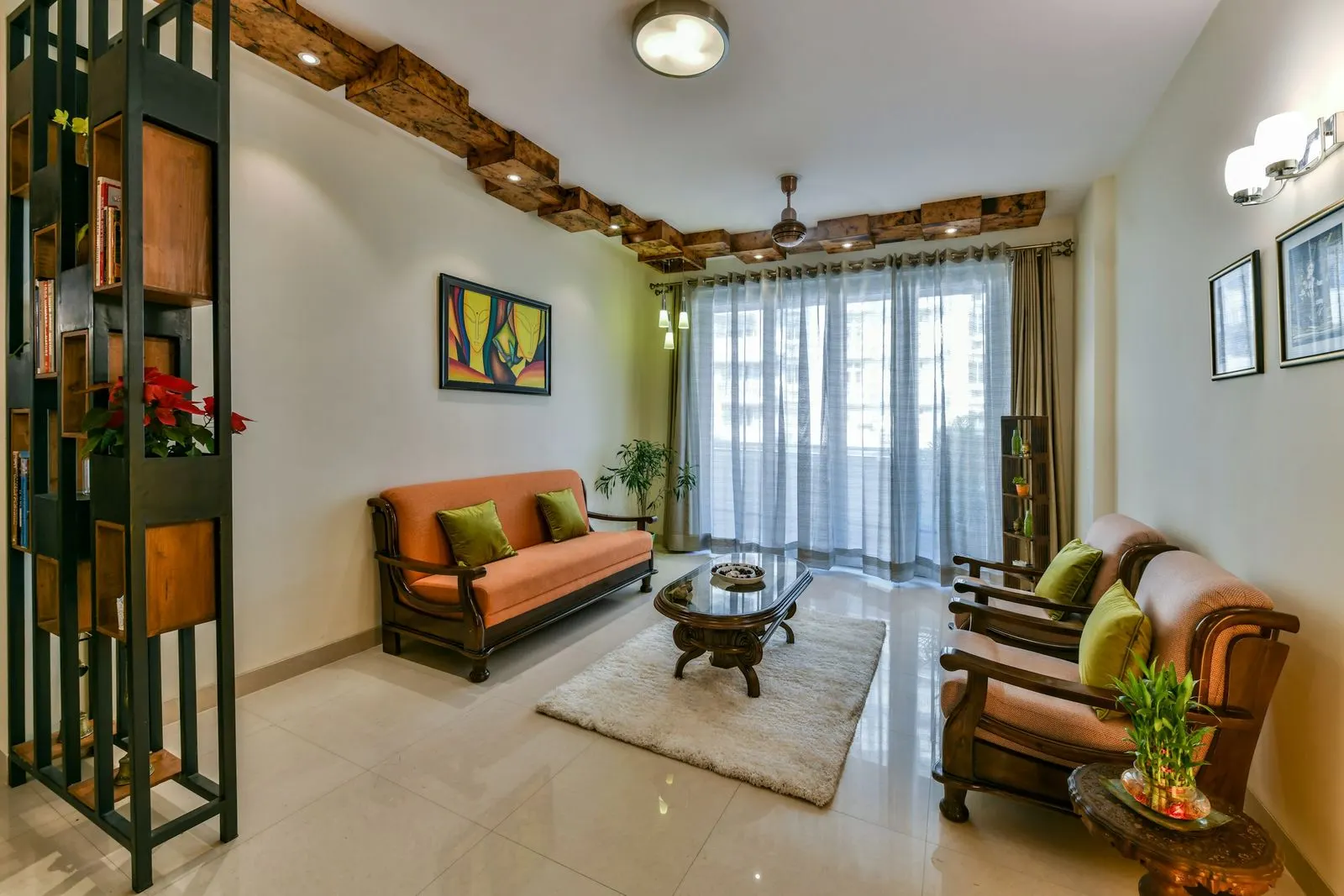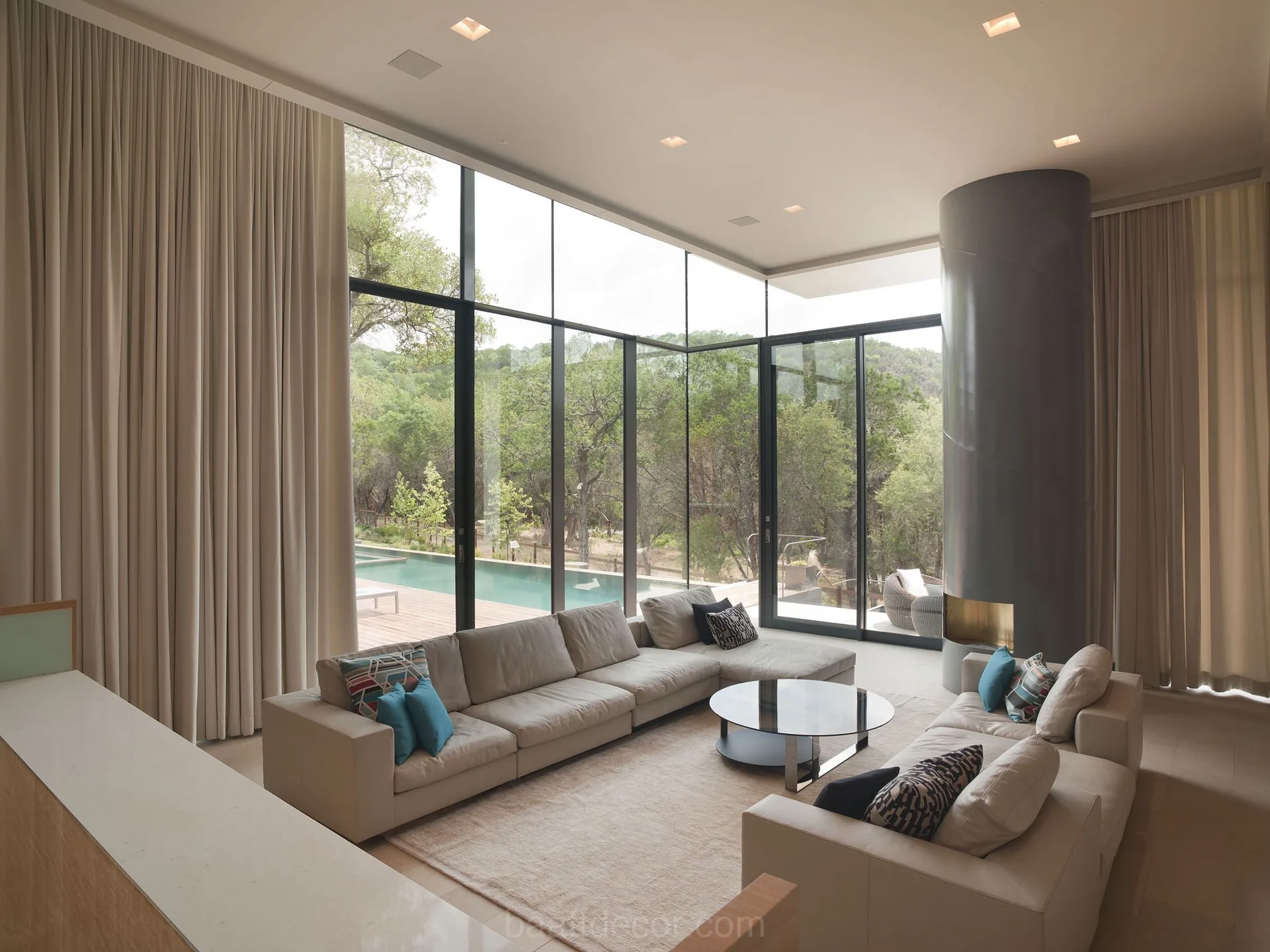
Floor-to-ceiling glass is why many people buy on the 20th floor. It is also why the living room is unbearable at 3 PM in May, why the neighbours across the podium can see your dinner, and why a cheap roller blind smacks against the glass every time someone opens the balcony door. High-rise windows need different choices from a ground-floor house: bigger tracks, two layers, wind-aware hardware and often a motor. If your glass is large enough that pulling curtains by hand is a chore, our motorised curtains and blinds are built for exactly these openings. Windows are one part of setting up a new flat, and our new home furnishing guide for Hyderabad covers the rest, from handover to move-in.
Why high-rise windows are different
Four things change as you go up a tower:
- More sun. No trees or neighbouring roofs shade you. West and south glass take the full afternoon sun.
- More wind. Wind is stronger at height, and opening a sliding door creates a strong draught through the flat.
- Less night privacy. Facing towers are often close, and a lit room behind glass is easy to see into after dark.
- Glare. Light bounces off neighbouring glass facades, not just from the sky.
New towers across Kokapet and the Financial District are full of full-height sliding doors, so these are the problems we plan for on almost every high-rise visit.
Heat: what actually cuts it
Stop the sun as close to the glass as you can, then add a second layer that traps air.
| Option | Heat | Glare | Night privacy | Day view | Best for |
|---|---|---|---|---|---|
| Sheer curtain only | Low | Some | Poor | Yes | North-facing rooms, daytime softness |
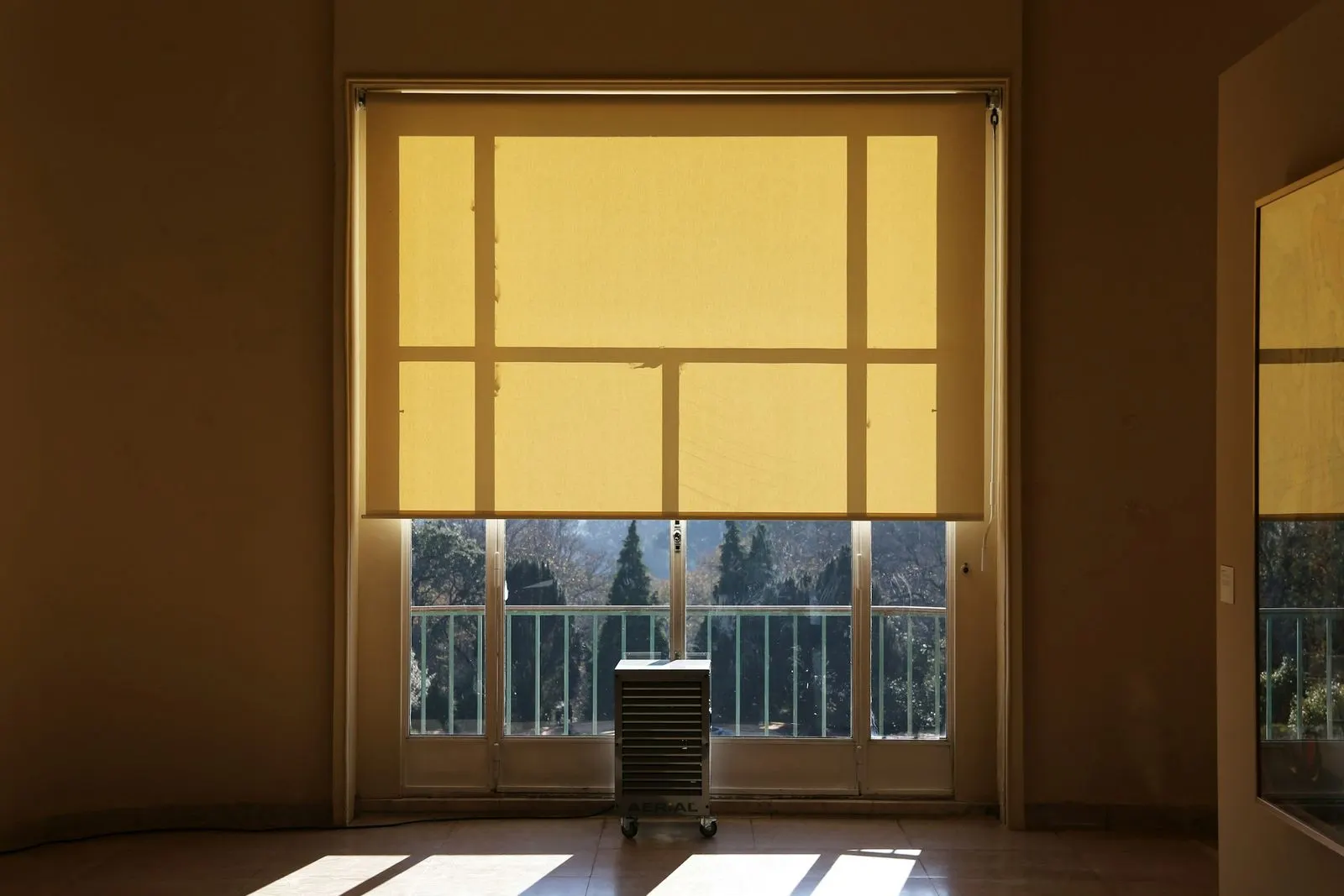
| Sunscreen roller blind | Medium | Good | Poor to fair | Yes, filtered | Living rooms, study |
| Zebra blind | Medium | Good, adjustable | Fair | Partial | Living rooms |
| Dimout curtain | Medium to high | Good | Good | No, when closed | Living rooms |
| Blackout curtain with lining | High | Full | Full | No, when closed | Bedrooms, west glass |
| Blind plus blackout curtain | Highest | Full | Full | Yes, blind open | West or south living rooms |
Sunscreen roller fabrics are sold by “openness”, the percentage of open weave. A lower openness blocks more heat and glare but shows less of the view. For a deeper look at fabrics, see our guide to blackout, sheer and dimout curtains, and for whole-house heat tactics, how to keep your home cool in a Hyderabad summer.
We don’t suggest venetians as the main heat layer on west glass. Tilted slats let strips of sun straight through, and dark slats sitting in direct sun get hot and warm the air beside the window. A light-coloured roller blind that closes flat does that job better.
Glare and keeping the view
If you bought the flat for the view, you don’t want to close it off every afternoon. A sunscreen roller blind is the answer most people end up with: it cuts glare on the TV and laptop while you still see out. Zebra blinds give you a choice between filtered light and a solid band, which suits living rooms well. For bedrooms, a blackout roller does the night-time job better.
Privacy from facing towers
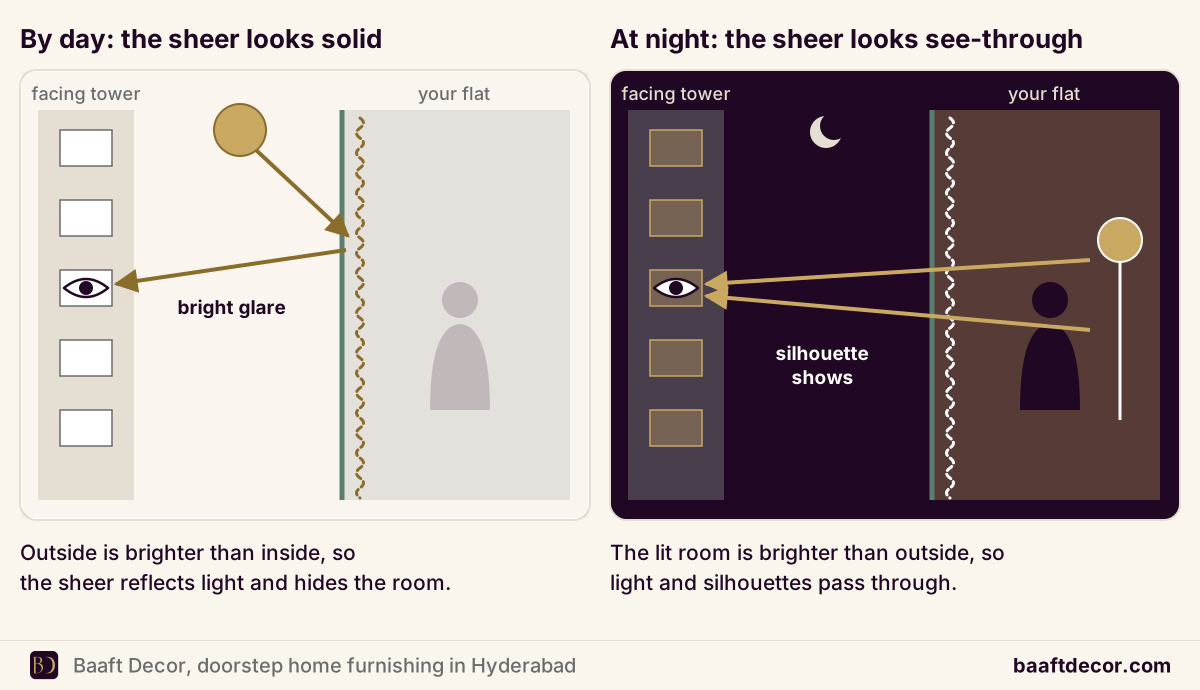
A sheer curtain works by day because it is brighter outside than in. After sunset that reverses. Switch the lights on and the sheer turns into a screen that shows your silhouette to the tower opposite. So every high-rise bedroom and most living rooms need a second, opaque layer for the evening, even if you love the sheer.
Wind: stopping curtains and blinds from flapping
Open a balcony door on a windy afternoon and every loose fabric in the room moves. Here’s what we do about it:
- Weighted hems on curtains, using lead tape or a chain weight sewn into the bottom.
- Ceiling-mounted tracks close to the ceiling, so less air gets behind the curtain.
- Tie-backs (magnetic or hook) to hold curtains when doors are open for long periods.
- Bottom-weighted rollers or side channels for blinds near doors you open often.
- No venetian slats beside open doors. They rattle, bend and tangle in wind.
- Mesh doors kept shut. A pleated or sliding mosquito mesh slows gusts as well as insects.
Hardware matters too. Heavy lined curtains on a long drop pull hard on the brackets when wind catches them. Fix brackets into the concrete slab or into proper wooden backing in a false ceiling, never into gypsum board alone.
Measuring tall glass properly
Floor-to-ceiling curtains look wrong if they are even an inch short, and slabs in new towers are rarely perfectly level. Measure the drop at both ends and in the middle of every opening, and use the shortest figure for a curtain that should just clear the floor. Note where the sliding door’s handle sits when open, because a curtain stack that covers the handle gets pulled and stained within weeks. Leave wall space beside the glass for the curtain to stack; otherwise it eats into the view even when open. If you’re measuring on possession day, our flat handover checklist lists what else to note on the same visit.
When motorised curtains and blinds are worth it
Motorisation isn’t a gadget on high-rise glass. It earns its place when:
- The glass is very wide or tall, and lined curtains are heavy to pull by hand.
- Windows sit behind a sofa, a bed or a double-height void and are hard to reach.
- You want blinds to close on a schedule before the afternoon sun hits.
- You have small children and want no cords in the room.
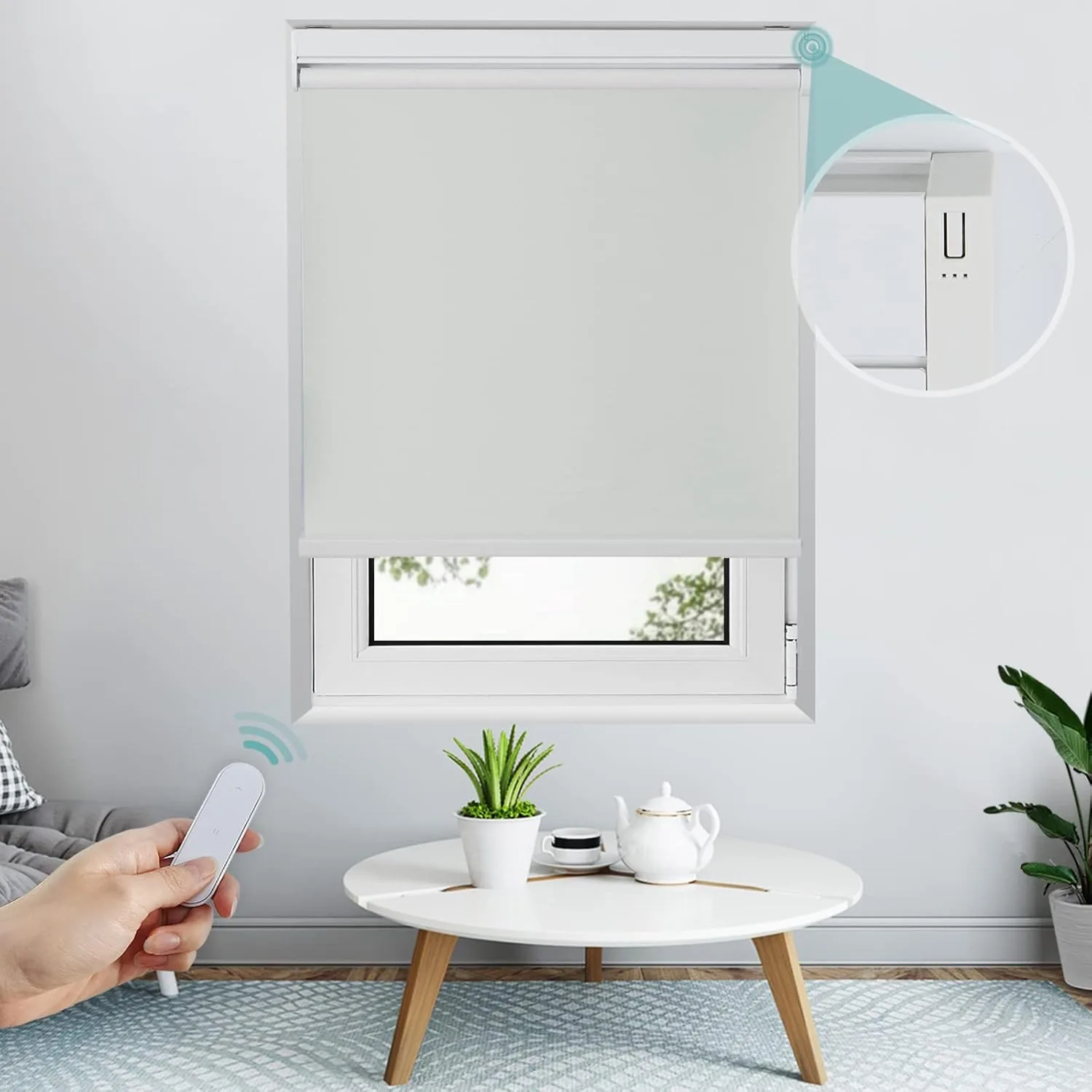
The planning point most people miss: curtain track motors and most blind motors need a power point at the head of the window. Put it in before the false ceiling and painting. Battery motors suit blinds and lighter curtain tracks; heavy or very wide curtains are better on a wired motor. Most systems run on a remote, and many can be linked to a phone app or a voice assistant. Ask for a manual override, so the curtains can still be drawn during a power cut.
Safety on high floors
- Cords. Long or looped blind cords are a strangulation risk for young children. The US window covering standard now requires stock blinds to be cordless or have inaccessible cords (WCMA FAQ). Choose cordless, motorised or a wall-fixed chain tensioner.
- Balconies. On high floors, the gap above a balcony railing is the bigger worry. Invisible grills close it without blocking the view.
- Furniture under windows. Don’t put a bed, a sofa or a low cabinet right under an openable window in a child’s room. It becomes a step.
Balconies and facade rules
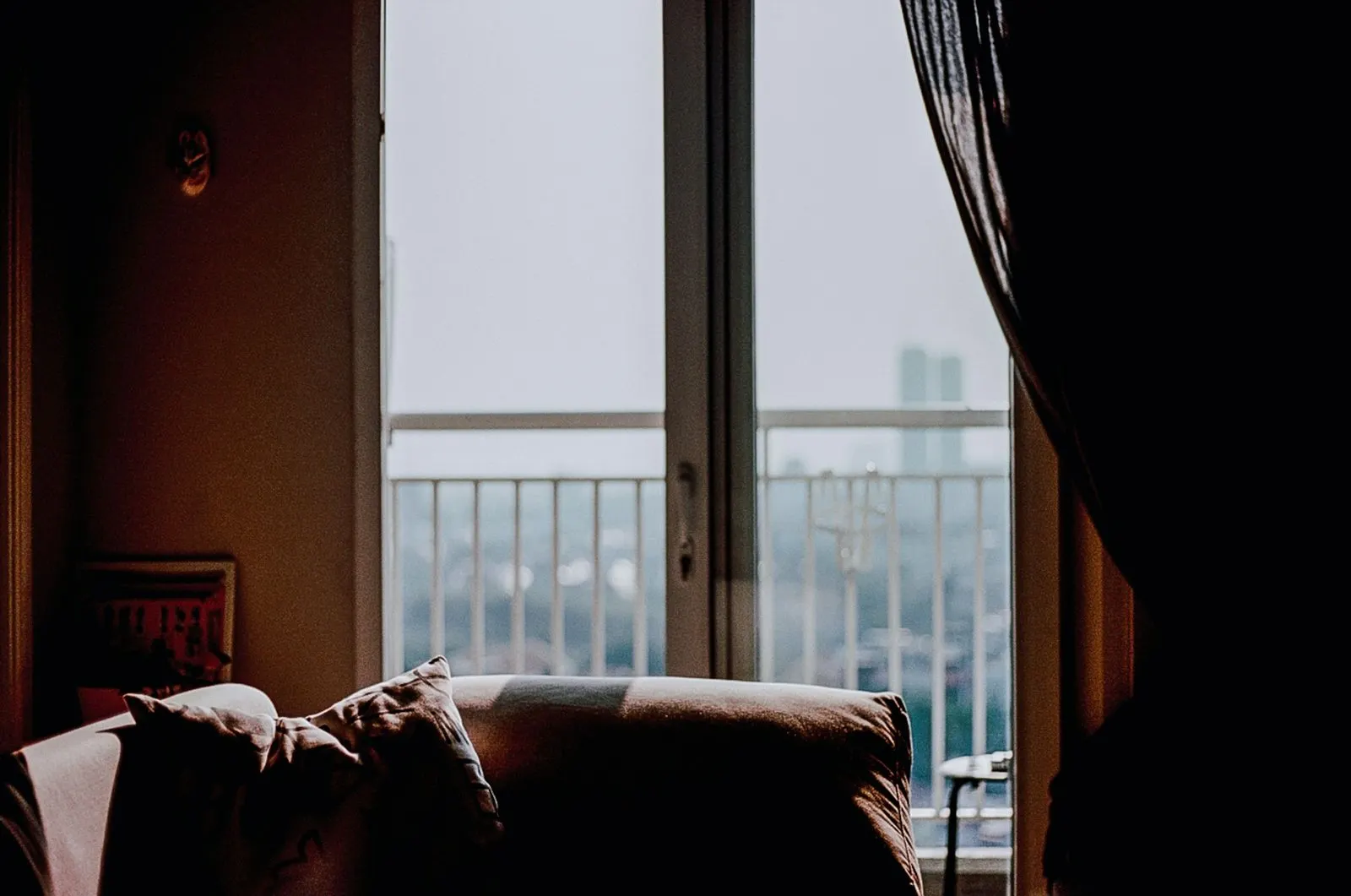
Balcony blinds take the most wind of anything you fit, and they are also visible from outside, which means your association may have a say. Outdoor PVC or roller balcony blinds in side channels or on guide wires stay put in gusts; loose bamboo chiks don’t. Retract them in storms, especially the pre-monsoon squalls of April and May. Before ordering, ask the facility office for the facade guidelines; our guide to gated community interior rules explains what associations usually check.
Quick recommendations by room
- Living room with a west-facing sliding door: sunscreen roller blind plus a dimout or blackout curtain on a ceiling double track, motorised if wider than one comfortable arm pull.
- Master bedroom: blackout curtain on a ceiling track or a blackout roller blind, with a sheer if you want daytime softness.
- Child’s room: cordless or motorised blackout blind, curtains with tie-backs.
- Study: sunscreen roller blind, which cuts screen glare and keeps the view.
- Kitchen and bathrooms: PVC or aluminium blinds that handle steam.
Living on a high floor with big glass? Book a free home visit and we’ll measure every opening, check where power points sit, and bring fabric and blind samples to see in your own light. Call or WhatsApp +91 98499 17494, 8 AM to 10 PM, all 7 days.
Frequently asked questions
What are the best curtains for floor-to-ceiling windows?
The best curtains for floor-to-ceiling windows are a two-layer set on a ceiling-mounted double track: a sheer at the front for daytime privacy and soft light, and a dimout or blackout curtain behind it for heat, glare and night privacy. Ripple-fold or pinch-pleat headings hang straight over long drops and stack neatly beside the glass. On very wide or tall glass, motorised tracks make heavy panels easy to open, and they remove cords and wands from the room.
Are blinds or curtains better for a high-rise apartment?
For a high-rise apartment, blinds and curtains work best together rather than as rivals. A roller or zebra blind handles glare and heat close to the glass and keeps the view, while a curtain adds night privacy, softens echo in rooms with hard floors and large glass, and finishes the room. Where a sliding door is opened often in wind, a curtain with a weighted hem or a side-guided blind behaves better than a loose blind or slatted venetian.
How do I stop curtains blowing in the wind on a high floor?
To stop curtains blowing in the wind on a high floor, add weight to the hem with a lead tape or chain weight, use magnetic or hook tie-backs when the sliding door is open, and fit the track close to the ceiling so less air gets behind the fabric. Keep the mosquito mesh door closed, since it slows gusts. For blinds near open doors, choose bottom-weighted rollers or side channels, and avoid slatted venetian blinds, which rattle and bend in wind.
Are motorised curtains and blinds worth it in a high-rise flat?
Motorised curtains and blinds are worth it in a high-rise flat when the glass is very wide or tall, when curtains are heavy and lined, or when windows are hard to reach behind furniture. They also remove cords, which matters with small children, and can be set to close automatically against the afternoon sun. Plan a power point at the head of each window before the false ceiling and painting, or choose battery-powered motors, which suit blinds and lighter curtain tracks.
Can people see through sheer curtains at night?
Yes, people in facing towers can often see through sheer curtains at night. A sheer gives privacy during the day because the outside is brighter than the room. After dark, when your lights are on and outside is dark, the sheer becomes far more transparent and shows shapes and movement. That is why high-rise living rooms and bedrooms usually need a second layer, a dimout or blackout curtain or blind, for evenings.
How do I reduce heat from west-facing glass in Hyderabad?
To reduce heat from west-facing glass in Hyderabad, block the sun as close to the glass as possible and add a second insulating layer. A sunscreen or blackout roller blind next to the glass, plus a lined blackout or thermal curtain in front, cuts afternoon heat noticeably compared with a sheer alone. Close both by noon on summer days, before the sun comes round to the west side. Venetian blinds are a weaker choice here, because tilted slats let strips of sun through and dark slats get hot.
Are corded blinds safe in homes with small children?
Corded blinds with long or looped cords are a known strangulation risk for young children, and safety standards such as the ANSI/WCMA window covering standard in the US now require stock products to be cordless or have inaccessible cords. In a home with small children, choose cordless blinds, motorised blinds, or a chain fixed to the wall with a tension device so it cannot form a loose loop. Keep cribs, beds and furniture away from any window cord.
Can I fit blinds on a high-rise balcony in Hyderabad?
You can usually fit blinds on a high-rise balcony, but check two things first. Your association may control anything visible from outside, including blind colour and type, so ask for the facade or fit-out guidelines. And the blind must handle wind: outdoor roller or PVC blinds with side channels or guide wires stay in place far better than loose bamboo or fabric blinds. Retract them during storms, especially the pre-monsoon squalls Hyderabad gets in April and May.