Two 3BHKs with the same carpet area can need very different furnishing. One is on the 38th floor of a tower beside the ORR, with full-height glass and wind that slams the balcony door. The other is a 30-year-old colony flat with grilled windows that don’t match a single standard size. We work in homes like both, and across the areas we serve in Hyderabad, the neighbourhood shapes what a home needs almost as much as the family living in it.
This guide groups Hyderabad into six broad zones and explains what to plan for in each: sun, dust, window types, space and local quirks. It’s a companion to our new home furnishing guide for Hyderabad, which covers the full move-in sequence. Patterns here are general; every home still gets measured opening by opening.
Hyderabad zones at a glance
| Zone | Typical homes | Main challenges | Plan first |
|---|---|---|---|
| IT-corridor high-rises | 40 to 60 floor gated towers | Wind, west sun, construction dust | Tracks, blackout, wardrobes at handover |
| North-west growth belt | Colony flats, new townships, villas | Mixed window sizes, rentals, lakes | Measure every opening; mesh |
| Central-west established | Bungalows, large independent houses | Big non-standard windows, hillside sun | Made-to-measure, reupholstery |
| Secunderabad and cantonment | Colonial bungalows, defence and railway colonies | Tall openings, approvals, greenery | Long drops, non-structural upgrades |
| Old city and central | Independent houses, older apartments | Grilled openings, close neighbours, traffic | Custom sizes, privacy layering |
| Outer ring and emerging | New villas, plotted layouts | Bare shells, dust, mosquitoes | Whole-house packages, mesh |
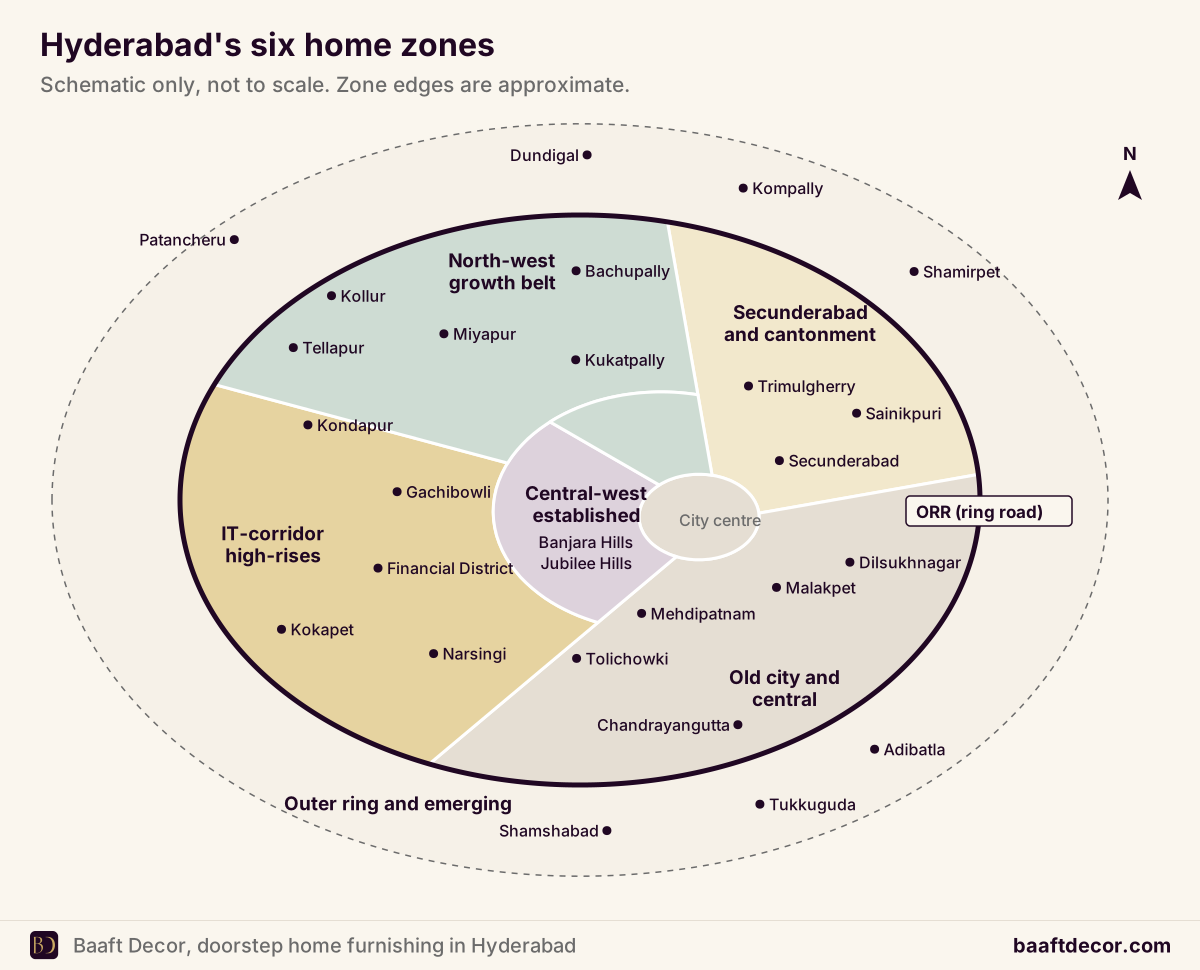
IT-corridor high-rises: Gachibowli, Kokapet, Financial District, Narsingi
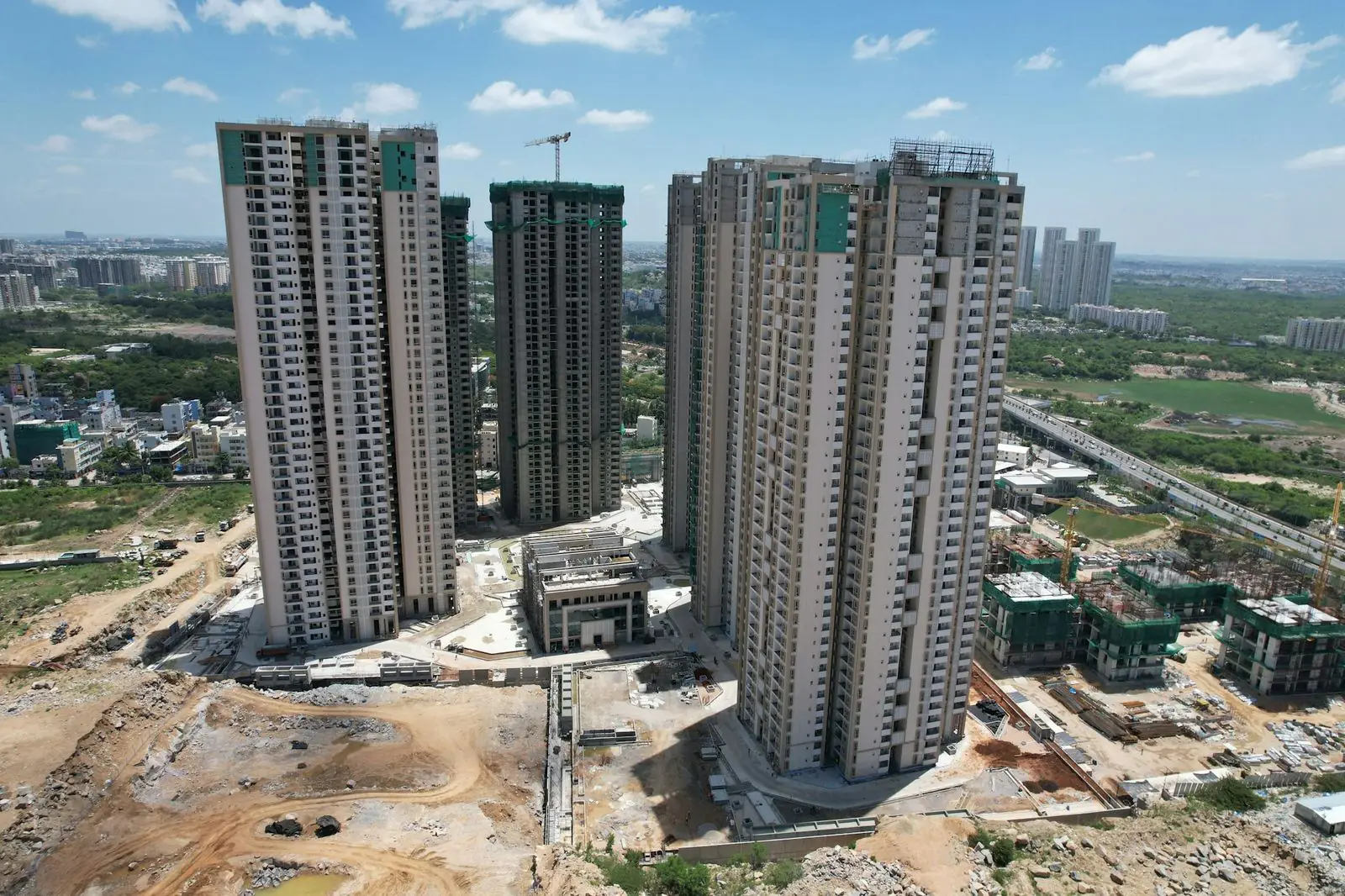
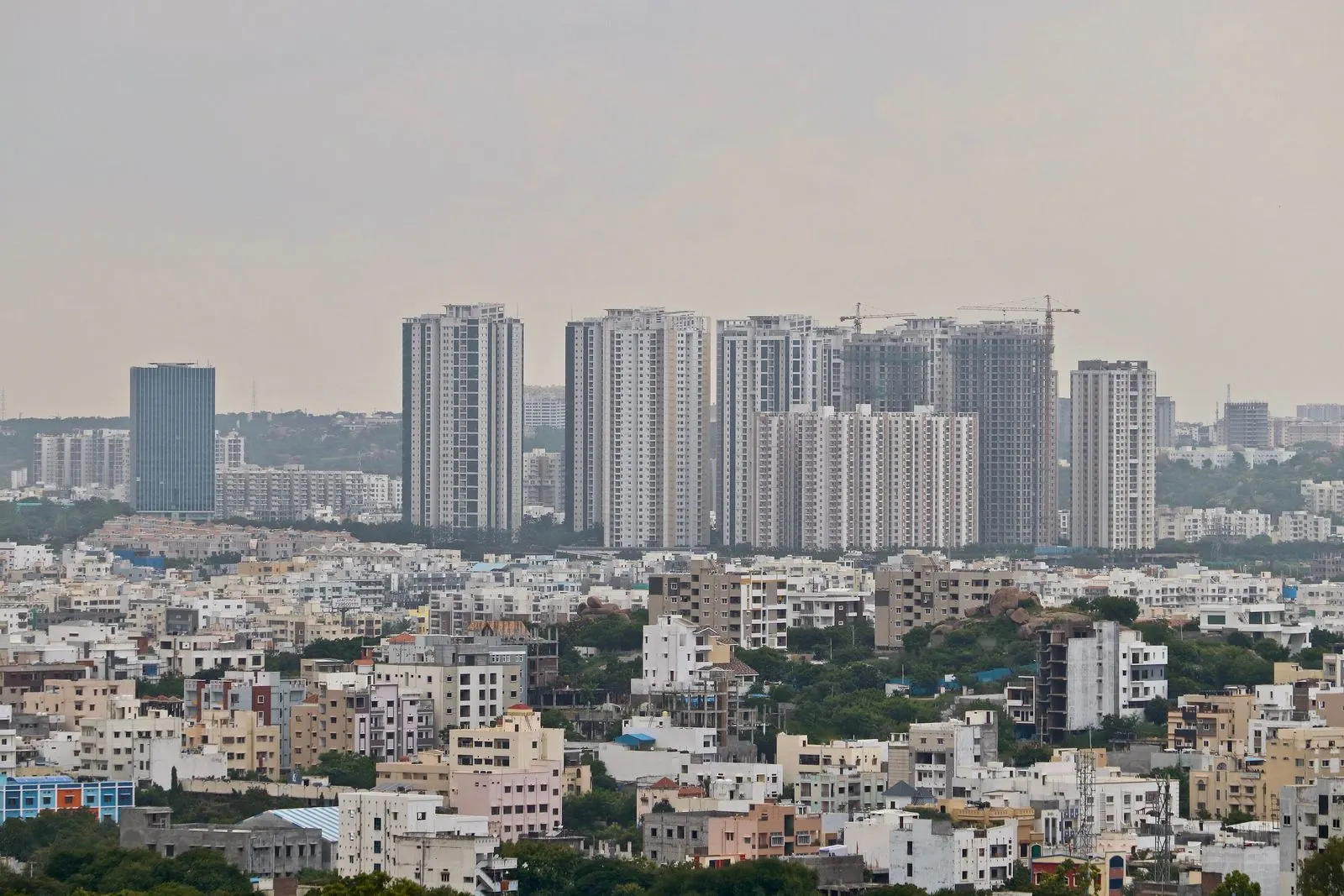
This is where Hyderabad builds upward. Kokapet has completed towers of roughly 45 to 58 floors and a pipeline of taller ones, while the Financial District and Narsingi are dominated by gated towers of around 40 to 60 floors. The top of the city’s list of tallest buildings is now made up of residential towers in and around this belt. Gachibowli is a little older, with gated complexes built as the IT corridor pushed west.
What to plan for:
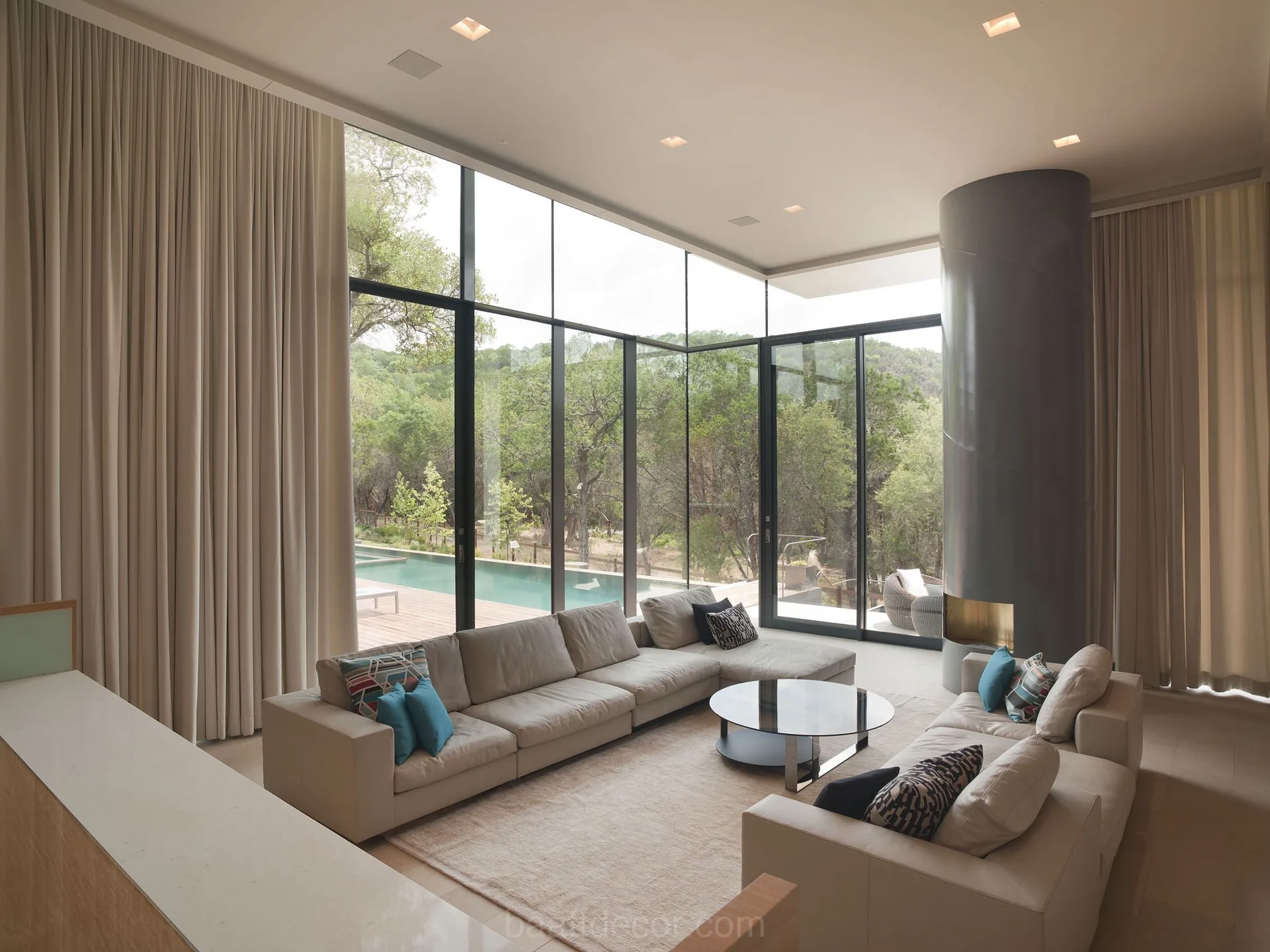
- Wind. On upper floors, open a window and light curtains fly. Ceiling-mounted tracks, weighted hems and heavier fabric hold up better than sheers alone.
- Sun through full-height glass. West-facing rooms take the afternoon sun unshaded. Blackout or dual-layer curtains help, and motorised systems make sense on long glass runs you can’t reach easily. Our curtains in Kokapet page covers the local options.
- Dust. Neopolis and the Financial District are still active construction zones. Wipeable roller or zebra blinds and machine-washable fabrics save hours of cleaning.
- Bare-shell handovers. Most new flats arrive with nothing. Wardrobes, kitchen, curtain tracks and false ceiling work best planned together, which our flat handover checklist walks through.
- Balcony safety and pigeons. High balconies with low glass railings suit invisible grills, and pigeons find AC ledges quickly.
Slightly older stock exists too. Many Kondapur apartments date from the 1996 to 2010 building boom and are now due for new curtain tracks, sofa reupholstery and refreshed wardrobe shutters. Our guide to high-rise apartment window solutions goes deeper on wind and heat.
North-west growth belt: Kukatpally, Miyapur, Bachupally, Tellapur, Kollur
This belt is the most varied in the city. Kukatpally mixes housing-board flats, 1980s employee colonies, older low-rise blocks and some of Hyderabad’s earliest residential high-rises, with plenty of rentals and PGs. Miyapur has established colonies alongside a surge of 30 to 40 storey towers since 2021. Bachupally has gated villa communities of G+1 and G+2 homes, while Tellapur is dominated by new gated townships of roughly 45 to 57 floors. Kollur includes the state’s 2BHK Dignity Housing colony, with compact flats of about 400 sq ft carpet area in 9 to 11 storey blocks.
What to plan for:
- Measure everything. Colony-era windows vary from flat to flat; never assume a standard width.
- Rental durability. Landlords do better with washable curtains, roller blinds and removable sofa covers.
- Villa staircases. Duplex and triplex windows rarely match standard sizes; made-to-measure avoids light gaps.
- Small rooms. In compact flats, rollers instead of drapes and sliding wardrobes instead of hinged ones. See wardrobes in Tellapur for fit-outs in the new townships.
- Lakes and mosquitoes. Many colonies sit near cheruvus, and mosquitoes follow the monsoon. Fit mesh early.
Central-west established homes: Banjara Hills and Jubilee Hills
Banjara Hills has large bungalows on hilly plots alongside apartments and newer luxury projects. Jubilee Hills is mostly large independent homes across several floors. Film Nagar sits largely within Jubilee Hills, and Kavuri Hills has houses from its late-1980s layout that are now due for renovation.
What to plan for:
- Big, non-standard windows. Custom-stitched curtains need proper stack-back space and sturdy tracks; tall living-room windows suit motorised tracks.
- Hillside sun and views. Sheer layers paired with blackout keep the outlook while controlling glare.
- Good furniture worth keeping. Many families own solid older sofas worth reupholstering rather than replacing; our sofa upholstery in Banjara Hills page explains the process.
- Road noise. Homes on the main numbered roads benefit from interlined curtains.
- Edit and preview rooms on residential plots in Film Nagar need full blackout, not dim-out.
Secunderabad and the cantonment colonies
Secunderabad was established in 1806 as a British cantonment, and its housing still shows it: colonial-era bungalows, dense bazaar-area houses, railway staff colonies and newer apartment blocks in localities like Marredpally. Trimulgherry adds defence quarters and old bazaar settlements, and Sainikpuri, founded in the 1960s as a cooperative for retired army personnel, has large houses on plots with lawns.
What to plan for:
- Tall openings. Colonial windows and doors need long custom drops and strong rods or tracks. See curtains in Secunderabad.
- Grilled, irregular windows. Curtains, blinds and mesh are cut to measure.
- Approvals. Within cantonment limits, structural changes need Board approval, so wallpaper, curtains, upholstery and wardrobes are the usual way to update a home.
- Transfers. Families on defence postings often prefer fittings that move with them: rod-mounted curtains, freestanding wardrobes and removable mesh.
- Greenery. Tree cover and open defence land mean mosquitoes and, on shaded ground floors, monsoon damp. Mesh and mould-resistant fabrics help.
Old city and central areas
Around Mehdipatnam, Tolichowki, Malakpet, Chandrayangutta and Dilsukhnagar, homes are mostly independent houses and older apartment buildings, many built plot by plot. Long-settled families, close neighbours and busy roads define the brief.
What to plan for:
- Custom sizes everywhere. Older houses have grilled windows and doors in every size; mesh frames and curtains are made to fit.
- Privacy. With buildings close together, sheer-plus-blackout layering or day-night blinds let light in without exposing rooms.
- Traffic dust and noise. Lined curtains and wipeable blinds suit street-facing rooms, especially along metro and flyover works.
- Uneven walls. In older houses with patched plaster, wallpaper refreshes a room without re-plastering.
- Reupholstery over replacement for well-made older sofas and chairs.
- The Musi and lakes bring mosquitoes to some pockets; fitted mesh is worth it.
Outer ring and emerging areas
Beyond the core, homes are newer and more spread out. Shamshabad has villas and mid-rise projects along the airport, NH44 and ORR corridors. Patancheru is an industrial town on NH65, and Shamirpet has farmhouses, villas and weekend homes. Kompally, Tukkuguda, Adibatla and Dundigal are mostly plotted layouts, independent houses, villas and newer gated projects.
What to plan for:
- Whole-house packages. Villas have far more openings than flats, across several floors, so plan curtains, blinds and mesh together.
- Dust and insects. Open plots and ongoing construction mean wipeable blinds, washable covers and mesh on every opening.
- Noise. Homes near airport approach paths, highways or training airfields need heavier lined curtains in bedrooms.
- Daytime sleep. Households on factory shifts in Patancheru benefit from blackout linings.
- Closed weekend homes suffer sun-fading and musty air, so UV-resistant fabrics and breathable linings last longer.
What every Hyderabad home shares
Wherever you live, three things are constant: 40 °C-plus summers with harsh west sun, June to September humidity, and dust from a city that never stops building. Gated communities add their own rules about grills, mesh and facades, which our guide to gated community interior rules explains.
Get a plan for your home
Book a free home visit and we’ll measure every window and room, bring fabric and material samples, and suggest what suits your building, floor and neighbourhood, with a written quote. We work across Hyderabad from 8 AM to 10 PM, all seven days. WhatsApp or call +91 98499 17494.
Frequently asked questions
What should I plan for when furnishing a high-rise flat in Kokapet or the Financial District?
When furnishing a high-rise flat in Kokapet, the Financial District, Narsingi or similar IT-corridor towers, plan for three things first. Upper floors face strong wind and unshaded sun, so use ceiling-mounted tracks, weighted hems and blackout or dual-layer curtains, with motorised systems for long runs of full-height glass. Nearby construction keeps cement dust high, so wipeable blinds and washable fabrics are easier to live with. And flats are usually handed over bare, so plan wardrobes, kitchen and curtain tracks together.
Why do older Hyderabad homes need made-to-measure curtains?
Older Hyderabad homes, such as colony flats in Kukatpally, bungalows in Secunderabad and independent houses in the old city, rarely have standard window sizes. Openings vary from room to room, many have grills fitted inside or outside the frame, and colonial-era houses have tall windows and doors that need long drops. Ready-made curtains leave light gaps or bunch on the floor. Measuring each opening and stitching to size gives a better fit, and the same applies to blinds and mosquito mesh frames.
What furnishing works best in small flats like the Kollur 2BHK colony?
In compact flats such as the Kollur 2BHK colony units, which are around 400 sq ft of carpet area, choose furnishing that saves floor and wall space. Roller or zebra blinds take less room than bulky drapes, sliding-door wardrobes need no swing clearance, and slim-armed sofas leave walking space. Light colours and a single flooring finish throughout make rooms feel larger. On the 9 to 11 storey blocks, invisible grills on balconies and windows add child safety without blocking light and air.
Do I need mosquito mesh in Hyderabad?
Most Hyderabad homes benefit from mosquito mesh, and some areas need it more than others. Homes near lakes such as Durgam Cheruvu, Kapra Lake and the many smaller cheruvus in the north-west see mosquitoes after the monsoon, as do villas and houses beside open land on the outer ring. Leafy cantonment areas in Secunderabad are similar. Fitted mesh on bedroom windows and balcony doors is the most useful start, with sliding mesh for sliding windows and pleated mesh for wide doors.
Can I renovate a house within Secunderabad Cantonment limits?
Homes within Secunderabad Cantonment limits, including parts of East Marredpally and New Bowenpally, need Cantonment Board approval for structural changes, which can make civil work slow. Many owners refresh these homes with non-structural upgrades instead: made-to-measure curtains and blinds, wallpaper on uneven walls, reupholstered sofas, freestanding or fitted wardrobes and fitted mosquito mesh. Check what your property's approvals allow before planning anything that touches walls, openings or the facade.
Is it worth reupholstering old furniture in Banjara Hills or Jubilee Hills homes?
In established Banjara Hills and Jubilee Hills homes, reupholstering is often worth it, because many families own solid, well-made sofas and chairs, some of them heirlooms, that would cost far more to replace at the same quality. If the frame is sound, new foam and fabric can make a piece feel new while keeping its shape and history. Reupholstery also lets you match fabrics across several rooms. Frames with rot, termite damage or broken joinery are the exception, and are better replaced.
What should I plan for in a new villa on the outer ring road?
New villas in outer areas such as Shamshabad, Tukkuguda, Kompally or Dundigal usually arrive as bare shells with far more windows and doors than a flat, across two or three floors. Plan curtains, blinds and mosquito mesh as one whole-house package so sizes, colours and blackout levels stay consistent. Open land nearby brings dust and insects, so fitted mesh and washable fabrics are practical. Homes near the airport, highways or training airfields benefit from heavier lined curtains in bedrooms.