Handover day is the one day the builder’s team is standing in your flat, listening. Once you sign and the furniture arrives, every defect gets harder to prove and slower to fix. So use the visit well: inspect properly, write down what’s wrong, and measure everything you’ll need for furnishing while the rooms are still empty. This checklist covers both. If you want help with the second half, our new home furnishing team can join you and measure every window and wall for free. Handover is the first stage in our new home furnishing guide for Hyderabad, which takes you on from here to the gruhapravesam.
What to carry on handover day
Pack a small bag. It saves a second trip.
- A bright torch, even in daylight, for corners and inside cupboards
- A phone charger to test sockets (or a plug-in socket tester that also checks earthing)
- A bucket or mug for water tests on floors, tracks and drains
- A tape measure or laser measure, plus a step stool
- Masking tape and a marker to label defects on the wall
- A coin or the back of a screwdriver for tapping tiles
- A printed copy of your agreement’s specification sheet
Documents to check before you sign
Get these in hand before the walk-through ends:
- Possession letter with the exact handover date. Under RERA the builder’s five-year defect liability runs from this date, so it matters.
- Occupancy certificate for your tower. Ask to see a copy. If you’re told it’s still pending, get that in writing.
- Keys: main door, bedrooms, balcony doors, electrical panel, letterbox, plus remotes or access cards.
- Meter readings for electricity and water, photographed with the date.
- Warranty cards for fittings the builder installed, such as sanitaryware, doors and any appliances.
- Association details: maintenance start date, contact for the facility office, and the interior fit-out guidelines.
For anything legal, especially if documents are missing, talk to a property lawyer before signing.
The snag list, room by room
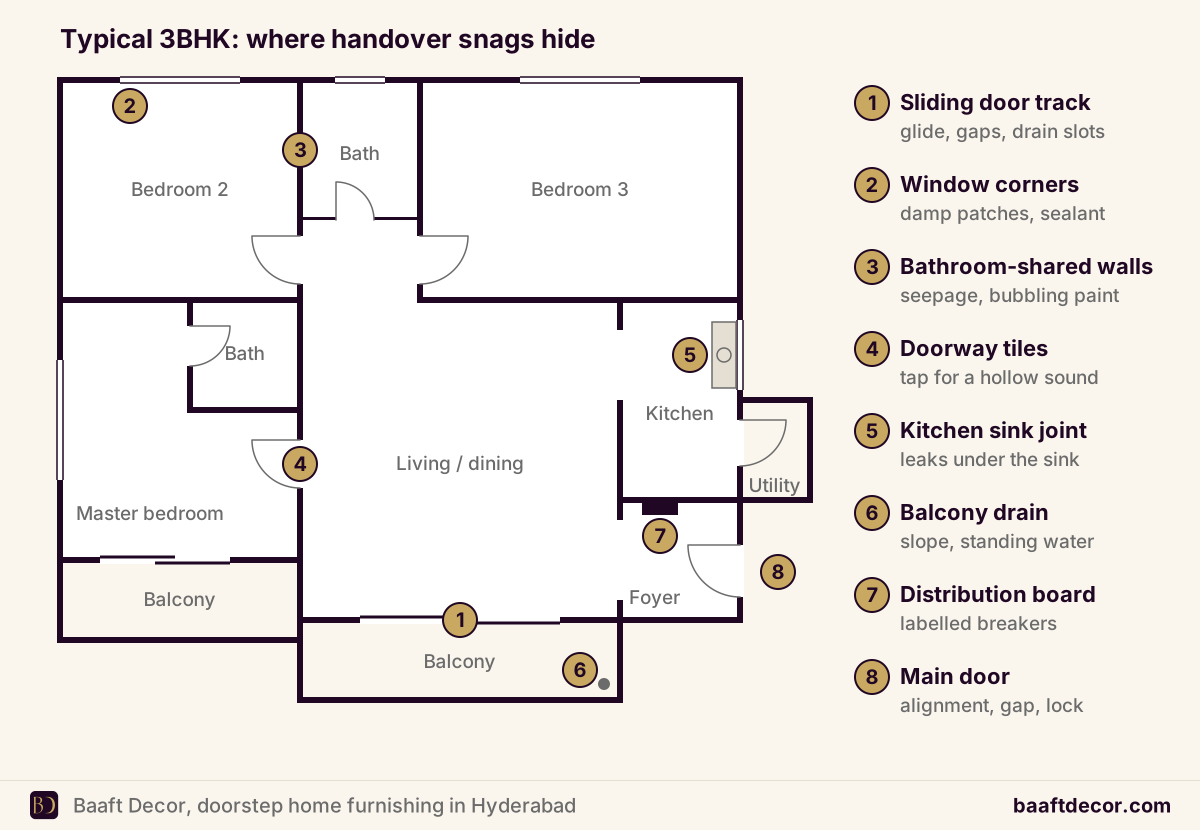
Walk the flat in a fixed order, say entrance clockwise, so nothing gets skipped. Open, close, switch on and run everything that moves or flows.
| Area | What to check | Common faults we see |
|---|---|---|
| Doors | Alignment, gap at the bottom, lock, hinges, stoppers | Doors that rub the floor, locks that need force |
| Windows and sliding doors | Smooth glide, full closure, locks, rubber gaskets, glass | Tracks that jam, gaps when shut, scratched glass |
| Walls and ceilings | Cracks, damp patches, paint bubbles, smell | Damp near window corners and bathroom walls |
| Floor and wall tiles | Hollow sound, chips, uneven edges, grout, slope to drains | Hollow tiles near doorways, standing water in bathrooms |
| Electrical | Every switch, socket, light point, AC and geyser points, panel labels | Dead sockets, unlabelled breakers, loose switchplates |
| Plumbing | Taps, pressure, hot water, flushes, drains, under-sink joints | Slow drains, small leaks under the sink |
| Balconies | Railing firm, drain outlet, floor slope | Water pooling against the sliding door |
Windows and sliding tracks
Give this extra time. It’s where Hyderabad flats leak in the monsoon. Slide every door and window fully open and shut several times. It should glide without lifting. When closed, look along the edge for daylight. Then pour a mug of water into the outer track: it should drain outside through the small drainage slots, not spill towards the room. Check that the silicone sealant around the frame is continuous on the outside and inside.
Anything wrong here also affects us. A sliding door that doesn’t close flush will catch a curtain or a blind, and a frame that needs re-fixing means the window covering comes down again.
Walls, ceilings and seepage
Look for damp patches, bubbling paint, white powdery deposits and a musty smell. Start with walls shared with bathrooms, then the corners around windows, then the ceiling under the bathroom of the flat above. If the flat has been closed for months, a damp patch may have dried out, so check whether paint has been touched up in suspicious spots.
Floor and wall tiles
Tap each tile lightly with a coin. A dull, hollow sound means poor adhesion, and hollow tiles crack later. Run your hand across joints to feel uneven edges, and pour water on bathroom and balcony floors to confirm it flows to the drain.
Electrical and plumbing
Plug your charger into every socket. Switch every light point. Check that the distribution board has labelled breakers. Run each tap for a minute, flush each toilet, and look under the kitchen and washbasin for drips.
While you’re at it, note where the points are, not just whether they work. Is there a socket near each window where you might want motorised curtains later? Is the AC point placed so a curtain track won’t block the indoor unit? Is the chimney point above the hob position? Moving a point now is a request to the builder; moving it after painting means chasing a fresh groove through your new wall.
Kitchen and balconies
Check that the granite platform is level (place a full water bottle on its side and see if it rolls) and that the joint around the sink is sealed. On balconies, push the railing firmly at a few points; it should not flex. If you plan mosquito mesh or invisible grills, note what the balcony walls and ceiling are made of, because fixings differ for concrete, block work and cladding.
What to measure on the same visit
The flat will never be emptier. Measure now and your furnishing quotes come back faster and more accurate.
Windows and sliding doors
- Opening width and height, measured at three points because new openings are rarely perfectly square
- Distance from the top of the frame to the ceiling
- Wall space on each side of the frame, which decides how wide curtains can stack
- Sill depth, and whether handles stick out (this decides whether a blind can sit inside the recess)
Rooms and walls
- Ceiling height in each room
- Each wall where a wardrobe could go, noting switchboards, skirting and AC points
- Kitchen run lengths and the positions of the sink, gas and electrical points
- Balcony width, depth and railing height, for grills, mesh or blinds
- Lift door width and height, so furniture deliveries fit
Our guide on how to measure windows for curtains shows exactly where to hold the tape. For wardrobes, measure wall to wall at floor level and at ceiling height, because walls lean more often than you’d think; it is the first thing a wardrobe carpenter will ask.
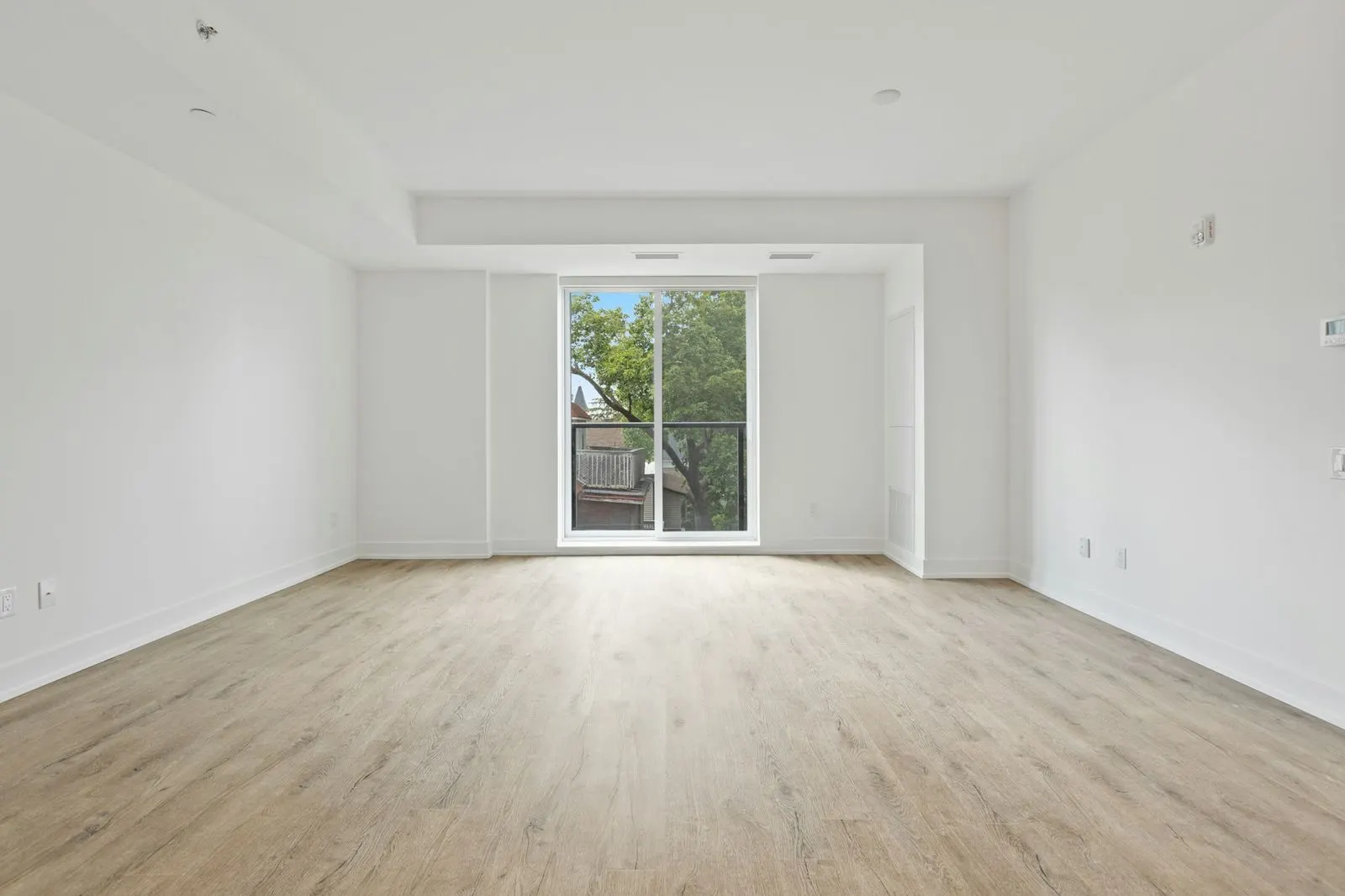
After the inspection: getting snags fixed
Hand over the snag list in writing, with photos, and ask for a signed or emailed acknowledgement with a repair date. Keep a copy. Under Section 14(3) of the Real Estate (Regulation and Development) Act, 2016, the builder must repair structural and workmanship defects reported within five years of possession, within thirty days and at no cost to you. In Telangana, complaints go to the Telangana Real Estate Regulatory Authority.
Then re-inspect each repaired item before your own contractors touch that spot. A repaired seepage patch should be bone dry for a couple of weeks, ideally through a spell of rain, before a wardrobe or wallpaper goes on that wall.
Why snags come before furnishing
Order of work saves money. Fix a sliding track after the curtains are up and the curtains come down. Fix seepage after the wardrobe is fitted and the wardrobe comes off the wall, sometimes damaged. Builders may also refuse to repair an area your contractor has drilled or covered. So: inspect, list, repair, re-check, and only then install. The new home furnishing checklist and our week-by-week gruhapravesam timeline show how to fit this into your move-in plan.
Getting possession soon? Book a free handover-day visit and we’ll measure every window, wall and alcove while you inspect, and point out anything that will affect curtains, blinds or wardrobes. Call or WhatsApp +91 98499 17494, 8 AM to 10 PM, all 7 days.
Frequently asked questions
What is a snag list for a new flat?
A snag list is a written record of every defect you find in a new flat at handover, such as a sliding door that sticks, a hollow tile, a dead socket or a damp patch. You give it to the builder's customer relations or handover team, ideally with dated photos, and ask for a written acknowledgement and a repair date. A clear snag list protects you later, because it shows the defect existed before you started any interior work or moved in.
What should I check during flat handover in Hyderabad?
During flat handover, check doors and locks, windows and sliding tracks, walls and ceilings for cracks or damp, floor and wall tiles for hollow spots and chips, every switch and socket, all taps, flushes and drains, the kitchen platform and sink, and balcony drainage. Also verify documents, keys, meter readings and the fittings promised in your agreement. In Hyderabad, pay special attention to sliding door tracks and seepage near windows, because problems there usually show up in the first monsoon.
Should I accept possession of a flat if there are defects?
Minor defects such as a loose handle, a chipped tile or a stiff window catch are normally listed on a snag list and fixed after handover, so they rarely justify refusing possession. Serious problems, such as active seepage, structural cracks, no water supply or unsafe wiring, are a different matter, and many buyers ask the builder to fix them before they sign. Get a written response to each item either way. For legal questions about refusing possession, speak to a property lawyer.
How long does a builder have to fix defects under RERA?
Under Section 14(3) of the Real Estate (Regulation and Development) Act, 2016, a builder must fix structural defects and defects in workmanship, quality or services that the buyer reports within five years of handing over possession. The repair should be done within thirty days and at no cost to the buyer; if it is not, the buyer can seek compensation through the state RERA authority, which in Telangana is the Telangana Real Estate Regulatory Authority. Note your exact possession date, since the five years run from it.
Should I hire a professional snagging inspector?
A professional snagging inspector is worth considering if you are buying a large or expensive flat, live abroad, or are not comfortable checking wiring and waterproofing yourself. Inspectors use moisture meters, thermal cameras and socket testers that pick up faults a visual check misses. For most buyers, a careful room-by-room walk with a printed checklist, a torch, a phone charger and a bucket of water finds the majority of visible snags. Either way, write everything down and photograph it.
What should I measure when I take possession of a new flat?
When you take possession of a new flat, measure every window and sliding door (opening width and height, frame to ceiling, and wall space beside the frame), ceiling height in each room, bedroom walls for wardrobes, the kitchen run and the positions of the sink, gas and electrical points, balcony width and railing height, and the lift door size. These measurements let curtain, blind, mesh, wardrobe and kitchen vendors quote accurately without separate site visits.
Can I start interior work before snags are fixed?
You can start planning and fabrication before snags are fixed, but avoid installing anything over a defect. Do not fix wardrobes against a damp wall, lay flooring over hollow tiles, or fit curtains and blinds before a faulty sliding track or window frame has been corrected. Builders sometimes refuse to repair areas that have been covered or altered by your own contractor. Get the snag repairs signed off first, then install in those specific spots.