The heading is the stitched top of a curtain, and it decides more than the look. It sets how much fabric you buy, whether the curtain hangs from a rod or a track, and how neatly it stacks when you open it. When we take on curtain stitching in Hyderabad, the heading is one of the first things we settle with the customer, usually before the fabric itself.
If you only need a quick overview of curtain styles, start with our guide to types of curtains. This page goes deeper into the tailoring side: what each pleat actually is, the tapes Indian tailors use, typical fullness and the hardware each heading needs. For the full sequence from measuring to fitting, see our curtains buying guide for Hyderabad homes.
What is a curtain heading?
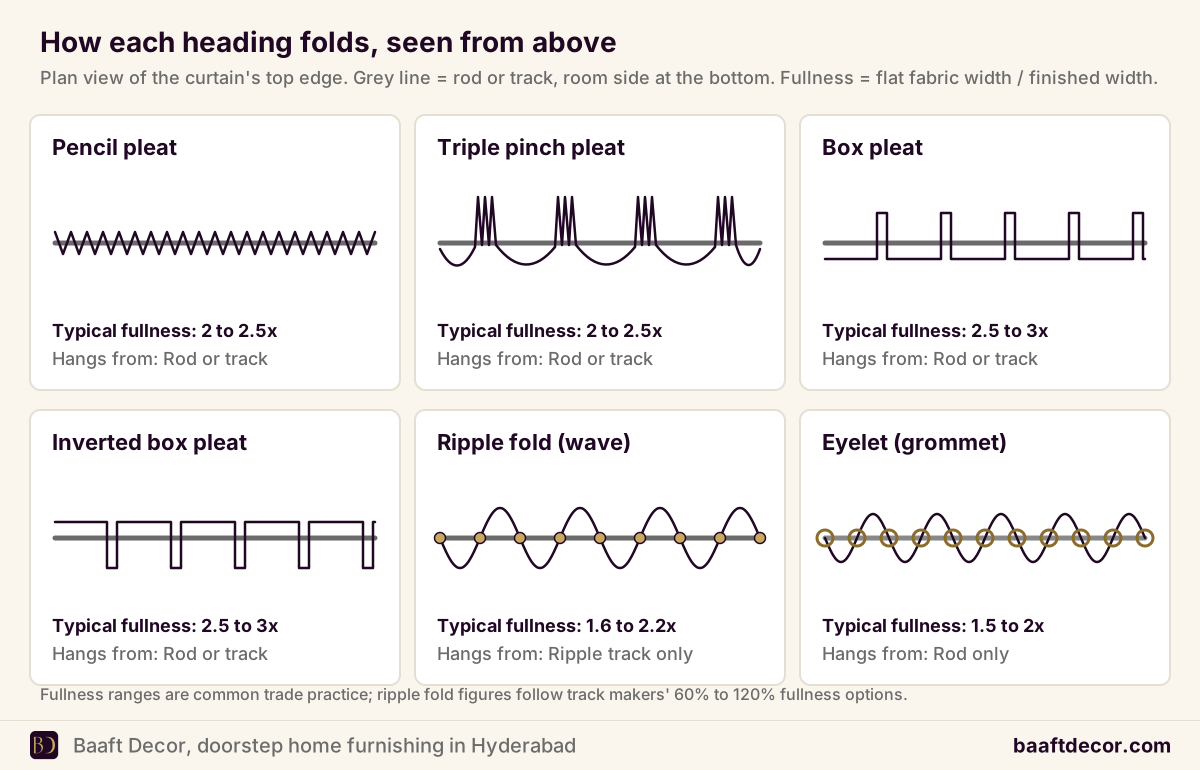
A curtain heading is the way the top edge of a curtain is finished so it can hang: stitched pleats, a gathering tape, metal eyelets, fabric tabs or a sleeve for a rod. The heading fixes the fold pattern for the whole drop, because the folds you set at the top run all the way to the hem.
Every heading has three parts you should ask about:
- The fold style (pencil, pinch, box, ripple and so on).
- What holds it (buckram stiffener, a pleat tape, eyelet rings, or nothing).
- What it hangs from (hooks into gliders on a track, rings on a rod, or the rod itself).
Want a heading chosen and stitched for your windows? We visit with fabric samples and measure, free across Hyderabad. WhatsApp +91 98499 17494.
Curtain pleat types compared
The table gives typical fullness, meaning the flat fabric width divided by the finished width the curtain covers. These ranges are common trade practice; your tailor may go a little higher for sheers or lower for heavy fabric.
| Heading | Look | Typical fullness | Hangs from | Suits |
|---|---|---|---|---|
| Pencil pleat | Tight, gathered folds | 2 to 2.5x | Rod or track | Bedrooms, budget all-rounder |
| Double pinch pleat | Pairs of crisp folds | 2 to 2.5x | Rod or track | Bedrooms, studies |
| Triple pinch pleat (American pleat) | Fans of three folds | 2 to 2.5x | Rod or track | Living rooms, master bedrooms |
| Box pleat | Flat, squared folds | 2.5 to 3x | Rod or track | Formal living and dining |
| Inverted box pleat | Flat face, folds behind | 2.5 to 3x | Rod or track | Modern formal rooms |
| Goblet pleat | Cup-shaped tops | 2 to 2.5x | Rod or track | Tall, formal windows |
| Cartridge pleat | Round tubes | 2 to 2.5x | Rod or track | Heavy fabrics, high ceilings |
| Ripple fold (wave) | Even S-shaped waves | 1.6 to 2.2x | Ripple track only | Apartments, motorised curtains |
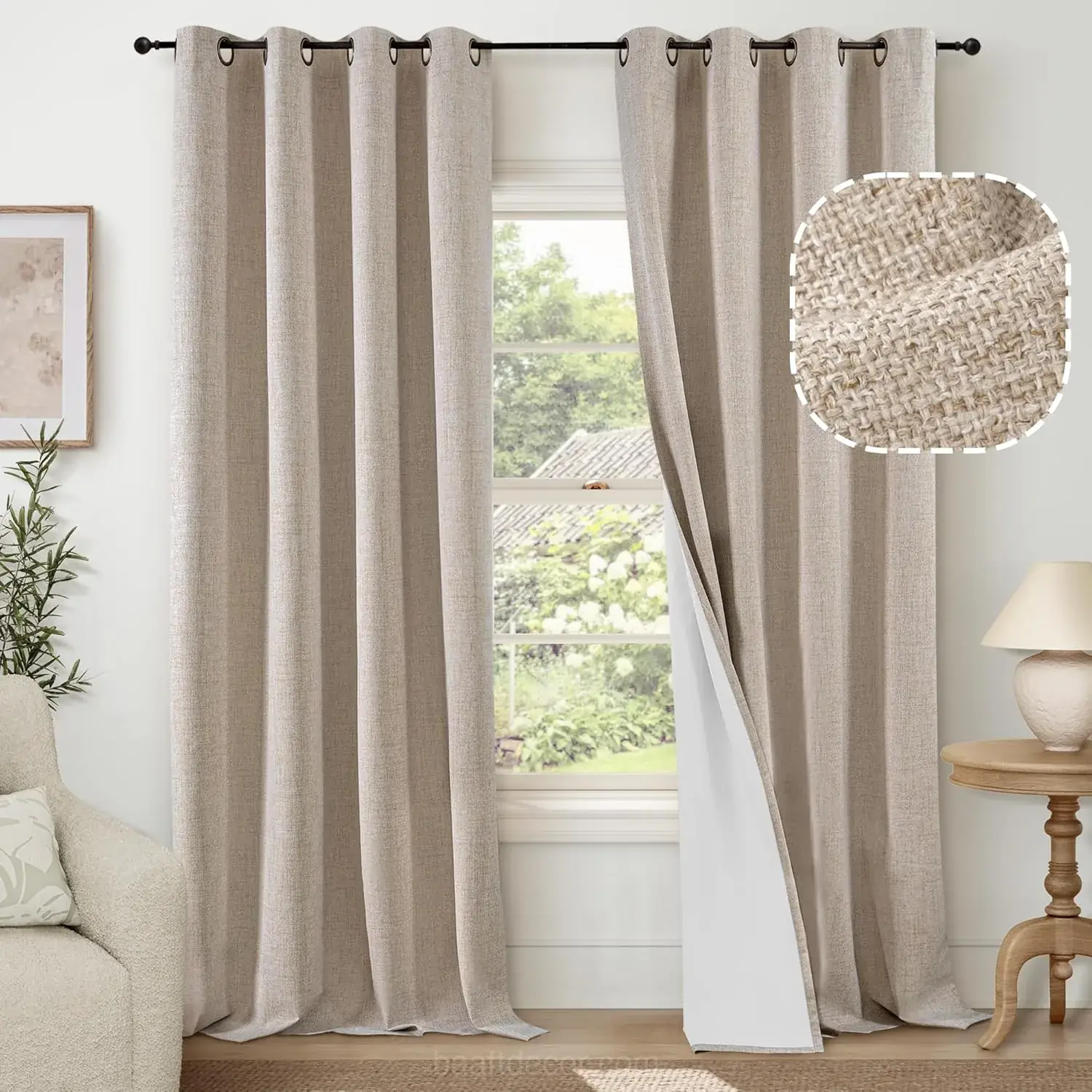
| Eyelet (grommet) | Wide, soft folds | 1.5 to 2x | Rod only | Kids’ rooms, studies, rentals |
| Tab-top | Relaxed, casual | 1.5 to 2x | Rod only | Panels that rarely move |
| Rod pocket | Gathered on the rod | 2 to 3x | Rod only | Sheers, door and kitchen panels |
The ripple fold range comes from track makers, who sell wave systems at 60%, 80%, 100% and 120% fullness, which is 1.6 to 2.2 times; 100% (2 times) is the usual recommendation.
Pencil pleat
A corded tape is sewn across the back. Pull the cords and the top gathers into narrow, pencil-like folds. It’s the quickest heading to make, it adjusts to any width, and it works on a rod with rings or on a track with hooks. The trade-off is a softer, less structured look, and the gathers can drift unevenly unless the hooks are spaced regularly.
Pinch pleat: double and triple
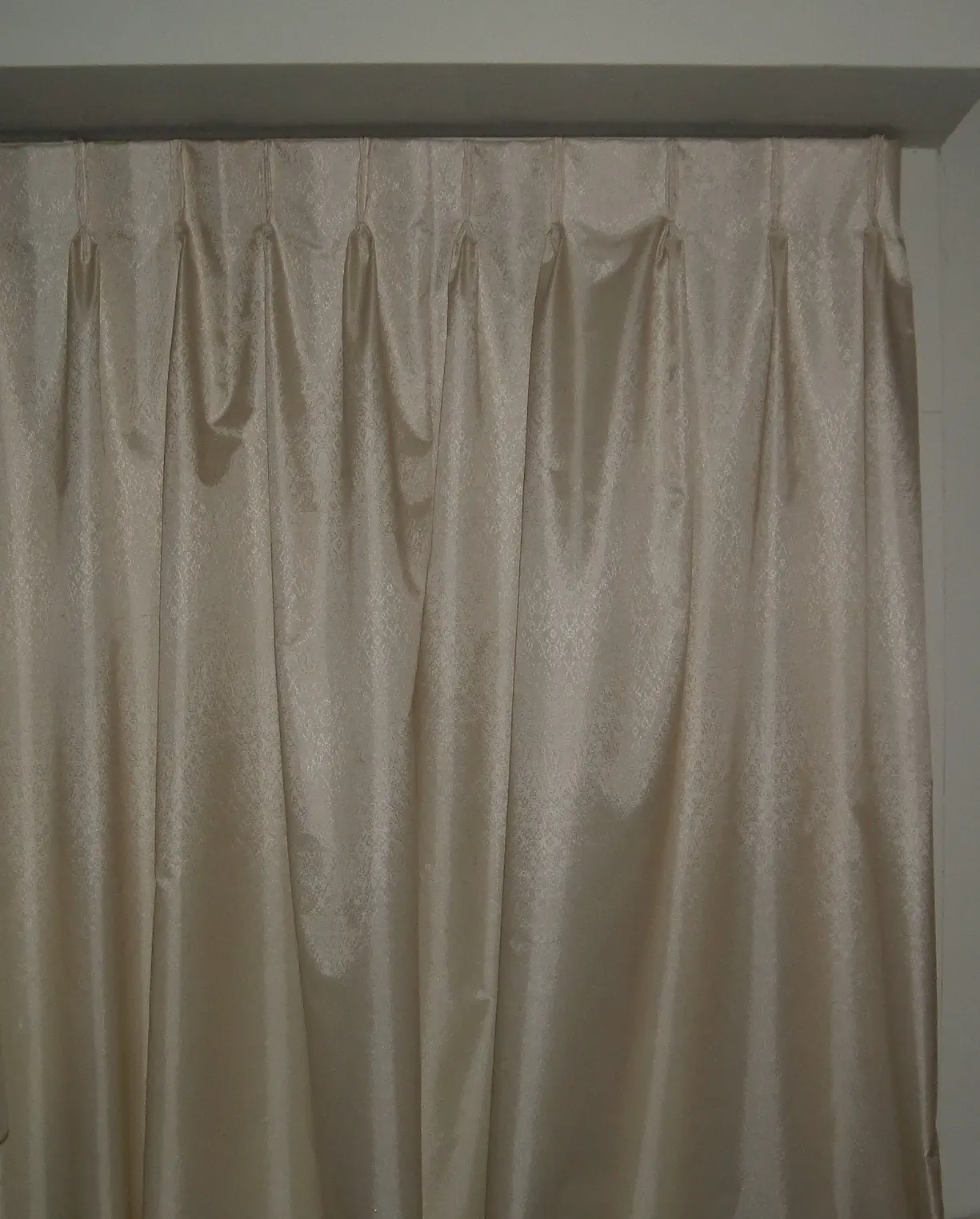
Fabric is pinched into groups of two (double) or three (triple) folds and stitched at fixed spacing, with flat spaces between each group. A pin hook goes into the back of each pleat. This is the heading most Hyderabad living rooms end up with, because it looks tidy open or closed and suits both lined and blackout curtains.
Box and inverted box pleat
Box pleats fold the fabric back on itself so the front shows flat, squared panels. Inverted box pleats do the reverse: the fold edges meet on the face and the box sits behind. Both look formal and use more fabric, so we suggest them where the curtain stays mostly closed or forms a fixed dress curtain beside a sheer.
Goblet and cartridge pleat
Goblet pleats are pinched at the base and left open as a rounded cup, sometimes stuffed lightly so they keep their shape. Cartridge pleats are plain round tubes. Both need buckram and a tall window to look right; on a standard 7 ft apartment window they can look heavy.
Ripple fold, eyelet, tab-top and rod pocket
Ripple fold curtains snap or hook onto carriers inside a dedicated track, so every wave is identical. Eyelet curtains have metal or plastic rings punched through a stiffened band and slide straight on a rod. Tab-top and rod-pocket headings drag on the rod, which is fine for a sheer or a door panel but tiring on a curtain you open twice a day.
Pleat tapes and trade names used in India
Most curtains stitched in Indian workshops use a ready-made heading tape rather than hand-pleating over buckram. A pleat tape is a stiffened strip sewn to the back of the curtain, with pockets for hooks and sometimes cords for gathering. Merriam-Webster defines pleater tape as a wide, stiff tape with narrow slots used for pleating curtain tops, which is exactly how it works.
The names you’ll hear at a curtain shop or tailor:
- Pencil pleat tape: corded tape that gathers the top. Often sold in 3-inch width.
- 3-inch pleat tape: a common stiff tape width for pinch-style headings.
- American tape or American pleat: a multi-slot pleat tape. Pronged pleater hooks are pushed into its pockets to form evenly spaced pinch pleats. Shops use the name loosely, so ask whether they mean double or triple pleats and what fullness.
- Ripple tape: a tape with loops or snaps at fixed spacing that matches a ripple or wave track.
- Eyelet tape: a stiff band that the eyelet rings are punched through.
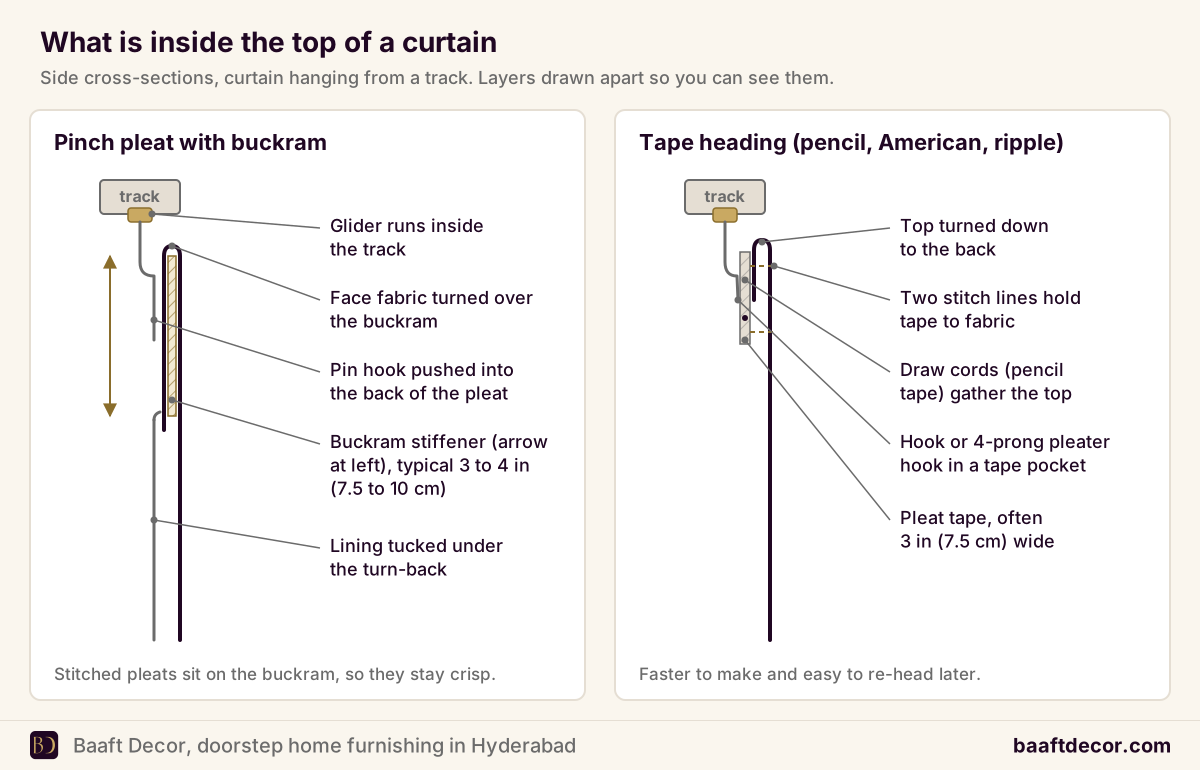
Buckram vs pleat tape
| Buckram, hand-pleated | Pleat tape (American, pencil, ripple) | |
|---|---|---|
| Stiffness | Very firm, typically 3 to 4 in deep | Firm to medium, often 3 in |
| Pleat spacing | Set by the tailor for each width | Fixed by the tape pockets |
| Time to make | Longer | Shorter |
| Change heading later | Harder, pleats are stitched | Easy, unpick the tape |
| Best for | Formal pinch, goblet, cartridge, box | Everyday pinch, pencil, ripple |
How a tailor lays out pinch pleats
A pinch-pleat curtain is marked out flat before any pleat is stitched. The tailor divides the top into a return at the wall end, alternating pleats and spaces, and an overlap where the pair meets in the middle.
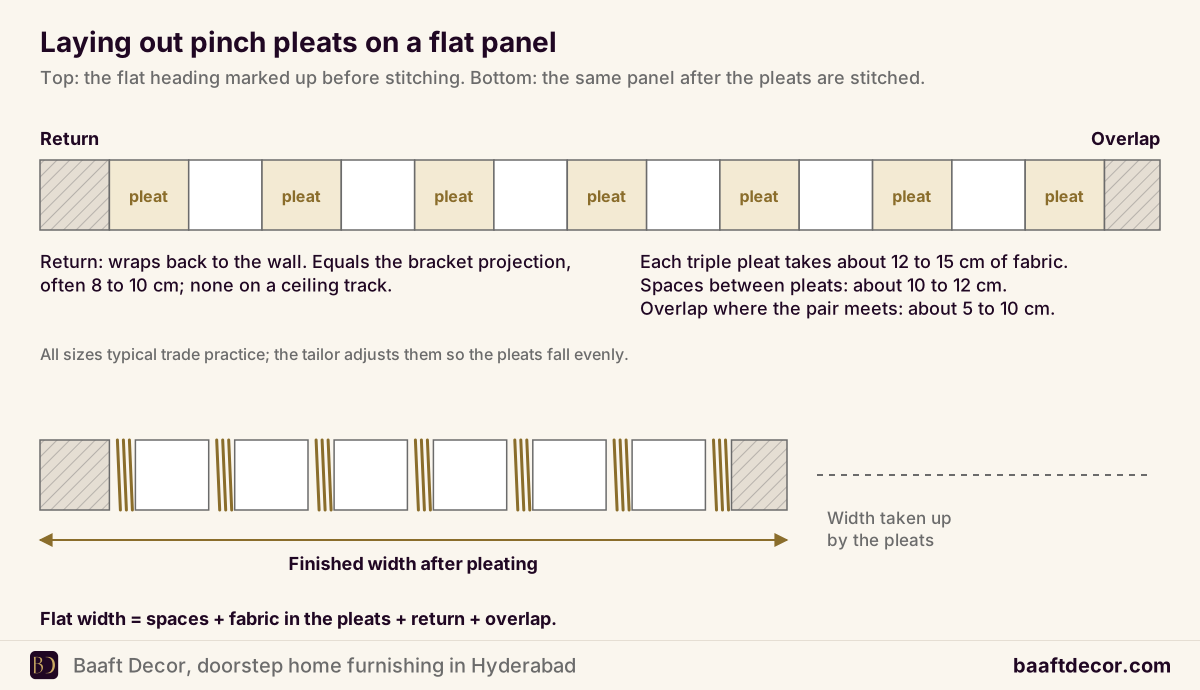
Typical figures from common trade practice:
- Fabric per triple pleat: about 12 to 15 cm.
- Space between pleats: about 10 to 12 cm.
- Return: the distance the curtain wraps back to the wall, equal to the bracket projection, often 8 to 10 cm on a wall-mounted rod or track and none on a ceiling track.
- Overlap: about 5 to 10 cm where the two curtains meet, so light doesn’t leak through the middle.
The tailor then adjusts the spaces slightly so the pleats come out even across each width. If you want to work out the fabric yourself, our guide on how much fabric you need for curtains walks through the sums.
Which heading suits which hardware?
Match the heading to the hardware before buying fabric. It’s the most common mistake we see with curtains bought online.
| Hardware | Headings that work | Headings that don’t |
|---|---|---|
| Decorative rod with rings | Pinch, pencil, American, box, goblet | Ripple fold |
| Bare rod (no rings) | Eyelet, tab-top, rod pocket | Ripple fold |
| Wall or ceiling track with gliders | Pinch, pencil, American, box | Eyelet, tab-top, rod pocket |
| Ripple or wave track | Ripple fold only | Everything else |
| Motorised track | Ripple fold, pinch pleat | Eyelet, tab-top |
Many new Hyderabad apartments come with a curtain pocket in the false ceiling. Those pockets take a track, so eyelets are out and a hook heading is in. Check the pocket depth too: two layers (a sheer and a lined curtain) need a double track and enough room for both stacks. Our curtain rods and tracks guide covers the hardware side in detail.
Picking a heading for Hyderabad homes
A few patterns from the homes we measure:
- Large sliding doors to the balcony: ripple fold or pinch pleat on a track. They stack tightly, so more glass stays clear, and they glide without snagging.
- West-facing living rooms: lined pinch pleat. The lining protects the face fabric from the afternoon sun and the pleats keep a heavy lined curtain looking neat.
- Bedrooms with blackout lining: pinch or American pleat on a ceiling track, floor length, so light can’t escape over the top.
- Kids’ rooms and rented flats: eyelet on a rod. Less fabric, easy to take down and wash after the dusty months.
- High-floor flats with wind: avoid tab-tops and rod pockets that flap. A track with gliders, plus weights in the hem, keeps curtains steadier when the balcony door is open.
We stitch all of these headings for curtains in Hyderabad, on our own fabric or on fabric you’ve bought elsewhere. If you’re furnishing a new flat in the western suburbs, we regularly fit curtains in Manikonda, curtains in Nallagandla and curtains in Madhapur.
Get the heading right before the fabric
Bring your heading choice to a free home visit and we’ll show it on real samples, measure every window, check your rods, tracks or ceiling pockets, and give you a written quote. Baaft Decor measures, stitches and fits curtains at homes across Hyderabad, 8 AM to 10 PM, all seven days. WhatsApp or call +91 98499 17494.
Frequently asked questions
What are the different types of curtain pleats?
The main types of curtain pleats are pencil pleat (tight gathers made with a corded tape), pinch pleat in double or triple form, box pleat and inverted box pleat (flat, tailored folds), goblet and cartridge pleats (rounded, cup or tube-shaped tops for formal rooms) and ripple or wave fold (even S-shaped waves on a special track). Eyelet, tab-top and rod-pocket curtains are headings too, but they are not pleated: the fabric simply folds as it slides along a rod. Each type needs a different amount of fabric and suits different hardware.
What is the difference between pinch pleat and pencil pleat curtains?
Pinch pleat curtains have fabric pinched into groups of two or three folds that are stitched at fixed spacing, with flat fabric between each group, so the top looks crisp and tailored. Pencil pleat curtains have a corded tape on the back that gathers the whole top into tight, narrow folds, which looks softer and more casual. Pinch pleats usually sit on buckram or a stiff pleat tape and hold their shape better over years of use. Pencil pleats are quicker to make and easier to adjust, and both need about 2 to 2.5 times the track width in fabric.
What are American pleat curtains?
In Indian curtain shops, American pleat usually refers to a pinch-style pleat made with a multi-slot pleat tape, often sold as American tape, rather than hand-stitched over buckram. The tailor sews the tape to the back of the curtain and pushes pronged pleater hooks into the tape pockets, which pull the fabric into evenly spaced pleats. The result looks close to a hand-made triple pinch pleat, works on both rods and tracks, and is quick to make. Ask your tailor which tape and fullness they mean, because the name is used loosely.
How much fabric do pleated curtains need?
Pleated curtains typically need 2 to 2.5 times the width of the track or rod in flat fabric, which tailors call fullness. Pencil pleat and pinch pleat sit in that range, box and inverted box pleats usually need 2.5 to 3 times, ripple fold runs from about 1.6 to 2.2 times depending on the track system, and eyelet or tab-top curtains need about 1.5 to 2 times. Add allowances for side hems, returns and the overlap where the pair meets. Too little fabric makes even an expensive heading look flat and stretched.
Which curtain heading works with a false ceiling track?
Pinch pleat, pencil pleat, American pleat and ripple fold headings all work with a ceiling-mounted track or a track recessed into a false ceiling pocket, because they hang from hooks or carriers that run inside the track. Eyelet and tab-top curtains do not work on a ceiling track, since they need a round rod to slide on. If your apartment has a curtain pocket built into the false ceiling, choose a hook-based heading and check the pocket depth before deciding on two layers, such as a sheer and a lined curtain.
What is buckram in curtains?
Buckram is a stiff, open-weave stiffening strip, usually 3 to 4 inches (about 7.5 to 10 cm) deep, sewn inside the top of a curtain under the turned-down face fabric. It gives pinch pleats, box pleats, goblet and cartridge pleats a firm base so the pleats stand up neatly and do not droop between hooks. Some buckram is fusible and is pressed on with heat, while other types are sewn in. A curtain without buckram or a stiff pleat tape tends to sag at the top after a few washes.
Which heading is best for motorised curtains?
Ripple fold, also called wave, is the most common heading for motorised curtains because the curtain clips onto carriers spaced at fixed intervals on the track, so every wave stays the same size and the curtain stacks compactly when the motor opens it. Pinch pleat on a motor-rated track also works well and suits more traditional rooms. Eyelet curtains cannot be motorised on a standard motor track because they need a rod. Whatever the heading, the fabric must be stitched to match the track system's carrier spacing.
Can I change the heading of my existing curtains?
Yes, the heading of an existing curtain can usually be changed. Converting eyelet curtains to pleats means cutting off the eyelet band and sewing on pleat tape, which shortens the curtain, so there must be enough hem to let down or the lost length is made up with a band. Converting pleats to eyelets means unpicking the tape and fitting eyelet tape and rings, which only works on a rod. Check the fabric width too: a curtain made at 1.5 times fullness for eyelets will look thin as a pinch pleat.