Hooks and gliders are the smallest parts of a curtain and the ones that fail first. A hook that doesn’t match the tape, or a glider that doesn’t match the channel, turns a good curtain into one that sags, snags or drops off the track. When we do curtain installation in Hyderabad, we match these small parts to the heading before anything goes up on the wall.
This guide covers the parts that connect the curtain to the hardware. The rods and tracks themselves are in our curtain rods and tracks guide, and the full sequence, from fabric to fitting, is in the curtains buying guide for Hyderabad homes.
How do curtain hooks and gliders work together?
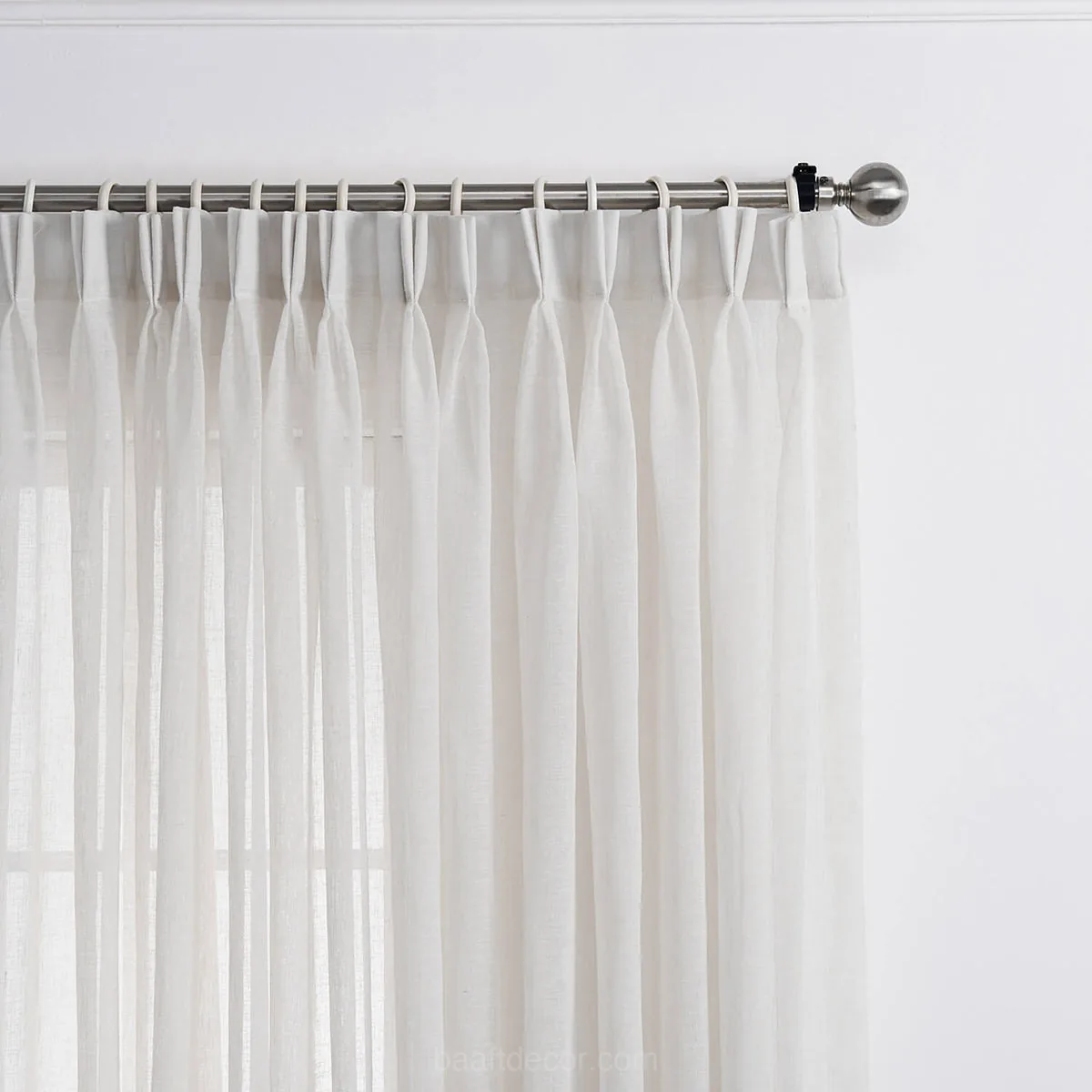
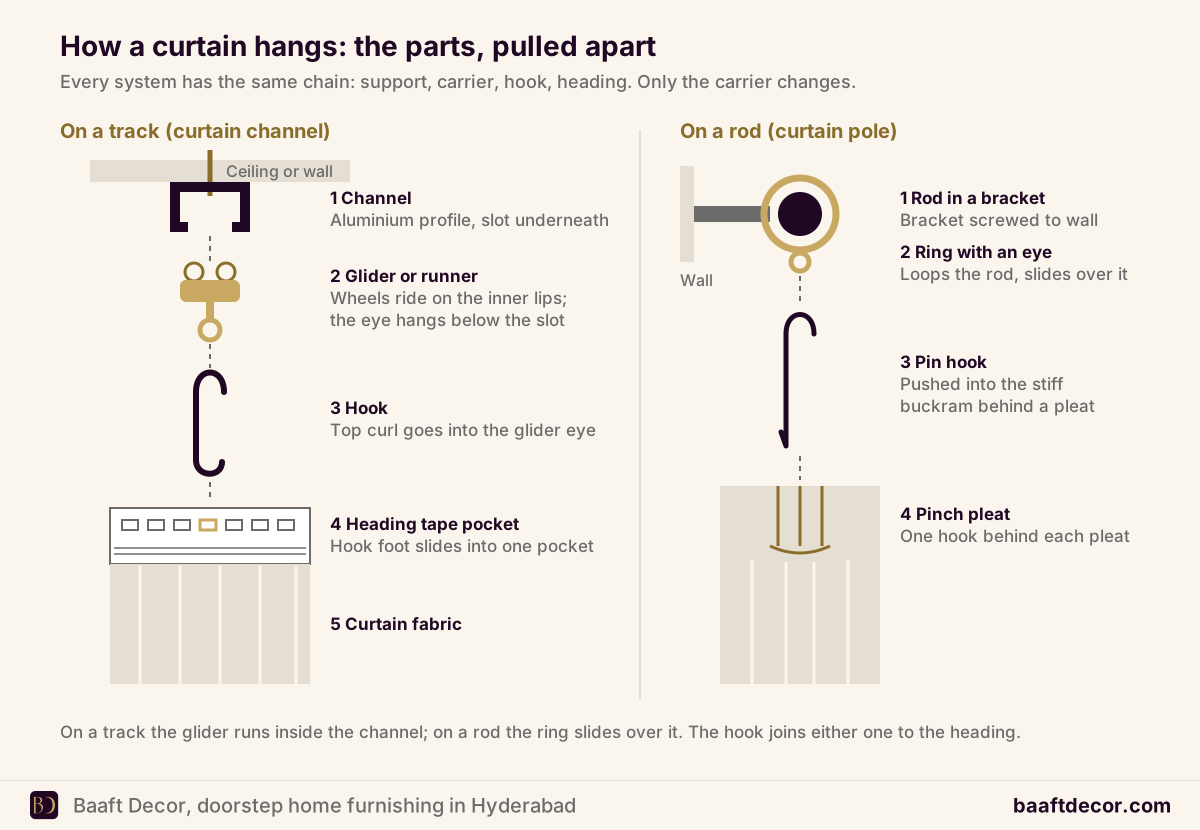
A curtain hangs through a chain of four parts: the support (rod or track), the carrier (ring or glider), the hook, and the heading on the curtain. Only the carrier changes between systems. On a rod, a ring slides over the pole. On a track, also called a curtain channel, a glider runs inside the profile. The hook joins either carrier to the heading.
Want hooks, gliders and track matched for your windows? We visit with samples and hardware, free across Hyderabad. WhatsApp +91 98499 17494.
Types of curtain hooks
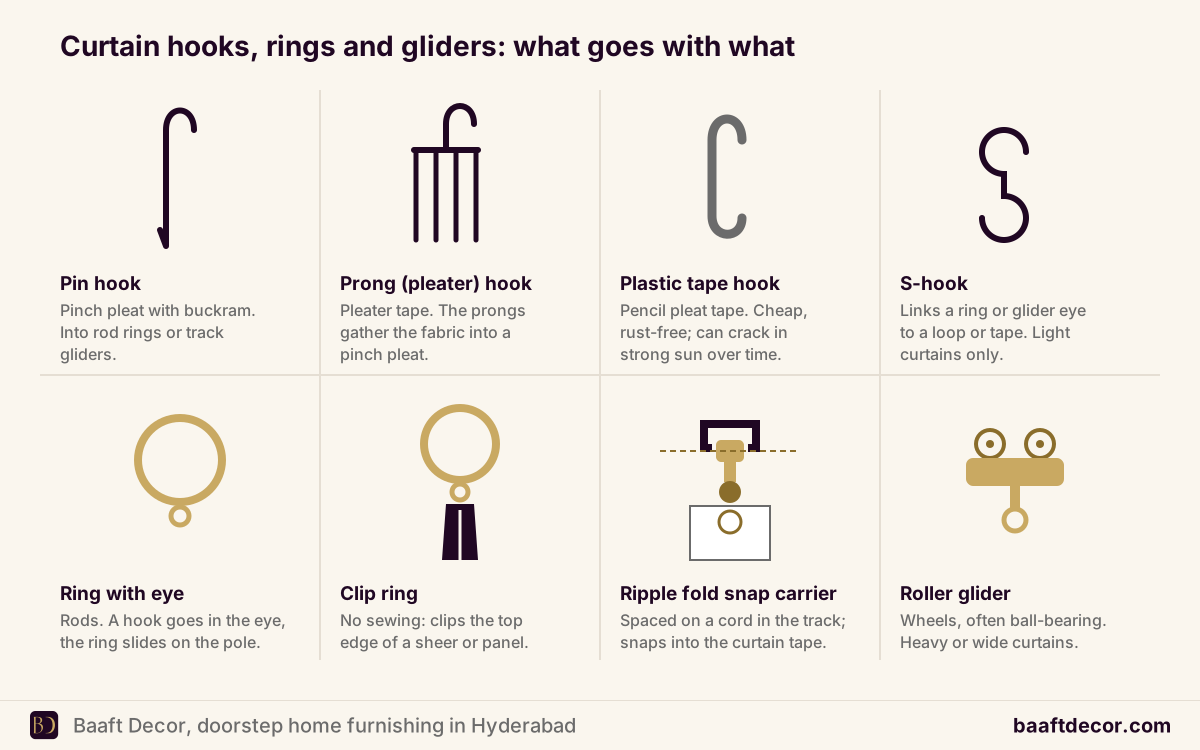
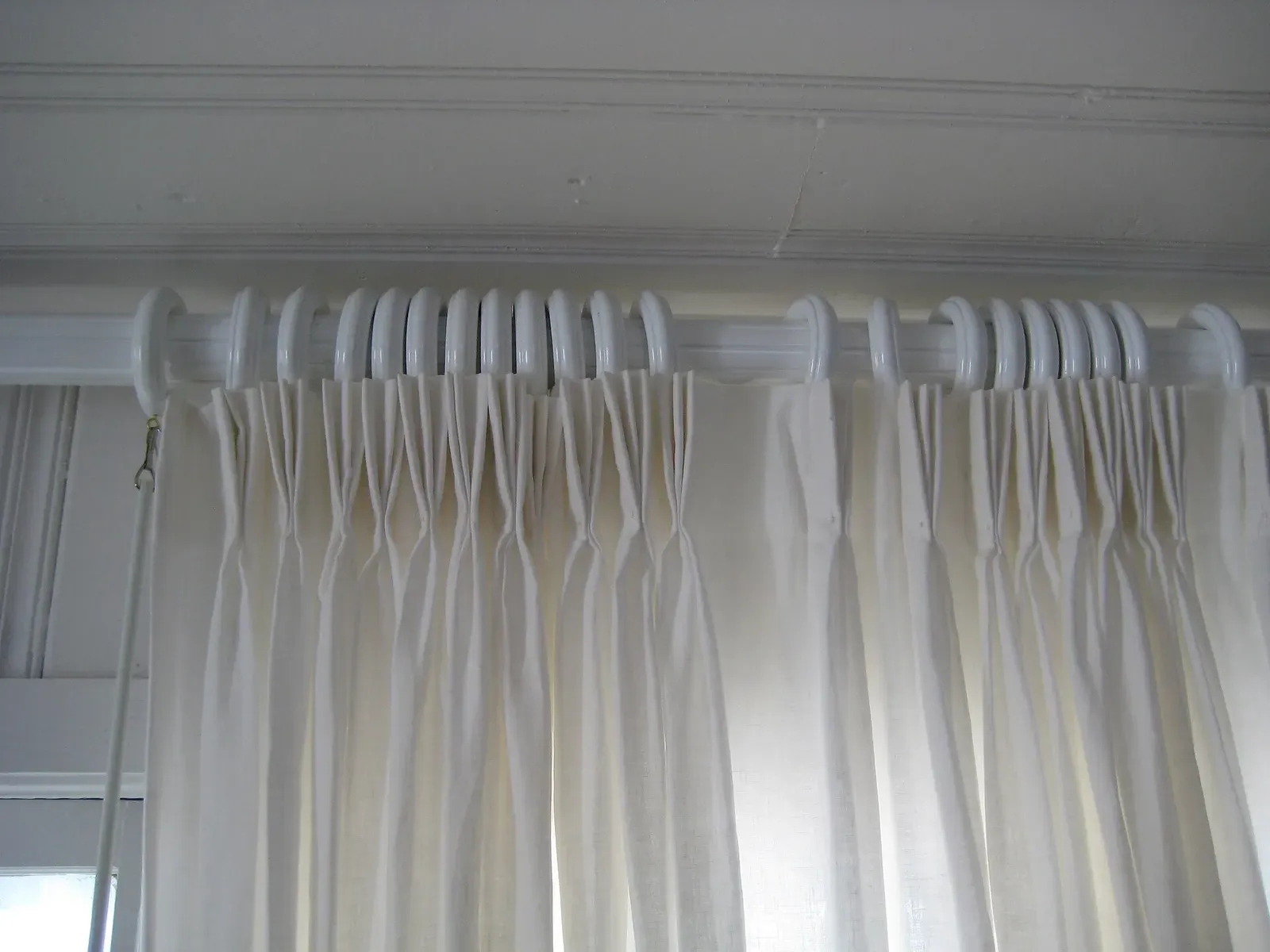
Plastic tape hooks (pencil pleat curtain hooks)
The white plastic hook most people picture. The lower end slides into a pocket on pencil pleat tape or pleat tape, and the curled top goes into a ring or glider. They don’t rust and don’t mark fabric. On west-facing windows, though, years of strong sun can make cheap plastic brittle, and you’ll find snapped hooks on the floor after a pull.
Metal tape hooks
The same shape in steel or brass-finish wire. Stronger, so better for heavy pencil pleat curtains. Plated steel can rust in the June to September humidity and leave brown marks on a light heading, so choose stainless or brass-finish if the window gets damp.
Prong (pleater) hooks
A metal hook with three or four long prongs. Push the prongs into neighbouring pockets of pleater tape and the fabric gathers into a pinch pleat. It’s a quick route to pinch pleats without stitching each one, and it lets you take the pleats out for washing.
Pin hooks
A hook with a sharp, straight spike that pushes into a stiff buckram heading, one behind each pleat. This is how hand-stitched pinch pleat and goblet pleat curtains are usually hung. Set the pin at the same height in every pleat, or the heading will look wavy.
S-hooks
A simple S of wire that links a ring or glider eye to a loop or tape. You still see them on older rods in many Hyderabad houses. They are fine for light curtains, but the open ends can unhook when the curtain is pulled hard.
Rings, clips and carriers
Curtain rings loop over a rod and have a small eye underneath for the hook. Wooden and metal rings both work; what matters is that the ring’s inner diameter clears the rod and its brackets with room to spare. Rings that are too tight grind and stop at every bracket.
Clip rings add a spring clip under the ring, so you can hang a sheer or a flat panel with no tape at all. Good for light fabric, not for lined curtains.
Gliders are small plastic sliders that run inside a track. Runners usually have wheels; ball-bearing runners roll rather than slide, which makes a real difference on a heavy blackout curtain across a 3 m sliding door.
Ripple fold snap carriers sit on a cord inside a ripple fold track at a fixed spacing, and the curtain’s tape snaps onto them. The tailor doesn’t decide the wave; the track maker’s cord does.
Which hook goes with which heading and track?
| Heading | Hook or carrier | On a rod | On a track |
|---|---|---|---|
| Pencil pleat | Plastic or metal tape hook | Hook into ring | Hook into glider |
| Pinch pleat (tape) | Prong (pleater) hook | Hook into ring | Hook into glider |
| Pinch pleat (buckram) | Pin hook | Hook into ring | Hook into glider or runner |
| Goblet or box pleat | Pin hook | Hook into ring | Hook into runner |
| Ripple fold | Snap carrier | Not possible | Ripple fold track only |
| Eyelet | None, rod passes through | Yes | Not possible |
| Flat panel or sheer | Clip ring | Yes | Not usual |
For how each heading looks and how much fabric it needs, see our curtain heading types guide. Shopping for curtains in Hyderabad and not sure what your old curtains used? Take one hook to the shop. It answers more questions than a photo.
Typical hook spacing
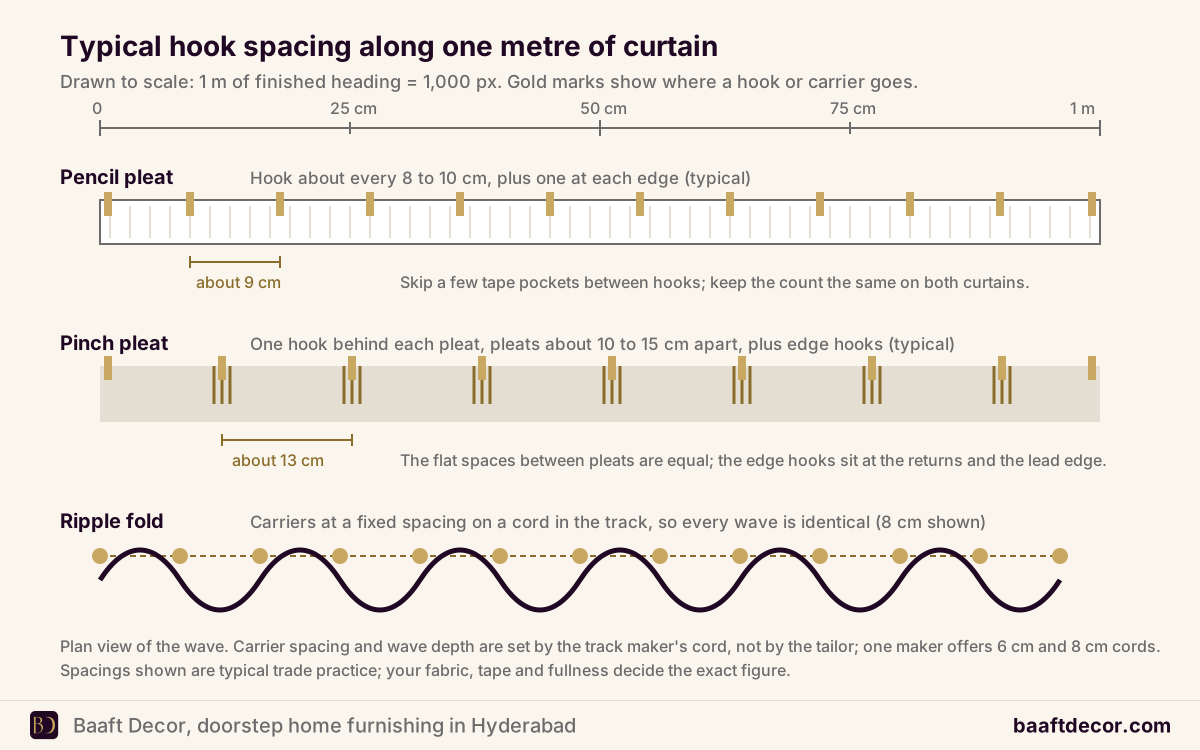
Hook spacing decides how evenly the heading hangs. These are typical trade figures; your fabric, tape and fullness set the exact number.
- Pencil pleat: about one hook every 8 to 10 cm of finished heading, plus one at each edge. Skip the same number of tape pockets between every hook.
- Pinch pleat: one hook behind every pleat, with pleats commonly about 10 to 15 cm apart, plus a hook at each end so the edges don’t droop.
- Ripple fold: fixed by the track’s cord. In one major maker’s system the carrier cord comes in 6 cm and 8 cm spacings, and its deepest wave option uses a fullness of about 2.3 and stacks about 16 cm deep, according to a Silent Gliss wave curtain guide published by its distributor Hallis Hudson.
Hook height: hide the track or show the rod
Most pencil pleat tapes have two or three rows of pockets. Hooks in the top row drop the curtain a little, so the heading stands up in front of a track and hides it. Hooks in a lower row lift the curtain, which is what you want under a decorative rod where the rings should show. Pin hooks give the same choice: set the pin lower in the buckram to hide a track. Whatever you pick, use the same row on every hook, or the hem won’t run level.
Gliders: count, match and maintain
Count. You need one glider per hook in each run, plus one or two spare. Running short means bunching the last hooks together, and the curtain won’t close fully.
Match. Gliders are made for one track profile. Shops sell channels under names like M-track and C-track, but sizes vary by maker, so take a glider or a short off-cut of track when buying spares. A glider that is slightly too small tilts and drops its hook; one too large jams.
Maintain. Hyderabad’s construction dust settles in open channels. Wipe the track every few months, and if gliders start to stick, use a dry silicone spray, not oil.
Hooks and gliders for Hyderabad conditions
Three things wear these small parts out here. Sun: plastic hooks and gliders on west and south-west windows take the full afternoon heat from March to June, and cheap plastic gets brittle. On those windows we use better-grade nylon gliders or metal hooks. Humidity: from June to September, plated steel hooks and S-hooks near damp walls or open balcony doors rust and mark the heading, so stainless steel or brass-finish hooks are worth the small extra. Wind: on high floors, an open window can lift a light curtain and pull hooks out of open-eyed gliders. Gliders with closed eyes, hooks closed up with pliers, and a magnetic holder at each side keep the curtain on the track on windy evenings.
Common hook and glider problems we fix
- Hooks popping out of a track: wrong glider size, open or bent hooks, or missing end stops.
- A heading that dips between hooks: spacing too wide, or hooks in different pocket rows.
- Snapped plastic hooks on sunny windows: replace the whole set with fresh or metal hooks.
- Rust marks on the heading: plated steel hooks in a humid room; switch to stainless.
- Rings that stick at brackets: rings too tight for the rod, or a centre bracket that isn’t a passing bracket.
Most of these are quick fixes, and we take them on even when the curtains came from elsewhere. Our curtain repair service covers re-hooking, new gliders, re-stitched tape and sagging tracks. If you are fitting new hardware anyway, our guide to curtain channels and ceiling tracks helps you choose the profile first, and how to hang curtains walks through fixing and hooking step by step.
Baaft Decor measures, stitches and fits curtains at homes across Hyderabad, and we also re-hook, re-tape and repair hardware on curtains you already own. We regularly work on curtains in Manikonda, curtains in Nallagandla, curtains in Madhapur and curtains in Bachupally.
Get the small parts right
If your curtains sag, snag or drop off the track, the fix is often a handful of the right hooks and gliders. Book a free home visit for new curtains in Hyderabad or for repairs: we check your track or rod, bring matching hooks and gliders, and quote before we start. We work 8 AM to 10 PM, all seven days. WhatsApp or call +91 98499 17494.
Frequently asked questions
What are the different types of curtain hooks?
The main types of curtain hooks are plastic tape hooks, metal tape hooks, four-prong pleater hooks, pin hooks and S-hooks. Tape hooks slot into the pockets of pencil pleat or pleat tape. Prong hooks push into pleater tape and gather the fabric into a pinch pleat as they go in. Pin hooks have a sharp spike that pushes into a stiff buckram heading behind each pleat. S-hooks link a ring or glider eye to a loop. Ripple fold curtains use snap carriers instead of hooks, and clip rings hang light curtains with no hooks at all.
Which hooks are used for pencil pleat curtains?
Pencil pleat curtains use standard tape hooks, usually white plastic, sometimes metal. The hook's lower end slides into a pocket on the pencil pleat tape and the curled top goes into a ring or track glider. A typical spacing is one hook about every 8 to 10 cm, plus one at each edge, keeping the count the same on both curtains. Most pencil pleat tapes have more than one row of pockets: use the top row to hide a track behind the heading, a lower row when you want the rings of a rod to show.
What is a pleater hook or prong hook?
A pleater hook, also called a prong hook, is a metal hook with three or four long prongs joined to a single hook at the top. It is used with pleater tape, which has a row of vertical pockets. Pushing the prongs into neighbouring pockets gathers that section of fabric into a pinch pleat, so the tailor doesn't stitch each pleat by hand. It's a quick way to get pinch pleats, though hand-stitched pleats with buckram hold a crisper shape over the years.
What is the difference between a curtain glider and a curtain runner?
A curtain glider and a curtain runner both run inside a track and carry the hook, and many shops use the words for the same part. Strictly, a glider is a small plastic slider that slides on the track's inner lips, while a runner usually has small wheels, sometimes ball-bearing, that roll instead of slide. Gliders are fine for sheers and light curtains. Wheeled runners make heavy lined or blackout curtains and wide sliding-door curtains easier to pull. Either way, the glider must match the exact track profile it goes into.
Are metal or plastic curtain hooks better?
Neither metal nor plastic curtain hooks are better everywhere. Plastic hooks don't rust, don't mark fabric and cost little, which makes them the usual choice for pencil pleat and pleat tape. Their weakness is sunlight: on west-facing windows in Hyderabad they can become brittle over time and snap. Metal hooks are stronger and suit heavy pinch-pleat curtains, but cheap plated steel can rust in monsoon humidity and stain the heading. Stainless steel or brass-finish hooks avoid that. Whichever you choose, replace the full set, not just the broken ones.
How many hooks do I need for a curtain?
The number of curtain hooks depends on the heading. For pencil pleat, a typical figure is one hook every 8 to 10 cm of finished heading width, plus one at each edge. For pinch pleat, you need one hook behind every pleat plus one at each end of the curtain. Ripple fold curtains use one snap or hook per carrier, set by the track's cord. Count the hooks first, then make sure the track has at least one glider per hook in each run, with a spare or two.
Can I hang curtains with clips instead of hooks?
Yes, curtains can be hung with clip rings instead of hooks. Clip rings slide onto a rod and grip the top edge of the curtain with a small spring clip, so no heading tape or stitching is needed. They work well for light sheers, cafe curtains, kids' rooms and fabric you don't want to cut. They are not a good choice for heavy lined or blackout curtains, which slowly pull out of the jaws, or for tracks, since clip rings are made for rods.
Why do my curtain hooks keep coming out of the track?
Curtain hooks usually come out of a track because the glider is the wrong size for the channel, the hook is too long or open for the glider eye, or the end stops are missing so gliders slide out at the ends. A sagging track with too few brackets also tilts the gliders until hooks drop. Fixing it normally means matching new gliders to your exact track profile, closing up open hooks, fitting end stops and adding a centre support. Our curtain repair visits cover exactly this kind of job.