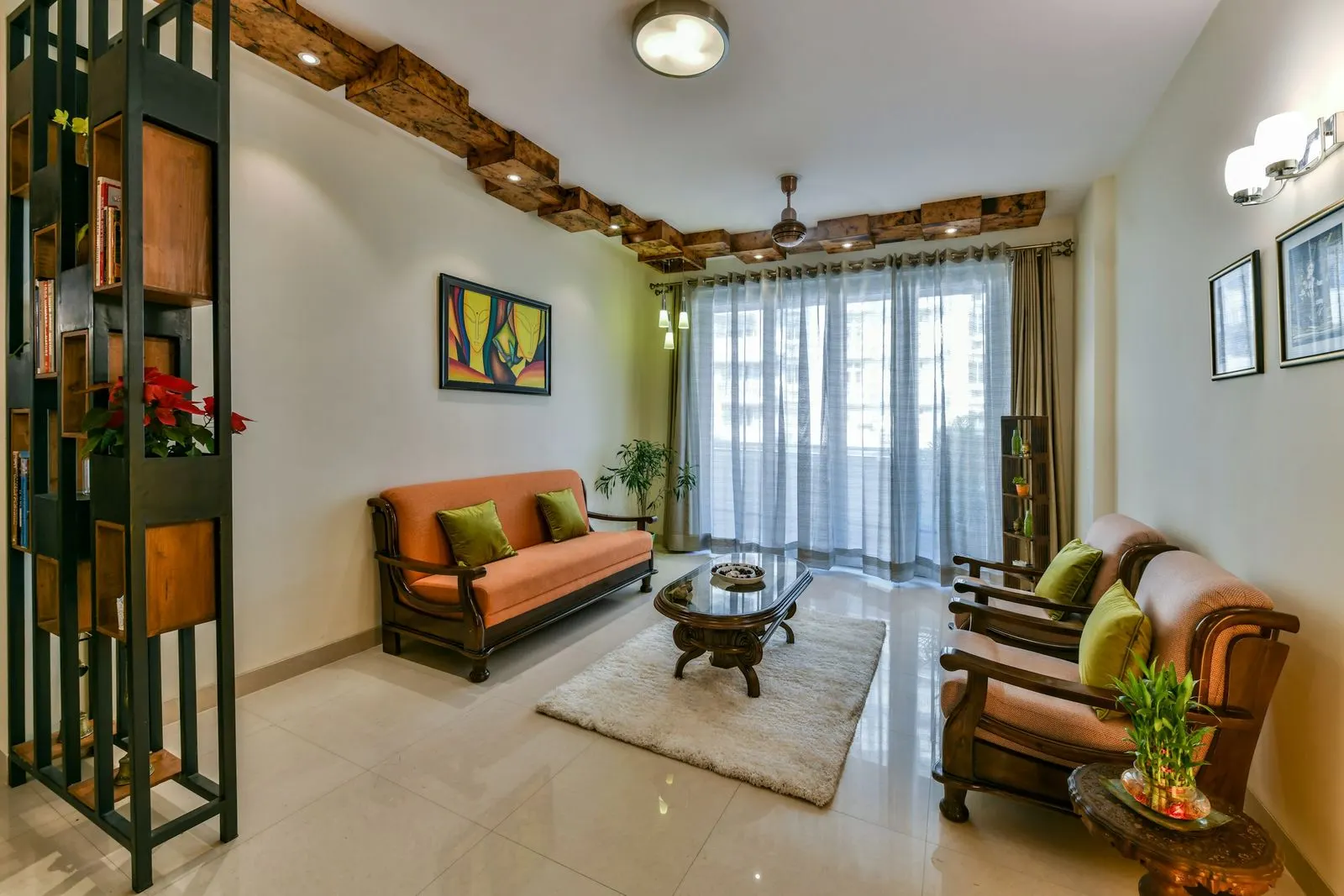
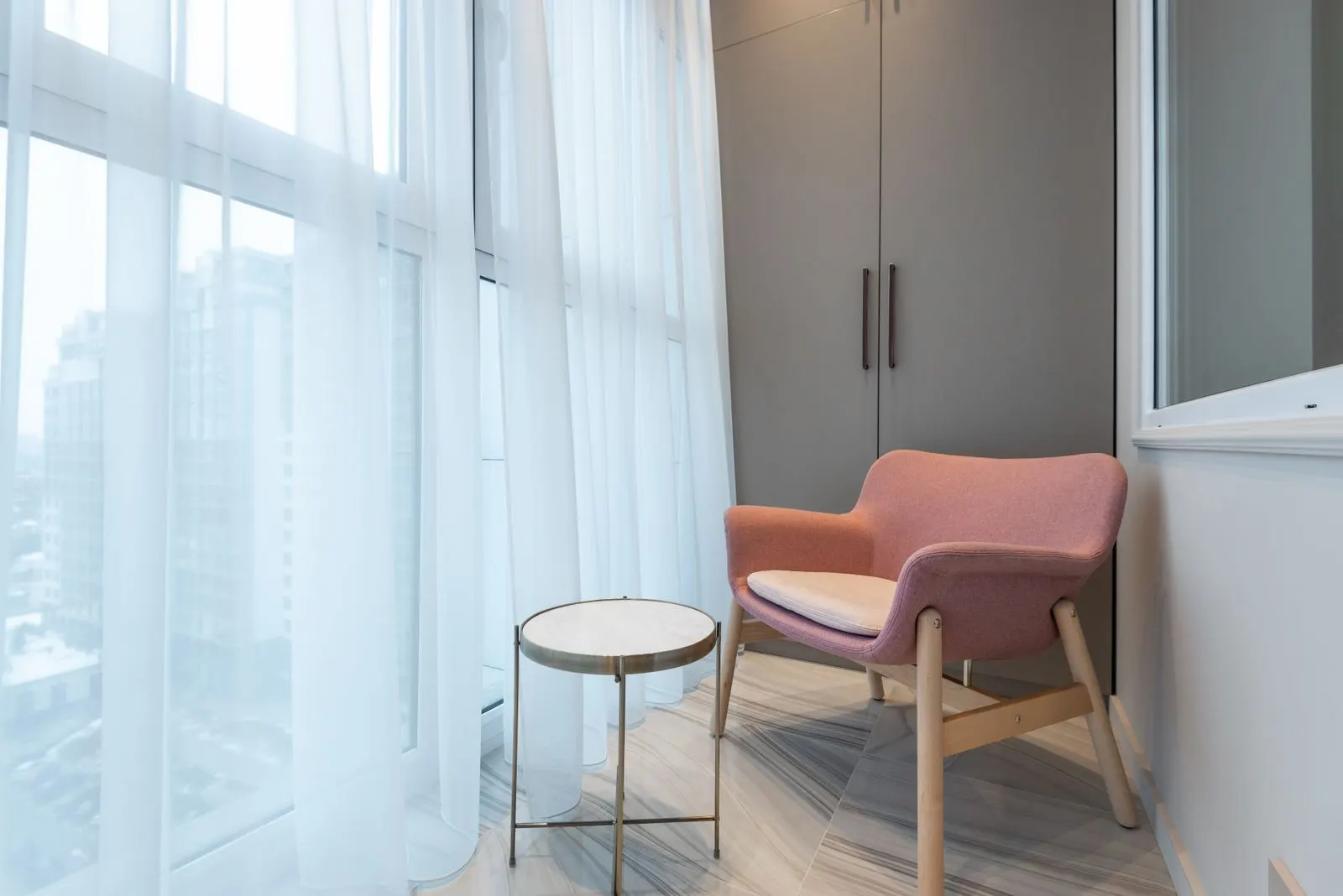
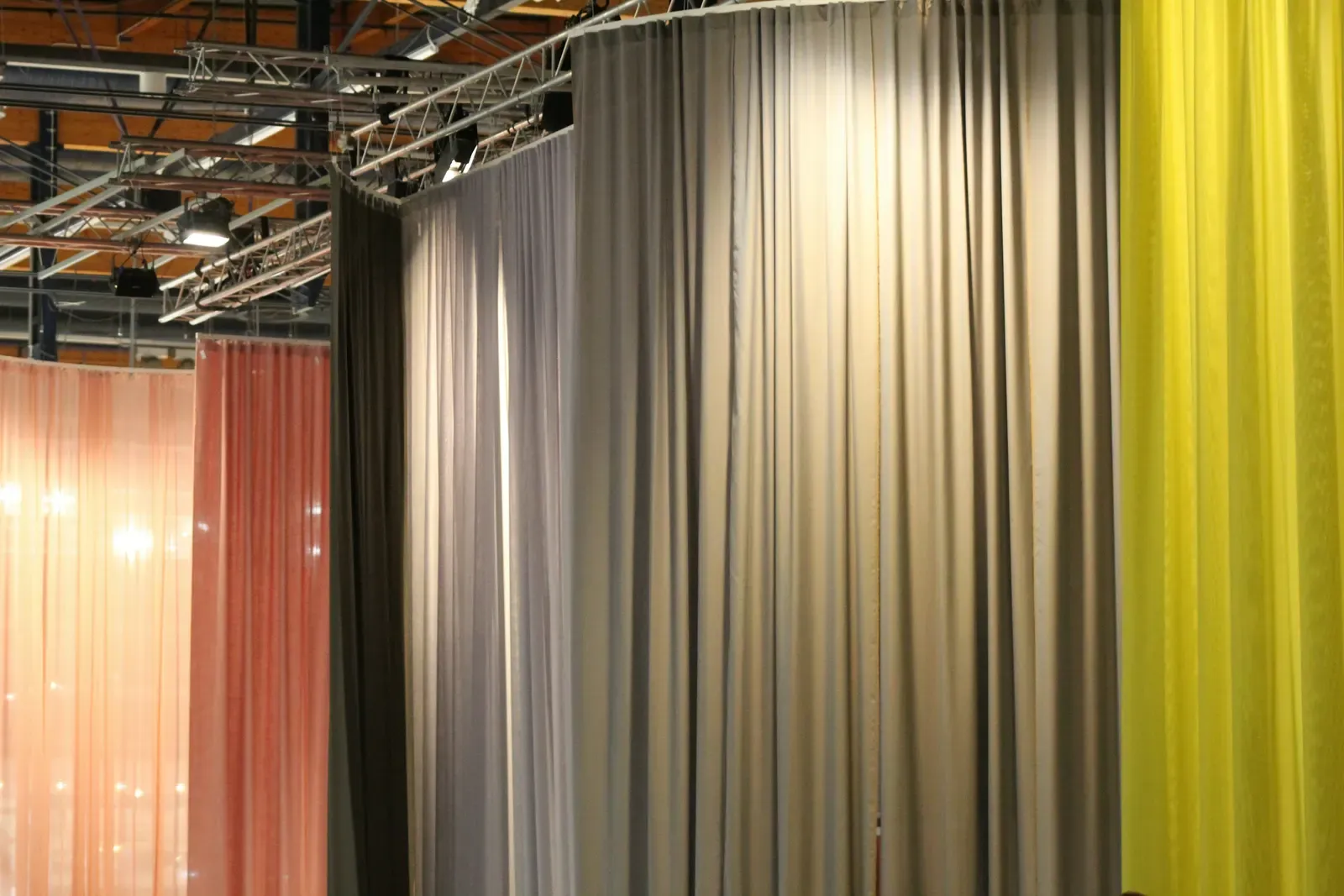
Sliding doors and big glass walls are the reason a lot of people call us. Ready-made curtains rarely fit them, rods sag across the span, and the fabric ends up covering half the door when it’s open. These openings need the same thinking as any window, just at a larger scale, and they’re among the most common jobs in our made-to-measure curtains service.
This guide is about the hardware and layout choices specific to large glass. For fabric, lining, cost and care, our curtains buying guide for Hyderabad homes covers the rest.
Which opening do you have?
Each type of large opening has its own quirks.
| Opening | What makes it tricky | What usually works |
|---|---|---|
| Sliding balcony door | Wide span, people walk through daily, handle sticks out | Ceiling track, ripple fold or pinch pleat, opens to the fixed-panel side |
| French windows / French doors | Doors swing inward or outward, often with tall glass | Track or rod fixed high and wide enough that doors clear the stacked curtain |
| Floor-to-ceiling glass wall | No wall above, sometimes no wall at the sides | Ceiling track or recessed pocket, panels split across the span |
| Corner window | Two glass walls meeting | Bent track so the curtain travels round the corner |
| Bay window | Three or more angled sections | Bent track, or separate sections each with its own curtain |
Rod or track for a large opening?
On anything over about 2.5 metres we almost always suggest a track. A long rod needs centre brackets, and ordinary rings can’t pass them, so the curtain stops halfway. A track has carriers running inside the channel, passes its own supports, and can be fixed to the ceiling. It can also take a motor later.
Rods still have a place on narrower French doors where you want visible hardware as part of the look. Our curtain rods and tracks guide compares materials and bracket spacing in more detail.
Which heading suits sliding doors?
- Ripple fold (wave): our first choice for wide glass. Even folds, the tightest stack, and the natural partner for motors.
- Pinch pleat: tailored and works on standard tracks. Stacks a bit wider than ripple fold.
- Eyelet: only on a rod, so best kept to narrow French doors.
Want this planned for your door? We visit with samples and a tape, free across Hyderabad. WhatsApp +91 98499 17494.
Stacking the curtain off the glass
This is the step that decides whether your door feels open or half-blocked.
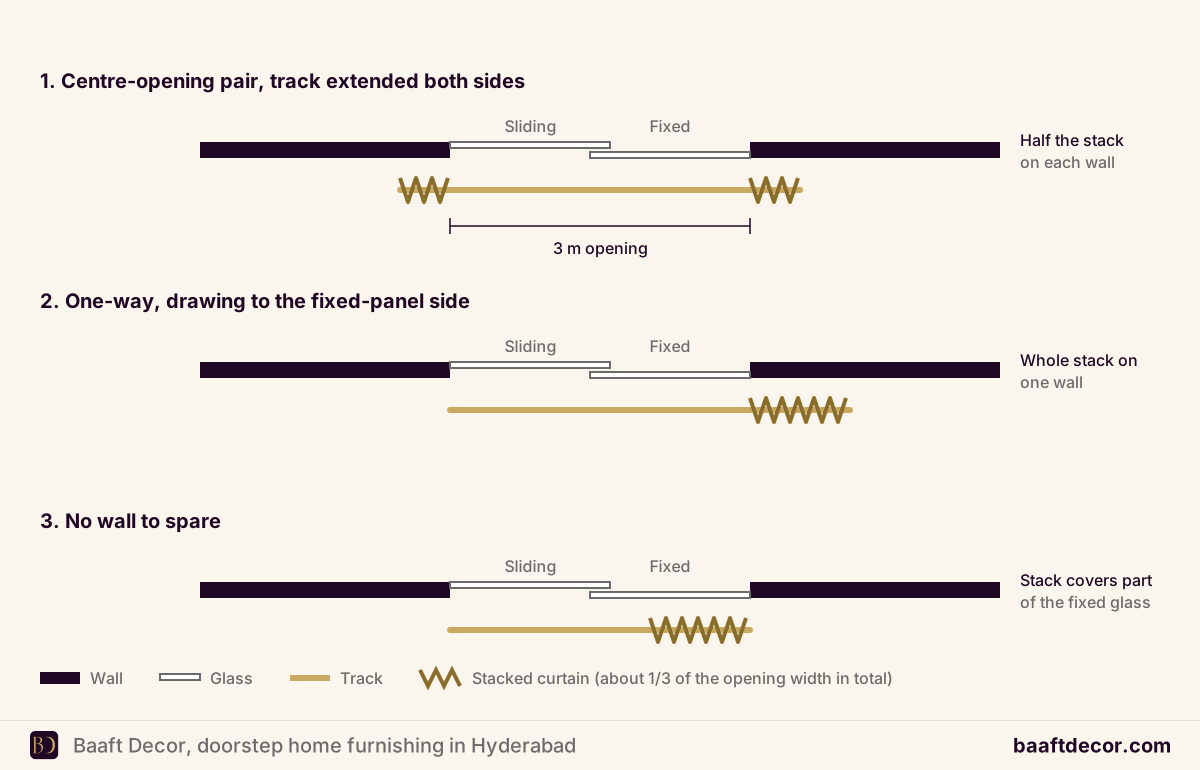
A curtain at about 2 times fullness doesn’t fold flat. Bali’s drapery measuring guide puts total stack-back at roughly one third of the window width, more for heavy or bulky fabric. On a 3 metre sliding door, that’s around a metre of fabric to park somewhere.
So, when we plan a sliding door:
- Measure the wall on each side. If there’s room, extend the track past the glass so the stack sits on wall.
- Pick the opening direction. If the door has one fixed panel, the curtain usually draws to that side, so the sliding panel stays clear.
- Check handles and sills. The curtain should hang a few centimetres clear of the door handle, and the track far enough off the wall to clear the frame.
- Choose fabric with stack in mind. Two thick layers stack much wider than a sheer plus a lined curtain.
French windows and doors that swing
French windows behave differently from sliders because the doors swing. If they open inward, the stacked curtain has to sit far enough to the side that the door can open fully without crushing it, so the track needs to extend well past the frame on both sides. If they open outward onto a balcony, the curtain only has to clear the handles.
Check two more things on French doors. First, the handle height: a curtain that rubs on a lever handle every day wears through at that spot. Second, the top: many French windows have a fixed fanlight above, and hanging the track above that fanlight makes the whole opening look taller and stops light leaking over the top.
Double-height living rooms
Villas and some duplex apartments have living rooms with glass running up two floors. Curtains here can be 5 or 6 metres long, which changes everything: the fabric is heavy, it’s hard to reach for cleaning, and drawing it by hand means a long pull cord or a pole.
We usually suggest a strong ceiling track with a motor for these, plus fabric chosen for weight (a lighter lined poly-blend rather than heavy velvet). Every panel has to come down for washing eventually, so we plan the panel count with that in mind.
Ceiling tracks and false ceilings
Most new apartments have little or no wall above a sliding door, and many have a false ceiling. A ceiling-mounted track is the clean answer: the curtain falls from the ceiling, there’s no light gap at the top, and the room looks taller. Our guide on how high to hang curtains explains why higher usually looks better.
If you’re doing a false ceiling, ask for a recessed curtain pocket along the glass wall. Make it deep and wide enough for a double track if you want a sheer and a lined layer. The track must fix into a plywood backing strip or the slab, never only into gypsum board.
Splitting wide panels
A 4 metre opening at 2 times fullness needs about 8 metres of flat fabric. That’s six widths of standard 137 cm fabric stitched together. Hung as one huge panel, it’s heavy to pull, hard to wash and awkward to take down.
We usually split large openings into two, three or four panels on one track. Each panel is lighter, washes in a home machine or at the laundry more easily, and can be taken down without a ladder party. Where the panels meet in the middle, we overlap them so light doesn’t leak through the join.
Wind on high floors
Upper-floor flats in Kokapet, the Financial District and similar high-rise areas get real wind through open balcony doors. The National Research Council Canada’s digest on wind on buildings explains why: surface wind is much slower than wind higher up, and gusts get stronger with height.
What helps:
- Heavier or lined fabric for the main layer. Loose sheers blow the most.
- Weighted hems so the bottom doesn’t flap out of the door.
- A tie-back or magnetic holdback to park the curtain when the door is open.
- Closing the glass first in strong wind, then drawing the curtain.
For more on tall-building windows, including safety grills and blinds, see our high-rise apartment window solutions.
Heat and glare through big glass
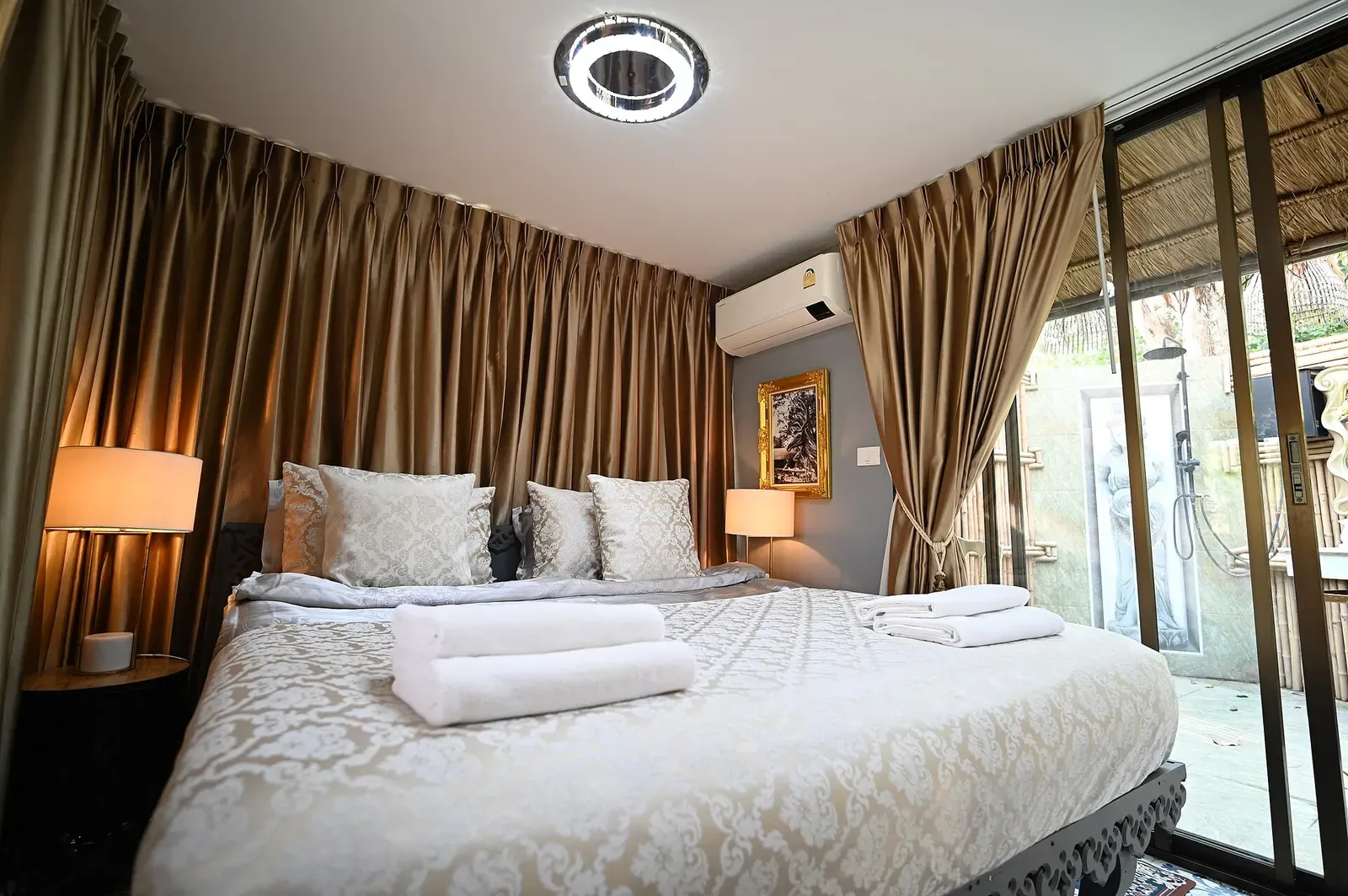
A west-facing glass wall in Hyderabad takes the full afternoon sun from March to June, and a TV or work screen facing it becomes hard to use. Two layers solve most of it:
- A sheer cuts glare and keeps the view during the day.
- A lined curtain with a light-coloured backing goes behind it and is drawn while the sun is on the glass.
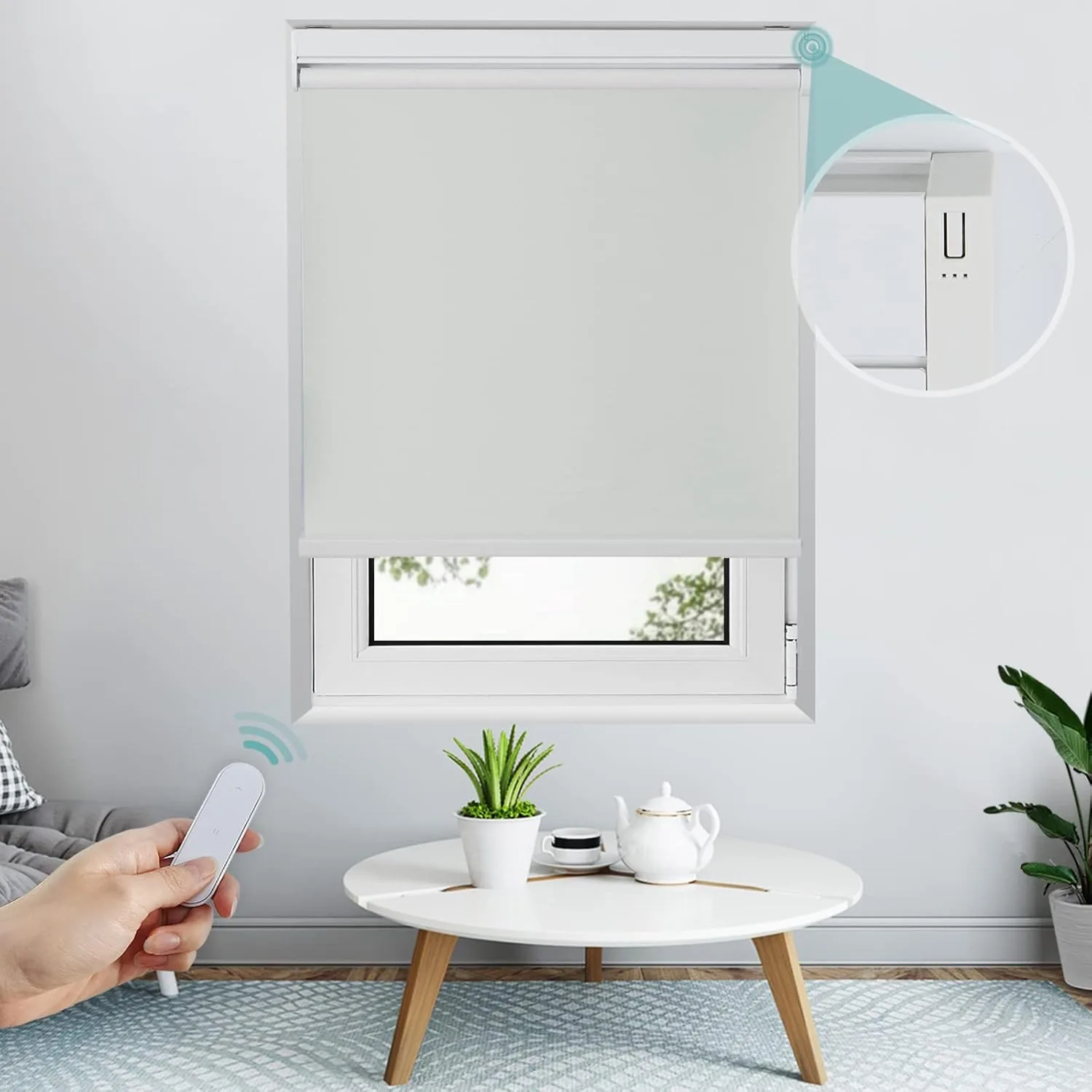
The lining also protects the face fabric from fading. Our guide to keeping your home cool with curtains and blinds goes deeper into fabrics and timings. For curtains that are long, heavy or behind furniture, motorized curtains can be set on a timer to close before the sun swings round.
Balcony doors: mesh, pets and everyday use
A sliding balcony door is used many times a day, which a bedroom window isn’t. A few things make the curtain easier to live with:
- Mosquito mesh. Many flats add a sliding or pleated mesh to the balcony door. The curtain track has to sit far enough forward to clear the mesh frame. We often fit both on the same visit, and our mosquito mesh service covers the mesh side.
- Hem height. Keep the hem 1 to 2 cm above the floor so it doesn’t catch on the door track or the threshold.
- Pets and kids. A heavier, darker fabric hides marks better than a pale sheer at hand height.
Corner and bay windows
Corner windows and bays need the track to follow the glass. Bendable aluminium tracks can be curved on site or supplied with factory bends, so one curtain travels round the corner. Rods need corner connectors and usually can’t let rings pass the joint, so each wall section becomes a separate curtain.
We measure each section separately, plus the angle where they meet, before ordering anything.
Planning a large opening
Big glass is where measuring mistakes cost the most fabric, so we measure every sliding door and glass wall ourselves. If you’re planning curtains in Hyderabad for a balcony door or a full glass wall, book a free home visit. We’ll bring track and fabric samples, check the wall space, door handles and ceiling, and give you a written quote. We work from 8 AM to 10 PM, all seven days. Call or WhatsApp +91 98499 17494.
Frequently asked questions
What type of curtain is best for a sliding door?
The best curtain for a sliding door is usually a floor-length ripple fold or pinch pleat curtain on a ceiling-mounted track. A track lets the curtain glide across a wide opening without snagging, and a ceiling fixing hides the top and gives the full height. Ripple fold stacks the most compactly, which keeps more of the door clear when open. For sun and privacy, most sliding doors in Hyderabad apartments get two layers: a sheer for daytime and a lined dim-out or blackout curtain behind it.
Should sliding door curtains be on a rod or a track?
Sliding door curtains work better on a track than a rod in most homes. Spans of 2.5 to 4 metres or more need several support brackets, and on a rod each bracket blocks rings from passing unless you use special passing brackets. A track has carriers running inside a channel, so the curtain slides the full length without stopping. Tracks can also be ceiling-mounted, bent for corners and motorised later. A rod is fine on a narrower French door where you want visible hardware.
Which way should a sliding door curtain open?
A sliding door curtain should usually open to the side where the door's fixed panel is, so the stacked fabric sits over glass that never moves and the sliding panel stays clear for walking through. If the door opens from the centre, a centre-opening pair works. Where there is a wall on one side only, a single panel that draws to that wall keeps the whole opening clear. The direction is decided at the home visit, after checking the door, handles, wall space and furniture.
How do you stop curtains blowing on a high floor?
On high floors, wind through an open sliding door or window pulls light curtains outward and can wrap them around the door frame. Wind speed rises with height above ground, so upper floors get stronger gusts than the ground does. Practical fixes are a heavier or lined fabric, which resists wind better than a loose sheer, weighted hems, a tie-back or magnetic holdback to keep the curtain parked when the door is open, and closing the door or window before drawing the curtain in strong wind.
Can curtains reduce heat from a large glass window?
Curtains can cut a useful amount of the heat that comes through large glass, especially lined curtains with a light-coloured backing that reflects sunlight before it warms the room. The curtain needs to be closed while the sun is on the glass, so on west-facing windows in Hyderabad that means afternoons from March to June. A ceiling-mounted, floor-length curtain that extends past the glass works better than a short one, because less heat and light escape around the edges.
How do you hang curtains on a corner window or bay window?
Corner and bay windows need a track that bends to follow the shape, or separate straight sections that meet at the corner. Bendable aluminium tracks can be curved on site or ordered with factory bends, so a single curtain can travel round the corner. Decorative rods need special corner connectors and usually cannot let rings pass the joint, so each section becomes its own curtain. Each wall section is measured separately, along with the angle between them, before the track is ordered.
How many curtain panels does a large window need?
A large window or sliding door usually needs more panels than people expect. The total flat fabric width is the track length multiplied by the heading fullness, often about 2 times, then divided by the fabric width of about 137 cm. A 4 metre opening at 2 times fullness needs about 8 metres of flat fabric, which is six joined widths, made up as two or more panels. Splitting into more panels also makes each one lighter to wash and easier to handle.
Should large windows have motorised curtains?
Motorised curtains make most sense on large windows where the curtain is long, heavy or hard to reach, such as double-height living rooms, wide sliding doors behind furniture and blackout curtains that are opened daily. A motor-rated track moves the curtain smoothly and evenly, can be put on a timer to close before the afternoon sun, and stops people tugging on the fabric. The motor needs a power point near one end of the track, which is easiest to plan before the false ceiling is closed.