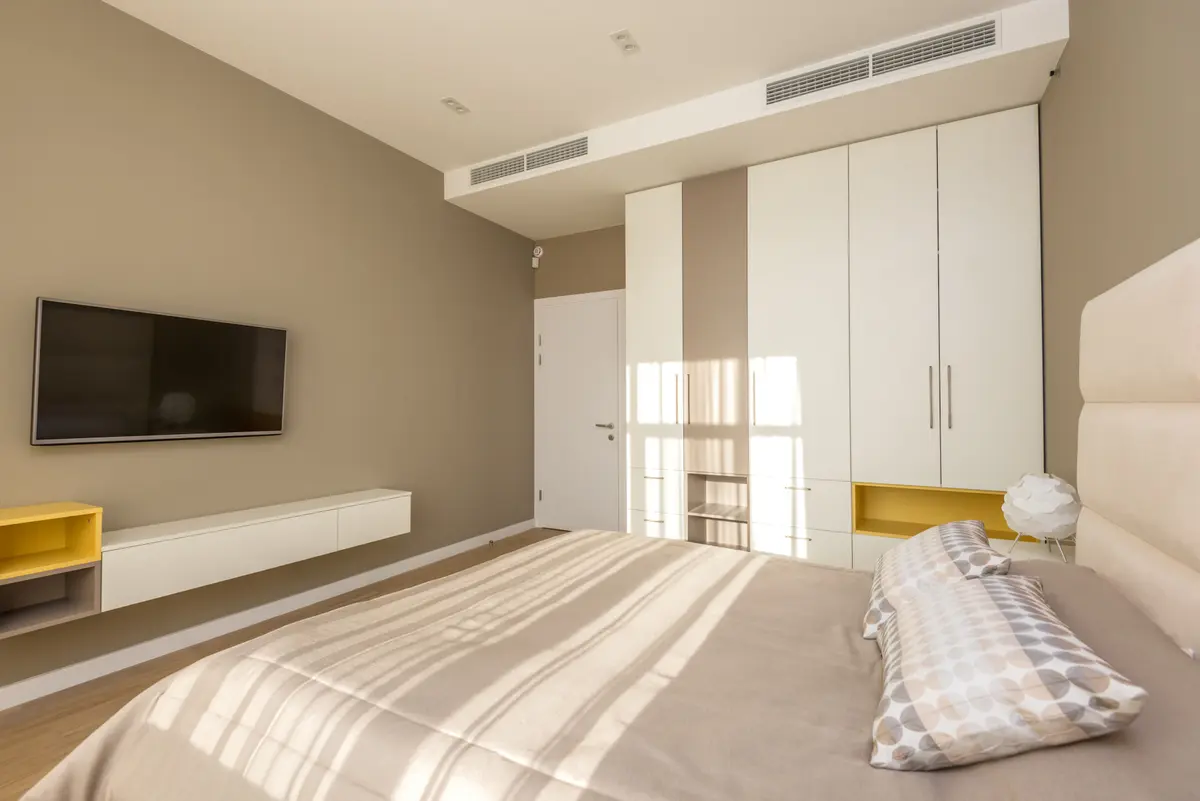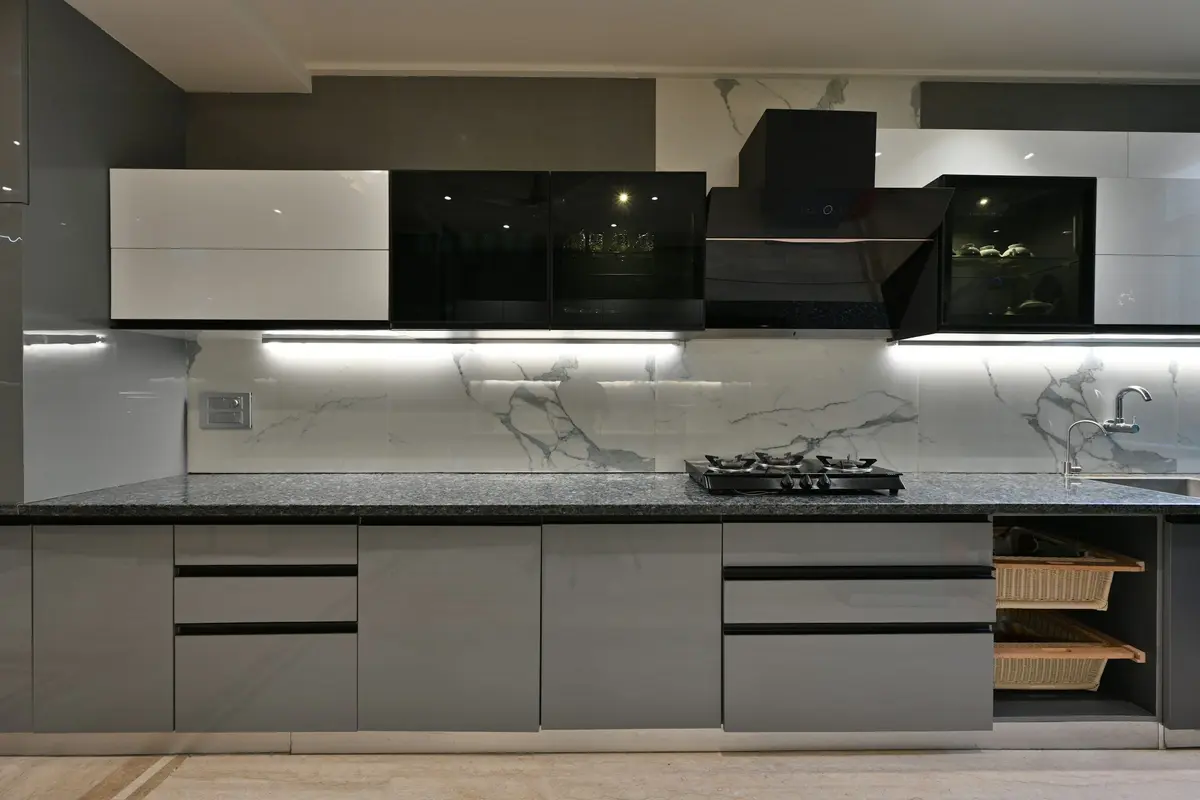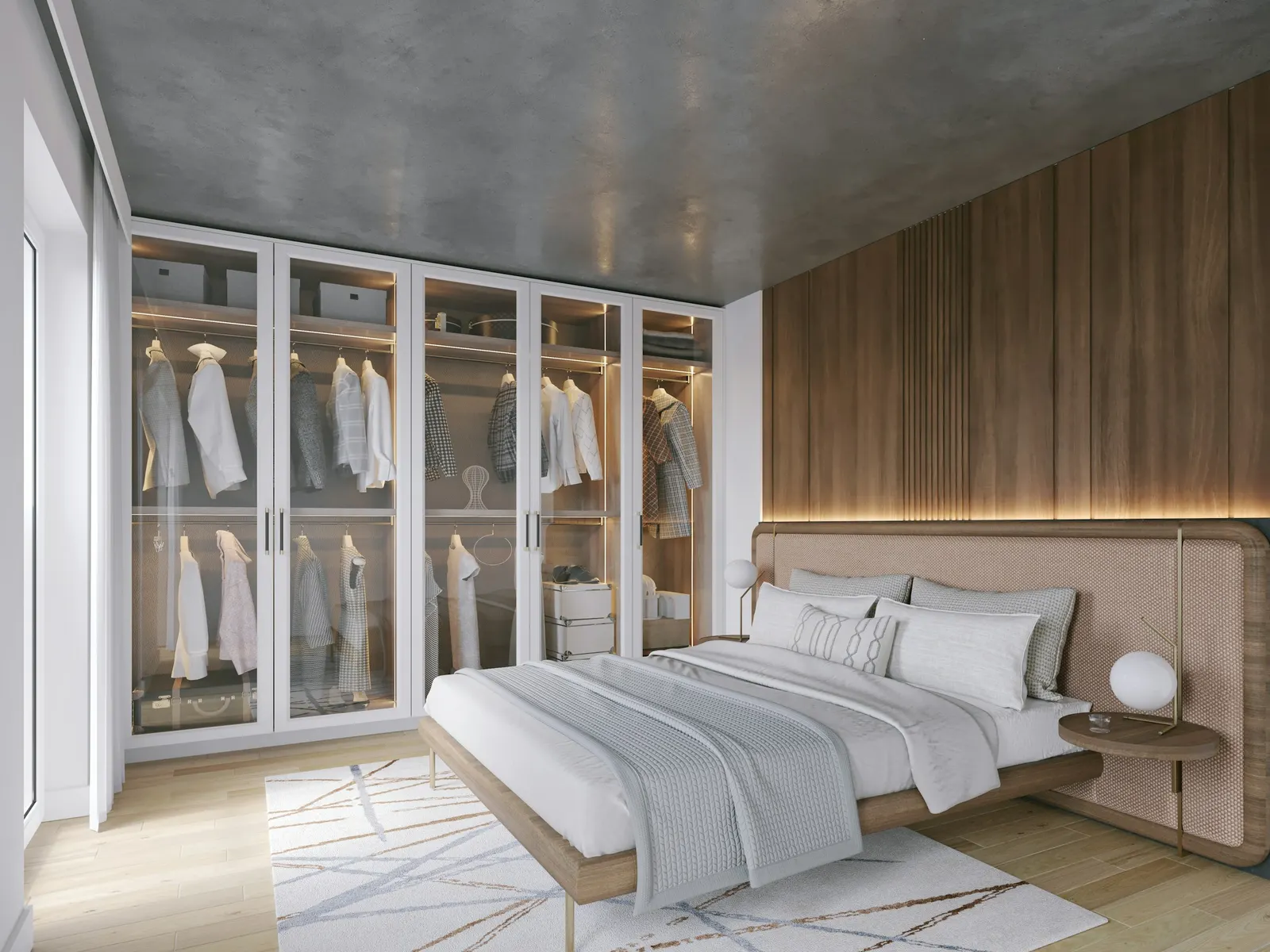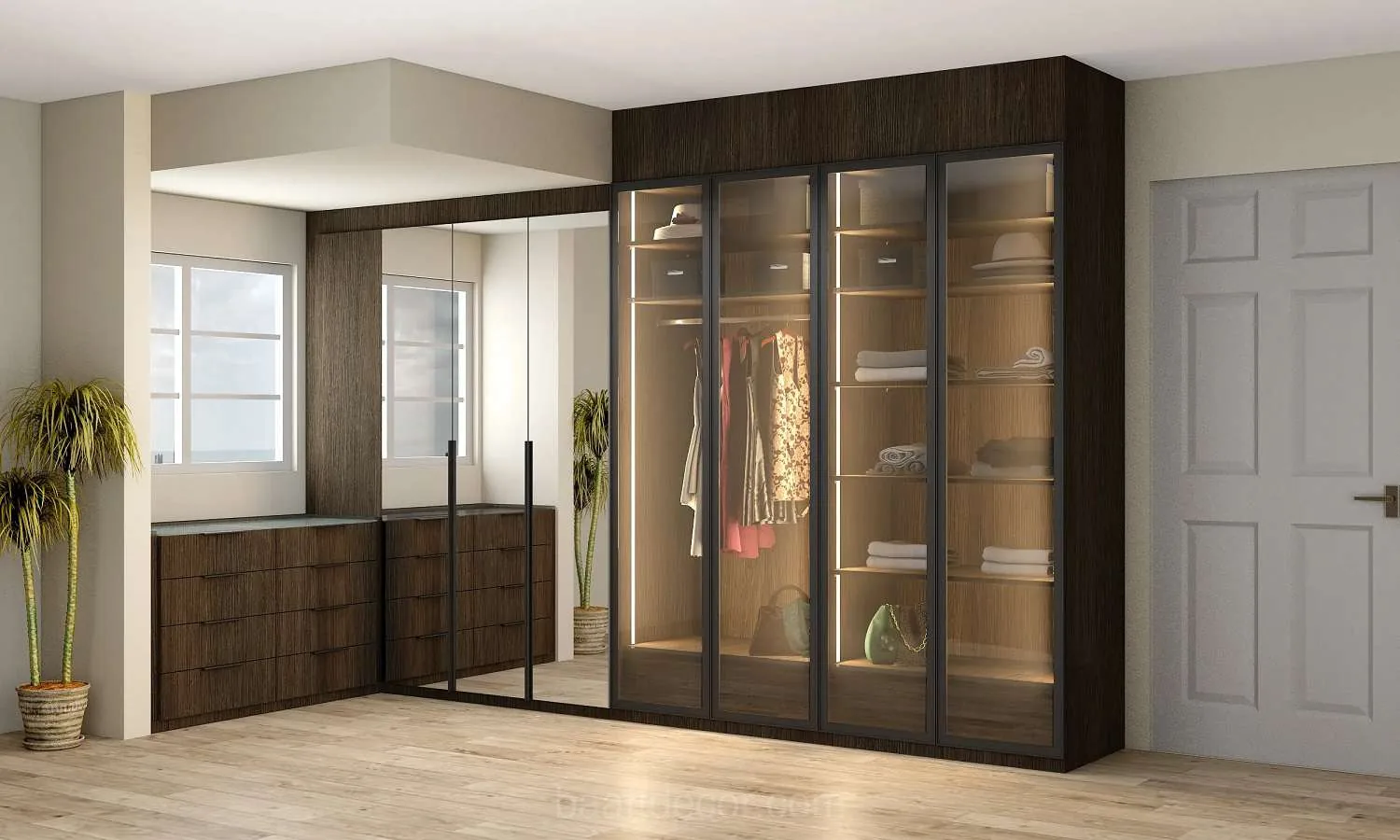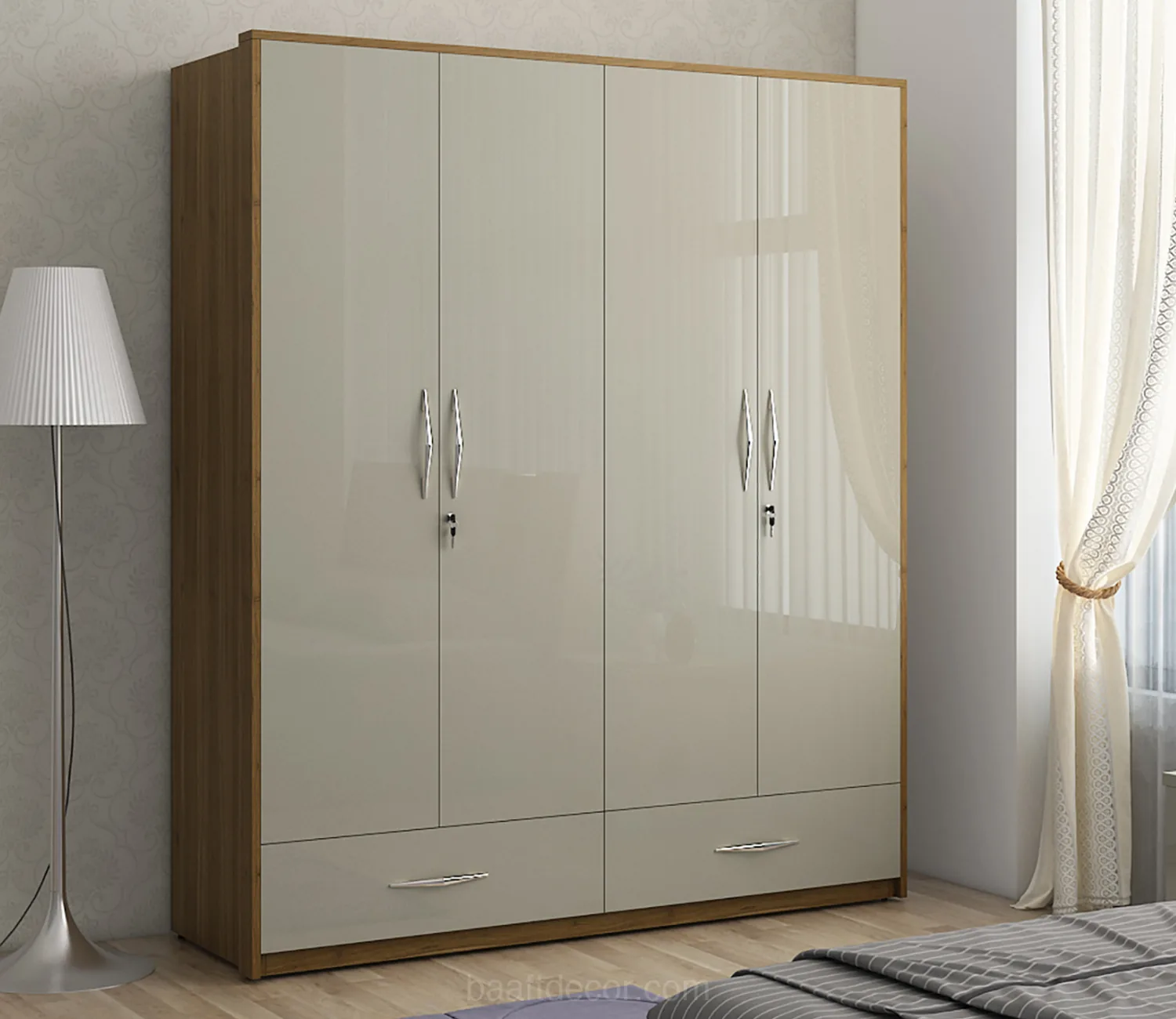
The finish is the part of a wardrobe you touch and see every day, so it’s natural to spend most of the decision time on it. But two wardrobes in the same “white gloss” can age very differently depending on what that gloss actually is, and what board sits underneath.
This guide compares the three finishes that come up on almost every visit when we plan wardrobes in Hyderabad: laminate, acrylic and PU paint. It also touches on membrane, veneer and glass, and the laminate colours that still look right after a decade. Finishes are one chapter of our Hyderabad wardrobe guide; start there if you’re still deciding size, doors or board.
Laminate vs acrylic vs PU: the quick verdict
- Laminate if you want durability, low maintenance and the widest choice at the lowest cost. It’s the right answer for most family bedrooms.
- Acrylic if you want a deep, glossy, almost-glass look and don’t mind wiping fingerprints.
- PU if you want a custom paint colour, grooved or curved shutters, or painted edges with no joint lines, and the budget allows.
Side-by-side comparison
| Factor | Laminate | Acrylic | PU paint |
|---|---|---|---|
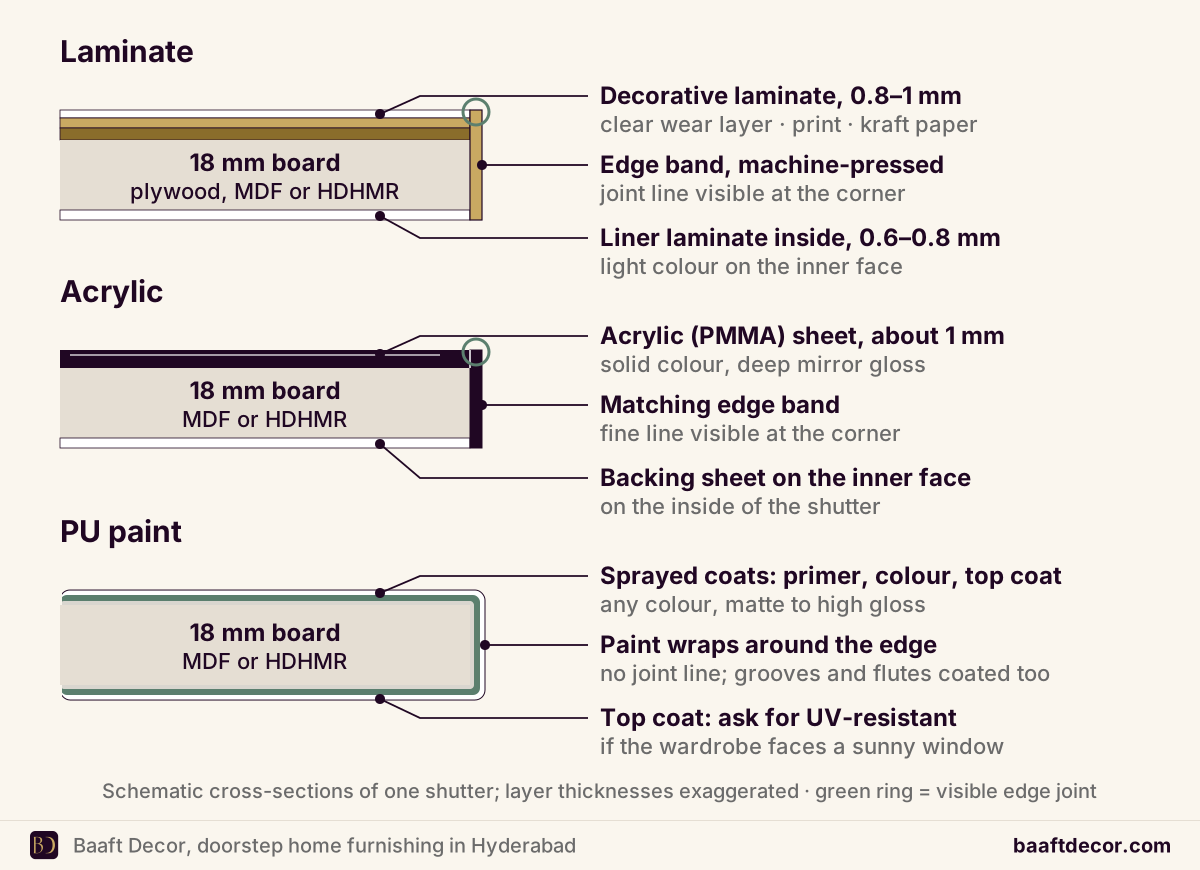
| What it is | Decorative sheet (about 0.8 to 1 mm) pressed onto board | PMMA sheet (usually about 1 mm) bonded to MDF or HDHMR | Polyurethane paint sprayed in several coats on MDF or HDHMR |
| Looks | Matte, suede, woodgrain, stone, gloss | Deep mirror gloss, some matte grades | Any colour, matte to high gloss |
| Edges | Edge-banded; joint line visible | Matching edge band; fine line visible | Painted all round; no joint line |
| Scratch resistance | Good (best in matte/textured) | Moderate; shows fine marks | Good, but scratches are visible |
| Fingerprints | Low on matte | High | Medium (high on gloss) |
| Strong sun | Good on quality brands | Choose UV-stable grades | Choose UV-resistant top coat |
| Repair | Chips hard to hide | Panel usually replaced | Can be sanded and resprayed |
| Relative cost | Lowest | Mid to high | Highest |
| Lead time | Shortest | Medium | Longest (spraying and curing) |
Laminate: the dependable default
High-pressure laminate (HPL) is several sheets of kraft paper soaked in phenolic resin, a printed decorative paper and a thin melamine-resin overlay, fused together under high heat and pressure. On a shutter, about 0.8 to 1 mm of decorative laminate goes on the outside and a thinner, light-coloured liner (about 0.6 to 0.8 mm) goes inside, so both faces pull equally and the shutter stays flat.
Why we like it: it takes knocks, it doesn’t mind a wet hand, and a good matte or suede texture hides fingerprints almost completely. The weak point is edge banding. A poorly pressed edge band lifts after a monsoon or two, so ask how the edges are applied. Machine edge-banding is far more reliable than hand-glued strips.
Wardrobe laminate colours that age well
Trends come and go; these have held up:
- Warm neutrals (ivory, greige, taupe) for the main shutters. They make small rooms look bigger and hide dust.
- Light or mid oak woodgrain for a warm, natural look that pairs with most flooring.
- Walnut in master bedrooms with wooden furniture.
- One accent bay in sage, dusty blue or charcoal if you want colour without committing the whole wall.
Sliding wardrobe laminate design ideas
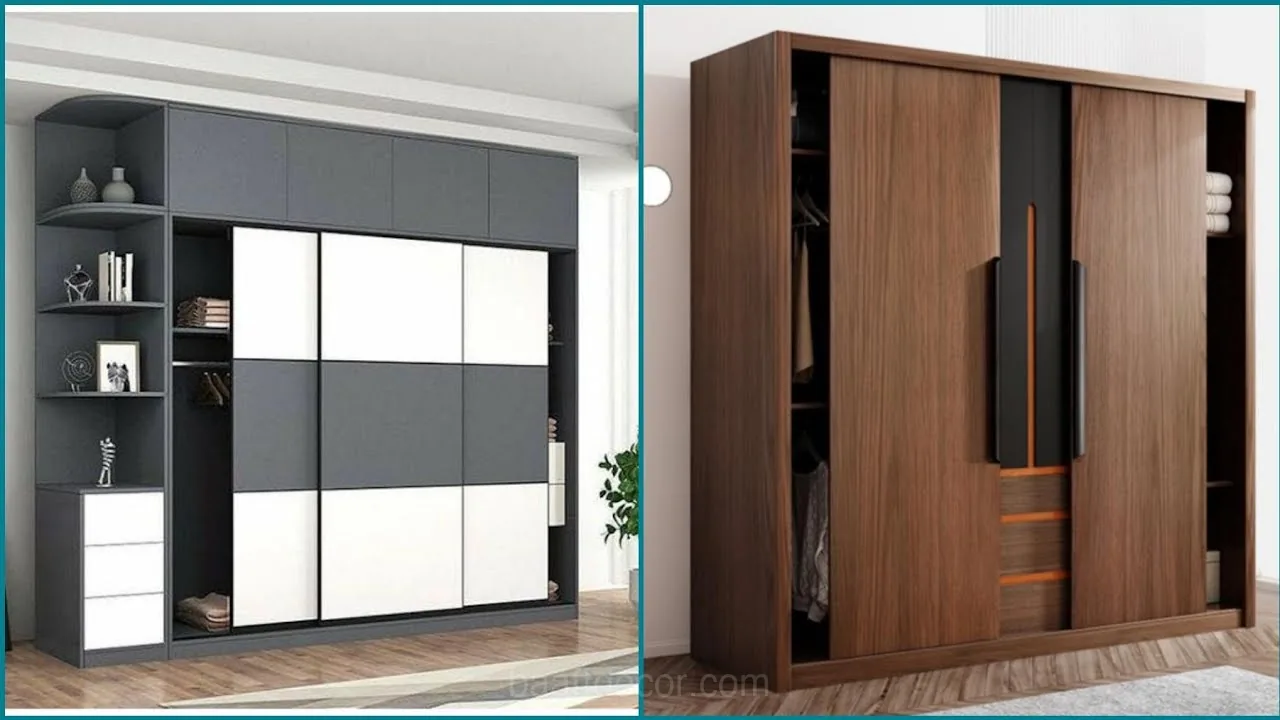
Sliding doors are big flat panels, so they’re a good canvas. Popular combinations: horizontal two-tone bands (a light colour with a woodgrain strip), a full woodgrain door beside a mirror panel, or matte laminate in a thin aluminium frame. Keep sliding panels to matte or suede if the doors get touched a lot, because that’s where hands push.
Acrylic: gloss with a catch
Acrylic shutters use a sheet of PMMA, the plastic sold as acrylic glass, usually about 1 mm thick and bonded to an MDF or HDHMR core. The reflection is deeper and clearer than high-gloss laminate, which is why acrylic photographs so well.
The catch is upkeep. Gloss shows every fingerprint and, on lower grades, fine swirl scratches from cleaning cloths. If a panel is badly scratched or dented it usually has to be replaced rather than repaired. Acrylic works best on wardrobe doors that are opened by handle or profile grip, not pushed by palm.
PU paint: the custom option
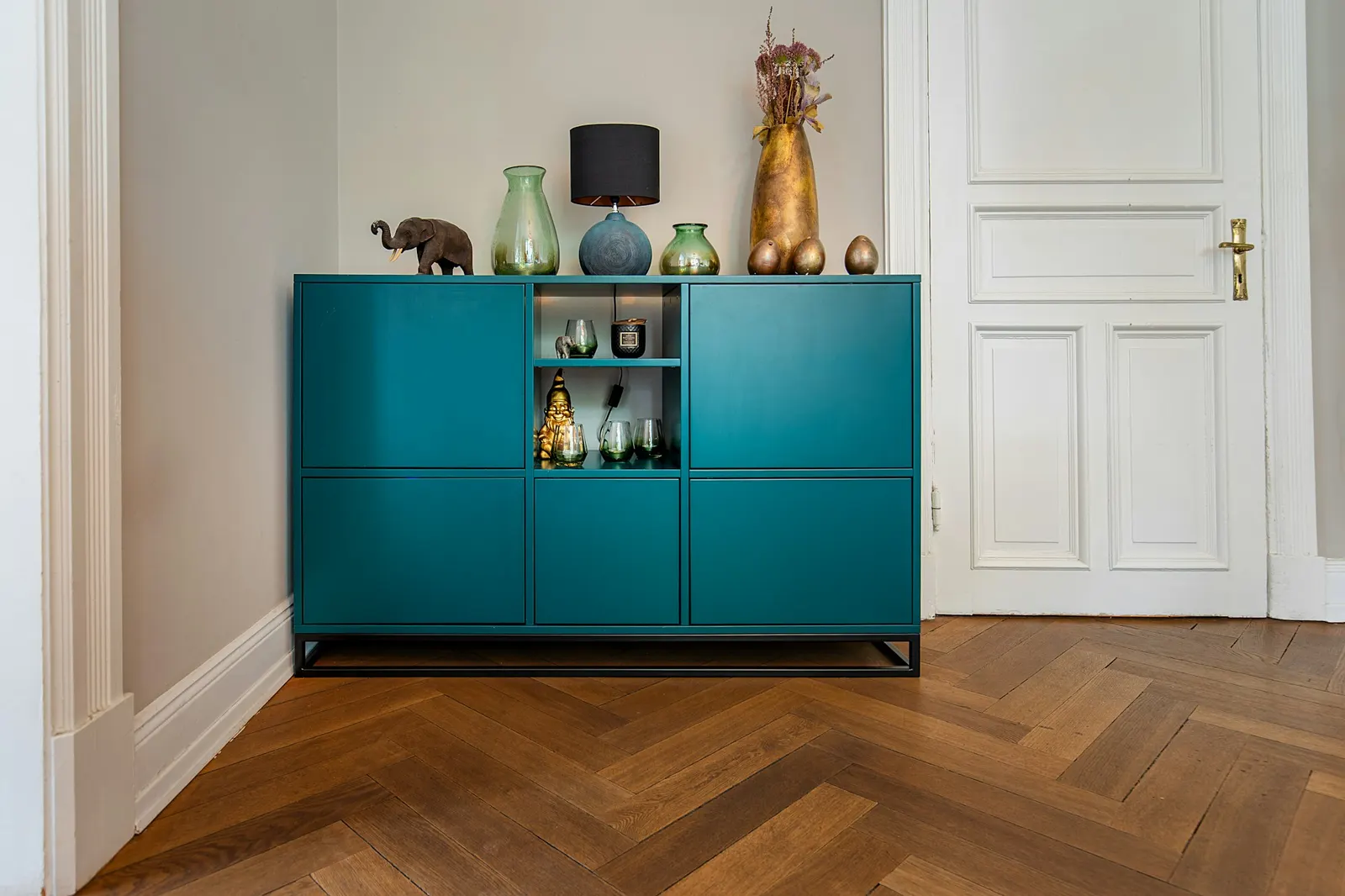
PU (polyurethane) finish is sprayed in several layers (primer, colour, top coat) onto an MDF or HDHMR shutter, then cured. Because it’s paint, it wraps around grooves, flutes, curves and edges, so you get a smooth front with no joint lines at all. You can match almost any colour.
It costs the most and takes the longest to make. The upside is repairability: a scratched PU shutter can be sanded and resprayed by a professional. Ask whether the top coat is UV-resistant if the wardrobe faces a window.
Other finishes worth knowing
- Membrane (PVC foil): vacuum-pressed over routed MDF, so it suits shaker-style or grooved doors on a budget. It’s sensitive to heat, which matters more in kitchens than bedrooms.
- Wood veneer: a thin slice of real wood, polished on site or in the factory. Beautiful and warm, but it needs good polish and some care.
- Lacquered glass and mirror: easy to wipe and very hard-wearing, usually set in aluminium frames. Heavy, so they need strong hinges or tracks; see our sliding vs hinged wardrobe guide.
The board underneath matters as much as the finish
A finish is only a surface. Acrylic and PU are almost always applied to MDF or HDHMR because those boards are smooth and flat. HDHMR is the safer core in a humid room: it’s pressed to about 850 to 900 kg/m³, but CenturyPly is clear that it still isn’t fully waterproof, so the edges must be sealed. Laminate can go on plywood, MDF or HDHMR. On a wardrobe that shares a wall with a bathroom, the board needs to be moisture-resistant (BWR or BWP plywood, or HDHMR) no matter which finish you pick. Our kitchen cabinet materials guide explains plywood grades, HDHMR and MDF in detail, and the same logic applies to wardrobes.
Which finish suits Hyderabad conditions?
Afternoon west sun. Pure white gloss next to a west-facing window is the riskiest choice; some paints and lower-grade acrylics can yellow over the years. Matte laminate, or acrylic and PU with UV-stable top layers, are safer.
Monsoon humidity. From June to September, edge banding gets tested. Machine-pressed edges and moisture-resistant boards prevent most swelling. Our monsoon home care guide covers airing wardrobes and keeping clothes fresh.
Kids and pets. Matte or suede laminate wins. It forgives sticky hands and toy cars.
Matching the kitchen. If you’re doing a modular kitchen at the same time, using the same laminate family in both can simplify ordering and give the home a consistent look.
Mixing finishes on one wardrobe
You don’t have to pick just one. The most cost-effective wardrobes we plan use laminate for the carcass and interiors, then put the premium finish only on the shutters you see. A few combinations that work well:
- Matte laminate shutters on the lower half, acrylic or lacquered glass on the loft, where nobody touches them.
- PU-painted fluted panel on one accent bay, matching flat laminate on the rest.
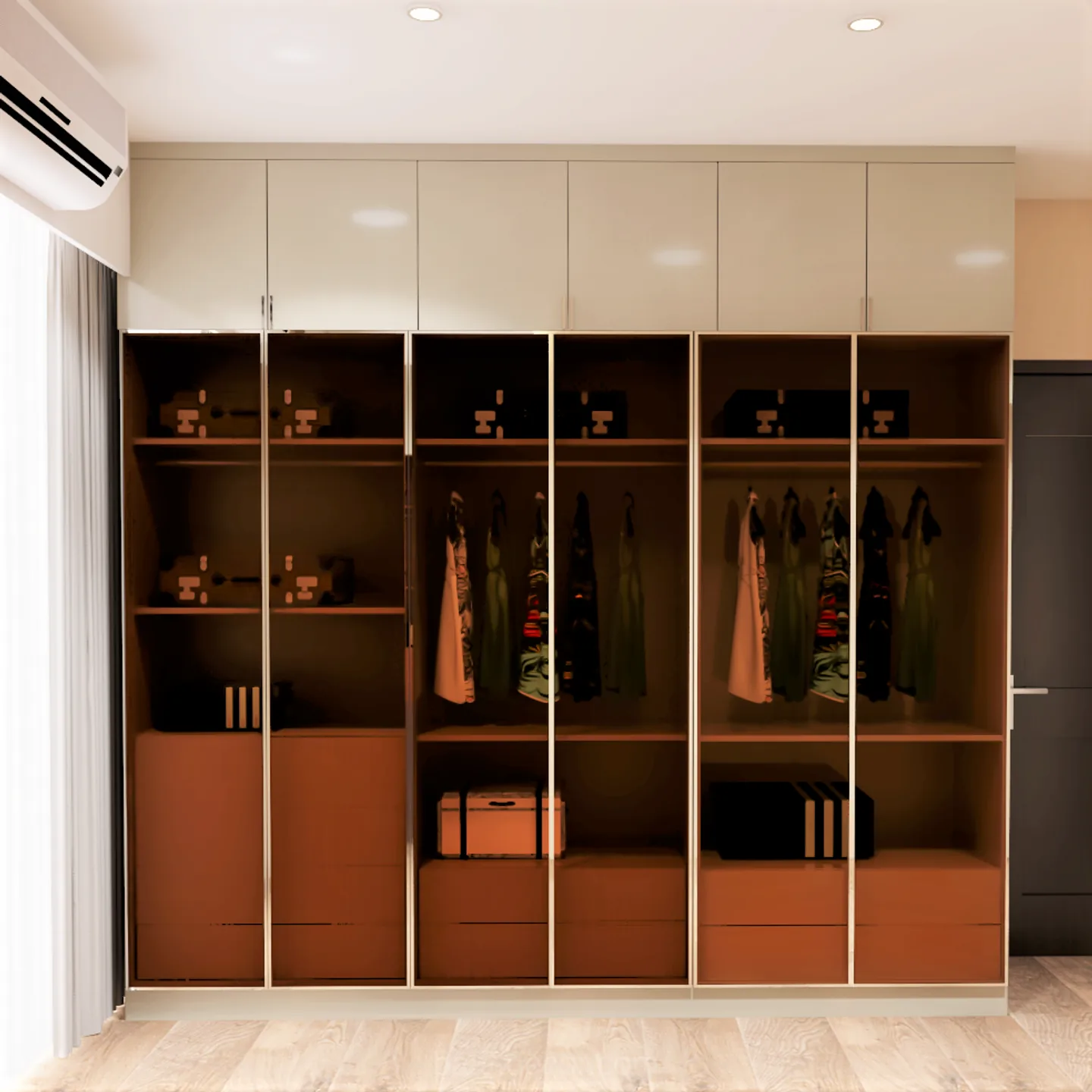
- Woodgrain laminate frame and side panels with gloss shutters, like the wardrobe at the top of this page.
The one rule: keep the colour family consistent. A gloss white and a matte white from different materials rarely match exactly, so pair contrasting colours instead of near-matches.
Care tips for each finish
- Laminate: wipe with a damp cloth and a drop of dishwashing liquid. Dry the edges.
- Acrylic: microfibre cloth only. No scrubbers, no alcohol sprays. Peel the protective film after installation, not before.
- PU: treat it like a car’s paint. Mild soap, soft cloth, and call a professional for deep scratches rather than using touch-up pens.
- Glass and mirror: glass cleaner on a cloth (not sprayed directly), so liquid doesn’t seep into the frame.
Finish is one of the biggest levers on price after size. Our wardrobe cost guide explains how it moves the quote alongside board, doors and hardware.
The easiest way to choose is to see the samples in your own room’s light, morning and evening. Book a free home visit and we’ll bring laminate, acrylic and PU swatches, measure the wardrobe wall and give you a fixed quote for each option. Call or WhatsApp +91 98499 17494, any day from 8 AM to 10 PM.
Frequently asked questions
Which is better for wardrobes: laminate, acrylic or PU?
For most wardrobes, laminate is the better choice because it is the most affordable, resists scratches well in matte textures, hides fingerprints and comes in the widest range of colours and woodgrains. Acrylic is better if you want a high-gloss, mirror-like front and accept that it shows smudges. PU is better if you want an exact custom colour, grooved or curved shutters and painted edges with no visible joints. Many homes mix them: laminate carcass and interiors, with acrylic or PU on the visible shutters.
Does acrylic finish scratch easily?
Acrylic finish can show fine scratches and swirl marks more easily than matte laminate, because the high-gloss surface reflects light and makes every mark visible. Quality varies a lot between brands and grades; better acrylic sheets have harder, scratch-resistant top layers. To keep acrylic wardrobe shutters looking good, peel the protective film only after installation, clean them with a soft microfibre cloth and mild soapy water, and avoid abrasive scrubbers, sprays with alcohol or rings and bangles brushing against the doors.
What is the best laminate colour for a wardrobe?
The best laminate colours for a wardrobe are usually warm neutrals such as ivory, greige, taupe and light oak, because they suit most wall colours, make bedrooms look larger and hide dust. Walnut and teak woodgrains suit master bedrooms with wooden flooring or furniture. Sage, dusty blue and charcoal work well as accent shutters on one section. Choose matte or suede textures over high gloss if you have children, and use a light-coloured liner laminate inside so clothes are easy to see.
Is PU finish worth the extra cost for a wardrobe?
PU finish is worth the extra cost when you want something laminate and acrylic cannot do: an exact paint colour matched to your walls, grooved, fluted or curved shutter designs, or painted edges with no visible joint lines. It can also be sanded and resprayed by a professional if damaged. For a plain flat-front wardrobe in a busy family bedroom, a good matte laminate gives a similar look for much less money and is easier to maintain.
Do PU and acrylic wardrobe finishes turn yellow?
Some PU paints and lower-grade acrylic sheets can yellow or fade over several years, especially white and pastel shades exposed to strong direct sunlight. Wardrobes next to west-facing windows in Hyderabad are most at risk. To reduce this, choose UV-stabilised acrylic grades or quality PU systems with UV-resistant top coats, keep curtains or blinds closed during harsh afternoon sun, and avoid placing a pure white gloss wardrobe directly in a sunbeam.
What is the difference between acrylic and high-gloss laminate?
Acrylic is a sheet of PMMA plastic, usually around 1 mm thick, bonded to MDF or HDHMR board, and it gives a deeper, clearer, more mirror-like reflection. High-gloss laminate is a decorative paper and resin sheet with a glossy top layer; it looks shiny but slightly flatter, and it usually costs less. Both show fingerprints. Acrylic generally has better colour depth and edge matching, while high-gloss laminate suits buyers who want shine on a tighter budget.
How do I clean laminate, acrylic and PU wardrobe shutters?
Clean all three wardrobe finishes with a soft microfibre cloth dampened with mild soapy water, then wipe dry. For laminate, you can use a little diluted dishwashing liquid on handprints. For acrylic and PU, avoid abrasive pads, powder cleaners and alcohol-based sprays, which dull or scratch the surface. Wipe the edges dry after cleaning, because water sitting on edge banding during humid monsoon months is what usually causes lifting or swelling.