Most rug regrets are size regrets. The rug looked generous in the shop, then sat in the middle of the living room like a doormat, with the sofa floating a foot away. When we supply rugs and carpets in Hyderabad, the first thing we do at a home visit is mark the size on the floor with tape, because a rug that fits the furniture fixes half the room’s problems.
This guide covers sizing by room, the main rug materials, pile and construction, rug pads, and care in Hyderabad’s dust and monsoon. If you’re also deciding what goes under the rug, our flooring guide for Hyderabad homes compares every floor type.
What size rug do you need for each room?
Rugs come in a handful of standard sizes. Exact dimensions vary a little between makers, so measure before you order.
| Size (ft) | Approx. (cm) | Typical use |
|---|---|---|
| 4x6 | 120x180 | Beside a bed, study, small entrance |
| 5x8 | 150x240 | Small living area, kids’ room |
| 6x9 | 180x270 | Most apartment living rooms, under a queen bed |
| 8x10 | 240x300 | Larger living rooms, queen or king beds, dining |
| 9x12 | 270x360 | Big halls, villas, six-seater dining |
| 2.5x8 runner | 75x240 | Corridors, beside beds, kitchen walkway |
Custom sizes are also possible if your room is an awkward shape, though made-to-order rugs take longer.
Living room: legs on, not floating
There are three ways to lay a living room rug:
- All legs on. The whole seating group sits on the rug. Looks best, but needs a big room and an 8x10 or 9x12.
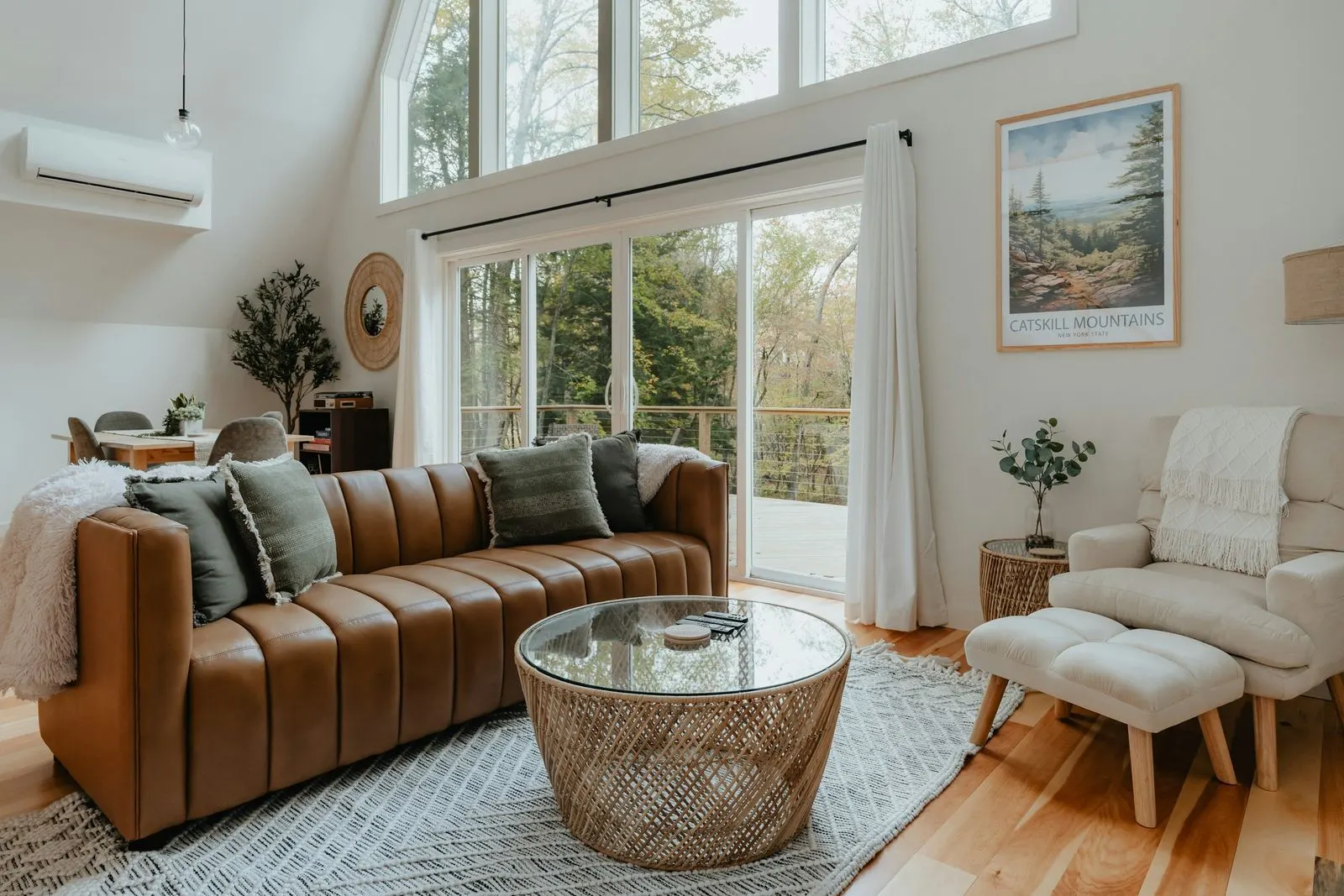
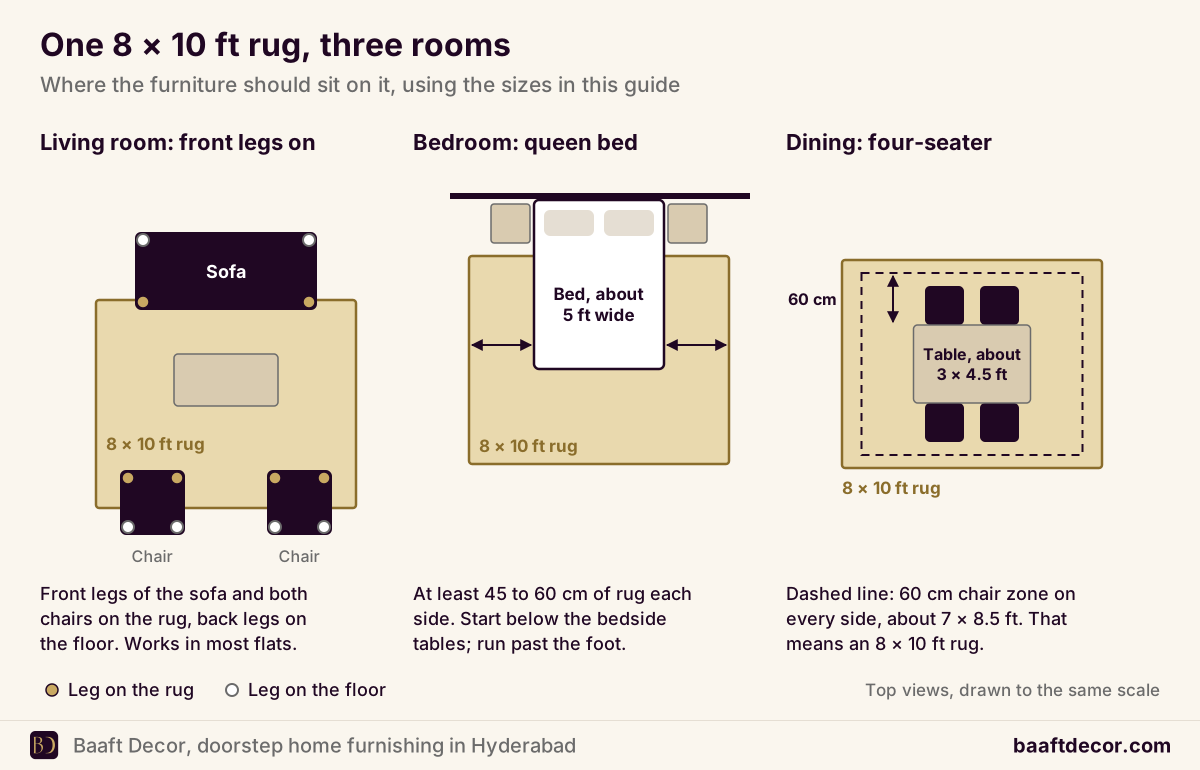
- Front legs on. The front legs of the sofa and chairs rest on the rug, the back legs on the floor. This is what works in most Hyderabad flats, usually with a 6x9 or 8x10.
- Coffee table only. A small rug with every piece of furniture around it. It almost always looks too small, unless the room itself is tiny.
Leave about 30 to 45 cm of floor showing between the rug and the walls. With an L-shaped sofa, the rug should reach under the front legs of both arms of the L. Before you buy, lay newspaper or masking tape on the floor in the rug’s size and live with it for a day. It’s the cheapest design tool there is.
Bedroom: room to step out
You want your feet to land on something soft when you get up. That means 45 to 60 cm (18 to 24 inches) of rug beyond each side of the bed. For a standard Indian queen bed, about 5 ft wide, a 6x9 laid across the bed is the minimum and an 8x10 feels generous. For a king, about 6 ft wide, go 8x10 or 9x12. Start the rug a little below the bedside tables so it covers the lower two-thirds of the bed and runs past the foot.
Tight room? Two runners, one on each side, do the same job and are easier to lift for cleaning.
Dining: honestly, think twice
The rule is simple: add 60 cm (2 ft) on every side of the table so the chairs stay on the rug when someone pulls one out. A four-seater of about 3 x 4.5 ft needs roughly 7 x 8.5 ft of rug, so an 8x10. A six-seater needs a 9x12 if the room allows.
But here’s our honest view. In homes where the family eats dal, sambar and curries at that table every day, a rug underneath becomes the most-scrubbed thing in the house. Chairs drag on it, rice grains hide in it, and haldi doesn’t forgive. If you want one anyway, use a flat-weave cotton or polypropylene rug.
Which rug material is best?
| Material | Feel | In Hyderabad conditions | Best rooms | Watch out for |
|---|---|---|---|---|
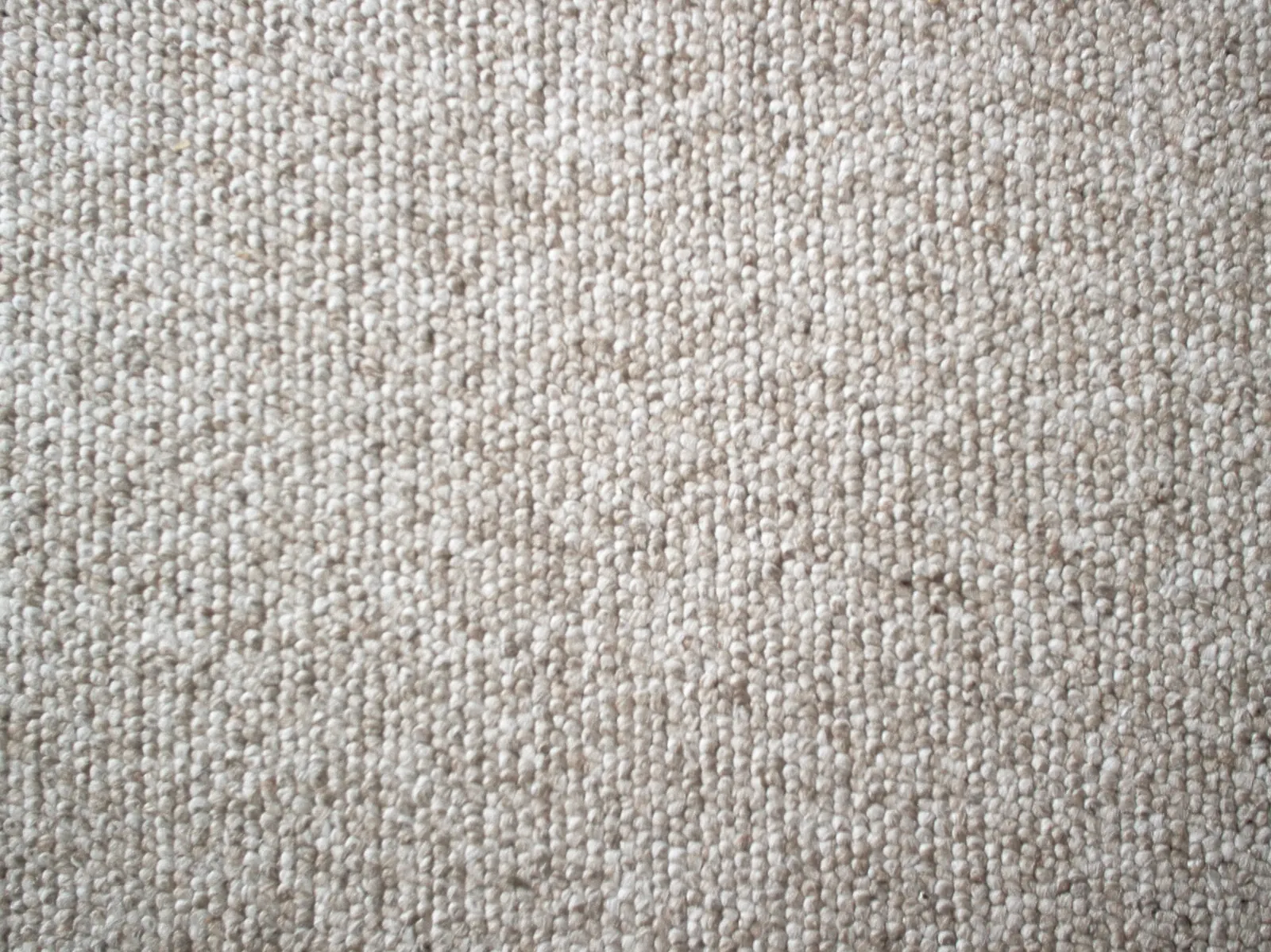
| Wool | Soft, springy | Hides dust well; slow to dry if soaked | Living room, bedroom | Sheds when new; moths if stored badly |
| Cotton dhurrie | Flat, light | Easy to shake out; small ones often washable | Kids’ rooms, dining, rentals | Slides on tiles; wears faster than wool |
| Jute | Coarse, textured | Stains brown when wet; can go musty | Dry, upper-floor living rooms | Sheds fibres; not for damp spots |
| Viscose (art silk) | Silky sheen | Water marks; crushes in traffic | Low-traffic bedrooms | Weak when wet, hard to clean |
| Polypropylene | Firmer, synthetic | Doesn’t soak up water; resists stains | Dining, kids, pets, balconies | Flattens under furniture; holds oily dirt |
Wool is the one we recommend most for living rooms. It springs back after furniture dents, takes dye beautifully and hides the fine grey dust that settles in Hyderabad homes. New wool rugs shed loose fibres for the first few weeks; that’s normal and settles with vacuuming.
Cotton dhurries are the practical Indian choice. They’re flat-woven, light enough to carry to the balcony and shake out, and smaller ones can often be washed (check the label and test darker colours for bleeding first). They need a pad on tiles, though, or they’ll slide.
Jute looks great in photos. In real life it’s rough on bare feet, sheds, and leaves a brown watermark when something spills. Keep it to dry rooms.
Viscose is where we see the most disappointment. It’s sold as art silk, sometimes as bamboo silk, and the sheen is lovely in the shop. Regular viscose holds up poorly, especially when wet, so one water spill or a few months of foot traffic and the pile looks matted. Fine for a guest bedroom. Not for the hall.
Polypropylene won’t win any softness contests, but it barely absorbs water, so water-based spills sit on the surface instead of soaking in (oily stains are harder). It’s affordable too, which makes it a smart choice under dining tables and in homes with toddlers or pets.
Pile height and how the rug is made
Pile is the height of the fibres. Flat-weaves (dhurries, kilims) have none and are the easiest to clean. Low-pile rugs suit dining areas, corridors and dusty homes. High-pile and shag rugs feel wonderful in a bedroom, but they hold onto dust, and near a construction site you’ll be vacuuming them daily.
Construction matters too:
- Hand-knotted rugs are tied knot by knot. Most durable, most expensive, and can last generations.
- Hand-tufted rugs have yarn punched into a backing cloth and sheared; the back is glued and covered. They look rich for less, but they shed more and usually can’t be wet-washed.
- Machine-made rugs are consistent and affordable.
- Flat-woven rugs are reversible on many designs and the easiest to keep clean.
Do you need a rug pad?
On vitrified tiles, always. Polished tile plus a loose rug is how people slip, and the rug will creep under the sofa within a week. A pad also cushions the rug, stops its back wearing against the floor and lets some air pass under it.
There are three common types: a thin rubber-grip mesh (grip only), felt bonded to rubber (grip and cushioning), and plain felt (cushioning for large rugs pinned by furniture). Cut the pad 2 to 3 cm smaller than the rug on every side so the edges lie flat. On wooden, vinyl or SPC floors, ask which pad backing your flooring maker allows, because some backings can mark certain finishes.
Caring for rugs in Hyderabad dust and humidity
Dust is the everyday problem. Vacuum twice a week, more often when the building next door is still going up. For wool and shag, use suction only or a gentle setting, since an aggressive beater bar fuzzes the pile and chews fringes. Shake small dhurries out on the balcony every week or so.
Sun is the slow one. Afternoon light through a west-facing glass door fades one half of a rug before the other, so rotate it every few months.
Spills need blotting, not rubbing. Dab with cold water and a little mild detergent, and always test on a hidden corner first.
The monsoon is the dangerous season. Don’t lay rugs near balcony doors where rain blows in, or on ground-floor rooms that feel damp. If a rug gets soaked, dry both sides fully within a day or two, in shade with good airflow, and never put it back on a damp floor. Wool and jute left damp start to smell. Our monsoon care guide for furnishings covers the rest of the house too.
If you store a wool rug for a season, roll it with the pile inward, wrap it in cotton cloth rather than plastic so it can breathe, and keep it off the floor.
Rug, carpet or something else?
Rugs lift out for cleaning, move with you when you change flats, and can be rolled away for the monsoon, which is why most Hyderabad apartments are better off with rugs than wall-to-wall carpet. If you’re replacing the floor itself, our flooring service covers wooden, laminate and SPC options. Wall-to-wall makes sense in air-conditioned bedrooms and home theatres; our comparison of carpet tiles vs wall-to-wall carpet explains when. For an open balcony or terrace, a rug is the wrong product altogether; look at artificial grass for balconies instead.
See the rugs in your own room
Book a free home visit and we’ll bring rug samples in different materials and piles, tape the right size on your floor around your furniture, and suggest a pad to suit your tiles or wooden floor, with a fixed quote before anything is ordered. We work across Hyderabad from 8 AM to 10 PM, all seven days. WhatsApp or call +91 98499 17494.
Frequently asked questions
What size rug should I get for my living room?
For most living rooms, choose a rug large enough for the front legs of the sofa and armchairs to sit on it, which ties the seating into one group. In a typical Hyderabad apartment living area with a three-seater and two chairs, that usually means a 6x9 ft or 8x10 ft rug. Leave about 30 to 45 cm of bare floor between the rug and the walls. A small rug that sits only under the coffee table tends to look lost, so size up if you are unsure.
What size rug goes under a queen or king bed?
A rug under a bed should extend about 45 to 60 cm (18 to 24 inches) beyond each side, so your feet land on it when you get up. For a standard Indian queen bed, about 5 ft wide, a 6x9 ft rug laid across the bed is the minimum and an 8x10 ft rug is more comfortable. For a king bed, about 6 ft wide, choose 8x10 ft or 9x12 ft. If the room is tight, two runners along the sides of the bed work instead.
Which rug material is best for Indian homes?
The best rug material depends on the room. Wool is the most durable choice for living rooms and bedrooms: it springs back under furniture, hides dust well and takes colour richly. Cotton dhurries are light, easy to shake out and often washable, so they suit children's rooms, dining areas and rented flats. Polypropylene handles spills and is affordable. Jute looks natural but stains if it gets wet, and viscose looks silky but marks and crushes easily, so keep both to low-traffic, dry rooms.
Are jute rugs good in humid weather?
Jute rugs are not ideal in humid or damp spots. Jute absorbs moisture, water leaves brown marks on it, and a jute rug that stays damp can develop a musty smell or mould. In Hyderabad, jute works well in dry, air-conditioned living rooms and bedrooms on upper floors. Avoid it near balcony doors where monsoon rain blows in, on ground floors that get damp, and near bathrooms or kitchens. If a jute rug gets wet, dry both sides quickly in shade with good airflow.
Is a viscose rug a good buy?
A viscose rug, also sold as art silk or sometimes bamboo silk, gives a silky sheen at a lower price than real silk or wool, but it is not a good buy for busy rooms. Viscose fibres are weak when wet, water and spills leave marks, and the pile crushes and mats where people walk. It suits a low-traffic bedroom or a decorative spot. For living rooms, dining areas and homes with children or pets, wool, cotton or polypropylene will look better for longer.
Do I need a rug pad on vitrified tiles?
Yes, a rug on polished vitrified tiles needs an anti-slip rug pad. Without one, the rug slides when you step on it, its corners curl, and it creeps under the sofa. A pad also adds cushioning, stops the rug back from wearing against the floor and lets a little air pass underneath. Cut the pad about 2 to 3 cm smaller than the rug on every side so the edges lie flat. On wooden, vinyl or SPC floors, ask which pad backing the flooring maker allows.
How do I clean a rug at home in Hyderabad?
Vacuum rugs at least twice a week in Hyderabad, more often when there is construction nearby, and shake small dhurries out on the balcony. Blot spills straight away with a dry cloth instead of rubbing, then dab with cold water and a little mild detergent, testing on a hidden corner first. Rotate rugs every few months so afternoon sun fades them evenly. In the monsoon, keep rugs off damp floors and dry any wet rug fully on both sides before laying it back down.
Should I put a rug under the dining table?
A rug under the dining table looks good but needs care. It must extend about 60 cm beyond every edge of the table so the chairs stay on it when pulled out, and it will catch food spills. In many Indian homes, where meals with dal, curries and turmeric are eaten at the table every day, a flat-weave cotton or polypropylene rug is the only practical choice. If the dining table is in daily heavy use, skipping the rug is often the better decision.