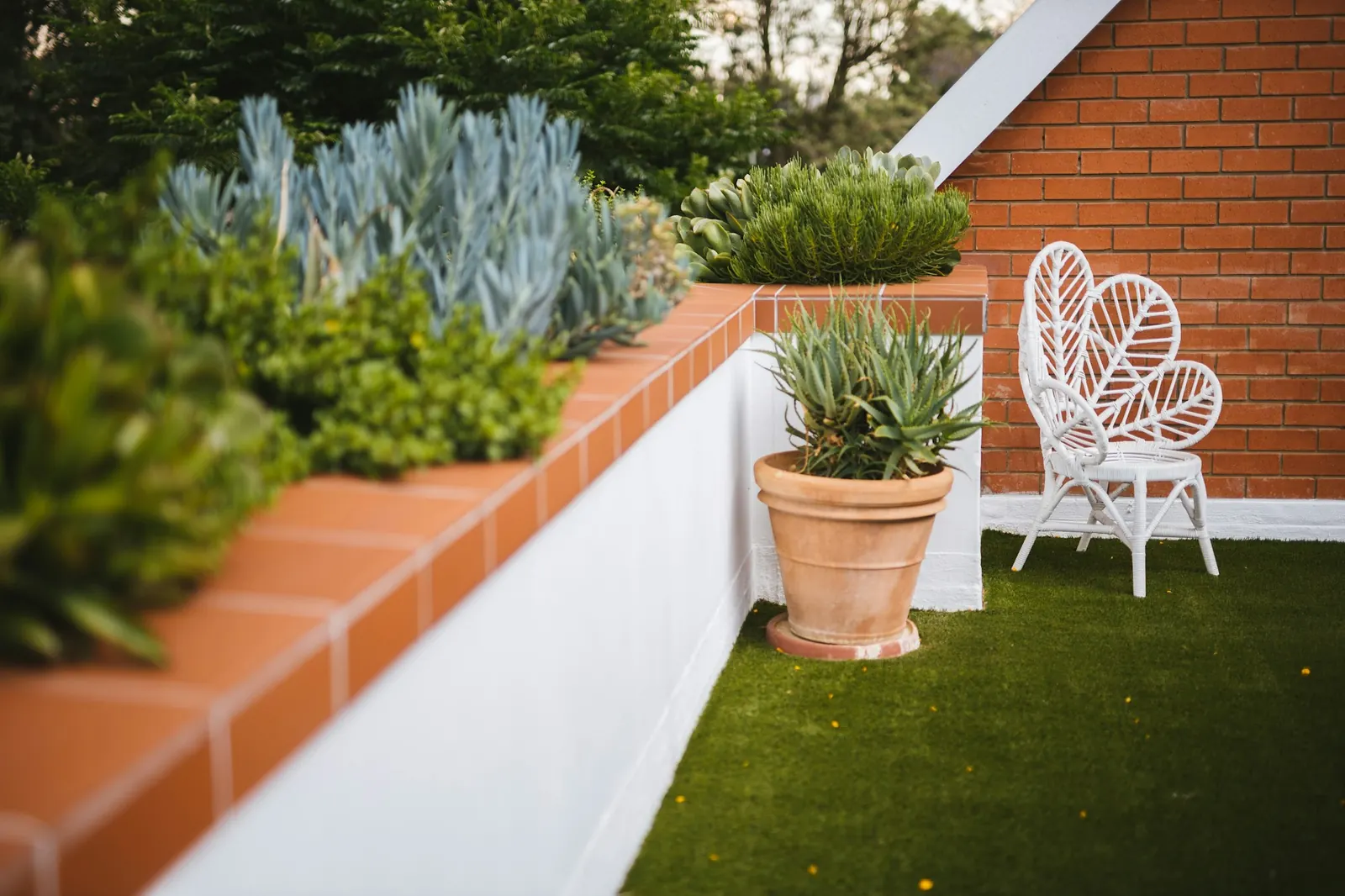
A tiled balcony in a Hyderabad flat gets hot, dusty and a bit bare. Artificial grass is one of the quickest ways to make it somewhere you’d actually sit: no soil, no watering, no load worries. But it has quirks that sales listings skip, mostly to do with summer heat, drainage and wind. This guide covers what to buy and how to lay it so it works, whether you’re doing it yourself or booking artificial grass and carpet fitting in Hyderabad.
Grass is one of several soft-floor options. For how it compares with carpet, SPC, wood and tiles across the rest of the home, see our flooring guide for Hyderabad homes.
What to look for in balcony artificial grass
For most balconies and terraces, look for:
- Yarn: polyethylene (PE), which is soft and natural-looking.
- Pile height: 20 to 30 mm.
- Backing: perforated, with drainage holes across the whole sheet.
- UV stabilisation: stated by the manufacturer, so the colour holds in strong sun.
- Thatch: a layer of curly, brownish fibres at the base, which makes it look more natural and helps the blades stand up.
Yarn types: PE, PP and nylon
| Yarn | Feel | Durability | Best for |
|---|---|---|---|
| Polyethylene (PE) | Soft, natural | Good | Balconies, terraces, play areas |
| Polypropylene (PP) | Stiffer | Lower | Budget mats, thatch layer |
| Nylon | Stiff, springy | Highest | Putting greens, heavy wear |
Most decorative grass blends PE blades with a PP thatch. Pure PP grass is cheaper but feels coarse and wears faster. Nylon is tough but too stiff for a sitting area.
Which pile height is best for a balcony?
- 10 to 15 mm: a dense mat. Good under heavy furniture, for putting practice, or where you want the green look without softness.
- 20 to 30 mm: the balcony sweet spot. Lawn-like, soft enough for kids, recovers under chairs, easy to rinse clean.
- 35 to 40 mm: lush lawn look. Flattens under furniture and holds more dust, which matters in fast-building areas like Kokapet, Tellapur and Kollur where construction dust is constant.
Artificial grass is light. Manufacturer data sheets for garden-style grass list total weights of roughly 1.5 to 3.3 kg per square metre, far less than planters or stone. So weight isn’t the balcony concern; drainage and heat are.
The heat problem nobody mentions
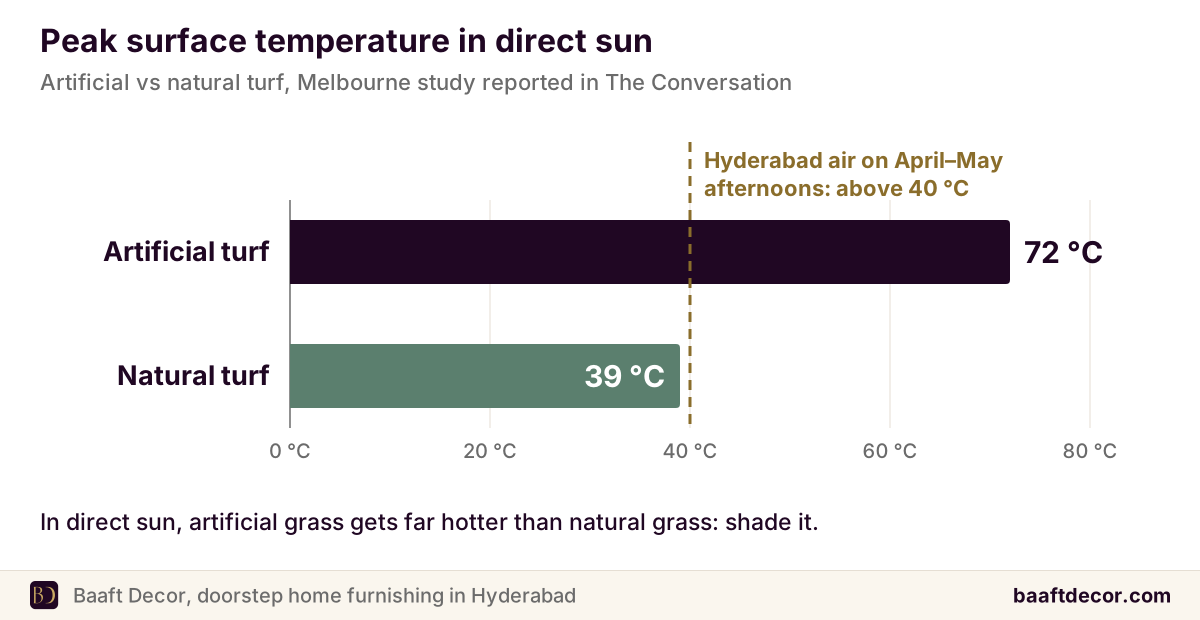
Artificial grass in direct sun gets hot. Very hot. Researchers in Melbourne, writing in The Conversation, measured artificial turf at 72 °C at its peak, while natural turf in the same study never went above 39 °C.
Now picture a west-facing balcony in Hyderabad in May, when the average daily maximum is close to 39 °C and hot spells push well past 40 °C. From midday through the afternoon, that grass is too hot for bare feet, toddlers or a dog lying on it. The fixes:
- Shade it. Outdoor blinds on the balcony opening make the biggest difference. Our balcony blinds and the guide to the best blinds for balconies cover outdoor-rated options.
- Use it in the morning and evening during peak summer.
- Rinse it before use. Water cools the surface, but only for a while.
- Choose lighter green shades if available; they absorb a little less heat.
North and east-facing balconies, and covered sit-outs, have far less of this problem.
Artificial grass vs other balcony floor options
Grass isn’t the only way to soften a balcony floor. How it compares:
| Option | Feel | Heat in sun | Upkeep | Watch out for |
|---|---|---|---|---|
| Artificial grass | Soft, springy | Gets very hot | Rinse and brush | Heat, fire, drainage |
| Real lawn in a raised bed | Cool, natural | Stays cooler | Daily watering, mowing | Weight, leaks, waterproofing |
| Outdoor deck tiles | Firm, warm-looking | Warm | Sweep, occasional wash | Uneven floors, gaps collect dirt |
| Outdoor PP rug | Flat, soft | Moderate | Shake out, wash | Blows around, fades |
Real grass looks and feels best, but a proper lawn needs soil depth and constant watering, which means load on the slab and a real risk of water reaching the waterproofing. For a flat balcony, that’s a project for an architect, not a weekend. Artificial grass gives most of the look with none of the watering, as long as you manage the heat. If you only want something soft under a chair or two on a covered sit-out, a cotton dhurrie you can carry in when it rains is the simplest route; our rug buying guide compares dhurries, jute and wool and explains which ones cope with damp.
How to measure your balcony
Measure the floor at its longest and widest points, not just the middle, because many balconies are slightly out of square. Note where the drain outlet sits, where the door threshold is, and any pillars or AC outdoor units that need cut-outs. A sketch with these marked is enough for an accurate quote. Add a little extra length for trimming at the edges.
How to lay artificial grass on a balcony
- Clean and check the floor. Remove dust and grit, and fix any loose or hollow tiles.
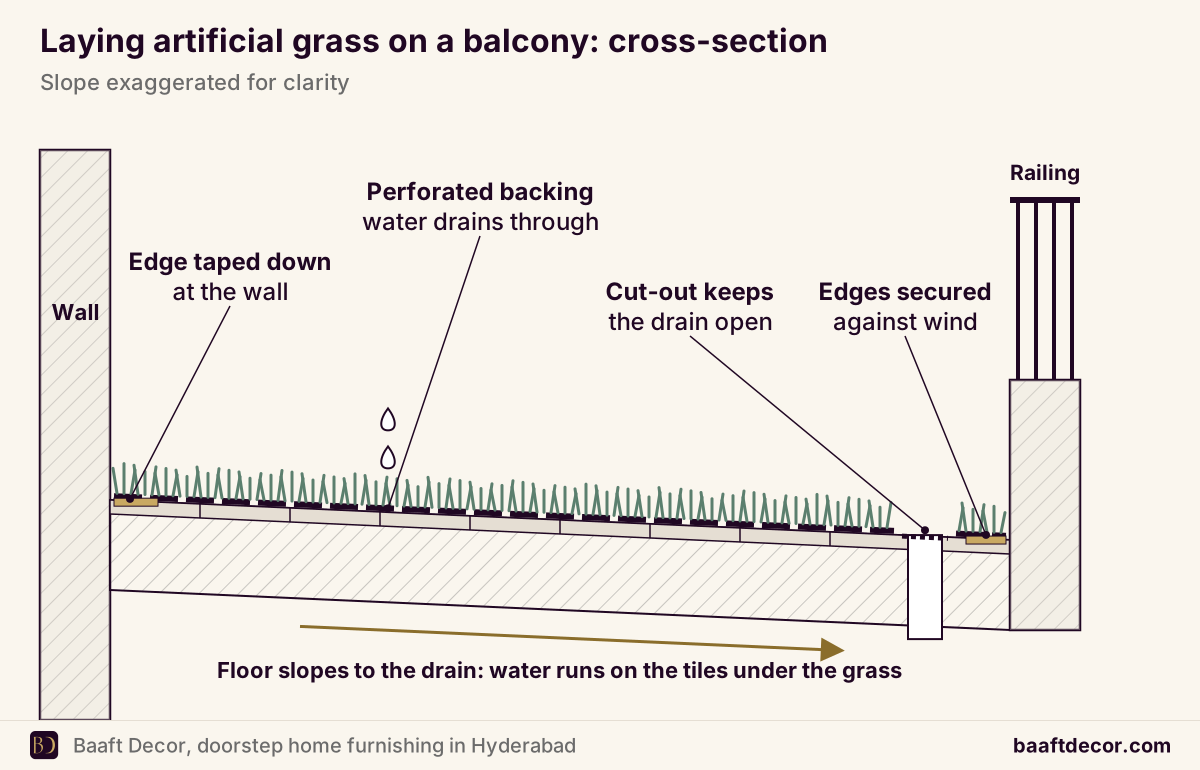
- Respect the slope. Balconies are built to slope towards a drain. The grass follows that slope; never pack material underneath that changes it.
- Keep drains open. Cut the grass neatly around drain outlets so water reaches them freely.
- Lay in one direction. All pieces should have the pile leaning the same way, or joins show as colour differences.
- Join with tape. Where two pieces meet, use joining tape and outdoor adhesive on the tape, not on the floor.
- Secure the edges. On higher floors, wind gets under loose edges during monsoon squalls. Use outdoor double-sided tape along the edges or a low trim, especially at the open side.
Grass is commonly sold in 2 m and 4 m wide rolls. A 5 ft × 12 ft balcony (about 1.5 m by 3.7 m) fits within one 2 m wide strip, so there’s no joint at all.
Terraces and waterproofing
Terraces are different from balconies. Most have a waterproofing layer, and anything that punctures or permanently bonds to it is a problem. On a waterproofed terrace:
- Loose-lay the grass. Don’t nail or screw anything into the roof.
- Join and weight rather than glue down. Taped joints and weighted or trimmed edges hold it.
- Lift and inspect every year or so, especially before the monsoon, to check the floor dries properly and drains are clear.
- On uneven terraces, interlocking deck tiles with a grass top raise it slightly off the surface and let water run underneath.
Living with it: dust, pets and festivals
Dust. Rinse weekly in dusty months. Brush against the pile direction with a stiff, non-metal broom to lift flattened patches.
Pets. Rinse the pet corner often; urine drains through the backing but odours build if left. An enzyme cleaner sorts out persistent smells.
Diwali and fire. Synthetic grass melts. Keep diyas, candles, sparklers, mosquito coils, barbecue coals and cigarettes off it. Put lamps on a tray or tile.
Kids’ play corner. Grass is a popular base for a toddler play area on the balcony. Pick a soft PE grass without rubber or sand infill, so nothing comes loose to be picked up or swallowed, and check the surface with your palm before letting children sit on it on a sunny afternoon.
Monsoon. After a heavy spell, lift a corner and check the floor underneath is drying, not staying damp.
Gated-community rules and safety
Some associations restrict visible changes to balconies, including wall-mounted grass panels that are visible from outside. Check before ordering. Our guide to gated community interior rules covers what’s usually allowed. If the balcony has children around, pairing the grass with invisible grills makes it a much safer play space.
Indoors, artificial grass isn’t the right choice; for carpeted rooms see carpet tiles vs wall-to-wall carpet.
To get it measured and fitted properly, book a free home visit: we bring grass samples in different pile heights, check the balcony’s slope and drains, and quote for the exact area. Call or WhatsApp +91 98499 17494, 8 AM to 10 PM, all seven days.
Frequently asked questions
Is artificial grass good for balconies?
Artificial grass is good for balconies when it is chosen and laid correctly. It softens a hard tiled floor, adds green without watering or soil, is light enough for any balcony, and suits children's play corners and seating areas. For a balcony, use UV-stabilised polyethylene grass with a perforated backing, keep the floor's slope and drain outlet clear, and secure the edges so wind can't lift it. The main drawback is heat: in direct summer sun it gets very hot, so shade matters.
Does artificial grass get hot in the sun?
Yes, artificial grass gets much hotter than natural grass in direct sun, because synthetic fibres absorb heat and there is no moisture to cool them. Research in Melbourne reported artificial turf surfaces reaching 72 °C, while natural turf in the same study peaked at 39 °C. In a Hyderabad summer, a terrace or west-facing balcony in full afternoon sun will be too hot for bare feet, children or pets. Shade from blinds or a pergola, and a quick rinse with water, help, though the cooling from water is temporary.
What pile height of artificial grass is best for a balcony?
A pile height of about 20 to 30 mm is best for most balconies. It looks like a well-kept lawn, feels soft underfoot, stands back up reasonably well under chairs and planters, and is easy to brush and rinse clean. Shorter piles of 10 to 15 mm feel more like a mat and suit heavy furniture or putting greens. Taller piles of 35 to 40 mm look lusher but flatten more under furniture and hold more dust, which matters in dusty parts of the city.
Will artificial grass damage terrace waterproofing or block drains?
Artificial grass will not damage terrace waterproofing or block drains if it is laid correctly. The grass should have a perforated backing so water passes through, and the floor's existing slope towards the drain must be kept. Drain outlets should be left open, with the grass cut around them. On waterproofed terraces, avoid nails and strong permanent adhesives that can puncture or bond to the membrane; loose-laying with taped joints and weighted or trimmed edges is safer and lets you lift the grass for inspection.
How do you clean artificial grass on a balcony?
To clean artificial grass on a balcony, pick up leaves and debris, then rinse the grass with water to wash dust down through the drainage holes. Brush the fibres against the direction they lean with a stiff, non-metal broom to lift flattened areas. In dusty months, rinsing once a week keeps it looking fresh. For bird droppings or pet urine, rinse thoroughly and use a mild detergent or an enzyme cleaner. After the monsoon, lift a corner to check that the floor beneath is drying properly.
Is artificial grass safe for pets?
Artificial grass is generally safe for pets when it is kept clean and shaded. Choose a grass with a perforated backing so urine drains through, rinse the pet area daily or every few days, and use an enzyme cleaner if odours build up. Avoid letting pets lie on it in direct afternoon sun in summer, because the surface can become hot enough to hurt paws. Check that the edges are secured so pets can't chew or lift them, and avoid rubber crumb infill on balconies.
How long does artificial grass last on a balcony?
How long artificial grass lasts on a balcony depends mainly on UV stabilisation, yarn quality and how much sun and traffic it gets. Good UV-stabilised polyethylene grass keeps its colour and softness for several years outdoors, while cheap grass without UV protection fades, turns brittle and sheds fibres much sooner in strong sun. Shaded balconies extend life noticeably. Keeping it clean, brushing it upright, and keeping hot items like diyas and grills off it also prevents early damage.
Can artificial grass be used on balcony walls?
Yes, artificial grass can be used on balcony walls, usually as vertical green panels or grass sheets fixed to a backing board or battens rather than glued straight to the plaster. It adds green without watering and hides plain or stained walls. Keep it away from lamps, diyas and anything hot, because synthetic fibres melt. In gated communities, check your association's rules first, since visible changes to balconies and facades are sometimes restricted, and fix it securely on higher floors where wind is strong.