A child’s bedroom asks more of a curtain than any other room. It has to make the room dark enough for an afternoon nap and a sunrise that comes before six in summer. It has to survive being tugged, hidden behind and wiped with sticky hands. And it has to be safe, with nothing that can form a loop or come down if a toddler hangs on it. When we fit curtains in Hyderabad for families, the kids’ room usually gets the most careful planning.
This guide covers kids’ curtains and children’s bedroom curtains specifically: blackout, safety, fabric and prints. For how curtains work across the whole home, see our curtains buying guide for Hyderabad homes.
What makes a good curtain for a kids’ room?
A good kids’ room curtain blocks light well, has no cords or loops, hangs from hardware a child can’t pull down, and goes in the washing machine. Looks come after those four.
| Need | What to choose | What to avoid |
|---|---|---|
| Sleep and naps | Blackout lining or triple-weave fabric, ceiling track, overlap past the frame | Unlined cotton, short curtains ending at the sill |
| Safety | Cordless blinds, rigid holdbacks mounted high, firmly anchored track | Pull cords, chain loops, rope or tassel tiebacks |
| Cleaning | Machine-washable polyester or poly-cotton | Velvet, silk, dry-clean-only fabric |
| Longevity | Plain or softly patterned base fabric | Character prints the child will outgrow |
| Small hands | Eyelets on a rod or a smooth-running track | Heavy pleated curtains that stick or jam |
Planning a kids’ room? We visit with blackout and washable fabric samples, free across Hyderabad. WhatsApp +91 98499 17494.
Blackout curtains for naps and early sunrise
Blackout curtains block almost all incoming light using either a coated lining stitched behind the face fabric or a dense triple-weave fabric. For children, they make the difference between a nap that lasts and one that ends when the sun moves round to the window.
Hyderabad gives you two reasons to bother. From May to July the sun rises before six, and a west-facing room is flooded with light right through the after-lunch nap. Our blackout curtains service covers the lining options in detail; the comparison between blackout, sheer and dim-out curtains explains when each is enough.
Where light leaks, and how to stop it
Even a perfect blackout fabric lets light in round the edges. Three fixes do most of the work:
- Over the top. Mount the track on the ceiling, or well above the window, so light can’t spill over the heading. A pelmet also helps.
- At the sides. Make the curtain wide enough to overlap the frame on each side, typically by 10 to 15 cm. A return, where the track curves back to the wall, closes the side gap completely.
- In the middle. An overlap arm on the track, or slightly wider leading edges, stops the centre line of light.
Floor length helps too. A curtain ending at the sill lets light bounce up from the floor below.
Blackout plus sheer
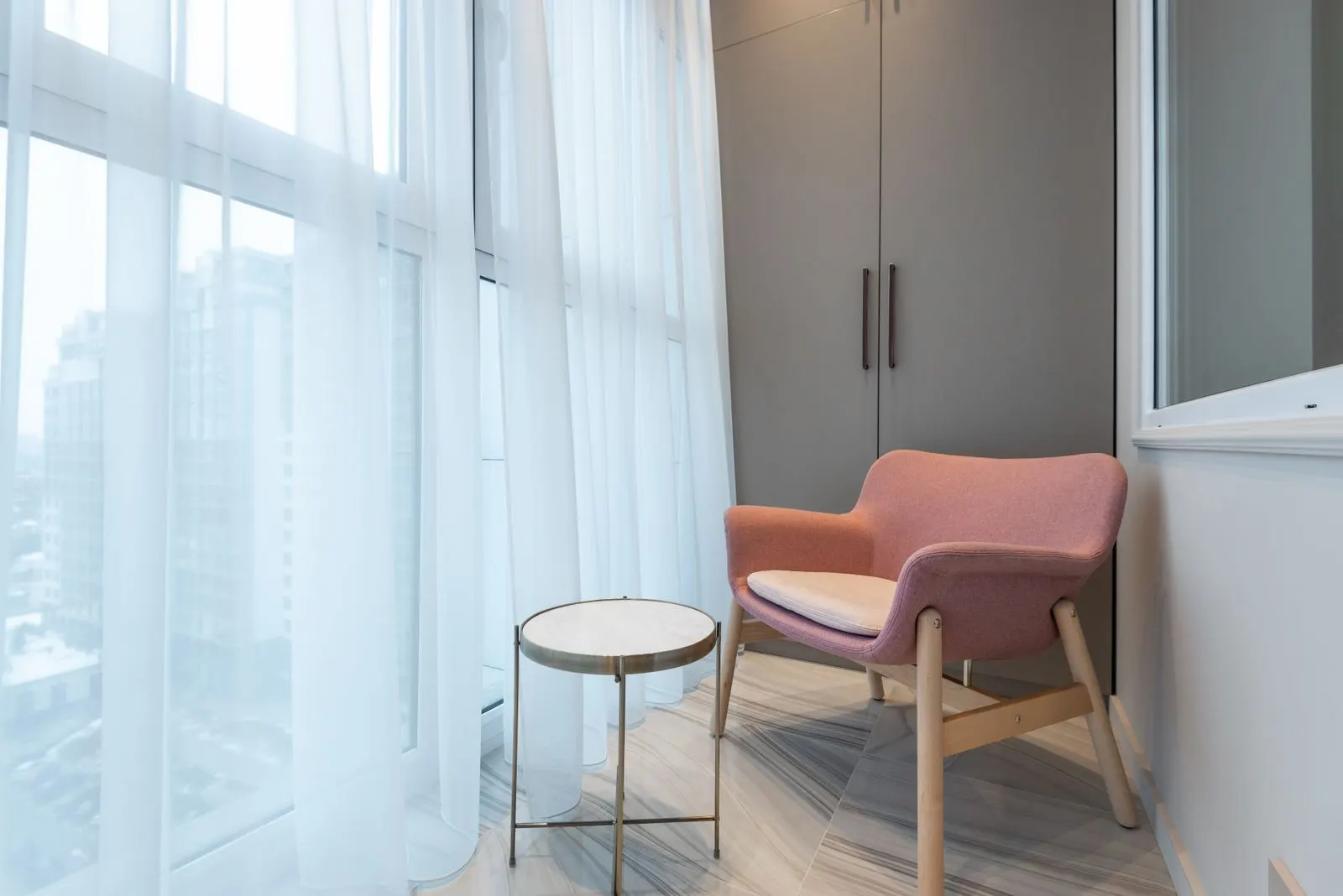
A sheer in front of the blackout curtain gives daytime privacy with soft light, so the room isn’t dark during play. It needs a double track or rod. The sheer is also the easiest place for a fun print, because it’s light, cheap to replace and washes in minutes.
Cord and tieback safety
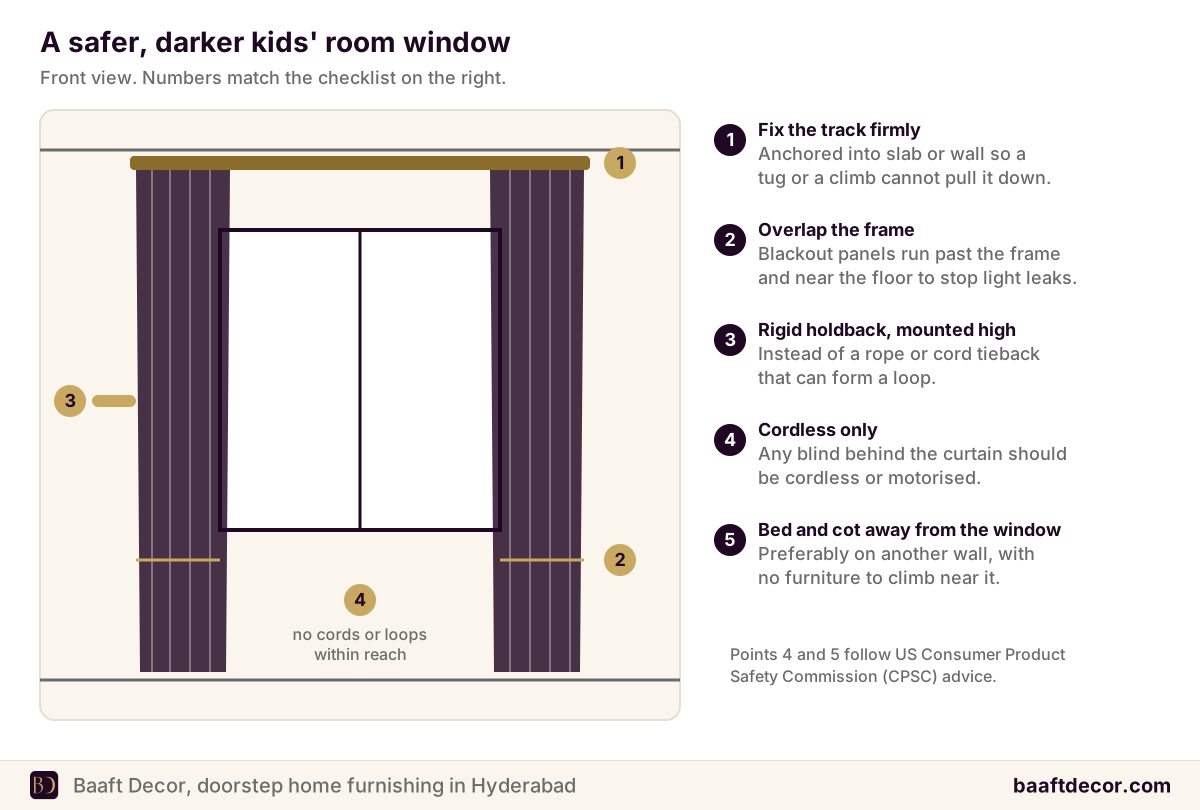
Cords and loops on window coverings are a known strangulation hazard for young children. The US Consumer Product Safety Commission recommends cordless window coverings in homes where children live or visit, keeping all cords out of reach, and moving cribs, beds and furniture away from windows, preferably to another wall.
In practice, in a child’s room:
- Blinds behind the curtain should be cordless or motorised. Roller blinds with a looped chain or venetians with pull cords don’t belong in a nursery.
- Replace rope and tassel tiebacks with rigid metal or wooden holdbacks fixed high on the wall, or magnetic tiebacks that release with a light pull. Our guide to curtain holders and tiebacks shows the types.
- Fix the track or rod into the slab or wall with proper anchors. Children pull on curtains, swing on them and hide behind them. A rod on plastic plugs in a hollow wall can come down.
- Skip small trims. Beads, pom-poms and buttons sewn onto a curtain hem can come off and be swallowed.
- Keep the cot and bed away from the window, and don’t put climbable furniture such as a toy box or a low shelf right under it.
Washable fabrics for kids’ rooms
The best fabric for a child’s room is a machine-washable polyester or poly-cotton. It dries fast, doesn’t shrink much, keeps its colour in sun and comes out of the wash without heavy ironing.
Dust matters here. Many families in newer neighbourhoods live next to active construction for years, and children with dust allergies feel it first. Smooth, tightly woven fabrics hold less dust than textured ones, and vacuuming curtains with a brush attachment every couple of weeks keeps them fresher between washes.
For blackout, ask whether the lining is stitched in or detachable. A detachable lining can be washed separately and replaced if it cracks. Wash coated linings cool and hang to dry, because heat damages the coating.
Prints and colours that age well
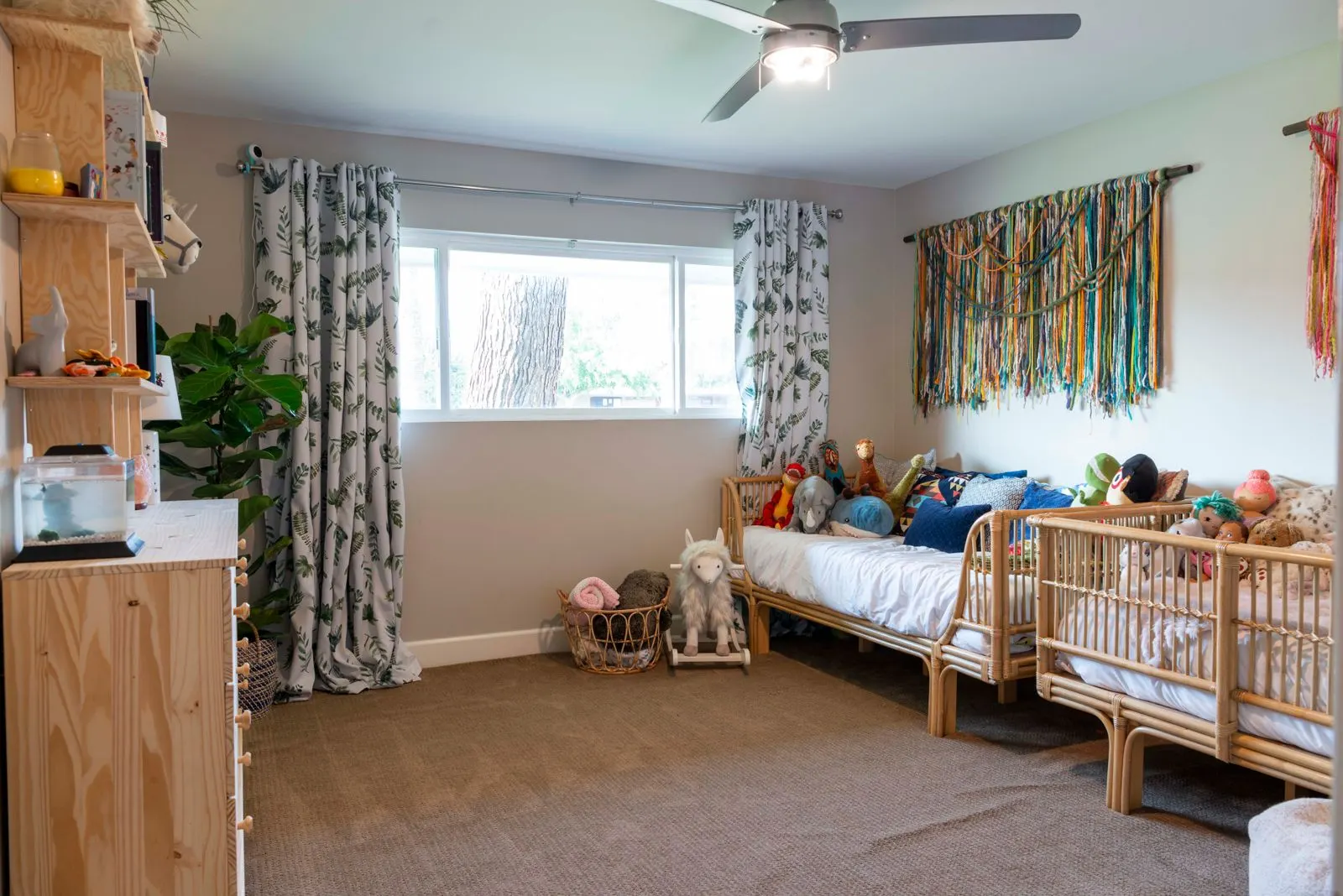
A child’s curtains often stay up longer than the child’s interest in a cartoon. Prints that still work for a ten-year-old include stripes, stars, leaves, clouds and small geometrics on a soft base such as sage, sky blue, sand, grey or pastel yellow.
Practical ways to keep the room fun without redoing the curtains every two years:
- Plain blackout, printed sheer. The sheer carries the theme and costs far less to replace.
- Prints on cushions, bedding and a rug. These change easily as the child grows.
- Mid tones over pure white or very dark shades. They hide fingerprints and dust and show sun fading less.
For shared rooms or a room that will become a study later, pick a heading that suits a grown-up room too. Eyelet and pinch pleat curtains both age well.
Which heading and hardware suit a kids’ room?
The best heading for a kids’ room is one that slides easily, has no loose parts and is easy to take down for washing. Eyelet curtains on a sturdy rod are the simplest: the rings glide, nothing hangs below the rod, and the whole curtain lifts off in a minute. Pinch pleat or ripple fold curtains on a ceiling track block more light at the top and look neater, and they suit rooms that will later become a teenager’s room or a study.
Hardware matters more than heading. Ask for:
- Metal brackets screwed into concrete or brick with proper anchors, not plastic plugs alone. In a room with a false ceiling, the track must be fixed through to the slab above.
- Finials or end stops so the curtain can’t be pulled off the end of the rod.
- A rod or track rated for the weight of a lined blackout curtain, which is noticeably heavier than an unlined one.
In a nursery, think about where the cot will sit before fixing anything, so you can keep it away from the window wall. For an older child, a study desk under the window often works better with a cordless blind than a full curtain, because the curtain ends up pushed behind the desk.
When to choose motorised or cordless blinds instead
In some kids’ rooms a blind behind the curtain, or instead of it, makes sense: a window above a study desk, a narrow window beside the bed, or a room that needs light control without heavy fabric. Choose cordless roller or zebra blinds, or motorised ones on a remote or schedule. Motorised curtains and blinds also let you darken the room at nap time without anyone reaching for a cord.
Baaft Decor measures, stitches and fits kids’ room curtains at homes across Hyderabad, including curtains in Manikonda, curtains in Madhapur and curtains in Kollur.
Plan the kids’ room properly
Book a free home visit and we’ll check which way the window faces, where light leaks in, and how the track should be fixed. We’ll bring blackout and washable fabric samples, measure, and give you a written quote. We work across Hyderabad from 8 AM to 10 PM, all seven days. WhatsApp or call +91 98499 17494.
Frequently asked questions
Which curtains are best for a child's bedroom?
The best curtains for a child's bedroom are blackout-lined, machine-washable polyester curtains hung on a firmly fixed ceiling track or rod, extending past the window frame on both sides and reaching close to the floor. Blackout helps children sleep through early sunrise and nap in the afternoon, washable fabric copes with sticky hands and dust, and a strong track survives being tugged. Avoid rope tiebacks, cords, beads and pom-pom trims. A plain or softly patterned main curtain lasts years longer than a cartoon print.
Do kids really need blackout curtains?
Many kids sleep better with blackout curtains, especially toddlers who nap in the afternoon and children who wake with the sunrise. In Hyderabad the sun is up before six in May and June, and afternoons are bright all year, so an unlined curtain lets in enough light to wake a light sleeper. Blackout curtains use a coated lining or a dense triple-weave fabric to block almost all light. For best results, fit them on a ceiling track and let them overlap the frame so light does not leak round the edges.
Are curtain cords and tiebacks dangerous for children?
Yes, cords and loops on window coverings can strangle young children, which is why the US Consumer Product Safety Commission recommends cordless window coverings in homes where children live or visit. Pull cords on blinds, chain loops and rope or tasselled curtain tiebacks can all form a loop at a child's neck height. In a child's room, choose cordless or motorised blinds, use rigid metal or wooden holdbacks mounted high instead of rope tiebacks, and move beds, cots and climbable furniture away from the window.
What fabric is best for kids' curtains?
Polyester and poly-cotton are the best fabrics for kids' curtains because they are machine washable, resist creasing, hold colour well in sun and do not shrink much. Tightly woven fabrics also hold less dust, which matters for children with allergies in dusty new neighbourhoods. Choose a blackout lining that is stitched in but washable, or a detachable lining that can be washed separately. Avoid velvet, silk, chenille and dry-clean-only fabrics in a child's room; they collect dust and are expensive to clean.
How do I stop light leaking around blackout curtains in a nursery?
To stop light leaking around blackout curtains in a nursery, close the three gaps where light escapes. Mount the track on the ceiling or well above the window so no light spills over the top. Make the curtains wide enough to overlap the window frame on both sides, typically by 10 to 15 cm, and let them reach close to the floor. Where the two panels meet in the middle, an overlap arm on the track or a slightly wider leading edge closes the centre gap.
Which curtain colours and prints suit a kids' room?
Curtain colours and prints that suit a kids' room for several years are soft, plain base colours such as sage, sky blue, sand, grey or pastel yellow, and simple patterns such as stripes, stars, leaves or small geometrics. These still look right when a toddler becomes a ten-year-old. Bold cartoon and character prints are often outgrown within two or three years. A practical approach is a plain blackout curtain with a printed sheer or valance in front, or prints on cushions and bedding that are cheap to change.
Are eyelet curtains safe for a child's room?
Eyelet curtains are generally safe for a child's room because they hang directly on a rod with no hooks, cords or loops, and the rings slide easily for small hands. The rod must be fixed firmly into the wall with proper anchors, since children often pull on curtains or hide behind them. Choose a rod with finials that stop the curtain sliding off the ends, and check that the brackets are rated for the weight of a blackout-lined curtain. A ceiling track works equally well and blocks more light.
How often should kids' curtains be washed?
Kids' curtains usually need washing every two to three months, and more often in a nursery, a room shared by a child with dust allergies, or a flat near ongoing construction. Machine-washable polyester can go in on a gentle cycle with mild detergent, while blackout-lined curtains should be washed cool and hung to dry, because heat can crack coated linings. Vacuuming the curtains with a brush attachment every couple of weeks between washes removes most dust and keeps the fabric fresher for longer.