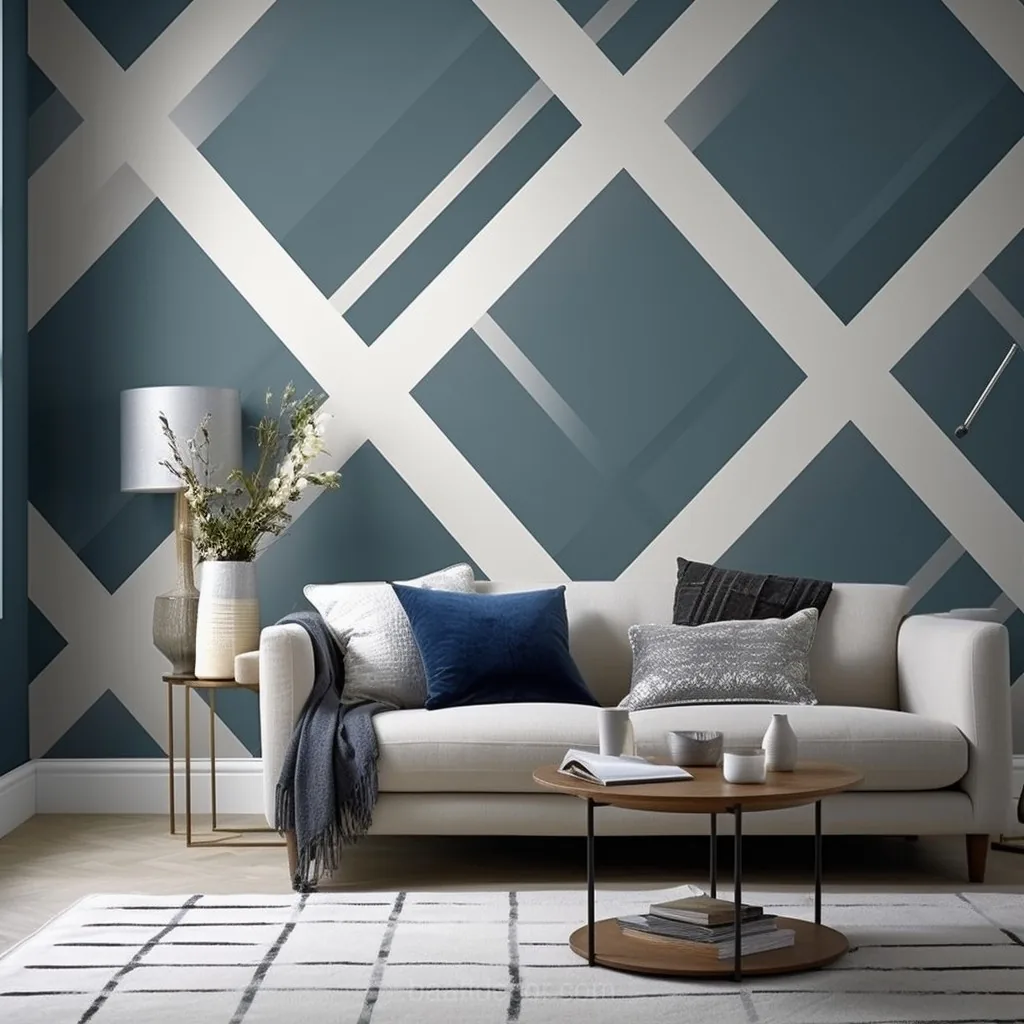
Paint or wallpaper? It sounds like a style question. In a Hyderabad home it’s mostly a wall question: what condition the wall is in, which room it’s in, and how long you want it to look the same. If you’re already leaning towards paper, our wallpaper service in Hyderabad page explains how we survey and install it.
This page compares the two finishes head to head. Wall panels are the third option, and our wallpaper and wall panels guide for Hyderabad sets all three side by side. Short answer first, then the detail behind it.
The quick verdict
Choose paint if:
- The wall is in a kitchen, bathroom, utility area or on the ceiling
- The wall shows any damp, seepage or efflorescence (white salt marks)
- You’re refreshing the whole house on a tight budget
- You rent and the owner hasn’t agreed to wallpaper
Choose wallpaper if:
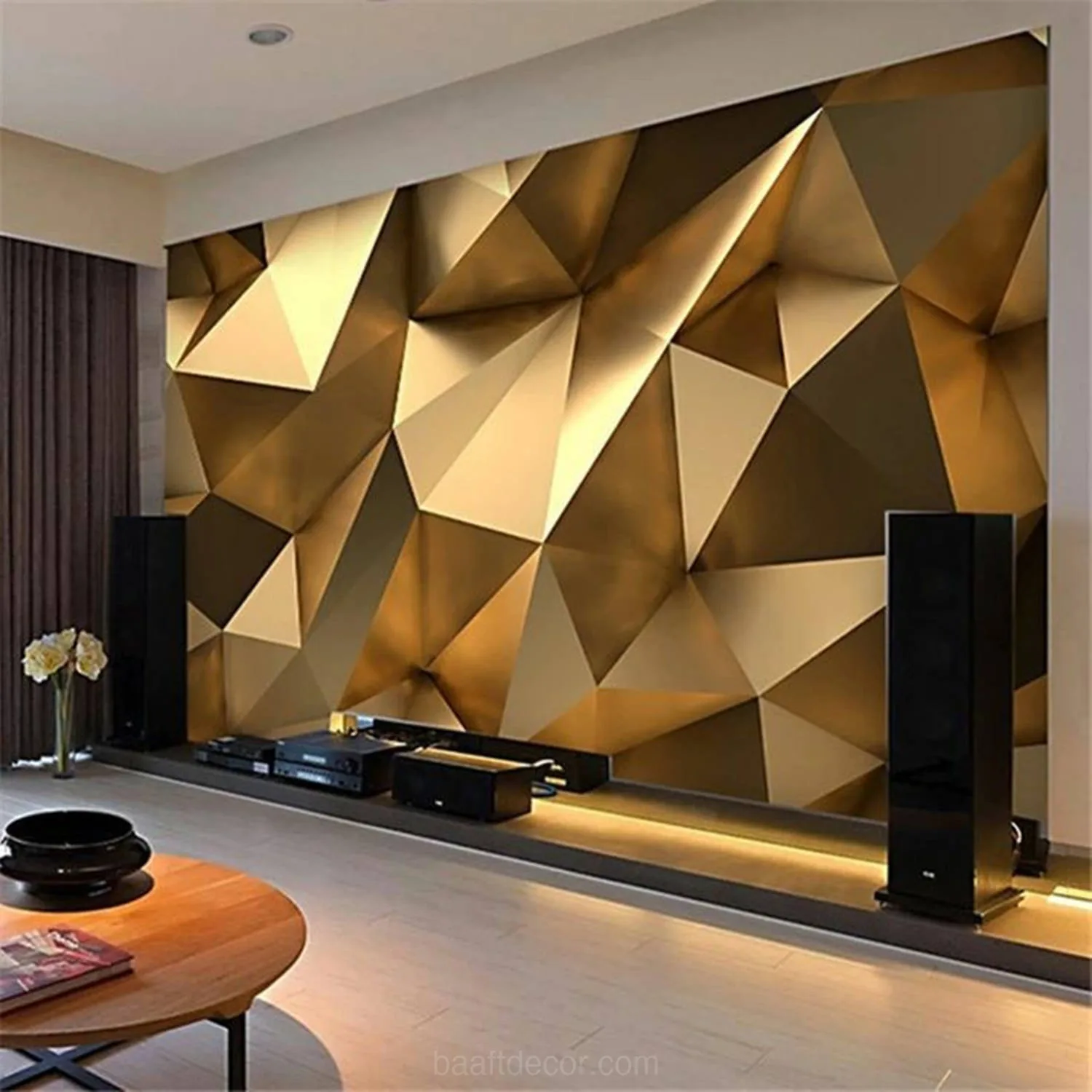
- You want one wall to carry the room: behind the TV unit, sofa, bed or dining table
- You want a texture or pattern (linen weave, grasscloth, a mural) that paint can’t copy
- The wall is dry, sound and smooth, and you don’t want to repaint it every few years
- You have kids and want a scrubbable surface
Most homes end up with both. Paint the room, paper one wall.
Wallpaper vs paint at a glance
| Factor | Paint (interior emulsion) | Wallpaper (vinyl / non-woven) |
|---|---|---|
| Upfront cost per sq ft | Lower | Higher |
| Repaint / redo cycle | Usually 5 to 7 years | Lasts longer on a dry wall; replaced when you want a change |
| Looks possible | Solid colours, some textures | Patterns, textures, murals, metallics |
| Cleaning | Washable grades wipe; matt marks easily | Washable vinyl wipes clean |
| Small repairs | Easy touch-up, though patches can show | Needs a spare strip from the same batch |
| Damp tolerance | Better; paint can be redone after a leak is fixed | Poor on damp walls; lifts and can grow mould |
| Mess and time | Putty, sanding dust, drying between coats | Little dust on a ready wall; quick to hang |
| Removal | Paint over it | Easy for non-woven; harder for paper or vinyl |
Which lasts longer in a Hyderabad home?
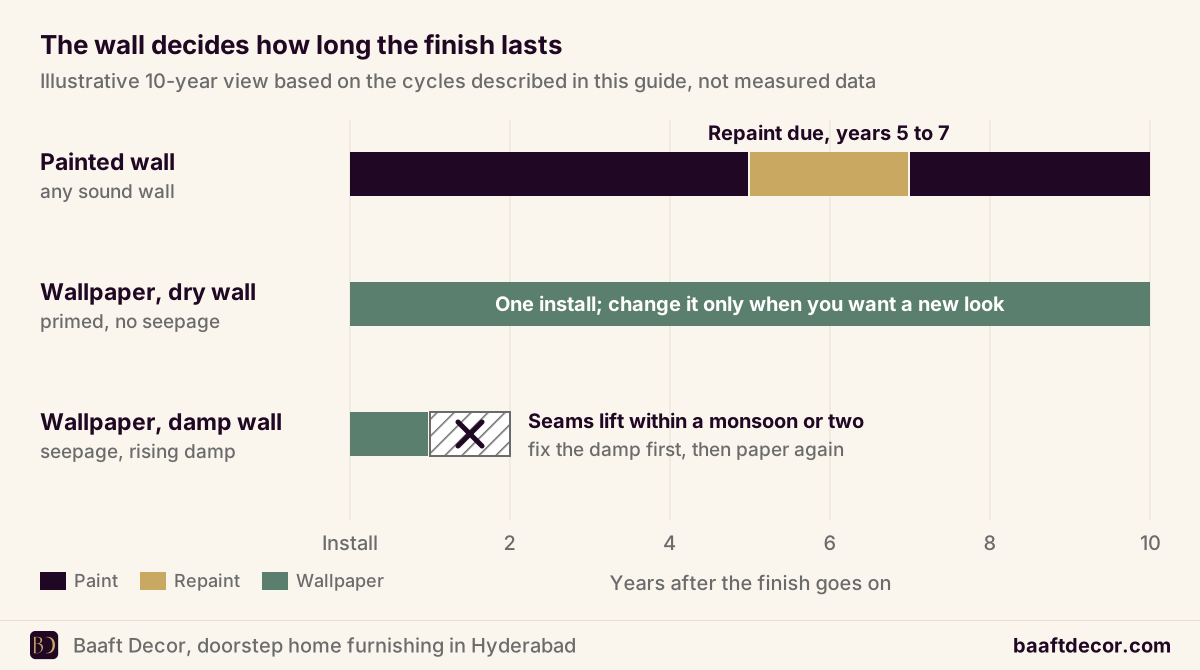
Paint makers themselves usually suggest refreshing interior walls every five to seven years (Berger’s paint vs wallpaper guide uses a similar range). In our experience, the walls that need it soonest are the ones near main doors, passages and kids’ rooms, where hands and furniture rub.
Good vinyl or non-woven wallpaper on a dry, primed wall holds its look longer. It doesn’t chalk, and washable grades take a damp cloth. But two things shorten its life here.
Damp. Hyderabad’s monsoon runs from about June to September. Walls that share a side with a bathroom, face driving rain, or carry an AC drain pipe often pick up moisture, and wallpaper on them lifts at the seams or along the skirting. Paint tolerates this better and can simply be redone once the leak is fixed. Our wallpaper humidity guide shows how to test a wall before you commit.
Hard sun. West-facing walls next to big sliding glass doors get intense afternoon sun for much of the year. Some wallpaper colours fade over time in that light. Choose lighter, sun-tolerant designs there, or keep sheers drawn in the afternoon.
Is wallpaper easy to remove?
This is the question people forget to ask until they want a change. The answer depends on what you bought.
- Non-woven: usually dry-strippable. Lift a corner and the whole strip comes off, leaving the wall nearly ready for the next finish.
- Vinyl: often “peelable”. The vinyl face comes away, but a paper backing stays on the wall and must be soaked and scraped.
- Paper: needs soaking or a steamer, and patience.
- Peel-and-stick sheets: come off fast, but in summer heat the adhesive can bond to the paint, and removal may pull emulsion and putty with it.
Indian walls are usually finished with wall putty under the paint. Aggressive scraping gouges it, so removal often ends with a little putty repair. If you think you’ll want a different look in a few years, non-woven is the sensible pick.
What about cost over time?
Per sq ft, wallpaper costs more than a standard emulsion repaint on day one. Over a decade the gap narrows, because a painted wall gets repainted, and each repaint means moving furniture, covering floors and living with the smell for a few days.
The cost logic is simple:
- Whole house: paint wins on budget almost every time.
- One feature wall: wallpaper adds a look paint can’t, for a few rolls.
- A wall you keep touching up: washable vinyl may save you repeated repaints.
For the drivers behind a wallpaper quote, read our wallpaper cost guide for Hyderabad.
Where paint still wins
- Kitchens. Steam, oil splatter and heat near the hob are hard on wallpaper adhesive. Paint, tiles or a backsplash panel are safer.
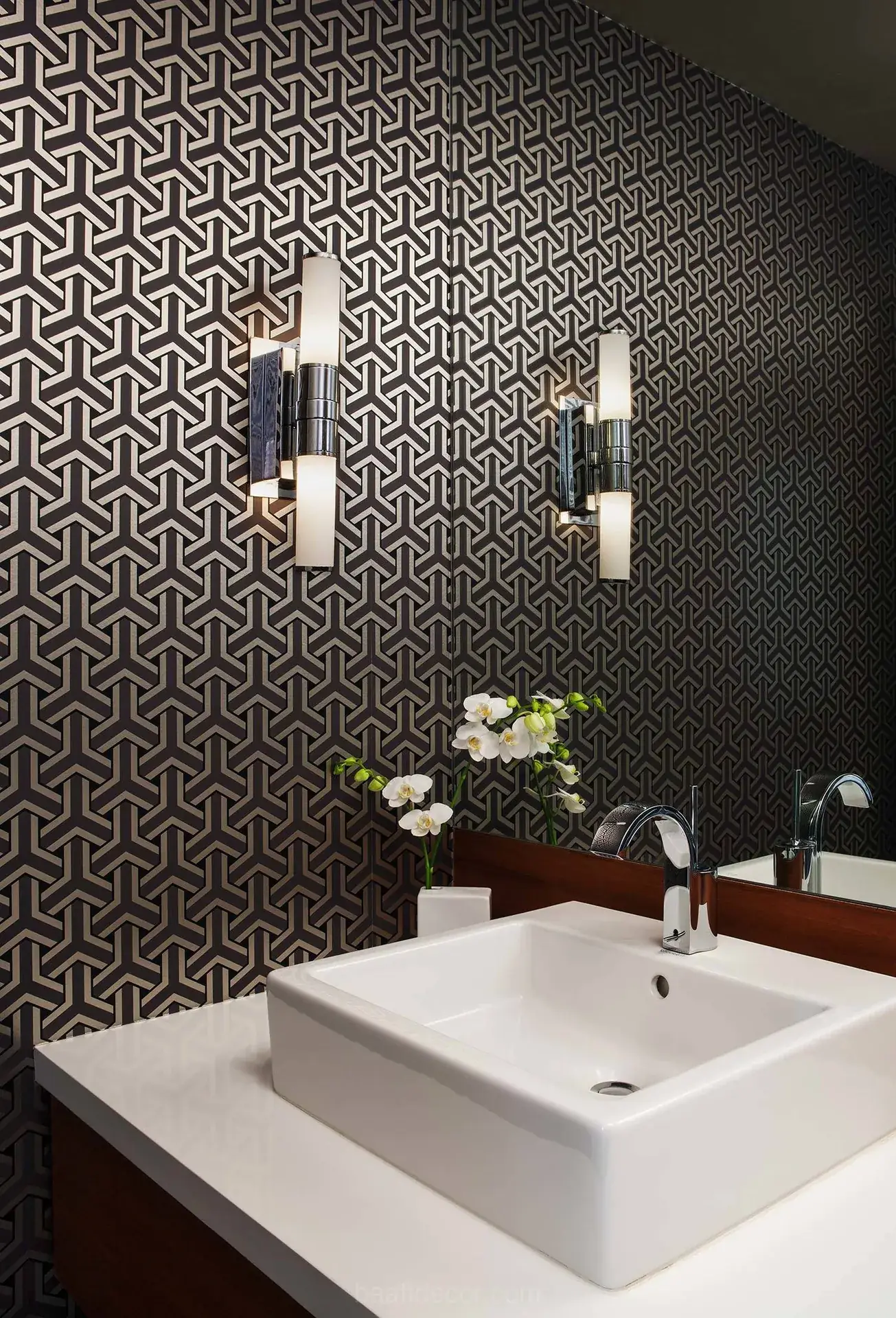
- Bathrooms. Paint (or tiles) in wet zones, always. A ventilated powder room is the only bathroom space where wallpaper makes sense.
- Ceilings. Papering a ceiling is slow and costly. Paint it, or consider a false ceiling if you want a design element up there.
- Walls you’re about to drill. If the AC, TV mount and curtain tracks aren’t fixed yet, paint first and paper later, or finish all drilling before papering.
Where wallpaper wins
- Feature walls. Behind the bed or TV, a pattern gives the room a focal point paint can only approximate with stencils.
- Texture. Linen weaves, grasscloth and plaster-look papers add depth that flat paint doesn’t have.
- Kids’ rooms. Scrubbable vinyl handles crayon and fingerprints better than most emulsions.
- Speed and mess. On a sound, ready wall, a feature wall can be papered in a few hours with almost no dust.
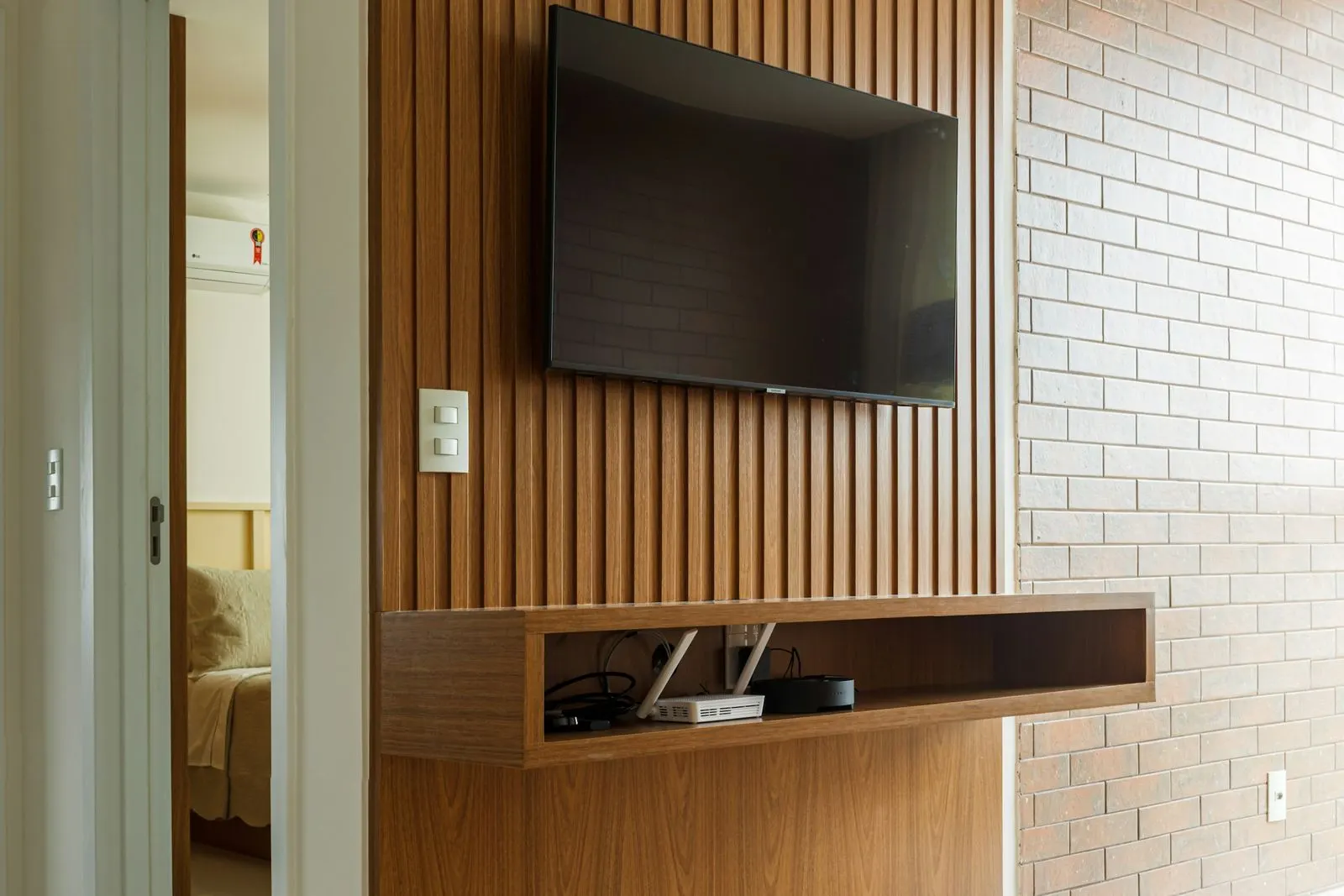
If you want texture but the wall takes knocks (dining areas, passages), look at PVC, WPC and fluted wall panels. They handle impact better than either paint or paper.
Paint or wallpaper in a brand-new flat?
New flats are a special case. Builders in Hyderabad usually hand over walls with putty and a coat of basic emulsion, often finished in a hurry. The plaster underneath may still be giving off moisture for months, especially if the building was completed during or just after a monsoon.
Our usual advice for a new flat:
- Live with the builder’s paint (or one fresh coat) through the first monsoon.
- Watch for damp patches near bathrooms, the kitchen sink wall and external corners, and get the builder to fix them under the defect liability period.
- Finish all drilling for ACs, TV mounts and curtain tracks.
- Then paper your feature walls on a wall you now know is dry.
If you’re moving in sooner and want the look straight away, paper only interior walls that don’t back onto wet areas. And plan the order of work, so the paperhanger isn’t working around wet paint or flying sawdust. Our Hyderabad home furnishing calendar shows which jobs suit which months, monsoon included.
How to tell if your wall is ready for wallpaper
- Rub it. If emulsion comes off chalky on your palm, it needs scraping and priming.
- Tap it. A hollow sound means loose putty or plaster that needs repair.
- Look low. Tide marks or white salt deposits near the skirting mean rising damp.
- Look high. Stains near the ceiling often point to leakage from the terrace or the flat above.
- Check the other side. A bathroom, kitchen sink or external wall behind it is a damp risk.
If any of these show up, fix the wall first. Then choose.
Not sure which way to go?
We check your walls for damp and loose putty, bring wallpaper catalogues to your home, and tell you plainly which walls will take paper and which should stay painted. Call or WhatsApp +91 98499 17494 (8 AM to 10 PM, all 7 days) for a free home visit.
Frequently asked questions
Is wallpaper better than paint for Indian homes?
Wallpaper is better than paint for feature walls, patterns and textures in dry rooms, while paint is better for kitchens, bathrooms, ceilings and walls with any damp. In Indian homes the deciding factor is usually moisture: wallpaper on a sound, dry, primed wall lasts many years, but on a wall that seeps during the monsoon it lifts and can grow mould. Most homeowners in Hyderabad paint the whole room and use wallpaper on one wall behind the TV unit, sofa or bed.
Is wallpaper easy to remove?
How easy wallpaper is to remove depends on its type. Non-woven wallpaper is usually dry-strippable, meaning each strip peels off in one piece without water. Many vinyl wallpapers are peelable: the vinyl face comes off and leaves a paper backing that must be soaked and scraped. Traditional paper wallpaper needs soaking or a steamer. Peel-and-stick sheets come off quickly but can pull paint and putty with them. If you might change the look in a few years, choose non-woven.
Which lasts longer, wallpaper or paint?
Good-quality vinyl or non-woven wallpaper on a dry, well-prepared wall usually stays presentable longer than an interior paint job, which most paint makers suggest refreshing every five to seven years. Wallpaper does not chalk or show patchy touch-ups, and washable grades wipe clean. However, wallpaper fails early on damp walls and can fade on walls hit by strong direct sun. Paint is easier to repair in small patches, while a torn wallpaper strip needs a spare roll from the same batch.
Is wallpaper cheaper than paint?
Wallpaper is not cheaper than paint upfront. Per sq ft of wall, the material and installation for wallpaper normally cost more than a standard emulsion repaint. The gap narrows over time because wallpaper does not need repainting every few years, and a single feature wall uses only a few rolls. For a whole house, paint is usually the economical choice; for one statement wall, wallpaper gives a look paint cannot match for a modest extra spend.
Can you put wallpaper over painted walls?
Yes, wallpaper can go over painted walls if the paint is sound. The emulsion should be firmly bonded, not flaking or chalky, and the wall should be smooth and dry. Glossy or oil-based paint needs light sanding and a wallpaper primer so the adhesive grips. Old distemper must be scraped off first because it powders and lets the paper fall away. Any cracks or loose putty patches should be filled and sanded, since wallpaper shows every bump under it.
Should I choose wallpaper or paint for a rented flat in Hyderabad?
For a rented flat in Hyderabad, paint is usually the safer choice unless your landlord agrees to wallpaper in writing. Wallpaper removal can damage putty underneath, and the owner may ask you to restore the wall when you leave. If you want pattern without the risk, choose non-woven wallpaper, which strips off dry, and paper only one wall. Avoid cheap peel-and-stick sheets; in summer heat they often lift at the edges and can take paint with them on removal.
Can wallpaper hide cracks in walls?
Wallpaper can hide fine hairline cracks and minor unevenness, especially thicker textured vinyl and non-woven papers. It cannot hide active structural cracks, damp patches or hollow plaster, and those will reappear as ridges, tears or lifting seams. Cracks should be opened up, filled and sanded before papering, and the reason for any crack that keeps reopening should be checked. Plain and glossy wallpapers show defects most clearly, so pick a textured design if your walls are older.