A panelled wall can make a plain flat look finished. It can also look like a catalogue page glued onto the wrong wall. The panel itself is rarely the difference; proportion, lighting and planning the switches and TV before anything is fixed usually are. When we install wall panels in Hyderabad homes, these are the designs that keep working, with the details that make each one look right.
Design comes after two duller questions: is the wall dry, and is panelling even the right finish for it? Our wallpaper and wall panels guide for Hyderabad homes answers both before you get to the fun part.
What to plan before choosing a design
- Is the wall dry? Exterior walls that show damp in the monsoon must be fixed and dried first. Panels hide seepage; they don’t stop it.
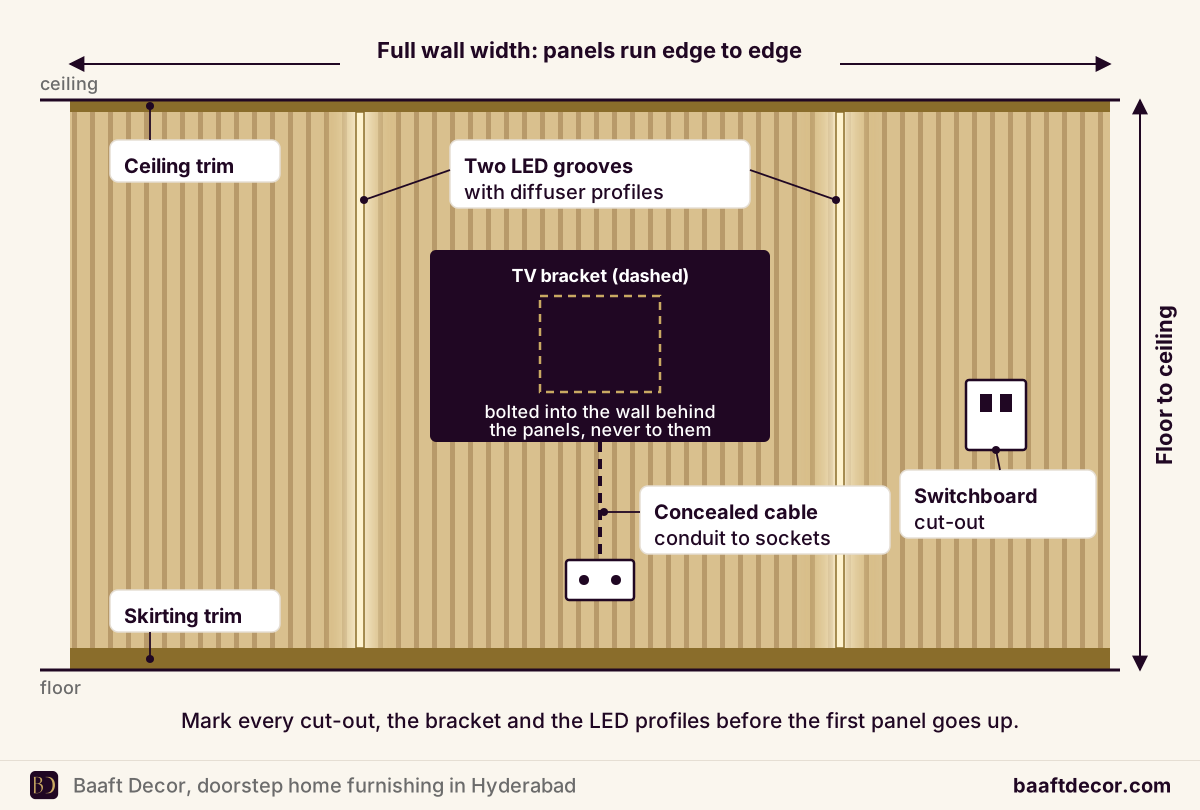
- Where do switches, AC piping and cables go? Mark every switchboard, socket, AC line and TV cable route before the first panel goes up.
- How will the TV be mounted? The bracket must be bolted into the wall behind the panels, never hung from them.
- What’s the lighting? LED profiles and wiring are far easier to add during panelling than after.
- Which material suits the room? PVC, WPC, MDF and wood behave very differently. Our guide to PVC vs WPC vs fluted wall panels explains which to use where.
1. Fluted TV wall with hidden LED lighting
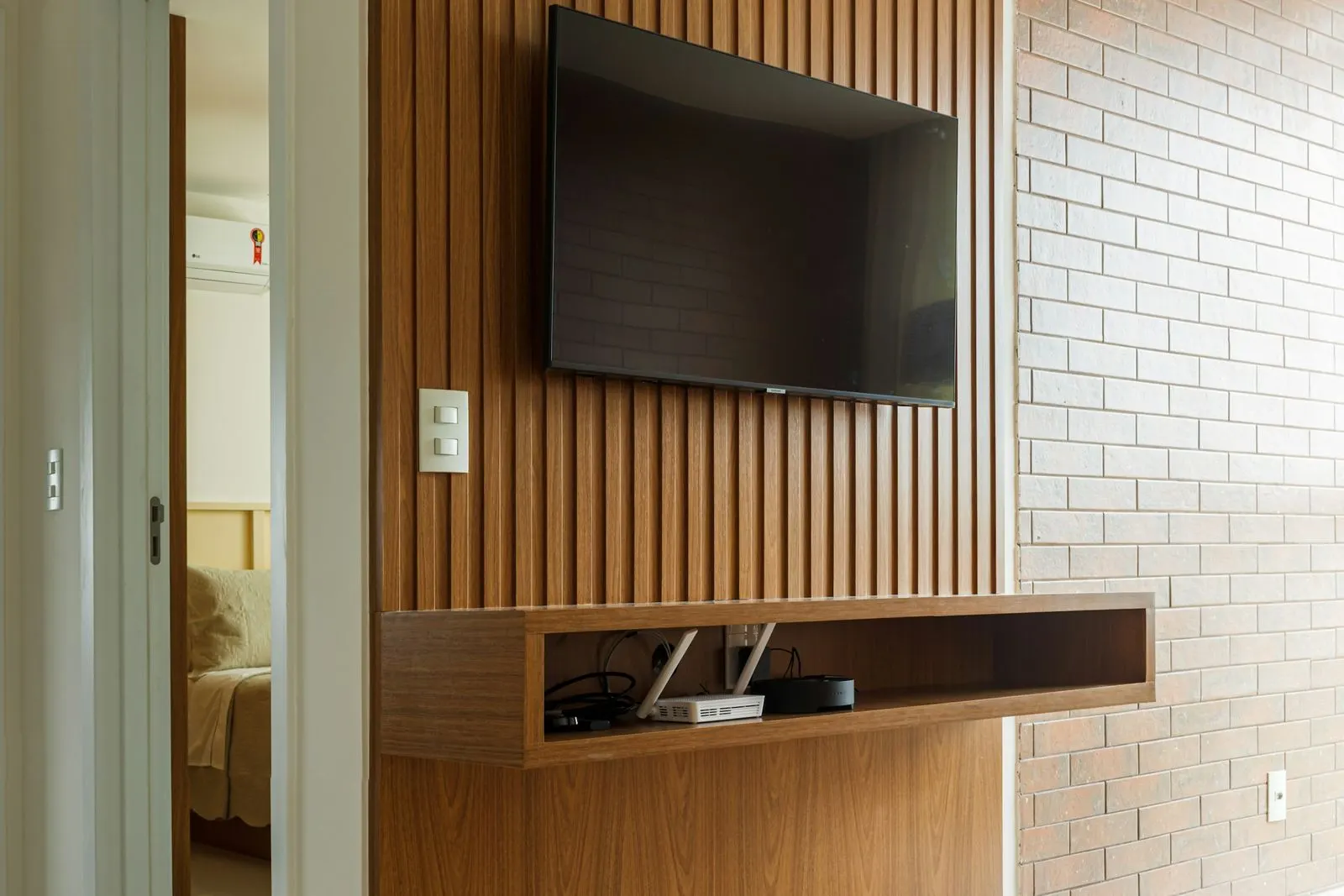
Fluted WPC panels across the TV wall add depth, hide the cables, and look good with the TV on or off. Set a warm LED strip into a groove or along the top edge so the light grazes the ribs.
Make it work: run panels across the full wall width, not a narrow strip behind the TV. Use an LED profile with a diffuser so you don’t see a line of dots.
2. Marble-look centre with fluted sides
A high-gloss marble-look PVC sheet directly behind the TV, with fluted panels framing it on either side. You get the stone look without the weight or cost of real marble. Before fixing, ask where the sheet joints will fall. One joint running through the middle of the veining spoils the whole effect.
3. Full-height headboard wall
In bedrooms, panelling the wall behind the bed from floor to ceiling makes the bed the clear focal point. Fluted WPC or MDF in light oak or a soft colour keeps it calm. For a hotel-style look, use upholstered fabric panels at headboard height, with fluted or plain panels above.
Make it work: plan bedside switches, reading lights and charging points first, so the cut-outs line up with panel joints.
4. Half-height wainscoting with moulding frames
Panelling the lower third or half of a wall, topped with a rail and finished with picture-frame mouldings, gives a classic look to dining areas, passages and kids’ rooms. The mouldings are usually painted PU, polystyrene or MDF.
It’s practical, too. The lower wall is where chairs, school bags and toys hit, and a panelled surface wipes clean far more easily than painted plaster.
5. Vertical slats to make a low ceiling feel taller
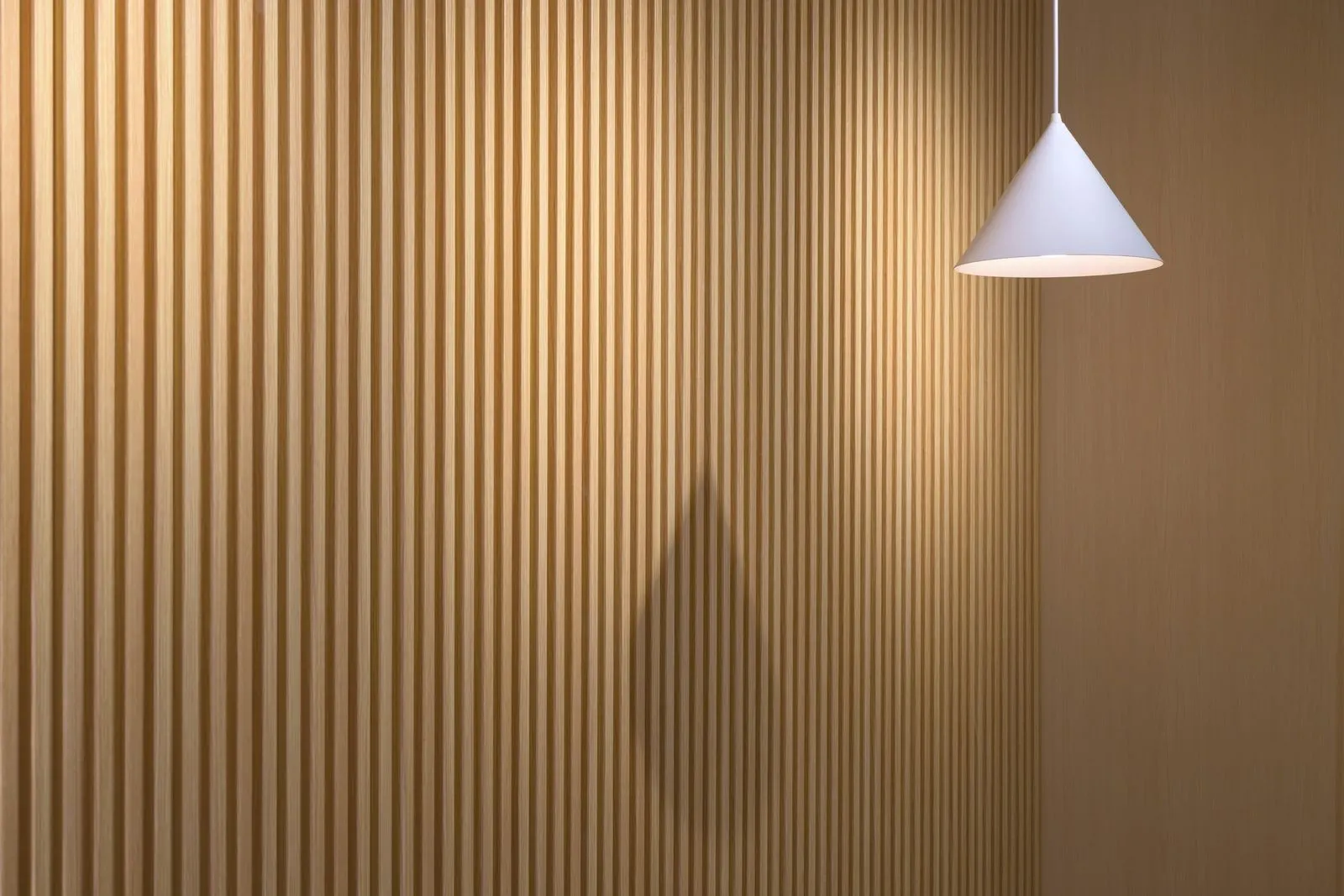
Vertical lines pull the eye upward. Where a false ceiling has brought the ceiling down a little, floor-to-ceiling slats or narrow flutes make the room feel taller again. Stick to light tones. Dark vertical slats in a small room feel heavy.
6. Slats that wrap onto the ceiling
Continuing wall slats up and across part of the ceiling creates a canopy effect over a dining table or bed. It needs careful coordination with the ceiling, lights and AC vents, so it’s best planned alongside the false ceiling rather than added afterwards.
7. Dark panels with metal or mirror inlays
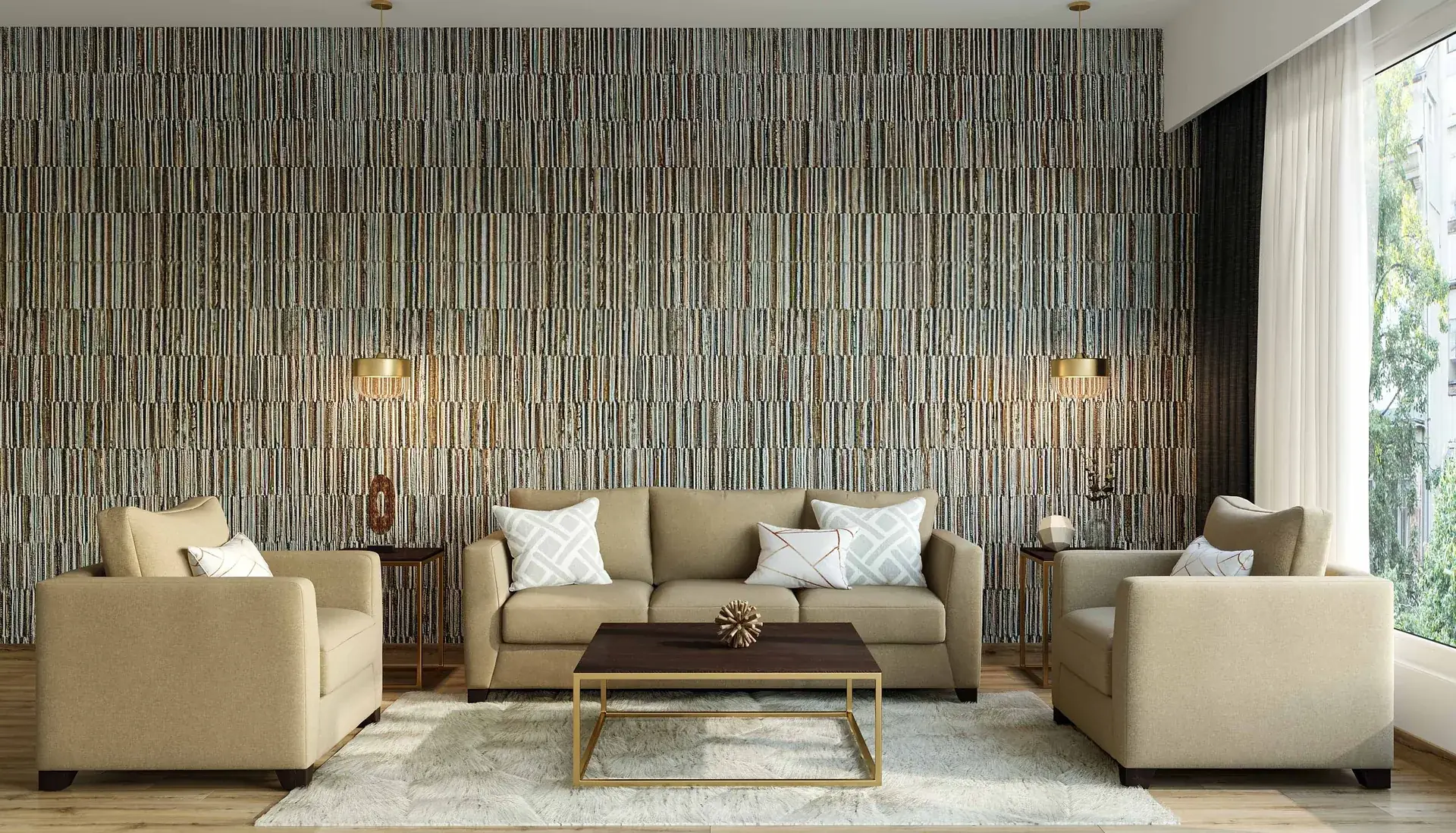
Charcoal, walnut or black fluted panels with thin brass-finish or mirror strips between sections look dramatic and formal. They need a large living room with plenty of daylight. In a small or dim room, keep the dark section to one part of the wall.
8. Acoustic slat panels for a home theatre or work room
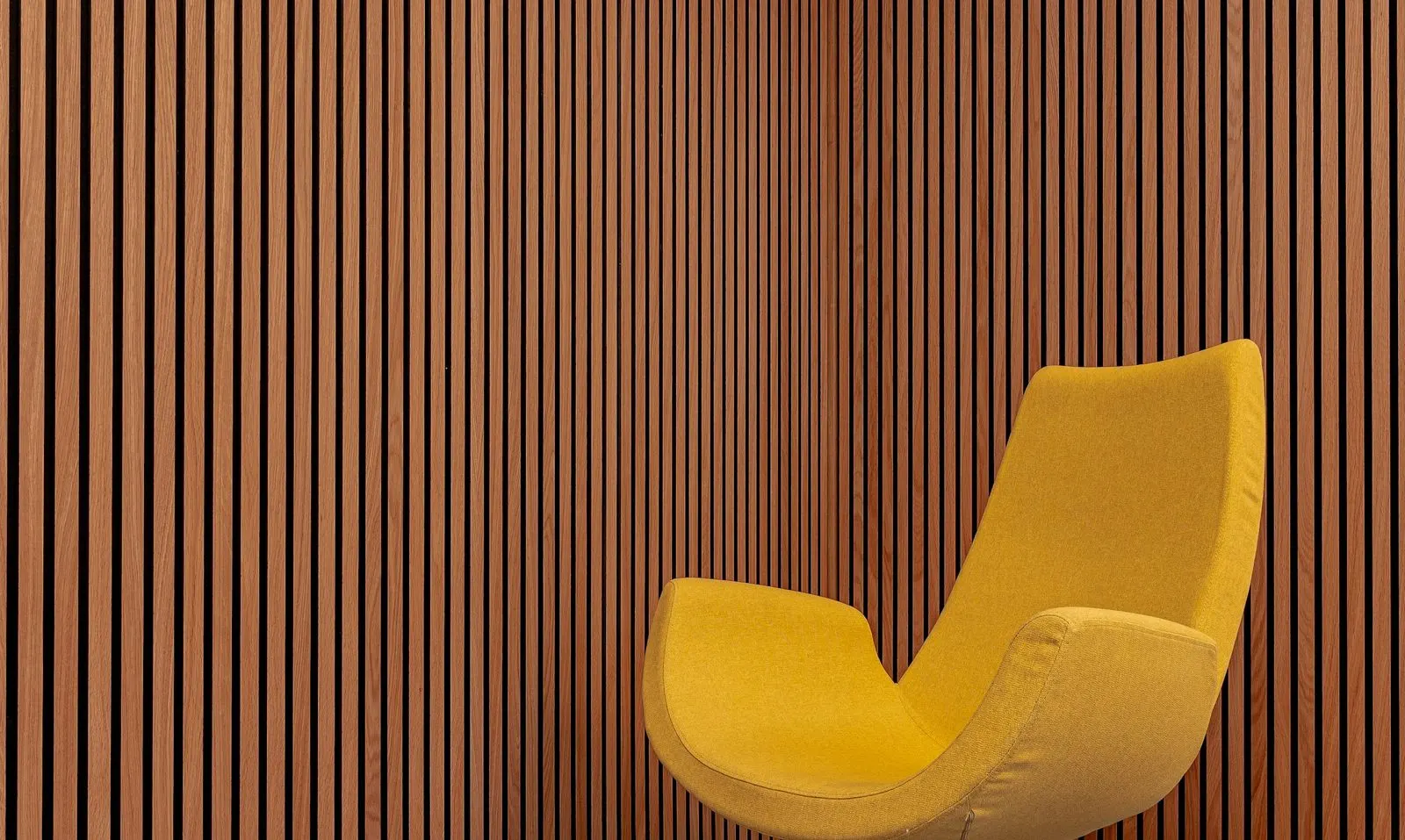
Wood slats on a felt backing cut echo. That helps in home theatres, work-from-home rooms and new flats with tiled floors where voices bounce around. They look like fluted panels but change how the room sounds. To be clear, they reduce echo inside the room; they don’t block noise from outside.
9. CNC jaali panels for the pooja room or a partition
Laser- or CNC-cut jaali patterns in WPC or MDF, softly backlit, are a favourite for pooja rooms, pooja units and screens between the living and dining areas. Keep plastic-based panels away from diya and agarbatti flames, with stone or metal directly around the lamp.
10. Panels combined with wallpaper
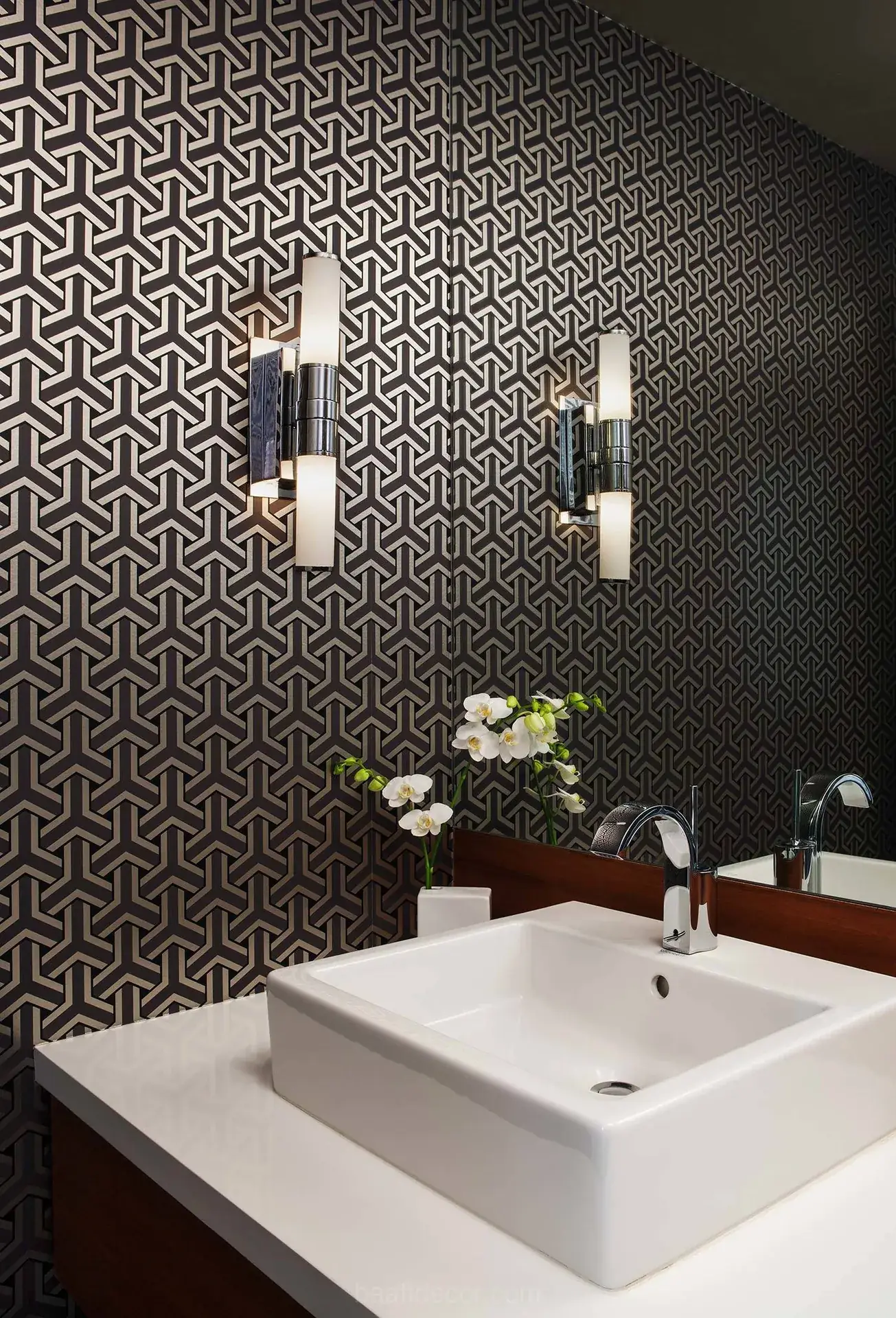
Panels below with a subtle wallpaper above, or a panelled TV section framed by wallpaper, gives texture without overdoing either. Keep one of the two quiet. A busy pattern next to heavy grooves just fights for attention. Our wallpaper design ideas show pairings that work, and our wallpaper service can be scheduled in the same visit.
11. Entrance foyer feature wall
A narrow panelled wall at the entrance, with a slim shoe cabinet, a mirror and a few hooks built into it, makes the first thing guests see look finished. Choose WPC here; foyers take knocks from bags, shoes and deliveries.
12. A video-call backdrop in the study
If you work from home, the wall behind your desk is the one colleagues see on every call. A section of fluted or slatted panelling with a single shelf and a warm wall-washer light looks tidy on camera, and slats on felt also cut the echo that makes calls sound hollow. Keep it simple and mid-toned. Very dark panels tend to show up as a flat dark block on a webcam, and the texture you paid for disappears.
13. Washable low panels in kids’ rooms
Crayons, stickers and sticky hands wreck painted walls. Half-height PVC or WPC panels in a light colour, topped with a rail, give a wipeable surface where children actually touch the wall. Rounded trims on corners are kinder to small heads than sharp edges.
Choosing colours and finishes
- Small rooms: light oak, ash, beige, off-white or pale grey. They reflect light.
- Large, bright rooms: walnut, teak tones, charcoal or deep green can carry the space.
- Matt vs gloss: matt looks calmer and hides fingerprints; gloss suits marble-look accents only.
- Match the floor loosely: panels a shade lighter or darker than wooden flooring look intentional. An exact match rarely does.
- Direct sun: printed finishes on a wall hit by afternoon sun can fade unevenly over years. Solid colours and better-quality laminates hold up longer.
For the rest of the room, our living room interior design ideas cover furniture, lighting and layout.
What affects the cost of a panelled wall?
The design changes the cost as much as the material does. The main drivers are the wall area, the panel material (PVC, WPC, MDF or wood), the finish (plain, wood-grain, marble-look or veneer), the amount of cutting around switches, windows and doors, any batten framework for uneven walls, LED profiles and wiring, and trims at edges and corners. A plain WPC wall with few cut-outs is far quicker to fit than a wall with mouldings, inlays, a wrapped ceiling and lighting. We give a fixed, itemised figure after seeing the wall.
Mistakes we see with panelled walls
- Panelling over a damp wall, then finding mould behind the panels a year later.
- Forgetting a switchboard, so it ends up awkwardly cut across a groove.
- Bare LED strips with visible dots instead of a diffused line.
- A narrow panel strip behind the TV with plain wall on both sides, which makes the wall look unfinished.
- Three or four different materials on one wall.
- Gaps at the skirting or ceiling line left without trims.
If you’re planning panelling as part of a full makeover, our interior design service coordinates panels with the ceiling, lighting and furniture.
Try the designs on your own wall
Book a free home visit. We’ll check the wall, bring PVC, WPC and fluted samples, mark switch and TV positions with you, and give you a written quote. We work across Hyderabad from 8 AM to 10 PM, all seven days. WhatsApp or call +91 98499 17494.
Frequently asked questions
Which wall panelling design is best for a living room?
The most practical wall panelling design for a living room is a fluted or slatted TV wall in WPC, running the full width of the wall, with a hidden LED strip in a groove or along the top edge. It gives depth without clutter and hides cables behind the panels. Other strong options are a marble-look sheet behind the TV framed by fluted panels on either side, or half-height wainscoting on a dining wall. Choose lighter wood tones for compact rooms and darker shades for large, bright ones.
What wall panel designs suit a bedroom?
The wall panel designs that suit bedrooms best are full-height headboard walls in fluted WPC or MDF, upholstered fabric panels behind the bed for a soft, hotel-style look, and vertical slats with warm wall-washer lighting. Keep bedroom panelling calm: one wall, matt finishes and soft tones such as light oak, beige, sage or muted grey. Plan bedside switches, reading lights and charging points before the panels go up so the cut-outs line up neatly with the panel joints.
Which wall should have panelling in a living room?
In most living rooms, the best wall for panelling is the one your eye goes to first, which is usually the TV wall or the wall behind the main sofa. Avoid panelling a wall broken up by several doors or windows, because the panels get cut into small pieces and lose their effect. In Hyderabad apartments, the TV wall is often a solid internal wall, which also suits panels better than an exterior wall that may show monsoon damp. Panel the whole width for the best proportion.
Are fluted wall panels still in trend, or will they go out of style?
Fluted wall panels are still widely chosen in Indian homes, especially for TV walls and headboards. As with any strong trend, the safest way to keep them looking current is restraint: use fluted panels on one feature wall rather than every room, choose natural wood tones or soft solid colours over loud finishes, and pair them with plain walls and simple furniture. Vertical grooves are a classic architectural detail, so a well-proportioned fluted wall tends to age better than heavily printed panels.
What colour wall panels work best in small rooms?
In small rooms, light wall panel colours such as light oak, ash, beige, off-white and pale grey work best because they reflect light and make the space feel larger. Vertical grooves or slats in these tones also make a low ceiling feel taller. Dark shades like walnut, charcoal or black can still work in a small room if used on a narrow section, such as a strip behind the TV, with good lighting. Matt finishes look calmer and show fewer fingerprints than gloss in compact spaces.
Can you combine wall panels with wallpaper?
Yes, combining wall panels with wallpaper works well when one leads and the other supports. A common approach is half-height panelling or wainscoting below with a subtle textured wallpaper above, or a fluted panel section behind the TV framed by a plain or lightly patterned wallpaper on either side. Keep the colours related and avoid pairing a busy pattern with heavy grooves. Wallpaper should go on a dry, smooth wall, and the joint between panel and paper needs a neat trim or moulding.
Can wall panels be used in a pooja room?
Yes, wall panels are often used in pooja rooms and pooja units. Popular choices are CNC-cut jaali panels in WPC or MDF with soft backlighting, marble-look PVC sheets behind the deity for a clean, easy-to-wipe surface, and fluted panels on side walls. Keep plastic-based panels away from diya and agarbatti flames, leaving a heat-resistant surface such as stone or metal directly around the lamp area. Choose finishes that can be wiped clean of oil and soot regularly.
How do you light a panelled wall?
The best way to light a panelled wall is with indirect light that grazes the surface, so the grooves and texture show. Common methods are a warm LED strip in an aluminium profile along the top or bottom edge, LED strips set into one or two grooves of a fluted panel, or ceiling wall-washer lights aimed down the wall. Use a profile with a diffuser so individual LED dots do not show. Warm white light suits wood tones, and all wiring must run in conduit behind the panels.