Pick a blind type before you know what each one does and you get a gloomy living room, or a bedroom that glows at 6 AM. Every type handles light, privacy, heat and dust differently, so the right one depends on the room. When we fit window blinds across Hyderabad, most homes end up with two or three types, not one.
Below are the nine common types and the rooms each suits. Once you’ve narrowed it down, the window blinds buying guide for Hyderabad homes takes you through fabric, mounting, mechanisms and cost in order.
Types of window blinds at a glance
| Type | How it works | Light control | Best rooms | Watch out for |
|---|---|---|---|---|
| Roller | One fabric sheet rolls onto a tube | Sheer to full blackout, by fabric | Bedrooms, study, kitchen | Up or down only, no tilt |
| Zebra (dual) | Two layers of sheer and solid bands slide past each other | Adjustable, but not full blackout | Living, dining | Bulkier roll, needs dead-level fitting |
| Roman | Fabric folds into horizontal pleats | Dim-out to blackout with lining | Living, bedrooms | Folds collect dust, stack covers top of window |
| Aluminium venetian | Thin metal slats tilt and lift | Fine tilt control | Kitchen, bathroom | Every slat collects dust |
| Wooden / faux-wood | Wide slats tilt and lift | Fine tilt control | Living, study (wood); wet areas (faux) | Real wood warps in damp |
| Vertical | Vanes hang from a track and draw sideways | Tilt and draw | Wide windows, sliding doors | Vanes sway in fan breeze |
| Honeycomb | Pleated fabric with air cells | Dim-out to blackout | West-facing bedrooms | Higher cost, gentle cleaning |
| Bamboo / woven | Natural slats roll up by cord | Filters light | Balcony, sit-out | Little privacy at night |
| PVC outdoor | PVC chicks or weatherproof rollers | Shade and rain cover | Balconies, utility | Wind on high floors |
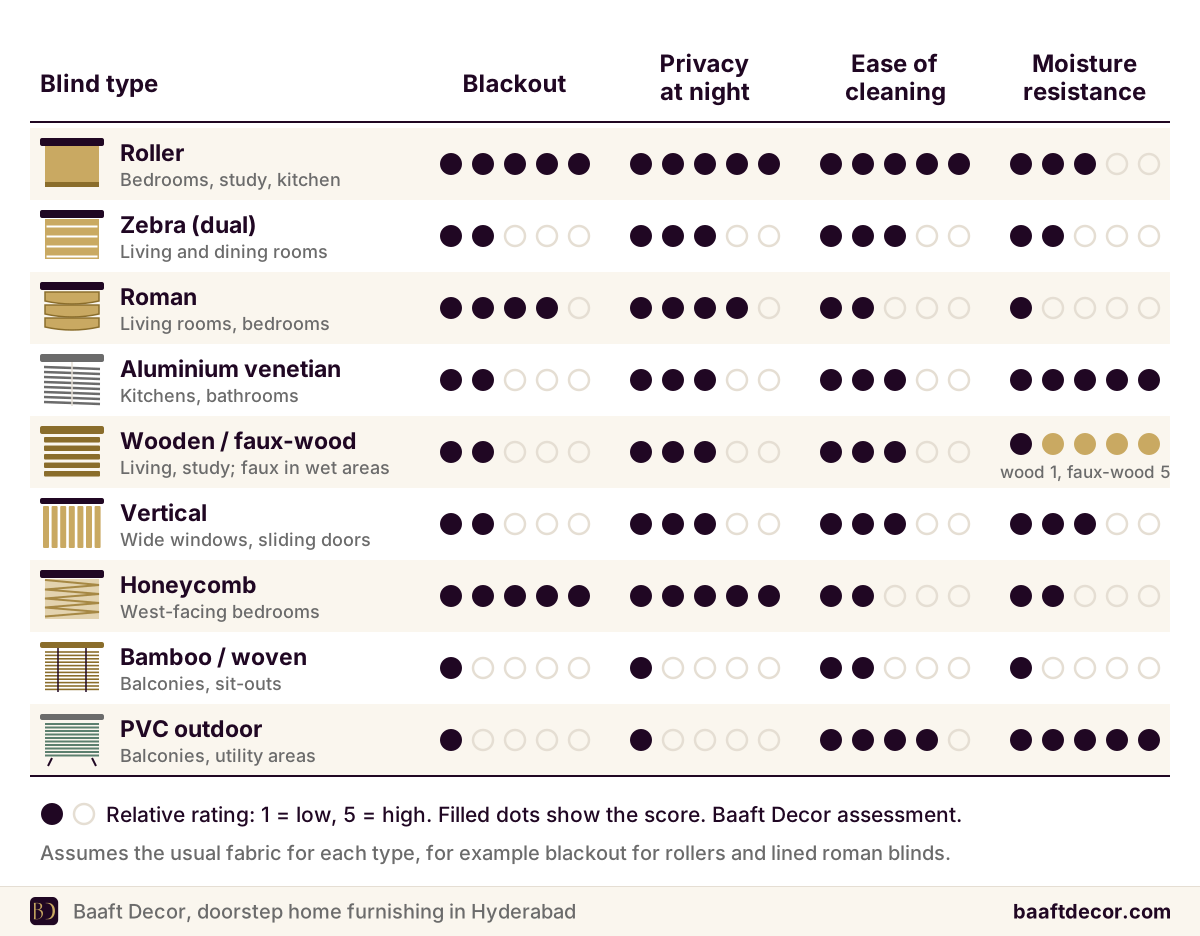
1. Roller blinds
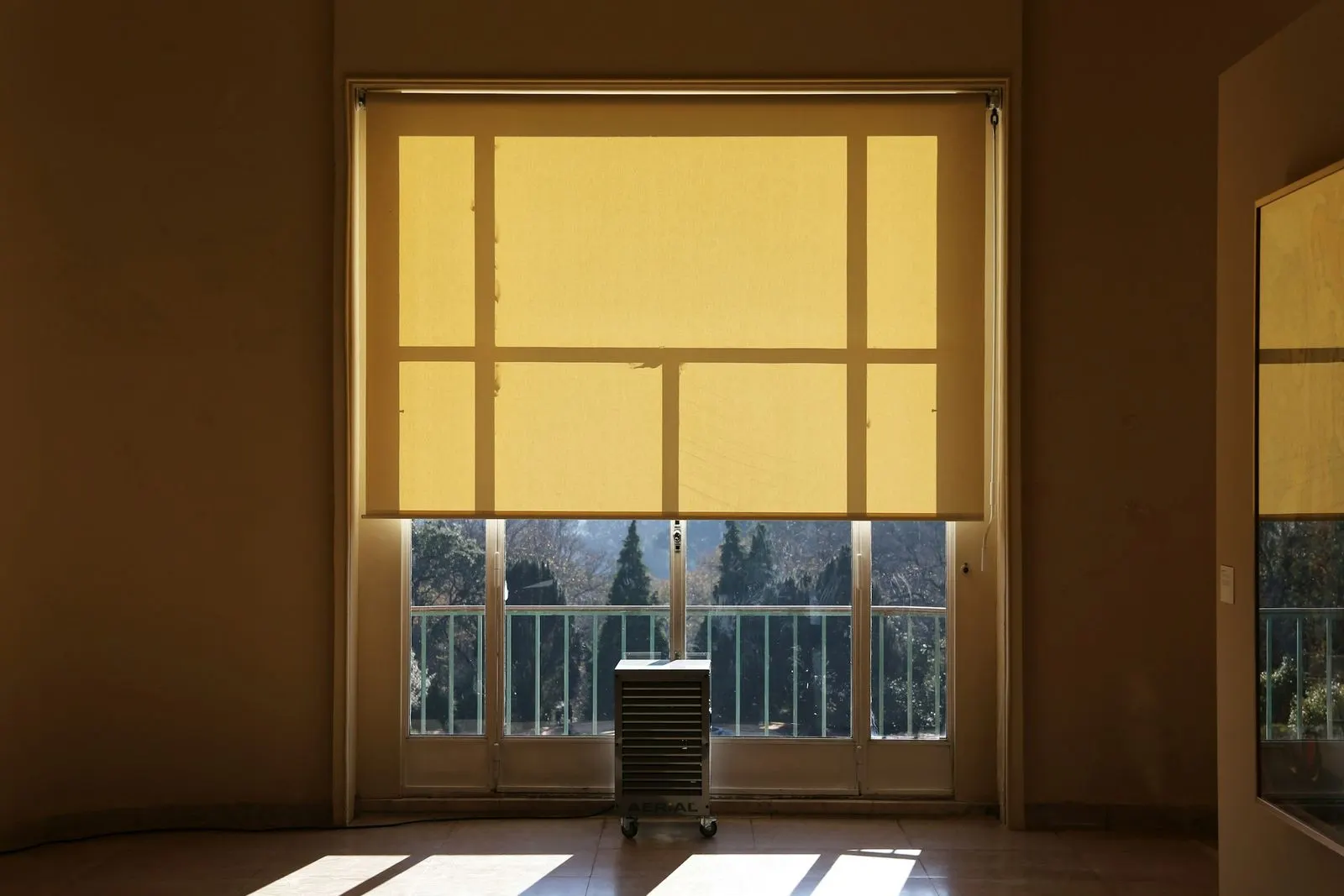
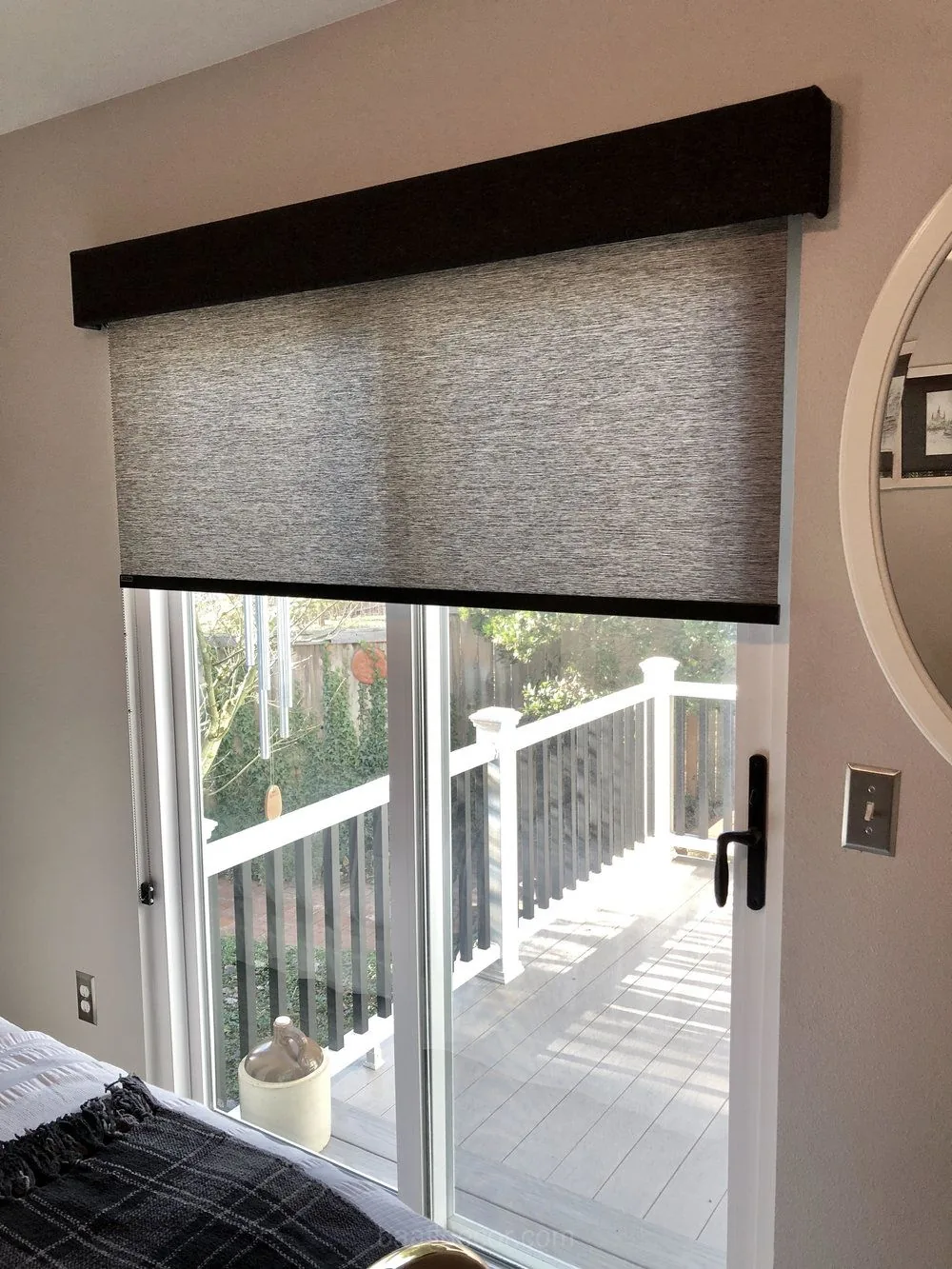
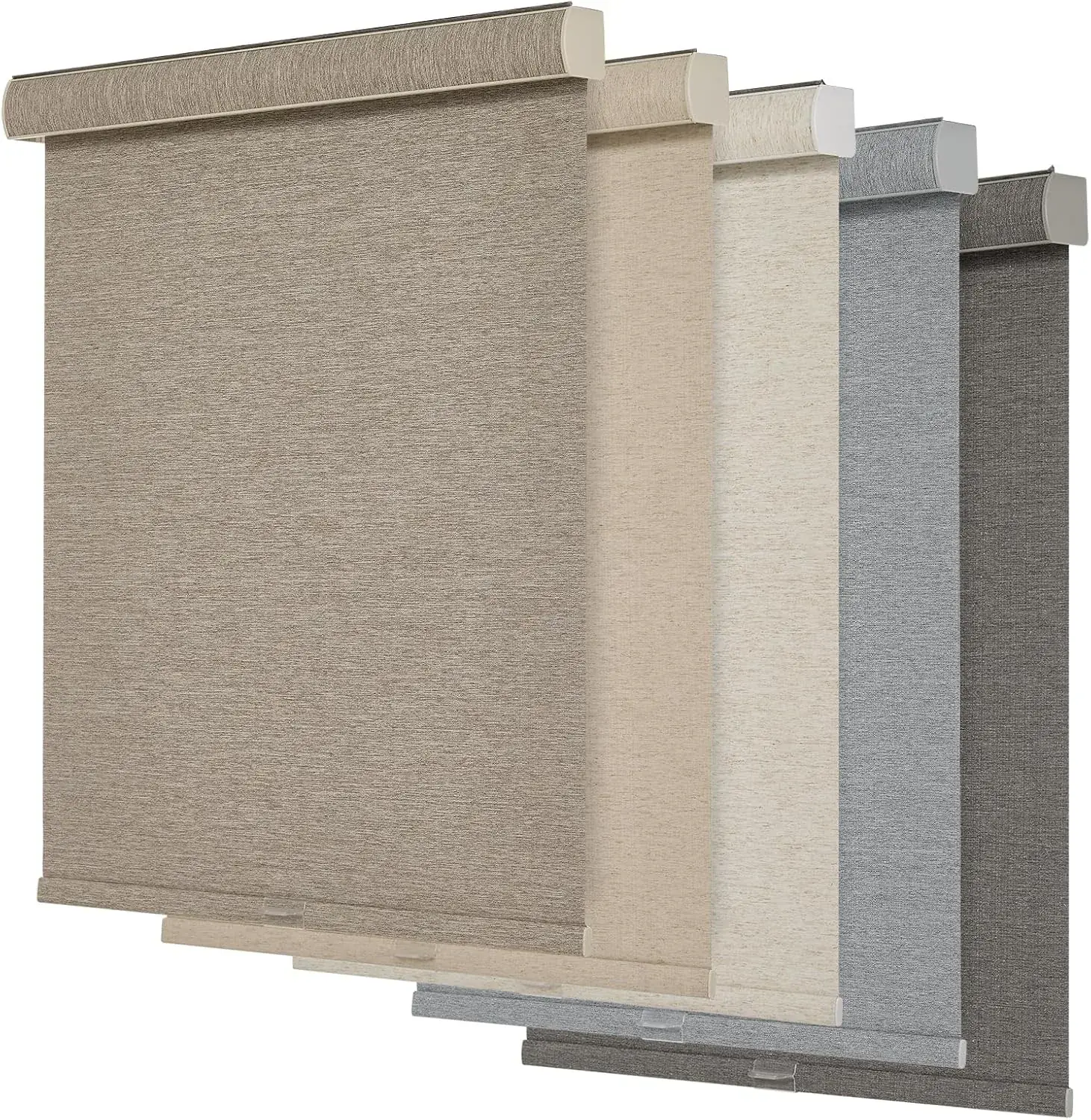
The workhorse. A single sheet of fabric winds onto a tube at the top of the window, usually by a bead chain. The fabric decides everything:
- Dim-out fabric softens light and gives daytime privacy.
- Blackout fabric stops nearly all light. This is the bedroom default.
- Sunscreen fabric is woven with a set openness (1%, 3%, 5% and so on). Lower openness means less glare and heat, but a dimmer view out. We often suggest 3% for home offices facing the sun.
Rollers are the simplest to clean and the easiest to motorise. Their one weakness: they’re up or down. You can’t angle the light the way slats do.
Printed roller blinds are the same blind with a custom image or pattern on the fabric: a skyline in a teenager’s room, a cartoon in a nursery, a logo in a home office. Fun, but a print facing direct afternoon sun can fade over a few summers. We suggest them for north- or east-facing windows, or with a blackout backing that shields the print from the glass side.
2. Zebra blinds (dual or day-night blinds)
Zebra blinds use one continuous fabric that passes in front of and behind the tube, with alternating sheer and solid horizontal bands. Roll it a little and the bands either line up (light comes through the sheers) or overlap (the solid bands block the view).
They’re popular in Hyderabad living rooms that face another tower, because you get daylight and privacy at once. When people ask for “day and night blinds”, this is usually what they mean, though a double roller (a sunscreen and a blackout roller on one bracket) does the same job with real blackout. The trade-offs are a bulkier roll, a higher rate per square foot, and no true blackout. We cover this in detail in zebra vs roller blinds.
3. Roman blinds
Roman blinds are made from curtain-style fabric that folds into neat horizontal pleats as you raise it. With a blackout lining, they work well in bedrooms; unlined, they give a soft, filtered light.
They look warmer than rollers and suit traditional or mixed interiors. Two things to know before you order. Raised, the folded fabric stacks at the top and covers part of the glass, so a short window loses a fair bit of light. And the folds hold dust; plan on vacuuming them regularly.
4. Aluminium venetian blinds
Horizontal metal slats (commonly about 25 mm wide) that tilt with a wand and lift with a cord. Tilting lets you keep privacy while still letting light bounce off the ceiling.
They’re inexpensive, moisture-proof and wipeable, which is why we fit them in kitchens and bathrooms. The downside is cleaning time. In a dusty month, every single slat needs a wipe.

5. Wooden and faux-wood venetian blinds
The same idea with wider slats, often 50 mm. Real wood looks rich in a living room or study, but it’s heavy and can warp in humid rooms. Faux-wood slats are made from PVC or composite, look similar from a few feet away, and handle bathroom steam and monsoon damp far better.
6. Vertical blinds
Vertical vanes (often about 89 mm, or 3.5 inches, wide) hang from a track and either tilt or draw fully to one side. That makes them practical for wide windows and sliding balcony doors you walk through every day.
They’re affordable. But plenty of people find they look more office than home, and the vanes sway and clatter under a running ceiling fan.
7. Honeycomb (cellular) blinds
Honeycomb blinds are pleated fabric formed into hollow cells. The trapped air acts as insulation between the glass and the room, which helps on west-facing bedroom windows in April and May. The US Department of Energy’s Building America Solution Center notes that multi-layer cellular shades can give summertime energy savings. They come in light-filtering and blackout versions, fold up compactly, and cost more than most other fabric blinds.
8. Bamboo and woven blinds
Natural bamboo, jute or reed slats woven together and rolled up by cord. They give dappled light and an earthy look on balconies and sit-outs.
One catch: at night, with the lights on inside, you can see through most woven blinds. And in the monsoon they must dry out properly, or mould sets in.
9. PVC and outdoor blinds
This group covers PVC chick blinds, outdoor rollers in weather-rated fabric, and clear PVC monsoon blinds, all built for rain, sun and dust on open balconies. On high floors the real enemy is wind, so tie-downs or side-guided systems matter more than the fabric. PVC chicks are the budget choice. Outdoor rollers look neater and control sun better. Clear monsoon blinds keep rain out and give no privacy at all. Our guide to the best blinds for balconies goes through each option, and our balcony blinds service covers measuring and fixing them to RCC slabs and parapets.
What about motorised blinds?
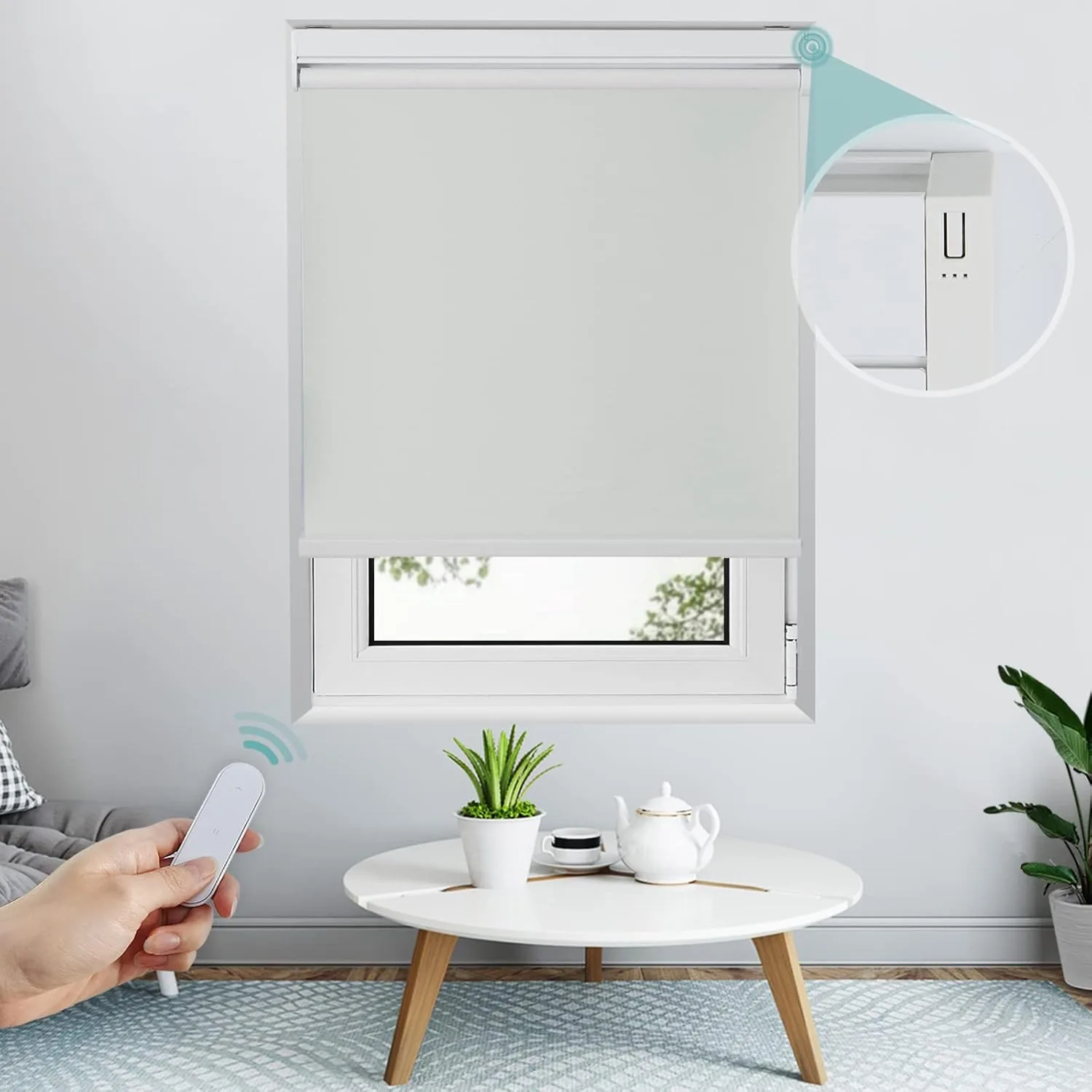
Motorised isn’t a separate type; it’s a mechanism that fits roller, zebra, roman, honeycomb and vertical blinds. It earns its cost on tall or wide windows, blinds behind beds or sofas, and living rooms with several large blinds. Our motorised curtains and blinds service covers wired and battery options.
Which type of blind should you choose for each room?
- Bedroom: blackout roller, or a lined roman blind. Add side channels if early light bothers you.
- Living room: zebra blinds, or a sunscreen roller paired with curtains.
- Kids’ room: cordless or motorised blackout roller.
- Study or home office: 3% to 5% sunscreen roller to cut screen glare.
- Kitchen: aluminium venetian or a wipeable PVC-coated roller.
- Bathroom: faux-wood or aluminium venetian.
- Sliding balcony door: vertical blinds or a pair of rollers.
- Open balcony: PVC chick, outdoor roller or bamboo.
If you’re unsure whether a room needs blinds at all, our guide on blinds vs curtains helps you decide.
What matters as much as the blind type
Mounting. Inside the window recess looks neat but leaves light gaps at the edges. Outside the recess blocks more light and makes the window look bigger. Many Hyderabad flats have shallow recesses with sliding uPVC handles in the way, so we check depth before suggesting an inside mount.
Child safety. Loose cords and chain loops are a strangulation risk for small children. Choose cordless or motorised blinds in kids’ rooms, or fit a chain tensioner, as the US Consumer Product Safety Commission advises.
Dust. Flat roller and zebra fabrics in a cassette are the easiest to keep clean near construction. Slatted and pleated types need more frequent wiping.
Budget. Type sets the rate per square foot. Our window blinds cost guide explains every price driver.
See the fabrics at home before you decide
Book a free home visit. We’ll bring blind fabric samples, check each window’s light and recess depth, suggest a type for every room and give you a written quote. We work across Hyderabad from 8 AM to 10 PM, all seven days. WhatsApp or call +91 98499 17494.
Frequently asked questions
What are the main types of window blinds?
The main types of window blinds are roller blinds (one fabric sheet on a tube), zebra or dual blinds (alternating sheer and solid bands), roman blinds (fabric that folds into pleats), aluminium venetian blinds (thin tilting metal slats), wooden and faux-wood venetian blinds (wider tilting slats), vertical blinds (hanging vanes that draw sideways), honeycomb blinds (pleated air cells), bamboo or woven blinds, and PVC outdoor blinds for balconies. Most of these can be fitted with a chain, a cordless spring or a motor.
Which type of blind is best for Hyderabad's heat?
For Hyderabad's heat, the most effective blinds are blackout roller blinds, honeycomb blinds and sunscreen roller blinds on west- and south-facing windows. Blackout fabric stops nearly all direct light, honeycomb cells trap a layer of air between room and glass, and sunscreen fabric with a low openness factor (1% to 3%) cuts glare and heat while keeping a view out. Light-coloured or reflective backings help further. Thin woven or bamboo blinds filter light but do little against afternoon heat on west windows.
Which blinds are best for bedrooms?
The best blinds for bedrooms are blackout roller blinds, because they block nearly all light and are simple to use every night. Add side channels or mount the blind outside the recess to reduce light leaking around the edges. Zebra blinds work in bedrooms where you want soft daylight and privacy, but standard zebra fabric does not give full darkness. For a softer look, a lined roman blind or a blackout roller paired with curtains gives darkness plus a warmer finish. Choose cordless or chain-tensioned blinds in children's rooms.
Which blinds are best for kitchens and bathrooms?
The best blinds for kitchens and bathrooms are aluminium venetian blinds, faux-wood (PVC composite) venetian blinds and PVC-coated or sunscreen roller blinds, because all of them handle steam and can be wiped clean. Real wooden blinds and plain fabric blinds are poor choices here, since humidity can warp wood and grease stains fabric. Keep a kitchen blind clear of the hob, and choose a roller with a wipeable surface if the window is right above the sink, where splashes are frequent.
Are roller blinds still in fashion?
Roller blinds are still in fashion, especially in new apartments with clean, modern interiors. Their flat profile suits large windows and minimal rooms, and current fabrics include linen-look textures, sunscreen weaves and blackout options in many colours. Many homes now pair a roller blind with curtains, using the roller for daily light control and curtains for a softer look. Cassette-mounted rollers, which hide the fabric roll in a slim box, are particularly popular because they look neater and keep dust off the fabric.
What is the difference between blinds and shades?
Strictly speaking, blinds are made of slats or vanes that tilt (like venetian and vertical blinds), while shades are a continuous sheet of fabric (like roller and roman shades). In India the words are used interchangeably, so roller blinds and roller shades are the same product: a single fabric panel that rolls onto a tube. When comparing quotes, the name matters less than the construction, so ask whether the product is fabric or slats, what the fabric's opacity is, and how it is operated.
Which window blinds are easiest to clean in a dusty city?
Roller blinds and zebra blinds with a cassette are usually the easiest window blinds to keep clean in a dusty city like Hyderabad, because the flat fabric can be vacuumed with a brush attachment and the cassette protects the roll. Aluminium venetian blinds are wipeable but every slat collects dust, so cleaning takes longer. Roman blinds trap dust in their folds, and honeycomb cells need gentle vacuuming. Near ongoing construction, choose smooth fabrics over textured weaves, and vacuum lightly every couple of weeks.
Are window blinds safe for homes with small children?
Window blinds can be safe for homes with small children if the cords and chains are managed. Loose cords and looped chains are a known strangulation risk, which is why cordless (spring-operated) or motorised blinds are the safest choice for children's rooms. If you keep a chain-operated blind, fit a tensioner that fixes the chain loop tightly to the wall, and keep cots, beds and furniture away from windows. Venetian blinds should use a wand for tilting rather than a long tilt cord.