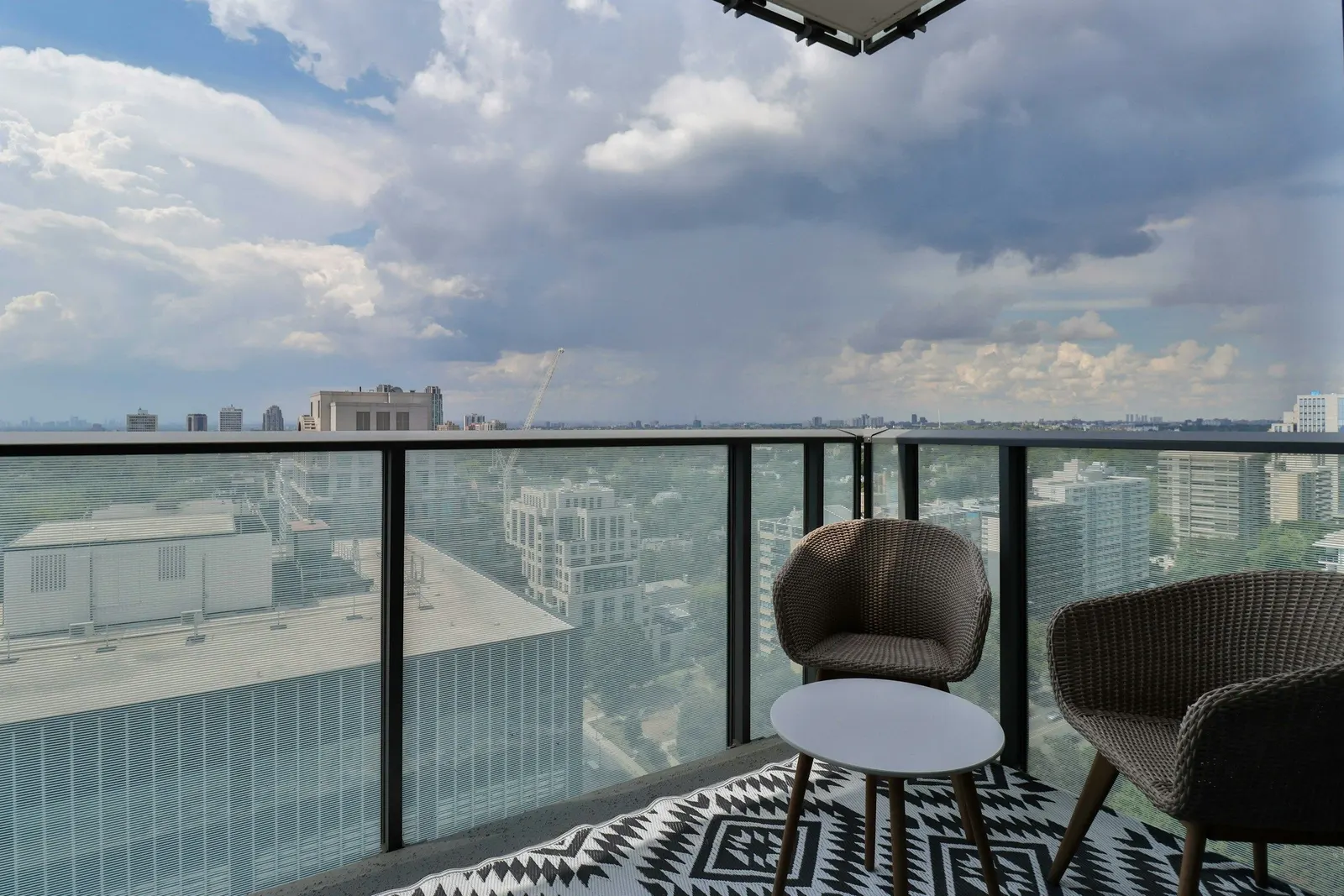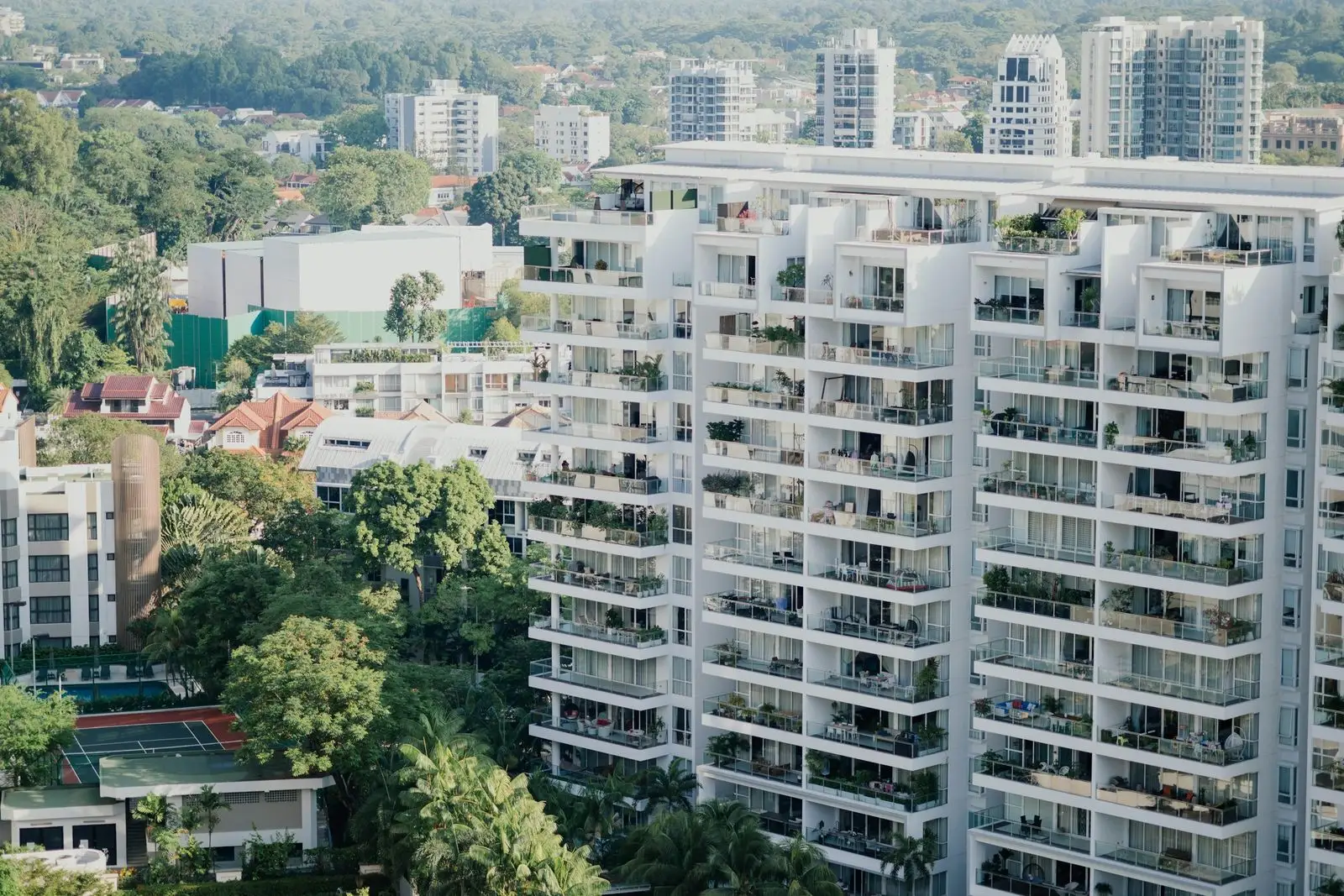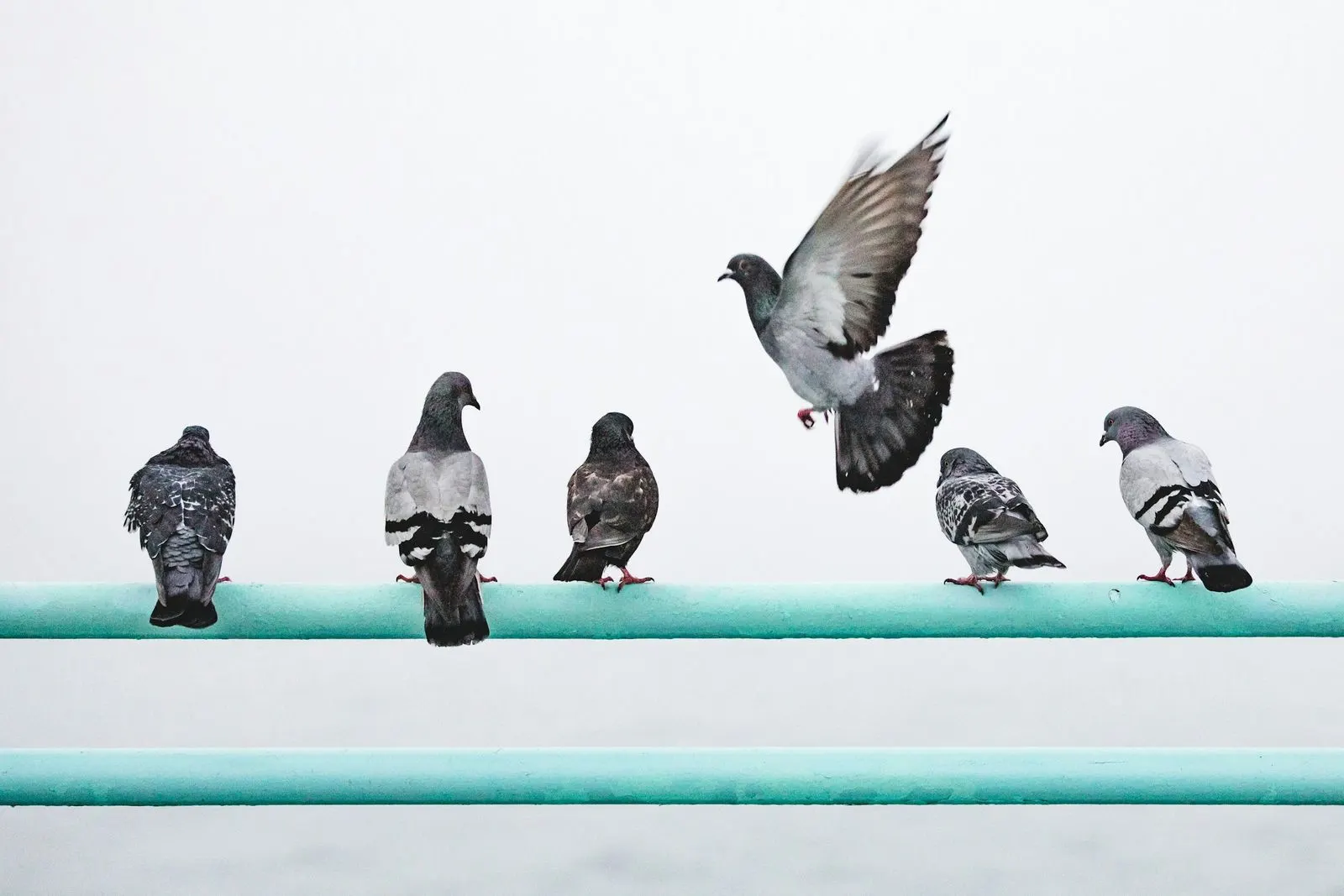
If you live in a high-rise in Gachibowli, Kondapur or Kokapet, you probably know the routine: cooing from behind the AC outdoor unit at dawn, droppings on the clothes stand, a twig nest on the sunshade. Families often ask us whether invisible grills for the balcony will fix it. The honest answer is no. Grills keep children safe; pigeons fly straight through them. This guide explains what does work.
Pigeon-proofing is one part of making a balcony usable and safe, which our balcony and window safety guide for Hyderabad covers in full. To be clear about where we stand: Baaft Decor installs mosquito mesh and invisible grills. We don’t install bird nets or spikes, so when a net is the right answer, we’ll tell you so and explain what to ask the installer.
Why do pigeons pick high-rise balconies?
Feral pigeons are descended from rock doves, which nest on cliff ledges in the wild. Tall buildings make an excellent substitute for cliffs, and a 30-floor tower in the IT corridor has hundreds of sheltered ledges. Pigeons can breed at any time of year, so the problem doesn’t go away with the seasons.
The spots we see them use most:
- The gap behind or beside the AC outdoor unit, especially on brackets
- Concrete sunshades (chajjas) above windows
- Utility balconies and ducts with stored boxes or old furniture
- Flower pots and planters with dry soil
- Any balcony where someone, anywhere nearby, puts out grain or water
That last one matters. One neighbour feeding pigeons on a terrace brings birds to every balcony around it.
Is it just a cleaning problem?
Mostly it’s mess: droppings on floors and railings, smell, stained clothes, feathers in the drain, and slippery tiles after rain. But there’s a health side worth taking seriously. The US CDC notes that the fungus behind histoplasmosis spreads in bird and bat droppings, and advises that large amounts of droppings be cleaned by professionals. Proteins in bird droppings and feathers can also cause an allergic lung condition known as bird fancier’s lung.
Most people who clean a small area carefully won’t get ill. Still, clean it the right way:
- Spray the droppings lightly with water first so they don’t turn into dust.
- Wear gloves and a well-fitting mask (N95 type).
- Scrape into a bag, seal it, then wash the area with detergent.
- Keep children and anyone with asthma away while you work.
Your options compared
| Option | Stops pigeons? | Visibility | Best for | Limits | Do we install it? |
|---|---|---|---|---|---|
| Bird net (HDPE or nylon) | Yes, if sealed on all edges | Low (black or clear) | Whole balcony openings, ducts | Approval needed; sags if poorly fixed | No |
| Framed mesh panels across balcony | Yes | Visible frames | Small or utility balconies | Changes facade; approval needed | Yes, where allowed |
| Mosquito mesh on windows and doors | Keeps birds out of rooms | Neat | Windows, balcony doors | Doesn’t protect the balcony itself | Yes |
| Invisible grills | No | Nearly invisible | Child and pet fall safety | Gap should be about 2 inches for small children | Yes |
| Spikes | On ledges only | Visible | Ledges, AC tops, parapets | Birds fly past into the balcony | No |
| Gels, gadgets, fake owls | Rarely for long | Varies | Not recommended | Pigeons get used to them | No |
Bird nets: the usual fix for an open balcony
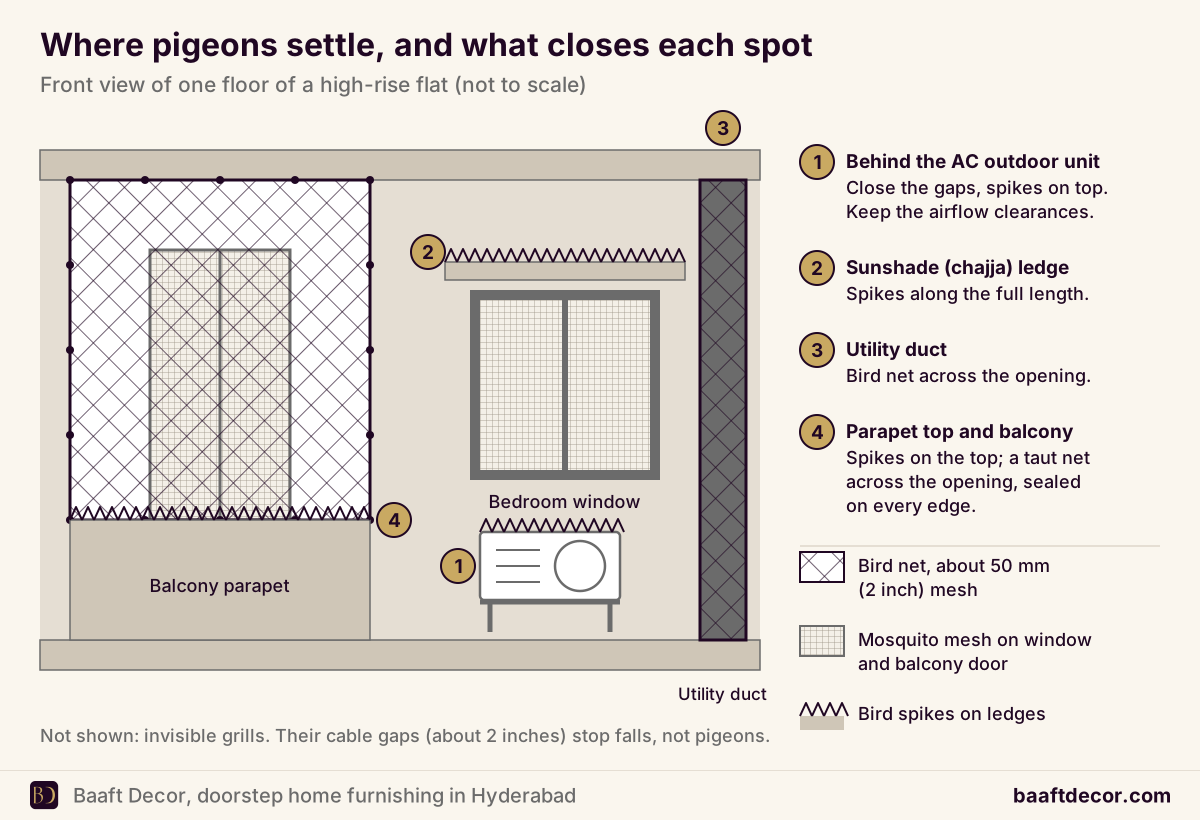
A net works because it closes the opening. Mesh size decides what it stops: about 2 inch (50 mm) mesh stops pigeons, while 3/4 inch (19 mm) is needed to keep out sparrows and other small birds too.
Material is the next question. HDPE (polyethylene) nets don’t absorb water and, when UV-stabilised, cope well with sun. Nylon nets are strong but need UV treatment to last in Hyderabad’s April and May. Either way, a net fails at the edges, not in the middle. A 10 cm gap at a corner is all a determined pigeon needs.
Since we don’t install nets, here’s what to ask whoever does:
- What mesh size and material, and is it UV-stabilised?
- How are the edges fixed, and how close together are the fixings?
- Will the net be taut? Loose nets can entangle birds.
- Who comes back to fix a gap or rescue a trapped bird?
- Has the association approved the colour and position?
Mosquito mesh: closes rooms, not the whole balcony
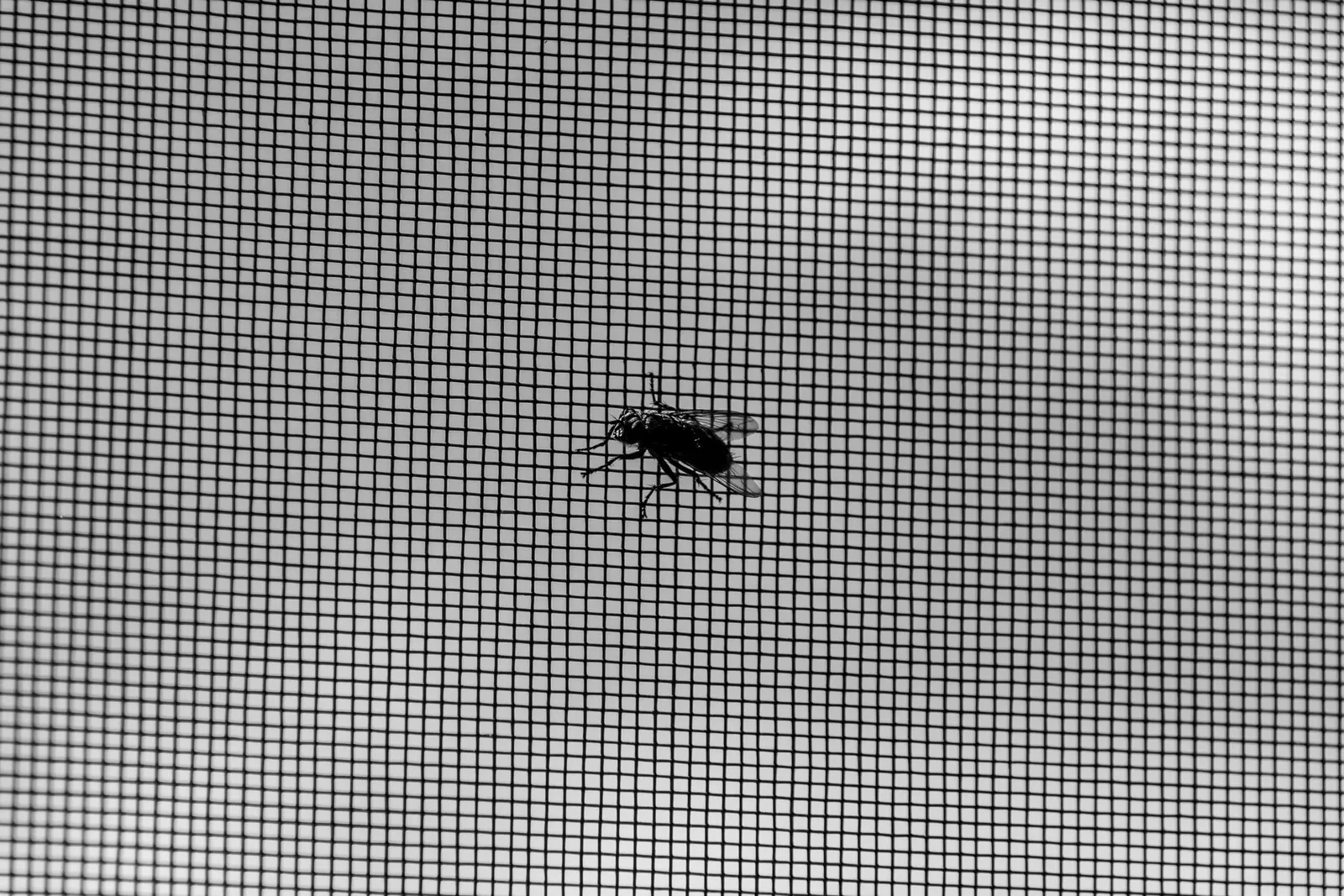
Mosquito mesh has holes far too small for any bird. On windows and balcony doors it keeps pigeons out of the house and off inner sills. It’s the same product that keeps mosquitoes out, so you solve two problems at once. Our guide to types of mosquito mesh for windows explains sliding, pleated and fixed systems.
On a small utility balcony, framed mesh panels across the opening can close it off completely. That changes how the building looks from outside, so it needs association approval. Where birds or pets are likely to push against it, stainless steel mesh holds up better than fibreglass. We fit both through our mosquito mesh service.
Invisible grills: safety, not birds
Invisible grills are tensioned stainless steel cables, fitted with gaps of roughly 2 to 4 inches. For a small child you want about 2 inches, because 4 inches is too wide. Either way, pigeons sit on the wires and get past them. If you have young children and a pigeon problem, you need both: grills for safety and a net or mesh for birds. Our invisible grills guide covers wire grade, spacing and tension.
Spikes and ledge covers
Spikes stop birds landing on narrow ledges, parapet tops, pipes and AC units. They don’t stop pigeons flying into an open balcony. Cover the full length of each ledge, and clear out twigs, because pigeons can build a nest on top of debris caught between spikes. An angled cover on a flat ledge does a similar job.
AC outdoor units need special care
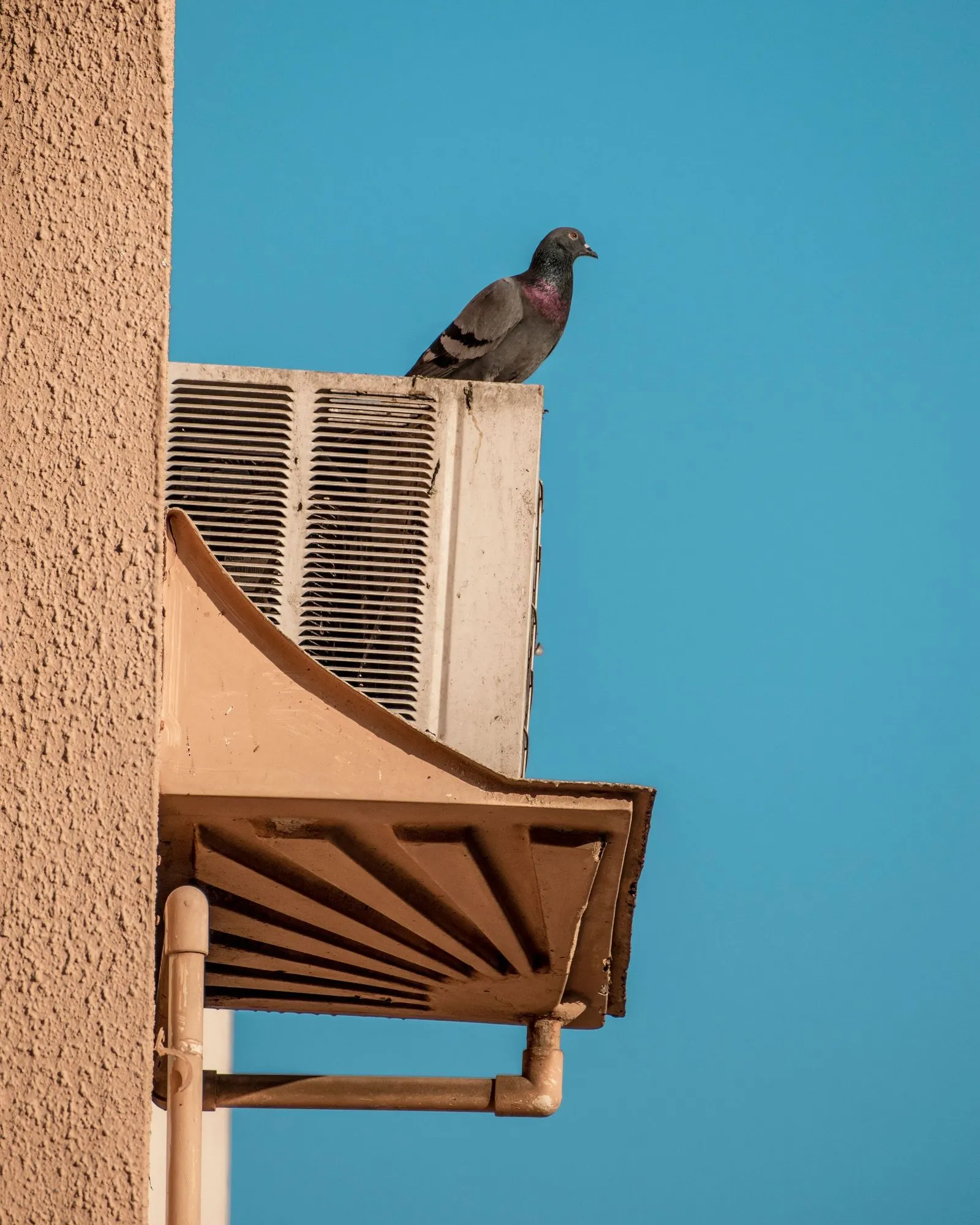
The gap behind an AC outdoor unit is the favourite nesting spot in Hyderabad high-rises. Close the gaps around it and cover the top, but keep the airflow clearances the AC maker specifies. Wrapping a condenser tightly in net can reduce cooling, and your technician still needs access for servicing.
Gels and gadgets
Reflective tape, old CDs, plastic owls and ultrasonic devices work for a few days at most; pigeons learn quickly that they’re harmless. Avoid sticky gels completely. Humane World for Animals warns that polybutene gels can harm all birds, not just pigeons.
What do gated community rules say?
Most Hyderabad associations treat nets and mesh panels as facade changes. Expect rules on colour (often black or transparent), where the net or frame may be fixed, and sometimes an approved vendor or common design. Some allow invisible grills and nets but not full mesh enclosures. Ask the facility office for the rules in writing before anything is drilled. Our guide to gated community interior rules covers what associations typically check.
The humane way to do it
Pigeons aren’t the villains here; they’re doing what rock doves have always done. A few rules keep it humane:
- Stop feeding, and ask neighbours to stop. Food is the main reason birds stay.
- Wait for empty nests. Eggs hatch in about 17 to 19 days and chicks leave roughly a month later. Clean and close the spot the day the nest is empty, before the pair starts again.
- Never poison, trap or glue. It’s cruel, and India’s Prevention of Cruelty to Animals Act, 1960 covers any living creature other than humans.
- Check nets regularly. A trapped bird needs releasing, not leaving.
A practical order for your flat
- Clean safely, with droppings dampened.
- Remove what attracts them: food, water, stored clutter.
- Close openings: net or mesh panels for the balcony, mesh for windows and doors, spikes for ledges and the AC top.
- Add invisible grills if children use the balcony.
- Walk round after every monsoon storm and close any new gap.
Get your balcony assessed
Book a free home visit and we’ll look at your balcony, windows and AC ledges, fit mosquito mesh and invisible grills where they’re the right answer, and tell you honestly where a bird net from a specialist is the better fix. We work across Hyderabad from 8 AM to 10 PM, all seven days. WhatsApp or call +91 98499 17494.
Frequently asked questions
What is the best pigeon net for a balcony?
The best pigeon net for a balcony is a UV-stabilised net with a mesh of about 50 mm (2 inches), fixed taut on all four sides with no gaps at the corners. That mesh size stops pigeons; a finer 19 mm (3/4 inch) mesh is needed to keep out sparrows and other small birds. HDPE (polyethylene) nets resist water and sun well, while nylon nets are strong but should be UV-treated for Hyderabad's sun. How the edges are fixed matters more than the brand.
Do invisible grills stop pigeons?
No, invisible grills do not stop pigeons. Installers space the cables anywhere from about 2 to 4 inches apart. About 2 inches is what stops a small child slipping through, since 4 inches is too wide, but pigeons still perch on the cables and get past them. Invisible grills are a fall-safety product for children and pets on high floors. If pigeons are also a problem, the balcony needs a bird net or mesh panels as well, and many families end up combining the two.
Can mosquito mesh keep pigeons out?
Yes, mosquito mesh keeps pigeons out of whatever opening it covers, because its holes are far too small for any bird. Fitted on windows, balcony doors and small utility openings, it stops pigeons getting into rooms and nesting on inner sills. It does not keep birds off an open balcony unless the whole balcony opening is enclosed with framed mesh panels, which changes the facade and usually needs association approval. Stainless steel mesh resists pecking and damage better than standard fibreglass.
How do I stop pigeons nesting behind my AC outdoor unit?
To stop pigeons nesting behind an AC outdoor unit, first clear any nest once it is empty and clean the area with the droppings dampened. Then close the gaps around and behind the unit with netting or a fitted barrier, and put spikes or an angled cover on top so birds cannot perch. Keep the airflow clearances the AC manufacturer specifies, because wrapping the condenser tightly can reduce cooling. Ask your AC technician to check the fixing so service access is not blocked.
Are pigeon droppings harmful to health?
Pigeon droppings can carry health risks, though most people who clean a small amount carefully will not fall ill. The US CDC notes that the fungus that causes histoplasmosis spreads in bird and bat droppings, and bird droppings and feathers can trigger an allergic lung condition called bird fancier's lung. People with asthma, lung disease or weak immunity should be most careful. Dampen droppings before cleaning so they don't turn into dust, wear gloves and a mask, and leave large build-ups to professionals.
Can I remove a pigeon nest from my balcony?
You can remove an empty pigeon nest, and the best time to block a nesting spot is straight after the nest is cleared. If there are eggs or chicks, wait for them to leave: pigeon eggs hatch in about 17 to 19 days and the young fledge roughly a month later. Removing active nests or harming birds is cruel, and in India animal cruelty is covered by the Prevention of Cruelty to Animals Act, 1960. Once the nest is empty, clean the spot and close it off immediately.
Do pigeon spikes work on balconies?
Pigeon spikes work well on narrow ledges, parapet tops, pipes and the tops of AC outdoor units, because birds cannot land on them. They do not keep pigeons out of an open balcony, since birds simply fly past the spikes into the space. Spikes must cover the full length of the ledge, and they should be kept free of twigs and debris, which pigeons can use as a base for a nest. For the balcony opening itself, a net or mesh is needed.
Do I need association permission for a balcony bird net?
In most Hyderabad gated communities, you should get association or facility-management approval before fixing a bird net or mesh across a balcony, because it changes how the facade looks. Many associations specify the colour, usually black or transparent, and where the net may be fixed, and some require an approved vendor or common design. Work fixed from outside the balcony on high floors may also need safety permissions. Ask for the rules in writing before anything is drilled.